

Honduras 2022: Disinformation, hate crimes and an apology
The apology for the murder of Vicky Hernández did not stop the rise in violence against the LGBT community. A year without progress on rights.


Share

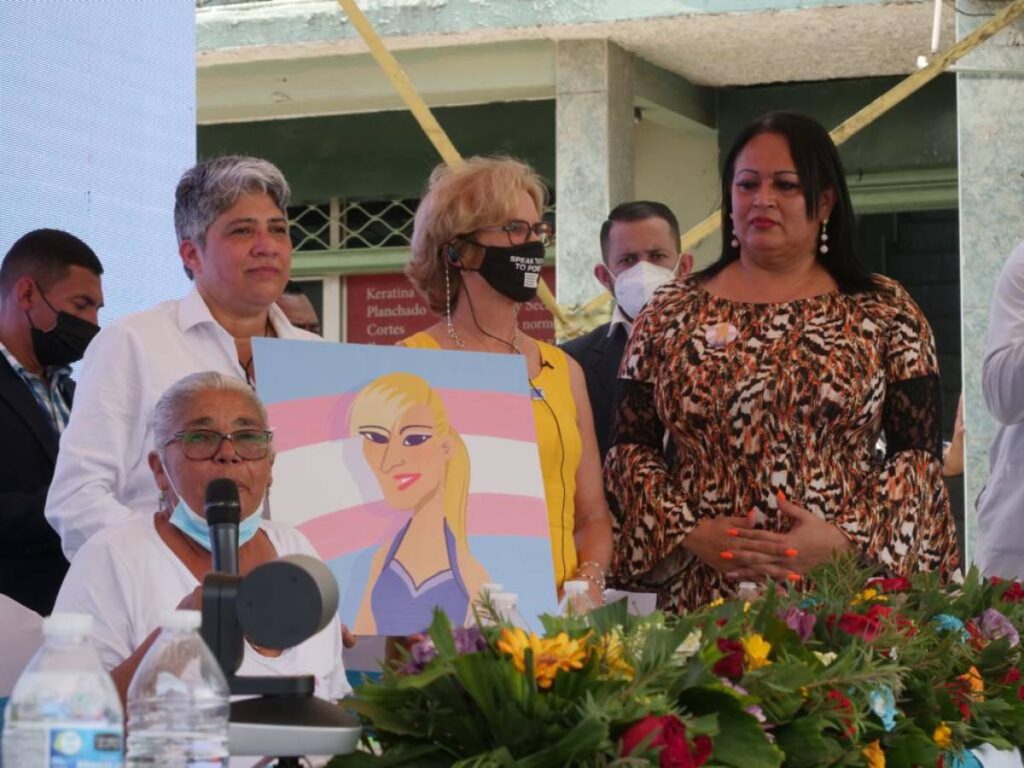
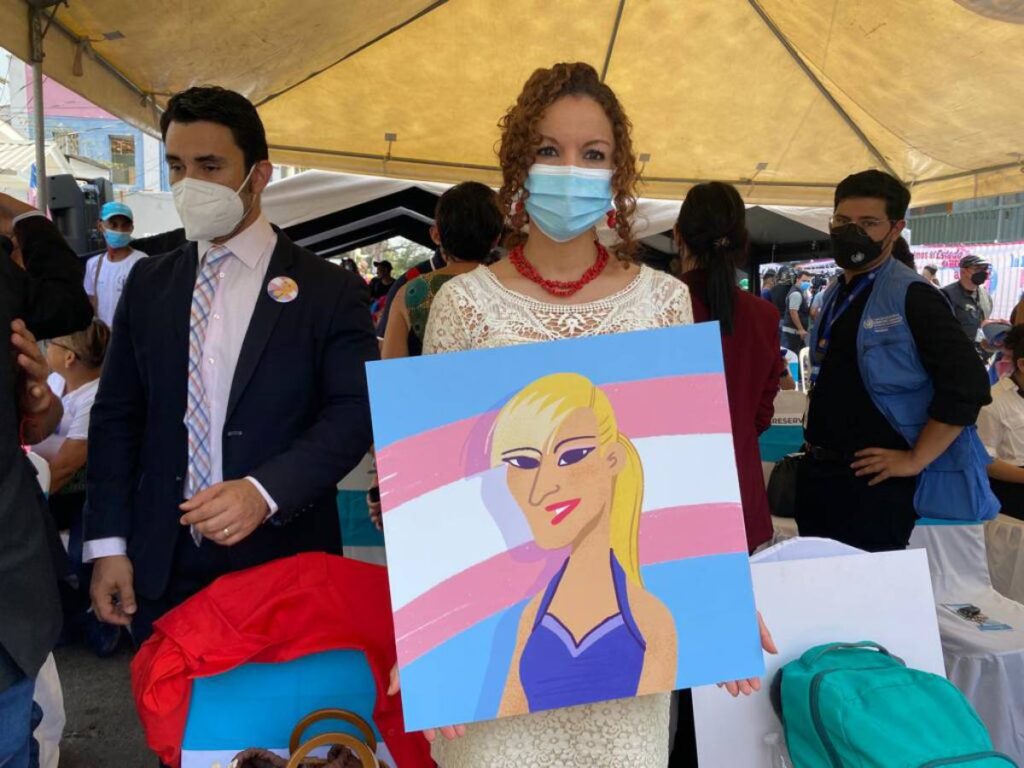
San Pedro Sula, Honduras. “Xiomara held a machete to our necks,” two Honduran trans women, displaced and in transit through Mexico, told Presentes . They had participated on May 9, 2022, in the ceremony where the president of Honduras, Xiomara Castro, apologized for the murder of trans activist Vicky Hernández.
Despite Castro's apology for crimes against sexual minorities in Honduras, anti-rights groups and religious leaders unleashed a wave of hatred and disinformation. This culminated in the murder of 41 LGBTQ+ people in 2022.
For these two displaced trans women, who were university students in Honduras studying Business Administration and Social Work, the Honduran president's act was symbolic. She not only apologized for the crime against Hernández, but also for the murders of more than 400 LGBTQ+ people committed from 2009 to the present.
Request for forgiveness: achievement and reparation
The apology is an unprecedented achievement in Honduras. It serves as one of the reparations demanded by the Inter-American Court of Human Rights for the violent death of Hernández, which occurred during the 2009 coup that ousted then-President Manuel Zelaya.
Despite the Honduran state's apology, 2022 was one of the worst years for the LGBTIQ+ population. This was confirmed by the Cattrachas Lesbian Network in its report on violent deaths. The Cattrachas Observatory documented 41 violent deaths of LGBTI people and two disappearances. These figures already far exceed the 29 murders committed in 2021 against the diverse population of Honduras.
“Most cases of violence against LGBTI people remain unpunished. Measures need to be taken to investigate and punish those responsible for violence against LGBTIQ+ people,” said Indyra Mendoza of Cattrachas.
According to the Lesbian Network, prejudice means that the LGBTIQ+ population in Honduras continues to suffer the "ridiculous prohibition" of donating blood, even though it is a common practice in the rest of America.
For an identity law
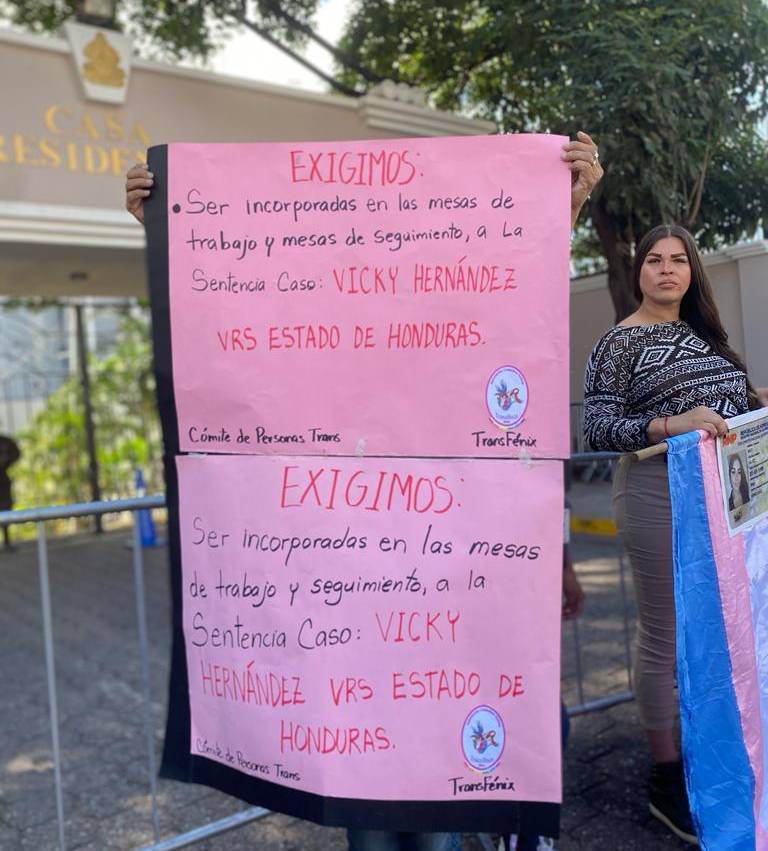
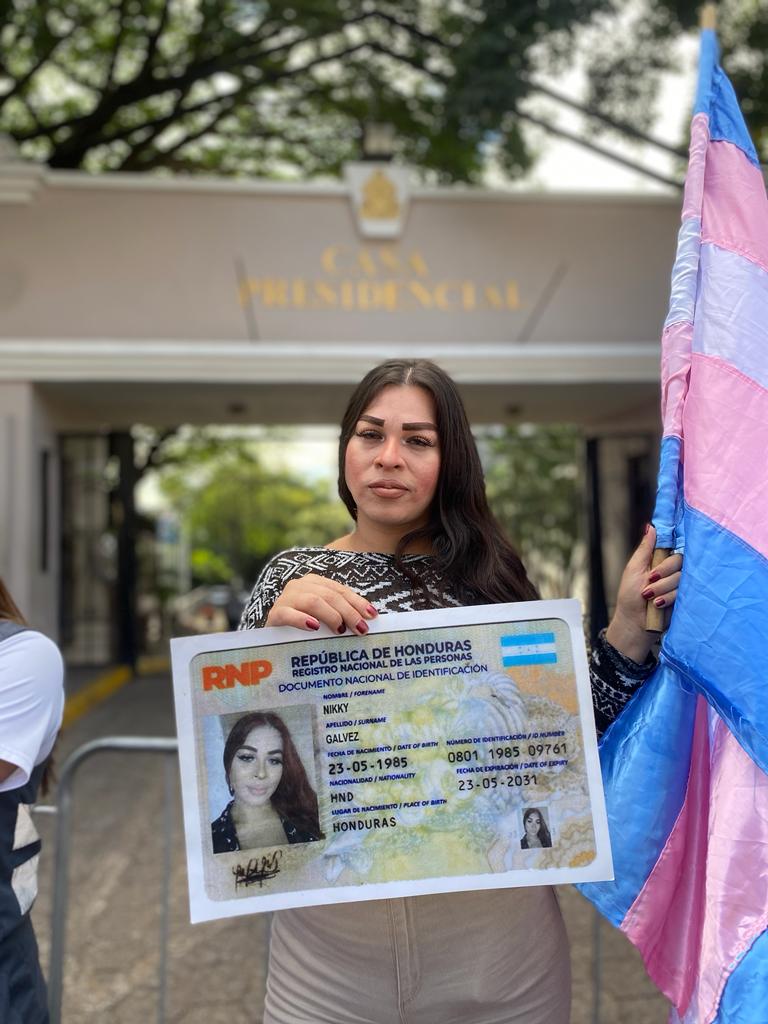
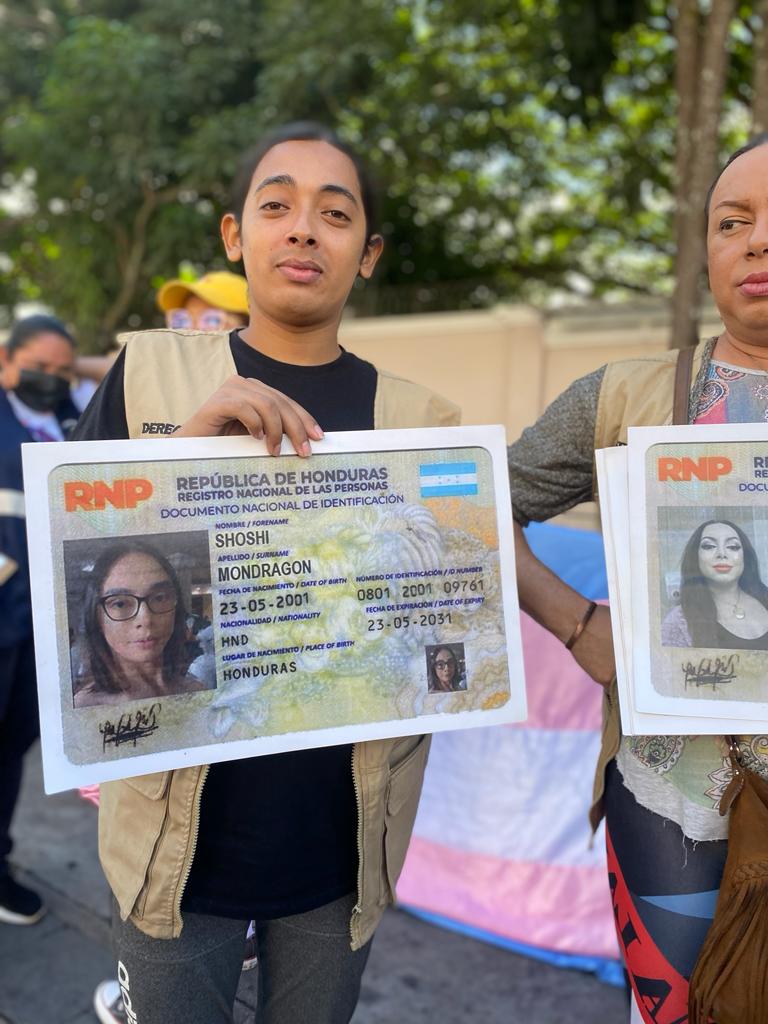
Although President Castro apologized on May 9, the Honduran state has not made progress in allowing transgender people to change their names on their identity documents. Authorities continue to discriminate, especially at the National Registry of Persons, where there has still been no political will to comply with the court ruling.
Natalie Roque, Secretary of Human Rights, said that since the situation of the LGBTQ+ community became more visible and Xiomara Castro's government began complying with international demands, hate speech has increased. This has a direct effect on the murders of LGBTQ+ people.
“There are hate campaigns that have intensified to prevent the advancement of human rights,” Roque told Presentes . He also made a public appeal to the commissioner of the National Registry of Persons to comply with the Vicky Hernández court ruling. This would allow transgender people to change their name on their identity card.
For his part, Néstor Hernández, director of Honduras Diversa , stated that one of the biggest problems in violent deaths is the State. "It brings up the issue of LGBTQ+ rights and then cowardly bows its head when Christian and Catholic leaders come with their hate speech."
According to Hernández, the LGBTQ+ youth are discouraged. “They voted thinking things would be different, but we keep seeing that it’s just talk and there are no documents or decrees.”.
What is the next step that will bring us closer to the full enjoyment of our rights? That is the question that trans people in Honduras continue to ask themselves. "We have knocked on many doors. We see the lack of political will from each of the people involved in this process," activist Angie Pérez pointed out.
Anti-LGBT officials
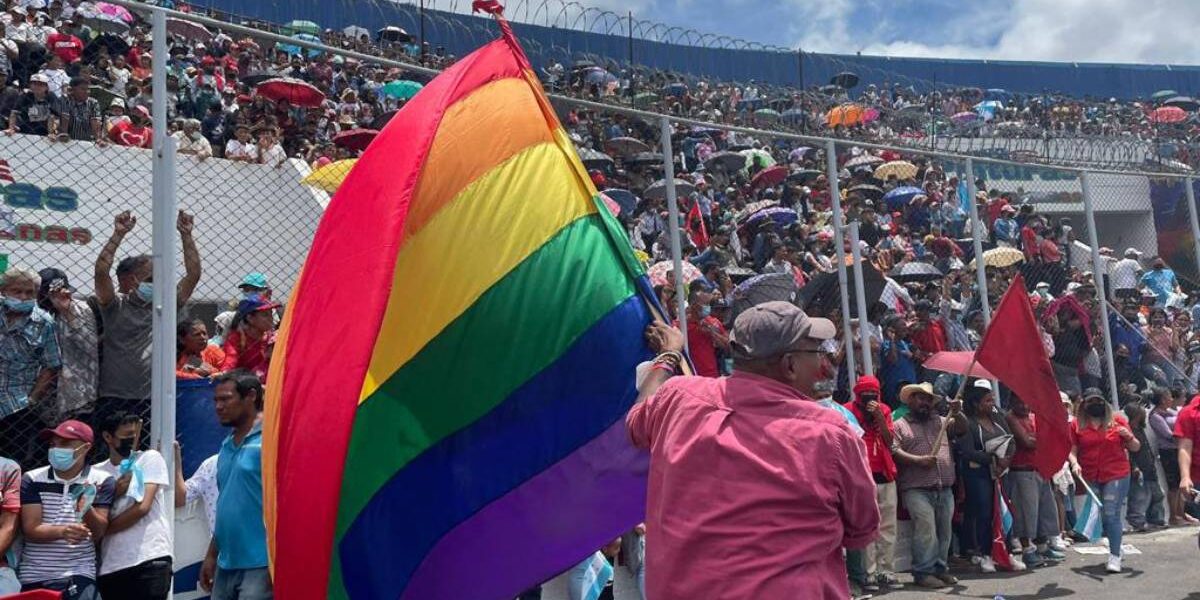
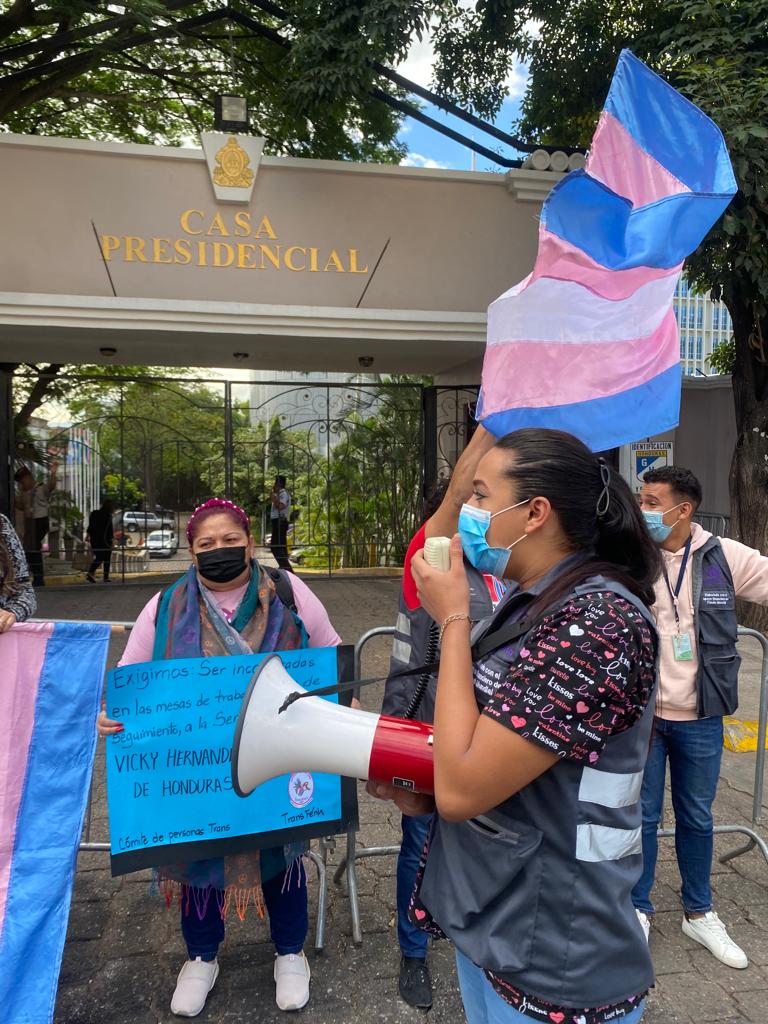
An example of a lack of political will occurred on May 17, the International Day Against Homophobia, Transphobia and Biphobia, when several organizations demonstrated to demand their rights. Roberto Contreras, the mayor of San Pedro Sula, on the country's northern coast, refused to raise the pride flag.
He argued that "he didn't want enemies like the Church or any other sector that could speak out against his government," said Osman Lara, president of the LGBTIQ+ Committee of the Sula Valley.
It's not only the Honduran political class that commits acts of prejudice against the diverse population. The majority of traditional media outlets also contribute, becoming sources of disinformation. In this way, they perpetuate hatred and prejudice against sexual minorities.
The media
In June 2022, Radio Nacional de Honduras broadcast two audio recordings promoting respect for LGBTQ+ rights. In one recording, a young woman tells her mother she is a lesbian. In the other, an older woman states that normalcy will only be achieved when the rights of all people are respected.
These radio broadcasts were a historic event in Honduras, as no state media outlet had previously commented on the matter. Consequently, the radio station faced backlash from anti-rights groups who argued that it was an attack on the institution of the family. They also claimed the campaign was immoral and inappropriate for children.
The radio campaign caused such a stir that the Castro government ordered the broadcasts taken off the air and the producer fired. Castro's Press Secretary, Ivis Alvarado, stated that the president "never endorsed it and the campaign was not ordered. Those responsible, who acted arbitrarily, independently, and without the consent of the Press Secretariat authorities or the president, have been removed from their positions.".
On the other hand, the Tegucigalpa Pastors Association published a statement on August 29, 2022, denouncing “attacks on civic principles and values.” They declared their disagreement with the LGBTQ+ community marching alongside children and youth in the Independence Day celebrations. This statement was an act of disinformation intended to discredit LGBTQ+ individuals, as they had not requested to participate.
The churches' actions sparked hate attacks against LGBTQ+ people in the media and on social networks. An enraged group of citizens belonging to anti-rights organizations reinforced the idea that sexual minorities attacked "the morals and good customs of the country.".
A parade with violence
The attacks sparked a reaction from the LGBTIQ+ organization Kukulcán. On September 8, they sent a request to the Ministry of Education to participate in the main parades. They also filed a discrimination complaint with the Public Prosecutor's Office.
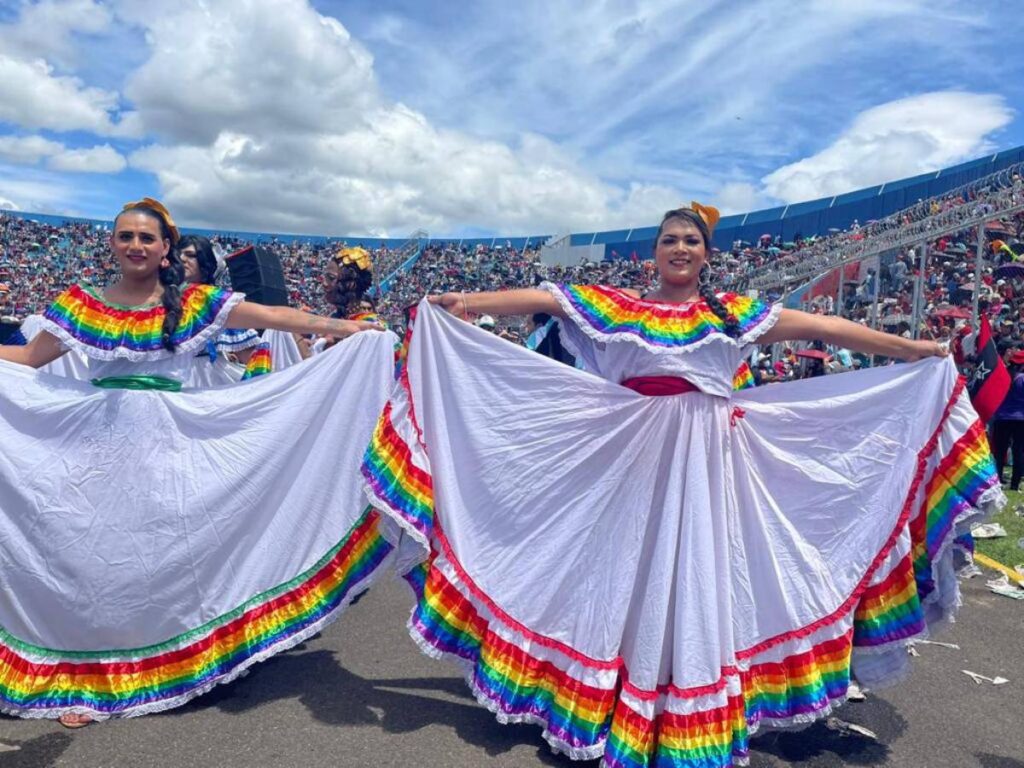
Consequently, transgender people took to the streets to march on September 15. But an anti-rights group met them by throwing bottles filled with urine and soiled diapers at them in the Francisco Morazán National Stadium in Tegucigalpa, the capital of Honduras. The media focused on one transgender person because she exposed her buttocks during the march.
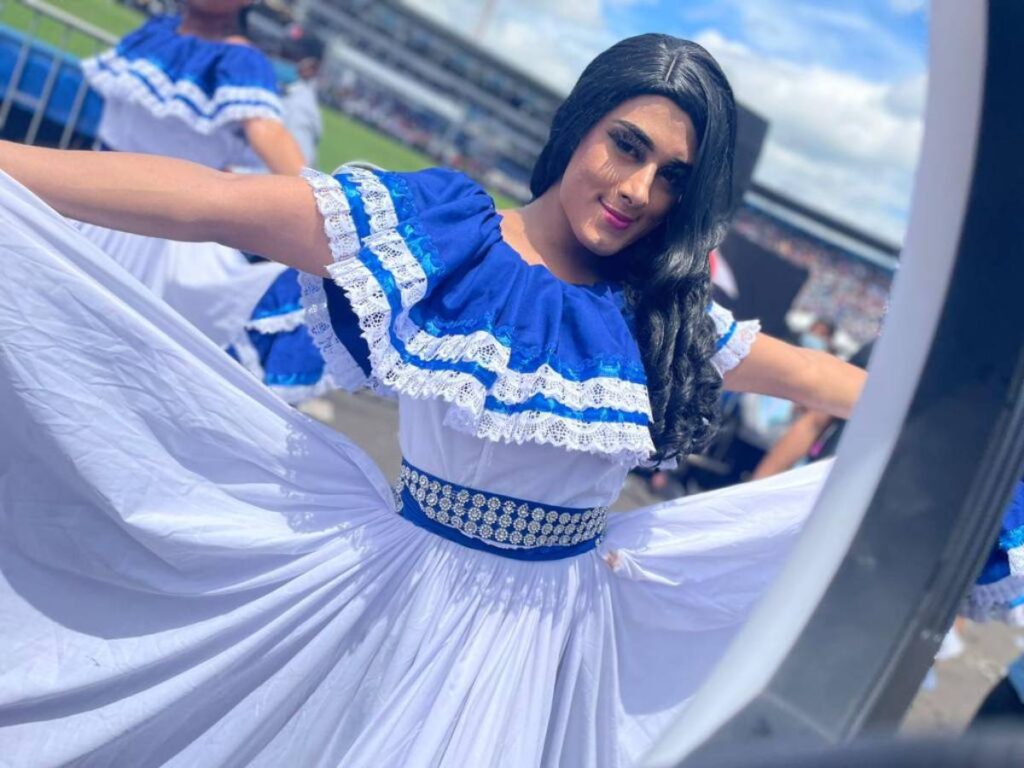
However, the hatred didn't end there. On October 31, José Manuel Matheu, the Secretary of Health in Castro's government, stated that emergency contraception pills (ECPs) would only be approved in cases of rape. Matheu's declaration sparked outrage among feminist and LGBTQ+ groups, as he failed to consider the entire female population. He also excluded lesbian, bisexual, queer, transgender, and non-binary people, among others.
“Women must learn to demand that men use condoms,” said Minister Matheu. This came after the approval in December 2022 of the protocol for the care of victims of sexual violence, which for the first time included emergency contraception as a protective measure for victims.
In response to these statements, Cattrachas released a video demanding that President Xiomara Castro fulfill her promise to approve school feeding programs for all women and that she dismiss the minister. However, pro-government groups launched a hate campaign against the organization, claiming it has no right to record the president in private meetings.
Onslaught against organizations
Days after the incident involving the Cattrachas Lesbian Network, the organization Somos CDC reported being the victim of a cyberattack. Individuals unaffiliated with the organization posted sexually explicit content on its Facebook page, which was subsequently suspended. Somos CDC filed a complaint with the Public Prosecutor's Office (MP) so that it can investigate and identify those responsible for the online attack.
“Throughout the year we have received hateful comments on various social media posts, but there has never been an attack of this magnitude. We have seen how public officials are attacking Cattrachas. It is quite concerning that civil society organizations are being attacked, especially those of us who demand rights,” said Kevhin Ramos, program manager at Somos CDC.
Despite the hatred and misinformation, this year one of the murderers of Thalía Rodríguez, a trans woman who dedicated her life to activism and the fight for equality, was convicted. Although two more perpetrators remain at large, this is an important step forward in the legal process.
Another important case that reached the IACHR is that of a trans woman who has been discriminated against by the prison system since 2017, as she is denied an intimate visit with her partner and is treated with great violence.
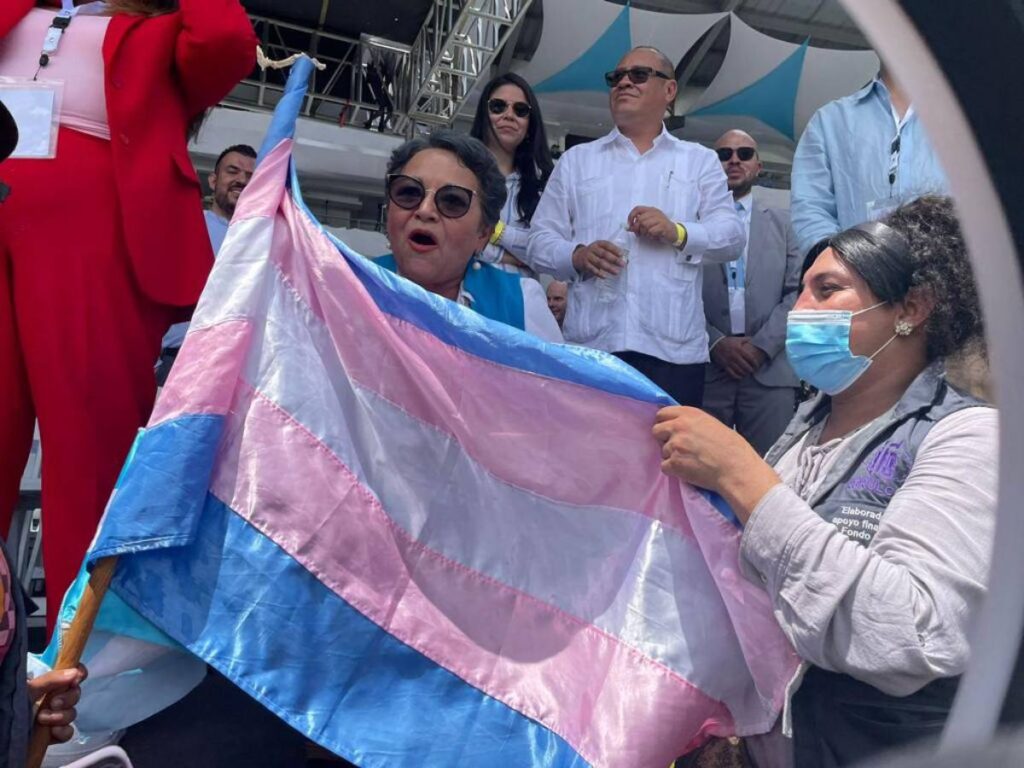
While Xiomara Castro's government decides the future of transgender people, they are not remaining silent. They denounce their exclusion from the government's negotiation processes regarding Vicky Hernández's sentence.
“With these governments, we’ve barely managed to get our gender expression reflected in our identity documents. We want a name change, as that makes many things easier for us. And above all, it respects our gender expression in every aspect of our country,” said Ruby, 33, a technician with the Rainbow Dolls collective.
We are present
We are committed to journalism that delves into the territories and conducts thorough investigations, combined with new technologies and narrative formats. We want the protagonists, their stories, and their struggles to be present.
SUPPORT US

FOLLOW US
Related notes


We are present
This and other stories are not usually on the media agenda. Together we can bring them to light.
1 Comment