

El Salvador 2022: The state of emergency exacerbated violations of LGBT+ rights
In 2022, the right to change the name of trans people was recognized, but the policy against the LGBT population was intensified.


Share

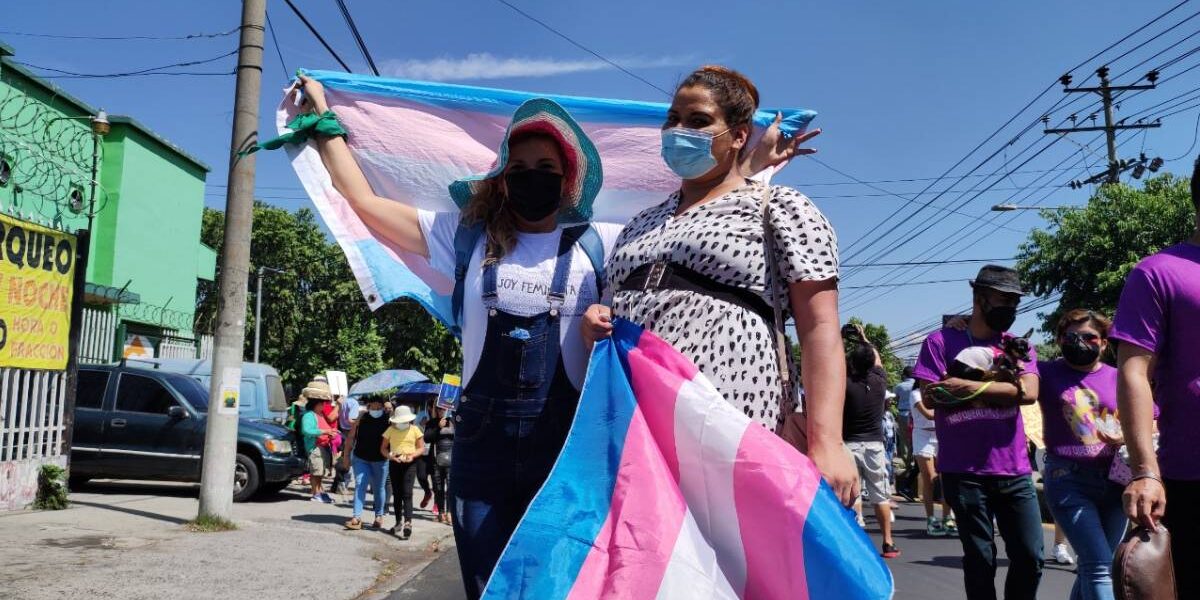
SAN SALVADOR, El Salvador. Although El Salvador recognized the right to name change for transgender people in 2022—in an unprecedented constitutional ruling— setbacks were also evident. This was especially true regarding repression and human rights violations, which came hand in hand with a controversial security and anti-gang strategy.
In the last twelve months, President Nayib Bukele's government has intensified its harassment of journalists and human rights organizations . It has also increased the criminalization of poverty by militarizing entire neighborhoods in search of alleged gang members.
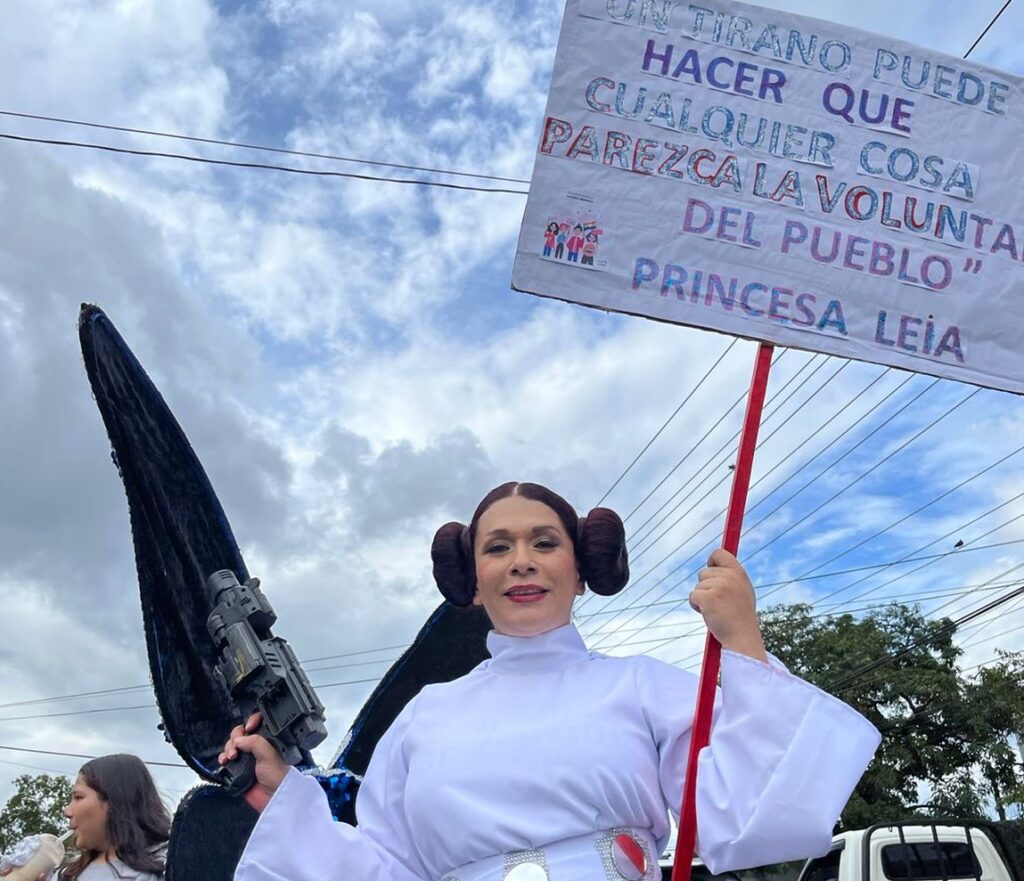
At Bukele's request, the Salvadoran Congress approved a nationwide state of emergency on March 27. This was intended to declare war on the Mara gangs, following the murder of 62 people in a single day—the highest number of deaths this century, according to human rights advocates.
In 72 hours, 87 people lost their lives due to alleged gang attacks.
What does this system consist of?
The state of emergency empowered police and soldiers to detain people without a warrant, suspended the right to a defense, and extended detention periods during the investigation phase. These periods now range from three days to six months before the first hearing before a judge.
Since then, the ruling party Nuevas Ideas and its allies have approved the expansion of the regime nine times.
From the outset, the country's prisons have been overcrowded. Most of those detained are accused of collaborating with or belonging to the violent Mara Salvatrucha (MS-13), its rival Barrio 18, and other smaller gangs.
According to human rights defenders , police and soldiers began a manhunt in the slums and rural areas of the Central American nation to pursue suspects and arrest innocent people, as they had to meet arrest quotas.
What happened to the LGBT community
Ester Flores, a specialist in LGBTI population care at the social organization Amate, points out that they have documented at least 41 cases of arbitrary arrests and attacks by public security forces against the sexually diverse population.
Among the complaints handled by Amate are documented cases of cruel and inhuman treatment, degrading humiliation of transgender people, persecution, and forced displacement. The identities and orientations of those detained, as recorded by the organization, included 4 transgender women, 1 transgender man, 8 gay men, 9 bisexuals, and 7 lesbian women.
Of all the complaints, only five were filed with the Attorney General's Office. The rest of the victims were afraid of facing state persecution.
Since April, Amate has been assisting in the cases of 27 arbitrary arrests. Of those, 26 were charged with illicit association and one with illicit grouping .
A guarantee from the penal code
In March, a series of reforms to the penal code were approved, increasing penalties for gang-related offenses. Those accused of belonging to an illegal group could face 20 to 30 years in prison. For criminal association, the penalty would be 15 to 20 years.
Of all the cases registered by Amate, only one person has been released. The rest remain in prison awaiting summary hearings, where judges must attend to up to 500 detainees daily, leading to serious human rights violations, according to WOLA , an organization that documents cases during the state of emergency.
“Stigmatization, persecution, and repression are not isolated actions. They are part of a larger, systematic targeting of a segment of the population. It is alarming that a judicial culture of abuse of power is being created, and the use of force as a method of social order is being normalized by the National Civil Police, the Armed Forces, and the judiciary,” WOLA reported in a report released in September.
Sources consulted by Presentes commented that overcrowding in prisons “is unsustainable.” Each cell holds between 130 and 140 people who must share sleeping space; bathrooms are also used as dormitories. From March to December, more than 60,000 people were arrested. Of these, only 2,000 were released because they had no gang affiliation.
“The state of compliance with the human rights of the LGBTI population, instead of progressing, is experiencing setbacks. Everything is undoubtedly connected to the political system. We are not in the best moment regarding the fulfillment of these rights,” Ester Flores de Amate told Presentes .
The cases
Among the arrests that Presentes has documented are two trans women and a gay man, who are still in prison. A trans man, an activist with Trans Culture, was arrested and publicly exposed naked in prison . He was released hours later after complaints were posted on social media.
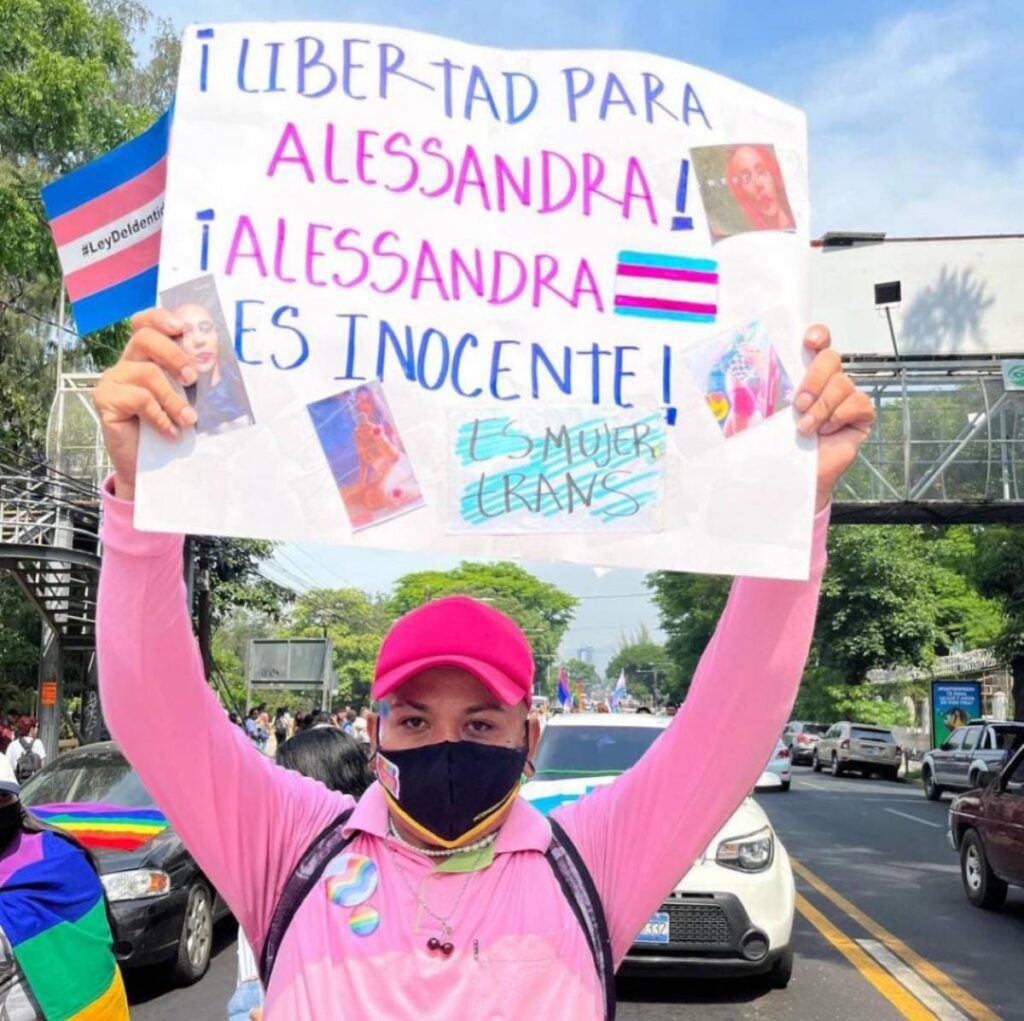
Alessandra Sandoval, 24, was arrested at her home for not having identification documents . Her brother, Carlos Sandoval, made the complaint public; weeks later, he was threatened by the police and arrested without a warrant. Their mother died waiting for their release.
“People don’t report crimes because they’re afraid of being persecuted. Everyone knows someone who reported something and was then arbitrarily arrested. Because of the current regime, there’s no access to justice,” said Ester Flores.
Keiry Mena, a 44-year-old transgender woman, was arrested by four police officers on the afternoon of Sunday, May 8, when she went out to buy nail polish for her work. She provided services at clients' homes because she does not have a physical location.
Keiry trained as a stylist at the Solidarity Association to Promote Human Development – ASPIDH Arcoíris Trans . She also trained at the now-defunct Directorate of Sexual Diversity of the Secretariat of Social Inclusion, which was closed by order of the populist president Nayib Bukele.
Human Rights Watch and Cristosal concluded that police and soldiers have repeatedly committed similar abuses during the nine months in effect.
The lack of complaints
The Association to Promote Human Development ASPIDH – Arcoiris Trans presents an annual report from its documentation center on the situation of transgender people. This report records complaints of human rights violations and identifies the police and armed forces as the primary perpetrators in each case.
In 2020, out of 51 surveys of transgender women, 46% reported experiencing some form of discrimination and harassment by agents of the National Civil Police, and 6% by the armed forces. The 2021 report indicates that 14.3% reported experiencing abuse by prison staff, while 21.4% referred to unidentified “others.”
In contrast to the 2022 report, complaints of human rights violations perpetrated by state agents have decreased compared to previous years. ASPIDH believes that one of the reasons for this is the self-censorship of victims when identifying and reporting their aggressors under the state of emergency.
“We no longer trust our country’s public security institutions because they criminalize us. Many decide not to file a report. We experience such intense violence and human rights violations that we have normalized them. We no longer believe in the State because it doesn’t provide us with the same level of service as the rest of the population,” Britanie Castillo, technical assistant at ASPIDH, told Presentes .
Another reason for the decline in reports is the impunity surrounding crimes committed against LGBTI people . In 2015, the Salvadoran congress approved a reform to articles 129 and 155 of the penal code to recognize crimes based on sexual orientation, gender identity, and gender expression.
Most cases were dismissed in the country's courts. Only five of the 600 murders of trans women that have occurred since 1992 have been prosecuted: Camila Díaz, Anahy Miranda, Tita Andrade, Sayuri Orellana, and Daniela Rodríguez.
The police forces, the worst enemy
The ruling in favor of Camila Díaz was the first conviction in the Central American country. In February 2021, three members of the Mara Salvatrucha MS-13 gang were sentenced to up to 66 years in prison for the murders of Sayuri Orellana and Daniela Rodríguez. Neither ruling considered the aggravating circumstance of a hate crime.
“If we go to file a complaint, we always end up being criminalized because we have to justify what we were doing in the shadows at night. All of this serves to marginalize our identities and say that because we are trans women, we are criminals,” Britanie pointed out.
Users of the Amate organization expressed their fear of reporting the attacks they received from the police and armed forces during the state of emergency.
“With the implementation of the state of emergency, we are witnessing the persecution that has occurred with these phases of the Territorial Control Plan, such as the harassment of LGBTI people by the police and the armed forces, and some of them have been arbitrarily detained,” said Ester Flores de Amate.
Amate learned of a case involving an LGBTI person who was harassed, humiliated, and detained by the police because of their gender identity. They believe that, under the state of emergency, security forces carried out threats against the population due to the state's rejection of diversity.
“Many of the reasons people are detained are due to the hatred we have as a society towards sexual and gender diversity. It is quite evident in cases where the reason is simply for being part of the LGBTI population,” Ester Flores pointed out.
Congress fails to legislate identity law
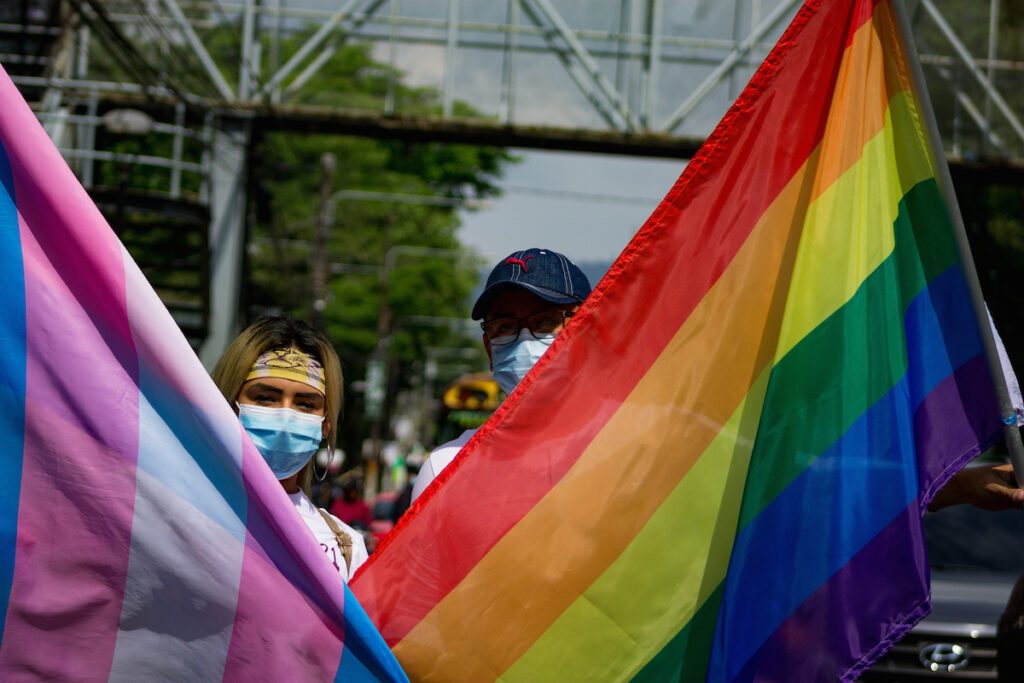
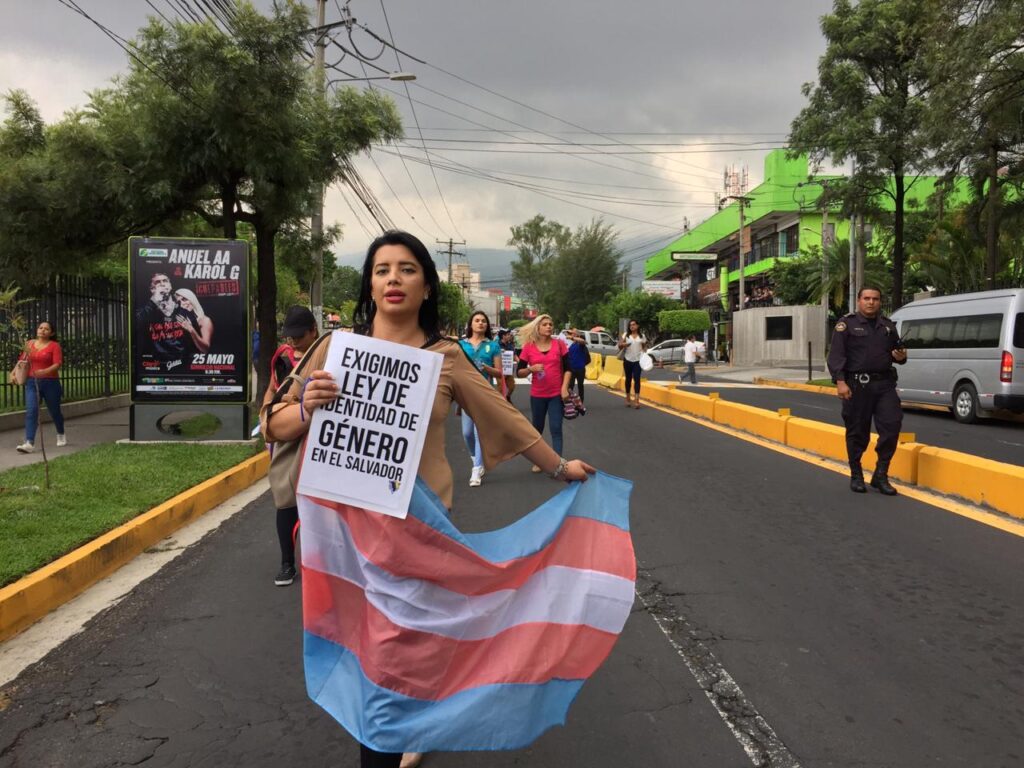
For the organizations that have been promoting the approval of the Gender Identity Law since March 22, 2018, the Supreme Court's ruling was a small glimmer of hope for the marginalized draft bill.
However, the highest constitutional court gave the legislative body a one-year deadline to adapt Article 23 of the Law on the Name of the Natural Person.
“The Legislative Assembly must issue the necessary reform to provide for the conditions that any person who wishes to change their name must meet in order to be compatible with their gender identity,” the court ordered in the ruling.
But since the ruling issued on February 22, 2022, ten months have passed without the Assembly's Women and Gender Commission including the discussion of the bill on its agenda. Or, failing that, the debate on the mandated reform. Despite repeated requests for meetings with the commission from the social organizations that drafted the proposal, these requests have been ignored.
Identity and rights
According to Britanie Castillo, a trans-feminist advocate and member of ASPIDH Arcoíris Trans, they have been requesting since 2020 that the gender commission grant them a space to explain the importance of the approval of the Gender Identity Law. They have not yet received a response.
“Violence, discrimination, and poverty are a cycle of life that we trans women experience because we don't have access to a gender identity law that can recognize my name, my legal identity, and allow me to access all my human rights,” said Britanie Castillo.
During 2022, through various rulings by the Supreme Court of Justice, three people legally changed their gender marker. Bianka Rodríguez was one of the first transgender women to obtain her National Identity Document (DUI), followed by Karla Guevara in September. Also that month, Aldo Peña became the first trans man to legally change his name in El Salvador. The Family Court of San Salvador issued the authorization.
The situation in Congress
The parliamentary majority is made up of conservative parties that refuse to legislate on the recognition of diverse identities, same-sex marriage, and abortion.
El Salvador does not yet have a gender identity law. In May 2021, legislators from the ruling party, Nuevas Ideas, shelved the draft bill being studied by the Congressional Committee on Women and Gender. Marcela Pineda, a member of the ruling party, considered the bill, along with 30 other proposals under review, to be “obsolete and out of touch with reality.”
The draft bill submitted in 2018 was revived three months after being shelved by the Permanent Committee for the Gender Identity Law in Congress. Its review in the relevant committee has not yet begun.
Advance of conservatism
Britanie Castillo dropped out of school due to the harassment she suffered because of her gender identity. This year she managed to graduate thanks to an educational program run by the Office of the United Nations High Commissioner for Refugees and the Ministry of Education of the Central American country. However, the government's decision to ban the distribution of educational materials on sexual orientation left her bewildered.
Last September, Bukele ordered the cancellation of the contract with the teacher training institute that broadcast an educational program on state television . This came after he received public pressure that the program was indoctrinating students with content related to sexual identity.
A video created with digital animations went viral on social media, explaining that, starting in puberty, teenagers may be attracted to other people, including those of the same gender. The video then offered definitions of the terms heterosexual, homosexual, and bisexual, but some users questioned its content.
“They closed a module and didn’t care. But we see how society said nothing because they don’t want their children to learn about sexual diversity,” lamented Britanie Castillo.
The broadcast episode was part of a learning guide on sexuality education, in place since 2013. It was aimed at eighth-grade students, ages 14 to 15, and addresses diverse sexual identities and orientations. LGBTI organizations consider this a clear step forward for conservative government policies.

“Many of us would like to be lawyers or psychologists, and we wouldn’t want to be doing sex work on the streets. But we don’t have the necessary resources to finish our studies. In many cases, we drop out of school at a very young age; we don’t have access to dignified employment, employment that allows us to think about our old age and receive all the legal benefits,” lamented Britanie Castillo.
An official to endorse human rights violations
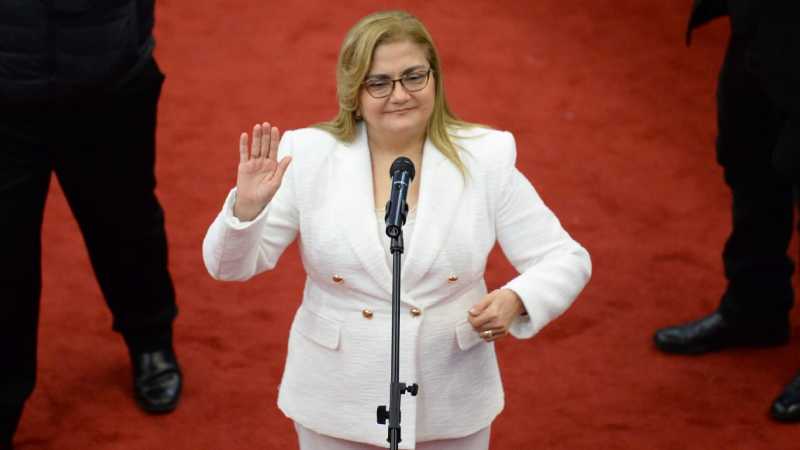
the human rights ombudsperson for the 2022-2025 term . They appointed Raquel Caballero, a conservative Christian lawyer who has been criticized in the past for violating the rights of the LGBTI population.
This is not the first time the lawyer – who also presents herself as a "personal coach" on her Twitter account – has been elected to the state institution. Her first appointment was between 2016 and 2019, and she was promoted by the far-right Nationalist Republican Alliance (ARENA) party.
In 2012, the Attorney General's Office established a permanent working group on the human rights of the LGBTI population. According to two organizations consulted by Presentes , Caballero refused to meet with them and continue the forum that served as a space for dialogue and debate.
In September 2017, Caballero presented his first year in office report. However, in his speech, he took credit for the achievements of his predecessor. He also lied about the results of his advocacy for the LGBTQ+ community.
Raquel Caballero was appointed with 67 out of a possible 84 votes in Congress. Opponents of the ruling party believe her appointment will serve to endorse and cover up human rights violations committed during the state of emergency declared to combat gangs.
We are present
We are committed to journalism that delves into the territories and conducts thorough investigations, combined with new technologies and narrative formats. We want the protagonists, their stories, and their struggles to be present.
SUPPORT US

FOLLOW US
Related notes


We are present
This and other stories are not usually on the media agenda. Together we can bring them to light.