

Peru 2022: Hate crimes decrease but discrimination against LGBT+ deepens
A year passed with little progress and some setbacks in LGBT+ rights in a turbulent political context.


Share

LIMA, Peru. Throughout 2022, Peru experienced a constant confrontation between the Executive and Legislative branches, which on December 7th led President Pedro Castillo to announce the closure of Congress. In short, he decreed a coup d'état, as this closure did not comply with the necessary legal requirements.
The coup was short-lived. The government lacked the support of the Armed Forces, leading to the arrest and imprisonment of the former president and massive protests across Peru. But this was also not a very happy year for LGBTQ+ rights.
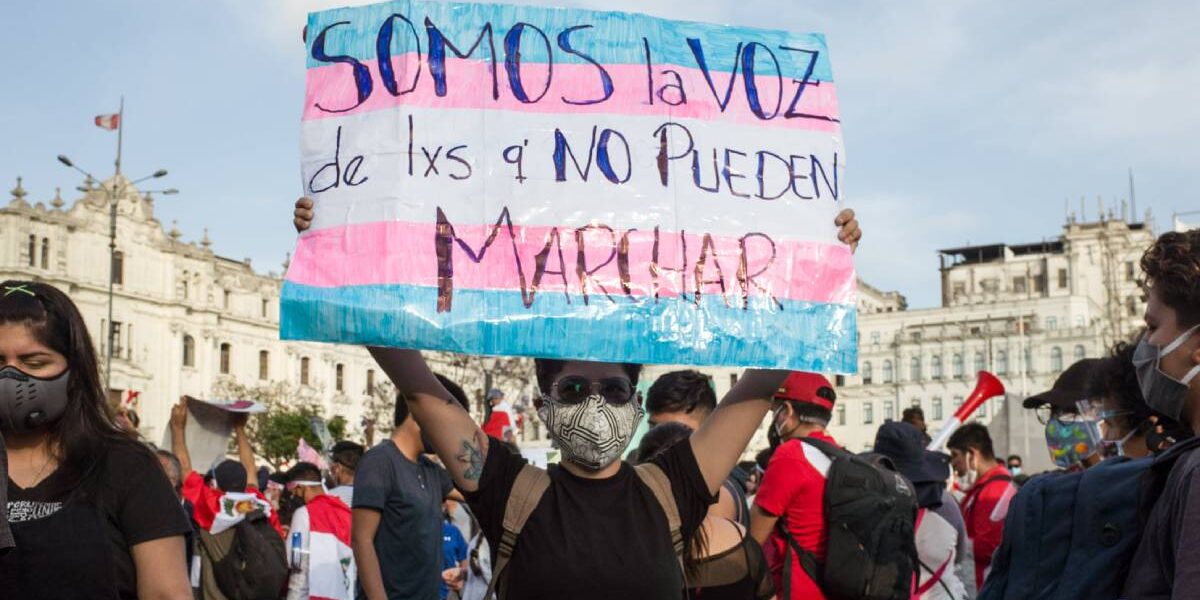
During its term, Castillo's government was a staunch opponent of any progress in this area , consistently remaining silent in the face of attacks from the most anti-rights faction in Congress, who dedicated these nearly two years to creating laws that would harm women and LGBTQ+ people. Among these was the attempt to eliminate therapeutic abortion, the only legal abortion in the country, which has been in effect for over a century. Castillo's party also proposed changing the name of the Ministry of Women and Vulnerable Populations to the Ministry of the Family. This initiative failed because they lack the authority to do so.
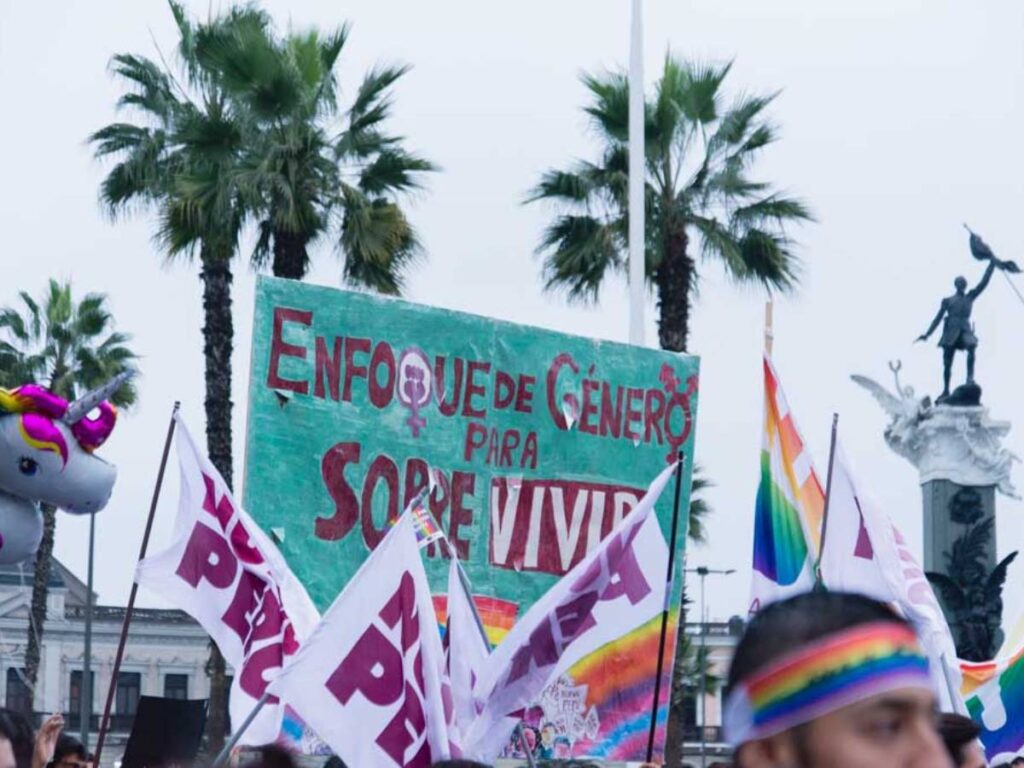
Furthermore, they supported the approval of a law that allows parent associations to intervene in the content of educational materials in order to remove any trace of a gender focus.
There has been very little progress and much stagnation in the country regarding LGBT rights. Presentes has prepared a review of the events of this year.
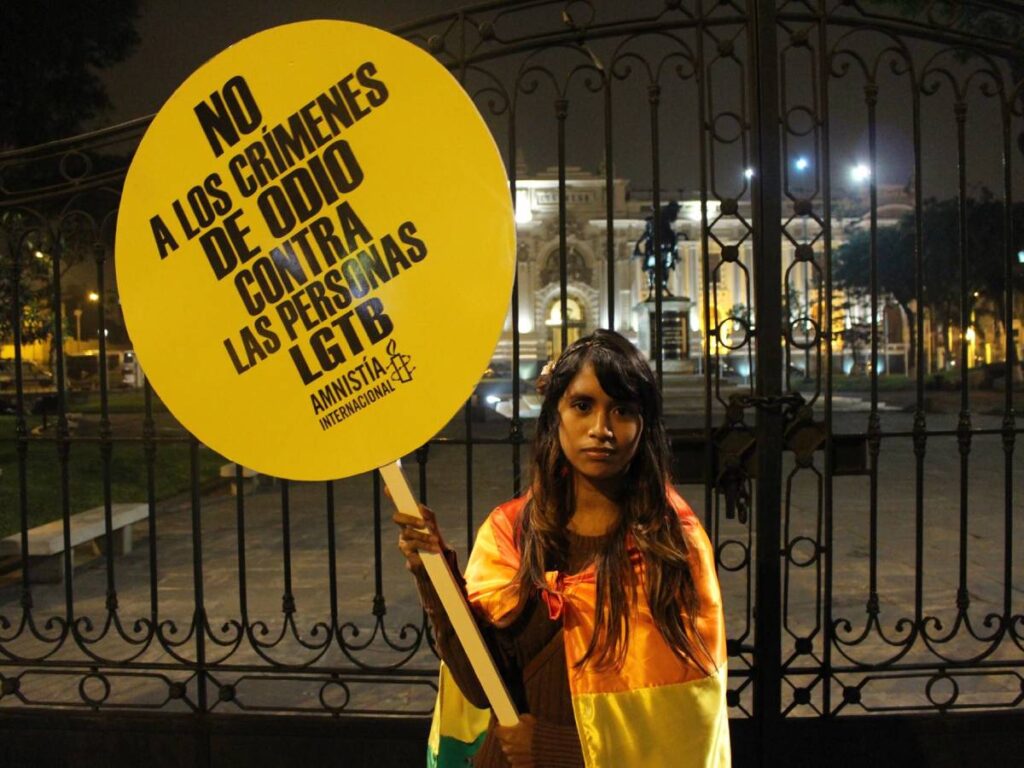
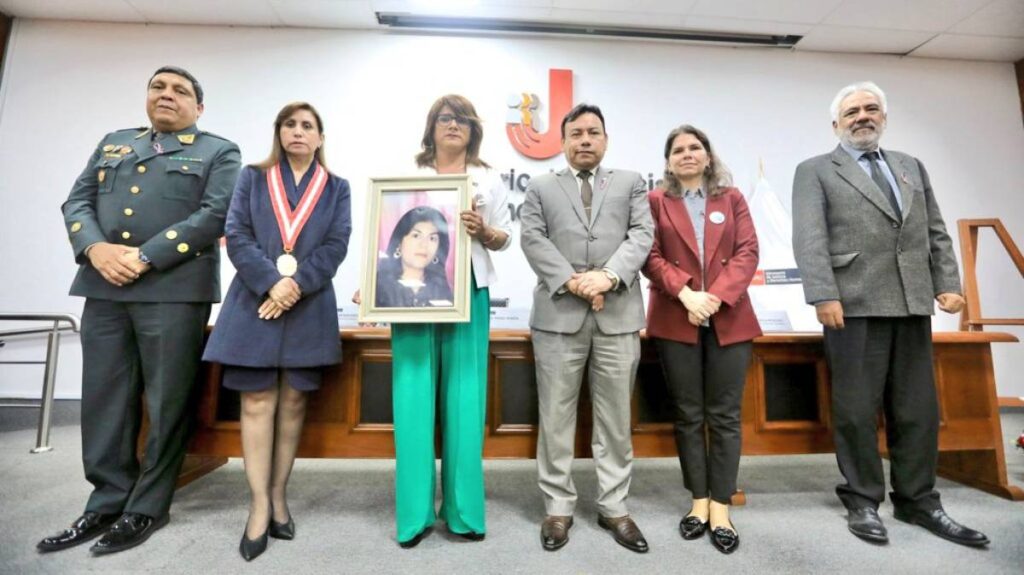
Peruvian state apologizes to trans woman for violating her human rights in 2008
Azul Rojas Marín is a trans woman who suffered torture and abuse at the hands of police officers. Unable to find justice at the national level, she reported these events to the Inter-American Court of Human Rights, which ruled in her favor in February 2020.
On February 25, 2008, Azul was illegally, arbitrarily, and discriminatorily detained by police officers and taken to a police station in Trujillo. There, Azul was subjected to mistreatment and insults related to her sexual orientation by the officers.
In February 2020, the Inter-American Court of Human Rights established the responsibility of the Peruvian State and ordered a series of reparations, including a public acknowledgment. A final, favorable judgment is still pending in the Peruvian courts, which would determine the criminal responsibility of the police officers for the torture and sexual violence perpetrated against Azul based on her sexual orientation.
Organizations present legislative proposal for reparation and recognition of trans and non-binary people
Supermarket fined for discriminating against trans woman
The National Institute for the Defense of Competition and the Protection of Intellectual Property (Indecopi) ordered Tottus Hypermarkets and its Hiperbodega Precio Uno to apologize to a trans woman for unjustifiably preventing her from entering one of its stores.
In doing so, the company violated the Consumer Protection and Defense Code . The incident occurred during the health emergency when the government established gender-based restrictions on purchasing food and other products. The court also imposed a fine of 23,000 soles, ordered the company to send a letter of apology to the complainant, train its staff on discrimination, and display a sign in a visible and accessible location in all its establishments open to the public, permanently prohibiting discrimination.
The Municipality of Lima recognizes outstanding trans people
In the context of International Transgender Day of Visibility, the Metropolitan Municipality of Lima recognized 13 transgender people.
They were recognized for their contribution to the transformation of society from their different fields of action as social work undertaken during the pandemic in favor of their community.
Furthermore, for the promotion and defense of the rights of trans people, the exercise of their profession in the field of health, business, sports, the arts, new struggles, among others.
A movie theater chain had to apologize for warning about "gender ideology" in a film
The Cineplanet movie theater chain sparked considerable controversy by including a warning in its online and in-theater advertising for the film Lightyear. "Attention! We inform you that the film Lightyear contains scenes with gender ideology," the message read. This referred to a brief kiss between two women .
Following the protest, the network issued a statement apologizing.
Other advances
The Regional Government of Callao approved Ordinance No. 004. The resolution declares the defense and promotion of the human rights of the LGBTI community to be of regional interest.
It also mandates the creation of a multi-sectoral LGBTI Working Group. This group must approve an annual Work Plan outlining actions, responsibilities, and deadlines.
On the other hand, the Ministry of Women and Vulnerable Populations approved the “Guidelines for providing services under the National Program for the Prevention and Eradication of Violence against Women and Members of the Family Group – AURORA , to LGBTI individuals affected by violence under Law No. 30364 or by sexual violence.” This was done through Resolution No. 133-2022-MIMP-AURORA-DE.
Congressman Alejandro Cavero of Avanza País also proposed a Civil Union bill for all types of couples.
This is the third time a project of this type has been presented; the first was in 2013, by Congressman Carlos Bruce. The second was in 2016, by Congressmen Carlos Bruce and Alberto de Belaunde.
Discrimination that never ends
A hearing was held at the Inter-American Commission on Human Rights (IACHR) regarding the discrimination case of a gay man. On August 24, Crissthian Olivera testified before the members of the IACHR in a public hearing. He recounted the discrimination he suffered in 2004. He and his partner were in a Peruvian supermarket showing affection when they were expelled from the store. Eighteen years later, he continues to demand justice.
A report on hate crimes in Peru
The Public Ministry's Crime Observatory , the General Directorate of Human Rights of the Ministry of Justice and Human Rights (MINJUSDH) and the LGBTI Rights Observatory of the Cayetano Heredia Peruvian University (UPCH) published the research entitled "Criminological characteristics of the intentional deaths of LGBTI people in Peru 2012-2021" .
The report identified 84 criminal complaints related to the deaths of LGBT people , or those perceived as such. This figure involves 88 victims and 72 identified suspects. The majority of the victims were gay men (55.8%) and transgender women (36.4%), or those perceived as such; primarily adults aged 25 to 54 (72.7%) and of Peruvian nationality (94.3%).
There are no answers regarding the rights of LGBTIQ+ people to the CEDAW Committee
On February 15 and 16, the Peruvian State was examined by the CEDAW Committee on compliance with its duties regarding the human rights of women in their diversity and LGBTIQ+ people.
During the review, the State's efforts focused on listing existing gender equality policies. They did not specify how discrimination and hate speech against LGBTQ+ people are being addressed in education, health, and justice services.
Regarding the Gender Equality Plan and the Human Rights Plan , which mention lesbian and LGBTQ+ people, no information was provided on when they will be updated or how follow-up will be conducted. Of the 52 services included in the National Gender Equality Policy, none directly serve LGBTQ+ people. In practice, they lack an intersectional approach. The State failed to adequately implement, monitor, evaluate, and mainstream the National Gender Equality Policy.
Congress opposes comprehensive sex education
organizations had attempted in numerous ways to interfere with the content of educational materials . They tried to censor education ministers and falsely denounce officials and specialists for including topics on comprehensive sex education. They also filed lawsuits in the courts.
They all failed, until their representatives were elected to Congress. They then managed to pass a law allowing parent-teacher associations (organized anti-rights groups) to veto the content of school textbooks.
Constitutional Court rejects recognition of same-sex marriages abroad
The Constitutional Court dismissed the lawsuits filed by the couples Andree Alonso Martinot Serván and Diego Alonso Urbina Fletcher, along with Susel Paredes and Gracia María Francisca Aljovín de Lozada, who were married abroad. The Court declared the lawsuits inadmissible and denied the same-sex couples the right to form a family and have their union recognized by the State.
With the two rulings issued, they denied the Inter-American Court of Human Rights' authority as the final instance for interpreting the Constitution and referred that task to Congress. Congress will have the final say on the matter. In doing so, they deny the binding nature of the Inter-American Court of Human Rights and isolate Peru on human rights issues reviewed by that body.
Congress decides not to hold OAS Assembly due to gender-neutral bathrooms
In 2021, Peru applied to host the OAS General Assembly the following year, from October 5 to 7. Amid preparations for the important event, the OAS sent Peru an agreement stipulating that it must "guarantee adequate access to sanitary facilities" for participants, "providing, in addition to communal restrooms, individual restrooms and at least one gender-neutral restroom."
The Foreign Relations Committee opposed this measure and voted against holding the Assembly in Peru under that condition. Congress later had to backtrack.
Trans man detained at Indonesian airport ends up dead
Rodrigo Ventocilla, a trans male activist and Harvard student, who was on vacation with his husband and had entered Indonesia to continue his trip, was detained, mistreated and tortured by the country's airport police on August 6 .
Five days after his arrest, he died in the hospital to which the police had taken him after he began to suffer from vomiting.
Rodrigo's family sued the Bali police and the Peruvian Foreign Ministry for acting negligently, which caused the young man's death.
The justice system still does not recognize lesbian motherhood.
The Second Constitutional Court of the Superior Court of Justice of Lima, in the second instance, denied the registration of Jenny Trujillo and Darling Delfín, as mothers in the DNI of their son.
This represents a setback in terms of equality and non-discrimination based on sexual orientation, the best interests of the child, identity, and the recognition of diverse families. By denying the registration of the plaintiffs and human rights defenders, they rejected the discriminatory ruling for failing to uphold—and violating—human rights. They announced that they will file a constitutional appeal and inform the Inter-American Commission on Human Rights (IACHR), as this decision provides further grounds for prioritizing the visibility of petition P-534-22.
Lima elects mayor with hate speech towards LGBTQ+ people
In a very close election, Lima elected Rafael López Aliaga as mayor. He is a right-wing conservative who won the mayoralty of the capital with a strong contingent of anti-rights council members. They will govern for four years.
Four femicides were recorded in Peru during 2022. The first was the murder of doctor Kevin Jordan Lucano Tejada ; a month later, transgender woman Patricia Mazzini Manco . Another victim was Sharon , who was shot to death. In April, hairdresser Javier Pauca Serna was murdered.
It was the year with the fewest gender-related crimes in Peru.
We are present
We are committed to journalism that delves into the territories and conducts thorough investigations, combined with new technologies and narrative formats. We want the protagonists, their stories, and their struggles to be present.
SUPPORT US

FOLLOW US
Related notes


We are present
This and other stories are not usually on the media agenda. Together we can bring them to light.