

Paraguay 2022: Disinformation and anti-rights pressure in the electoral climate
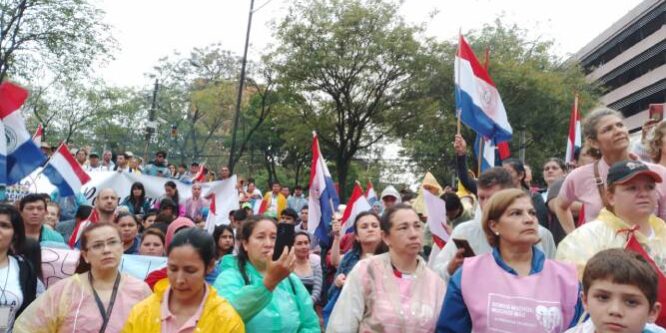
Catholic, evangelical, and self-proclaimed "pro-life" organizations have once again managed to establish arguments against "gender ideology," this time to oppose the National Plan for Educational Transformation (PNTE).


Share

In the year of Paraguay's primary elections, anti-rights leaders succeeded in deepening discrimination against LGBTQ+ people in Paraguay. Their disinformation campaign on social media and in the press focused on inciting rejection of the National Educational Transformation Plan (PNTE) for promoting what they call "gender ideology."
Anti-rights groups have been causing setbacks in Paraguay, primarily by attempting to modify or eliminate public policies that guarantee people's rights. This is documented in the chapter "Discrimination based on sexual orientation, gender identity, and gender expression" of the latest report by the Paraguayan Human Rights Coordinator. The report was prepared by Rosa Posa and Carolina Robledo of Aireana; Erwing Szokol of the Network Against All Forms of Discrimination (RCTFD); Walter Morínigo of Presencia Joven and Kuña Róga; and Florencia Falabella of the Center for Interdisciplinary Rural Studies (CERI).
Online complaints
no significant progress was made in protecting the rights of LGBTQ+ people during the period covered by the report The year was marked by increased demonstrations of hatred, verbal, physical, and symbolic violence against people of diverse sexual orientations and gender identities. Governments continue to deny discrimination based on sexual orientation, gender identity/expression, and bodily diversity. In fact, they systematically avoid mentioning LGBTQ+ rights.
Between November 2021 and October 2022, the Rohendu support service, run by the Aireana organization, registered a total of 209 cases. Seventy-three were related to dealing with discrimination, 60 were LGBTQ+ inquiries, and 23 concerned discrimination and domestic violence. Inquiries related to discrimination and domestic violence increased from 13 to 23 between 2021 and 2022.
The Panambi Association registered 75 cases at its complaints center regarding issues related to discrimination, physical assault, intimidation or threats, and harassment . These acts of violence were perpetrated by police authorities, security forces, and healthcare personnel.
"Values and family"
“The transformation plan has three cross-cutting themes: inclusion, interculturality, and a rights-based approach, which is directly related to gender ideology. Interculturality directly establishes LGBT behavior as culture ,” Pastor Miguel Ortigoza told the local press . The pressure was so intense that they managed to get the Ministry of Education and Culture (MEC) to replace the plan’s three cross-cutting themes— multiculturalism, inclusion, and a rights-based approach—with “a communicative and technological approach,” “values and family,” and “patriotism and culture.”
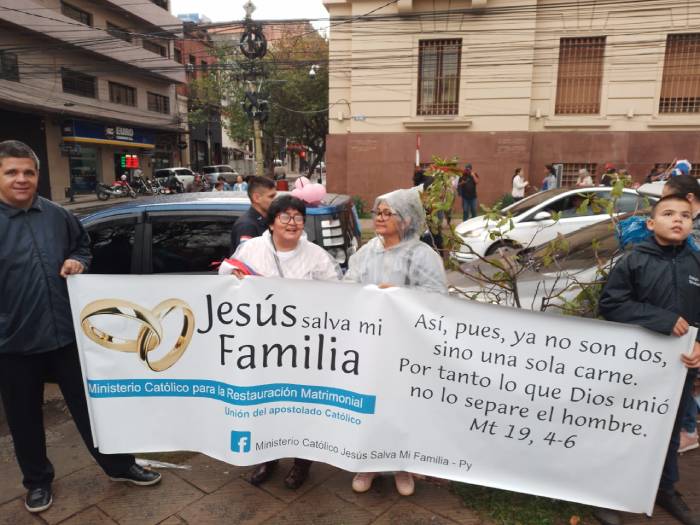
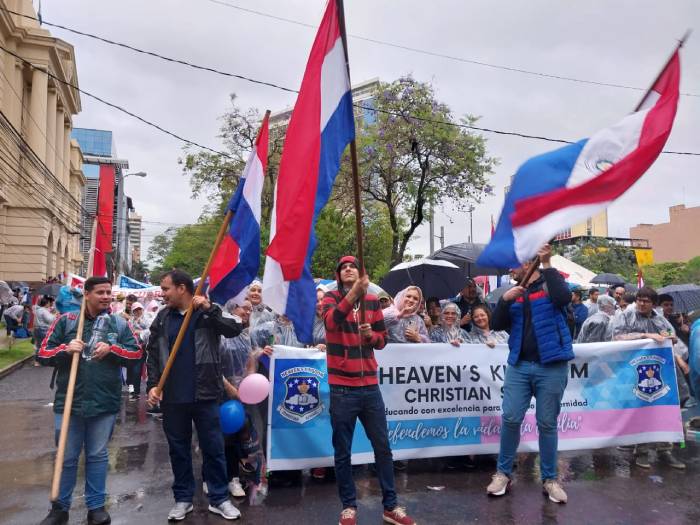
On October 20, self-proclaimed pro-life groups marched in the nation's capital against the National Education Plan (PNTE). The march was organized by the Citizen Network for Children and Adolescents (Recnapy), comprised of 35 parent, Catholic, and Evangelical organizations, and received support from various local authorities, such as the Alto Paraná Departmental Council, which declared a holiday, and the Municipality of Asunción, which invited public employees to participate in the demonstration.
Denying identities
On November 21, 2022, members of Congress from the ANR (Colorado Party), the PLRA (Liberal Party), and Patria Querida called a public hearing to debate the National Educational Transformation Plan . Fifty-nine “pro-life” activists presented arguments to the congress members, opposing the Plan and the European Union funding agreement. Their arguments were based on the denial of LGBTQ+ identities, biological determinism, freedom of expression, the alleged loss of parental rights, and patriotism . The truth is that the National Educational Transformation Plan does not include a gender perspective or comprehensive sexuality education, as the anti-rights spokespeople tried to claim.
The €38 million (approximately $39.3 million) in "non-reimbursable and unconditional funds" stipulated in the cooperation agreement with the European Union are earmarked for school supplies, food, textbooks, and infrastructure. However, for the "pro-life" movement, the EU seeks to impose a foreign model and "a global governance framework that will strip Paraguay of its sovereignty." Disinformation like this led the Chamber of Deputies to approve the bill repealing Paraguay's agreement with the EU for the Educational Transformation support program. On December 13, the Senate failed to reach a quorum to consider the bill.
Forbidden words
The Ministry of Foreign Affairs (MRE) issued a circular to all departments within the Ministry containing a glossary of recommended terms for use in negotiations and debates on gender issues. According to the document, these terms are not universally accepted and could conflict with legal regulations in our country.
The prohibited terms are: “Women and girls in all their diversity”, “diversity”, “intersectionality”, “sexual and reproductive rights” and “full autonomy”, and they are accompanied by “recommendations”.
According to the Ministry of Foreign Affairs circular, “the government interprets the concept of 'gender' to refer to the male and female sexes, and it has been incorporated into national documents with that scope.” Its objective was to “instruct” diplomats not to use “ambiguous” or “undefined” terminology.
Another year without recognizing LGBTIQ+ identities
Paraguay missed the opportunity to generate data on the LGBTQ+ population in the 2022 National Census. Questions about sexual orientation and gender expression/identity were not included. According to researchers from the Codehupy report, if the Paraguayan state does not decide to generate data on LGBTQ+ people, discrimination and violence against them will continue to increase, hindering the design and implementation of public policies capable of reversing this situation and guaranteeing the rights of this segment of the population.
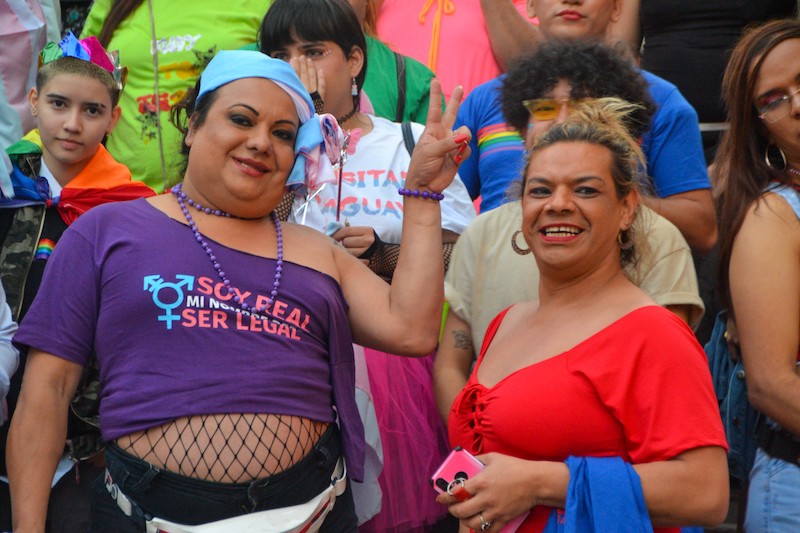
December 20 marked six years since Yren Rotela and Mariana Sepúlveda began their legal name changes. Both applications have been stalled since 2016. In September, they announced they had filed a complaint against the State with the United Nations Human Rights Committee for failing to recognize the names with which they identify. This demonstrates the systematic discrimination and unequal treatment of transgender people. The Paraguayan State's failure to recognize their gender identity fosters violence, precarious living conditions, and the invisibility of their existence.
Impunity for violence against trans people
Gabriela Cabrera, an actress and member of Casa Trans Casa Diversa, was found dead on the banks of a stream in the city of San Lorenzo on November 11, 2021, along with her partner, who was found sleeping beside her. The prosecutor in charge, Gerardo Mosqueira, ordered an autopsy and concluded that the cause of death was asphyxiation by strangulation. But this was not the first time Gabi had been abused. Evidence of this is a video uploaded to social media, showing several people violently beating her, an incident investigated by prosecutor Viviana Riveros.
In March of that same year, Gabi was kidnapped, assaulted, bound, and thrown into the San Lorenzo stream . She crawled to a house near the stream and was rescued by local residents. Gabi is one of sixty trans women who have been murdered. The Paraguayan state has an outstanding debt regarding the investigation, justice, and reparations for their deaths. To date, there has been only one conviction for transfemicide .
The punishment for being a lesbian
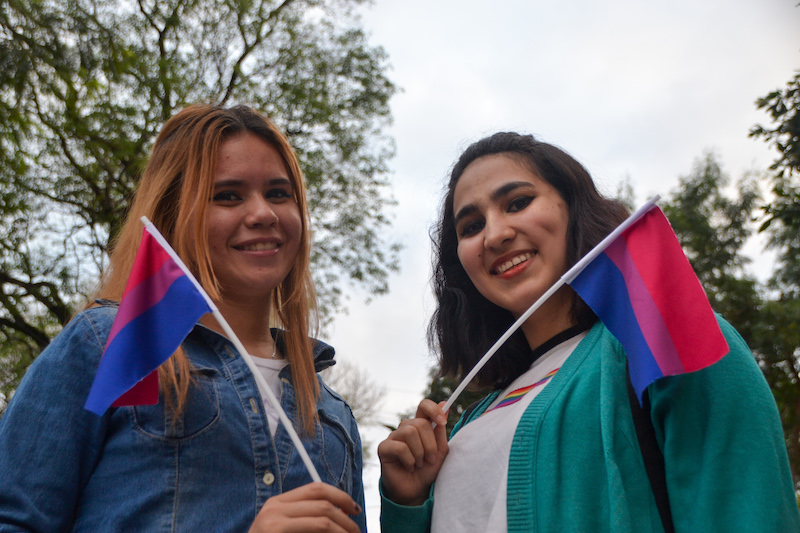
In January of this year, a lesbian woman from the Paraguayan Volunteer Fire Department (CBVP) was drugged and sexually assaulted by her colleagues at a construction materials store. They then dressed her and took her home. The following day, they returned to her house to deliver a contraceptive pill. The prosecution has charged the assailants, Rodney Piris and César Federico Molinas, with sexual assault.
Discrimination in the home
The Codehupy report brings up the misnamed “conversion therapies” again. In February, a 13-year-old girl contacted Rohendu. According to her account, when her family found out she was attracted to a classmate, they transferred her to a different school, and she fell into a depression. Several times they locked her in her room and kept her incommunicado.
The girl began experiencing panic attacks and insomnia, which, among other things, caused her to perform poorly in school. In April, during the Easter holiday, she was taken to an evangelical boarding school in the city of Concepción, where there were other girls her age. Her mother told her it was to "cure her of her lesbianism." At the girl's request, the social services contacted her father to inform him of the situation and, later, a trusted relative. Both individuals expressed their willingness to support the girl.
Her grandmother, with whom she currently lives, began accompanying her to therapy, but only with the aim of changing her sexual orientation. The psychologist reinforced several prejudices, including the idea that she was confused because she was still young. Regarding this, Aireana explains that the discourse surrounding homosexuality is still deeply rooted in families, and this is just one example of the many cases of family discrimination.
School discrimination
In March of this year, the administration of Nuestra Señora del Huerto School attempted to expel two teenage girls for being lesbians. The young women were constantly harassed and persecuted by school authorities. They were forbidden from being together, which is why the principal demanded that their daughters be withdrawn from the school, threatening that if they refused, they would be expelled and barred from attending other schools.
The principal's lesbophobic decision sparked a student protest in front of the school, with signs advocating for non-discriminatory treatment and chants. “According to God, we are all his children, he doesn't discriminate, but the school does,” “Huerto, don't be silent,” and “Respecting other people's identities is free and saves lives.”
“Don't say tattoo with tattoo”
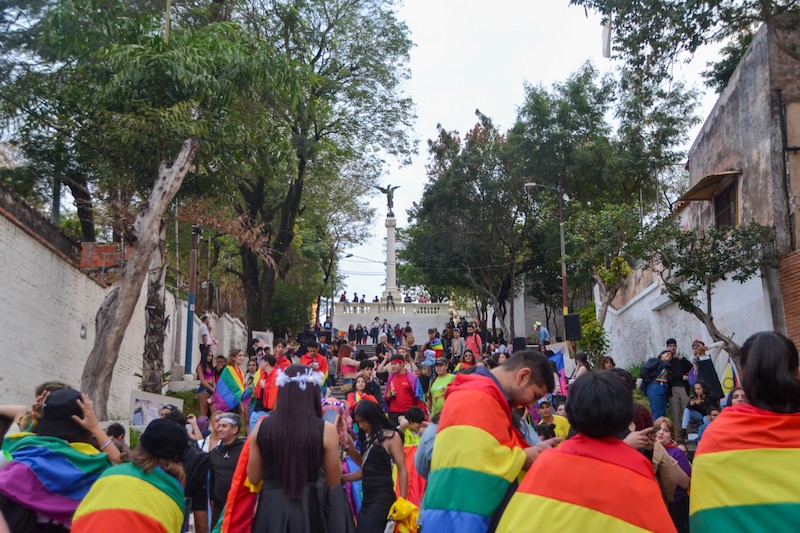
Hate speech was observed in relation to the activities organized around September 30, recognized by social organizations as the National Day for the Rights of LGBTQ+ People or as Paraguayan Pride Day. In this context, marches in support of the rights of the LGBTQ+ community were organized in Pedro Juan Caballero (Amambay), Encarnación (Itapúa)16 and Asunción, with a large turnout.
In these cities, acts of verbal aggression and intimidation by anti-rights groups were reported. The forces responsible for guaranteeing the constitutional right to protest failed to protect the demonstrators. Furthermore, a municipal official in Encarnación told the protesters, “Don’t say ‘tatú con tatú’” ( tatú means vulva in Guaraní), during the city’s 3rd LGBTQ+ Pride March.
However, according to the researchers, for the first time in five years, municipal authorities responded in writing, giving their approval for the march to take place in Encarnación. “This is a small step forward, considering that in 2019 the mayor of that city prohibited the event,” they wrote.
Meanwhile, in Encarnación (capital of Itapúa), on October 1st, at the 108 Memories Parade, a man identified as Horacio Alarcón arrived shouting religious hymns and disrupting the event. He then began touching people present, under the pretext of “converting them to his God.”
This incident was considered violent, so the march's organizing team contacted the police to request their intervention. Minutes later, police officers arrived at the Plaza de Armas and Alarcón was removed from the scene for assaulting some of the people present, escorted by a group of six officers.
Two steps forward
The Ministry of Public Defense trained its staff in the application of the Care Protocol for LGBTIQ+ people, approved by Resolution No. 1287/202018. It is the only regulation during Lilian Soto's administration.
In the private sector, a consortium of companies invited LGBTQ+ organizations to workshops aimed at addressing discrimination. The goal is to improve workplace treatment within their companies and begin creating inclusive workspaces for sexual diversity. Starting this year, several companies have begun to equalize rights regarding recognition of partners, maternity and paternity leave, and health insurance.
The authors of the TGBI chapter of Codehupy conclude that legislation recognizing equal rights, such as an anti-discrimination law, is urgently needed. This data reveals renewed attempts to silence the visibility achieved in the streets, in organizations, and in cities throughout the country. It is up to the next government to make the necessary progress to guarantee the rights of people of diverse sexual orientations and gender identities.
We are present
We are committed to journalism that delves into the territories and conducts thorough investigations, combined with new technologies and narrative formats. We want the protagonists, their stories, and their struggles to be present.
SUPPORT US

FOLLOW US
Related notes

We are present
This and other stories are not usually on the media agenda. Together we can bring them to light.