

They fled Venezuela for the US because of violence against LGBT+ people and were stranded in Central America
LGBTIQ Venezuelans are stranded in different Central American countries, exposed to the same dangers they had to endure in the Darien jungle.


Share

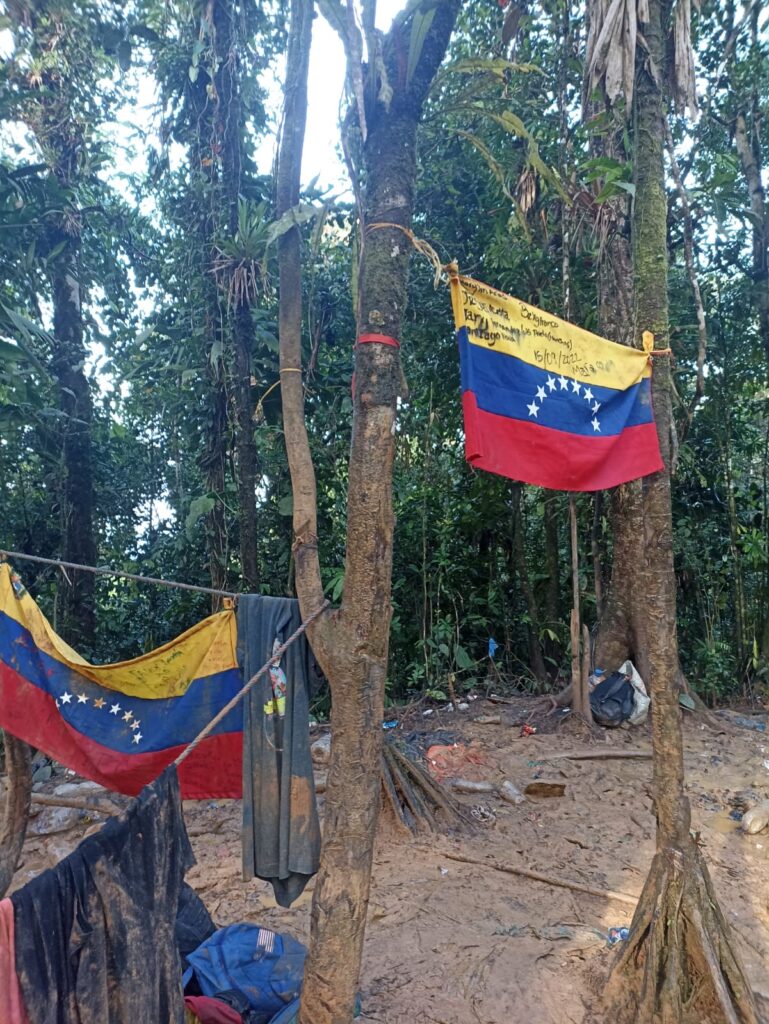
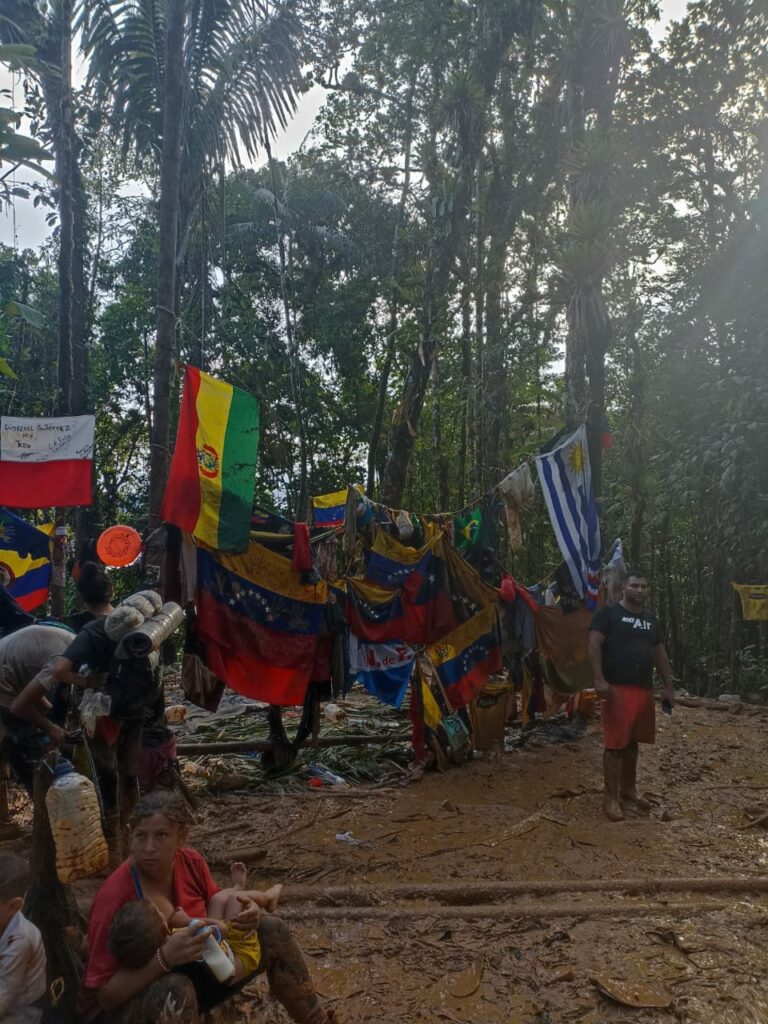
It was his fourth day in the Darien jungle . Ismael was resting in a camp with other Venezuelan migrants after walking through rivers and mud when he learned of the Department of Homeland Security's announcement barring them from entering the United States, the infamous Title 42. Some told others that they had contacted their families and been told that there was no longer any possibility of seeking asylum in the U.S.
“I was devastated. I felt that I had worked so hard to raise the money, and all the effort of crossing the jungle, all the hardships I endured, the hunger I went through, had been in vain,” says Ismael.
Stranded in the Costa Rican capital, Ismael sees entire Venezuelan families begging for food and sleeping on the streets with their children every day. "It's very sad." His mood is low: he feels frustrated, worried, and anxious. He wants to leave and continue on to Mexico, but he has no money.
“Currently, we have 88 Venezuelan LGBTQ+ migrants, refugees, or asylum seekers in our database. This represents the second largest nationality group within IRCA CASABIERTA , second only to the Nicaraguan population. Most of the people who entered since October are in the asylum seeker category,” explains Yahir Araya, communications director of the Institute on LGBTIQ+ Migration and Refugees for Central America (IRCA CASABIERTA).
It also warns that many people in transit have decided to stay in Costa Rica, but that the country has no shelters or government plans to protect the LGBTIQ population.
Reasons to flee
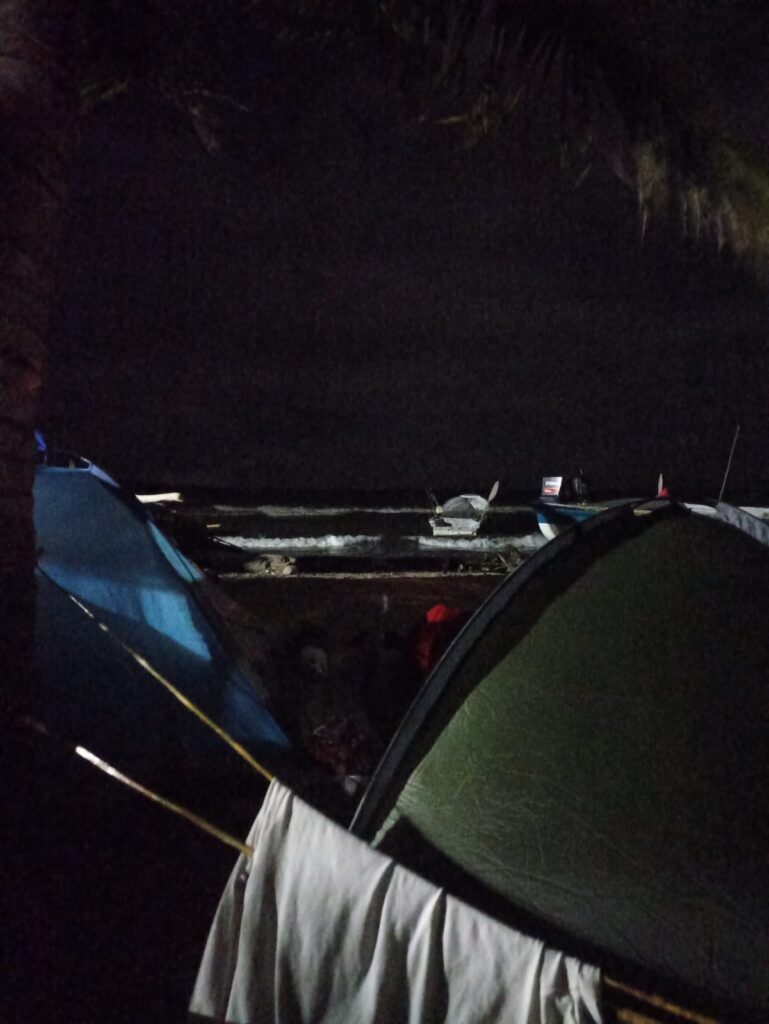
During October, and even now, many LGBTIQ Venezuelans are stranded in different Central American countries, exposed to the same dangers they had to endure in the Darien jungle: sexual assault, survival sex, hunger and fear, as explained by both UNHCR (the UN Refugee Agency) and organizations and activists from the United States, Honduras and Guatemala.
For Ismael, returning was the last option. He was left alone; his father and brother had gone back to Venezuela, but he, first and foremost, wanted to move forward. He needed to move forward. He tried to forget his anguish and stick to the part of the plan he had been working on for the past three years. But he couldn't.
When he learned it was dangerous for him as a gay man to travel alone through Honduras, he decided to leave Costa Rica and return to Panama, hoping to find a cheaper flight back to Venezuela. He waited for help at a shelter in Panama and managed to get a flight for $200. “The shelter is overcrowded, the conditions are truly inhumane,” Ismael says before leaving. Now he has arrived in Maracaibo and is trying to raise money to return to his city on the border with Colombia.
Ismael is back in his country, from which he left seeking asylum.
Venezuelans in the streets of Honduras and Guatemala
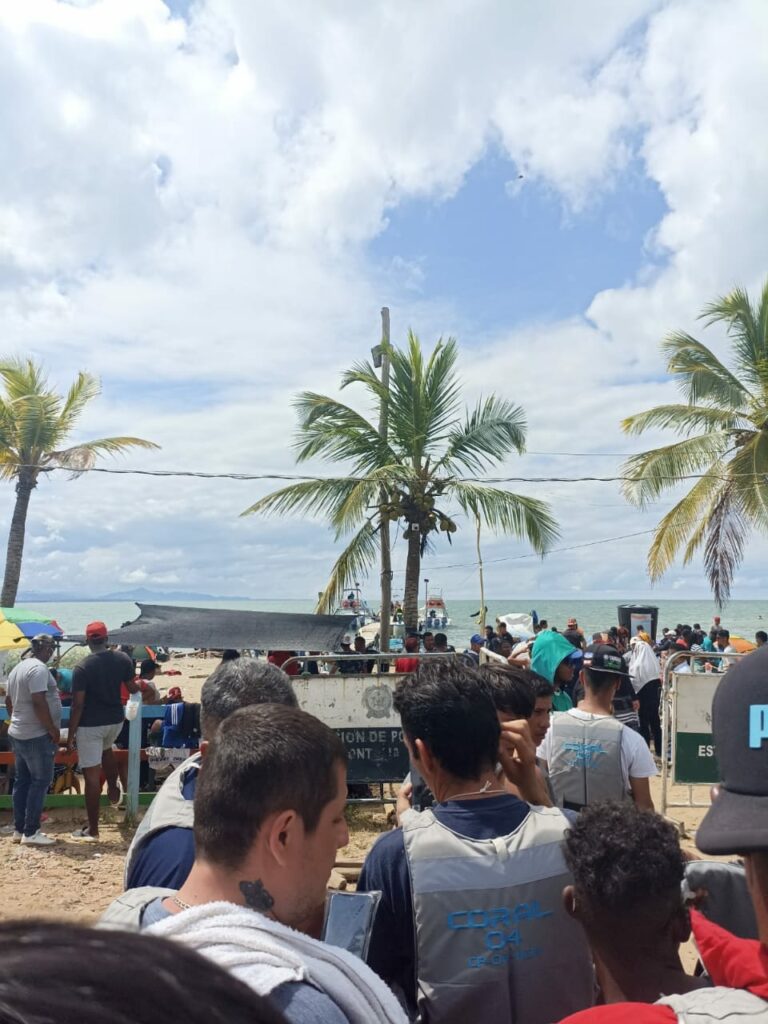
Osman Lara, leader and advocate for LGBTIQ+ rights with the LGBTIQ+ committee of the Sula Valley, Honduras, says there are more Venezuelans on the streets of Honduras, people who before October 12 were only in transit for a day at most. “There are more stranded people, mostly young people, and some are engaging in sex work, others are begging in the streets with signs,” Lara explains. In addition, extortion by National Police officers has increased.
Judith Ramírez coordinates the San José Migrant Shelter in Esquipulas, Guatemala, where humanitarian assistance is provided to all migrants in transit. Since October 12, she has noticed a much more desperate situation than usual. “Now we are receiving migrants who are exhausted, tired, without financial resources, sick, with immediate humanitarian needs,” says Ramírez.
The migration landscape in Guatemala changed dramatically this year: at the Casa del Migrante (Migrant Shelter), they went from serving 80 people to up to 500 per day, 90% of whom are from Venezuela. The organization has provided them with shelter, food, phone calls, clothing, and hygiene kits. But they can only house them for three days; it's a transit space, and they must make room for those who continue to arrive.
“They have really been left with nothing, unable to go to the United States or return to their country Venezuela,” Ramírez warns.
No treatment for HIV
Pedro* is stranded at the Costa Rica-Panama border. He has seven pills left of his antiretroviral treatment, which will last him seven days. After that, HIV will continue to damage his immune system and put him at greater risk.
She struggles to survive on the meager money her husband sends her from New York. When she leaves the hotel she can barely afford, she sees other migrants sleeping on the street, wondering what to do after the U.S. government, under Joe Biden, expanded Title 42 for Venezuelans. This means that since October 12, the only Venezuelans who can apply for asylum must have someone who can financially sponsor them for two years. And that is very difficult for most of them, because they are first-generation migrants to the north. According to the UN, more than 5,300 Venezuelans have been deported from the United States because of this policy.
Pedro has no sponsor. So in October, Manuel, his partner, dedicated himself to working very hard in New York, trying to clean as many houses as possible so he could send money back to Costa Rica. In September, they had both decided that Manuel would migrate to the United States first. They hadn't managed to raise enough money to travel together, so one would go first, work, and the other would leave in October. That's what they did, but that U.S. policy separated them and left Pedro with no way out.
“I’m an HIV patient, and it’s almost impossible to buy medication there. In Chile, thank God, I was able to get the medicine, but it’s very expensive,” says Manuel from New York. He first migrated to Chile three years earlier to save money so he could eventually travel to New York permanently.
Why do LGBTQ+ people migrate?
“In Venezuela, I was even beaten up once because of my sexual orientation. They punched me in the eye, leaving me literally seeing stars. I had to run away because they might have massacred me there. I was about 21 years old. I was always kind of hiding, walking carefully, trying to look as manly as possible; I had to be someone I wasn't. Because either I attracted attention or they would start yelling things at me. I got robbed because we're always easy prey for thieves,” Manuel recounts.
In September, while in Mexico walking toward the United States, Manuel began searching for an LGBTQ+ organization that could help him. He found América Diversa, an organization that supports LGBTQ+ immigrants of Latin American origin.
Yonatan Matheus, one of the founders of América Diversa, says that LGBTIQ people who migrate do so for three basic reasons: “First, because they cannot find protection for their rights in their country of origin or have been victims of violence; second, because many times their countries do not have democratic systems that can guarantee advocacy and mobilization actions so that their rights are recognized; and lastly, LGBTIQ people are going through health problems.”
“For example, those living with HIV, or those who are trans or non-binary people who don’t receive protection or support for their HIV antiretroviral therapy, or trans people undergoing hormone replacement therapy and genital growth treatment. Those are the three groups we’re focusing on, the things we’re doing our work on,” Yonatan explains.
But their work begins when the immigrants arrive in New York. Along the way, UNHCR, the UN Refugee Agency, works to help immigrants overcome the thousands of difficulties they face. But neither UNHCR nor the US government has data on how many immigrants are part of the LGBTQ+ community.
“One of UNHCR’s key objectives is to identify people who have been victims of gender-based violence or who have been forced into survival sex. Teams in the field are identifying people with specific needs within these groups. We were unable to quantify it, but the prevalence of rape and other forms of gender-based violence in the Darien Gap region is well-documented,” says Sibylla Brodzinsky, UNHCR spokesperson.
According to UNHCR , there are 7.1 million Venezuelan refugees or people with other protection needs in the world, and the vast majority are in this region of the Americas.
Since October 12, those who were in transit are no longer there; they have no money and nowhere to go. “We are seeing people spending the night on the streets, near the shelters, also with children,” Brodzinsky points out.
Policies change, uncertainty remains
On Tuesday, November 15, a month after Title 42 was extended to Venezuelans, U.S. Federal Judge Emmet Sullivan ordered an end to the policy, calling it “arbitrary and capricious.” Title 42 had been created by the Trump administration as a public health measure “to prevent the spread of Covid-19” through the entry of immigrants into the United States, and thus curb their arrival.
Now, with the judge's decision, the Joe Biden administration has until December 21 to prepare for the end of the policy. But uncertainty prevails among immigrants. Fifteen states with Republican governors have already asked the Federal Court to uphold Title 42.
By the time they learned of the judge's decision, Pedro had already returned to Venezuela. They celebrated their first wedding anniversary long-distance, facing a future filled with uncertainty.
Manuel, from a hostel in New York, is debating whether to return home, whether to abandon their project, the one they had been planning since they met. He says he misses his husband terribly, shows the tattoo of his name on his arm, and covers his face.
*Their name has been changed for protection reasons.
—
We are present
We are committed to journalism that delves into the territories and conducts thorough investigations, combined with new technologies and narrative formats. We want the protagonists, their stories, and their struggles to be present.
SUPPORT US

FOLLOW US
Related notes

We are present
This and other stories are not usually on the media agenda. Together we can bring them to light.