

Mariano Tenconi Blanco: “My focus is always on fiction”
The director of Las cautivas and La vida extraordinaria spoke with Presentes about the vast literature that inspired his works.



Share

BUENOS AIRES, Argentina. However varied the worlds Mariano Tenconi Blanco creates, one element is repeated time and again: his love for literature. He will state this clearly and unequivocally in his interview with Agencia Presentes: he writes to read and reads to write.
In November, Tenconi Blanco received two ACE Awards, one for directing and one for writing Las cautivas . The play, acclaimed for two seasons, draws inspiration from sources as varied as Echeverría, Shakespeare, and Saer, while La Vida Extraordinaria pays homage to Argentine literature. However, despite finding its origins in works and authors we know by heart and have read time and again, the result of this blend is always unique, original, and, above all, exquisite.
Thus, as in any good piece of literature, Tenconi Blanco relies on words, delivered through a monologue to the audience, to take us on a journey. In * Las Cautivas* (The Captives) , the Frenchwoman Celine and the indigenous woman Rosalila ride across the Pampas while the desert stretches out before them like a map of adventures marked by eroticism and discovery. In *La Vida Extraordinaria* (The Extraordinary Life ), two friends travel through different stages of life and provinces of the country, while questioning the meaning behind it all. The playwright constructs this cartography through poetry; it is the text that reveals the scene to us. And suddenly, all images become unnecessary as the word soars above the room, powerful and evocative.
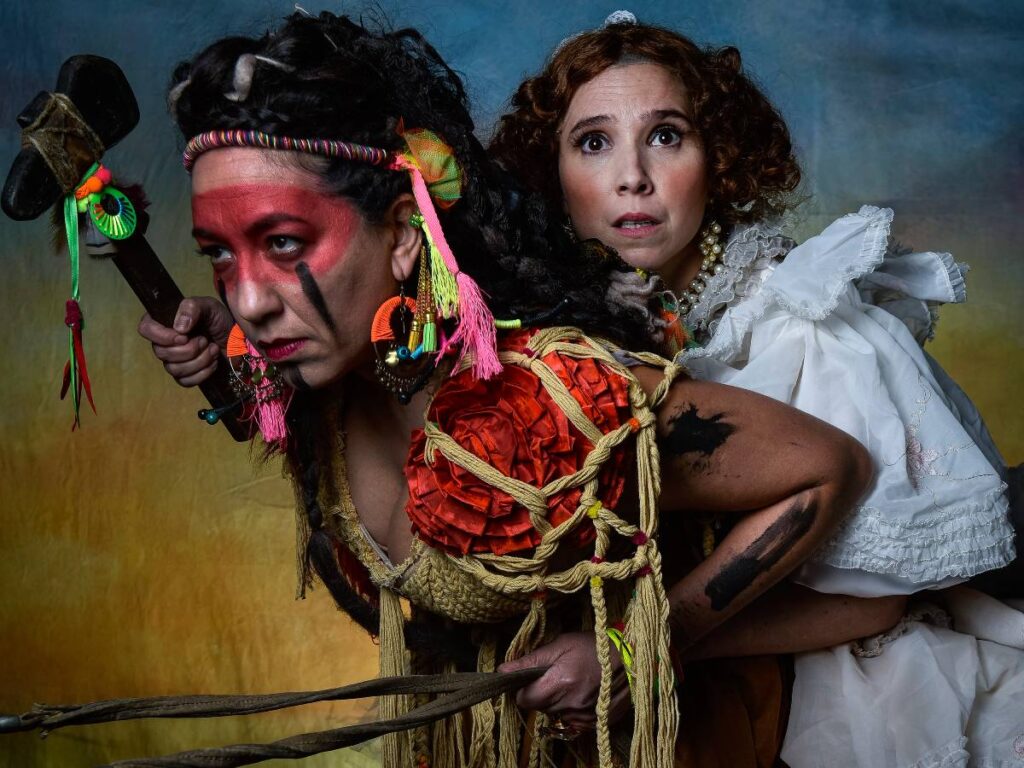
Photo: Carlos Furman
–How did the idea for Las Cautivas ?
– The Captives is part of “The European Saga,” a series of plays that my company, Teatro Futuro, will perform as a residency in various venues of the Buenos Aires Theater Complex. The saga aims to revisit, through literature, the relationship between Argentina and Europe, looking back to the 19th century. In The Captives , the first of the four plays, a raiding party storms a wedding in the middle of the pampas and kidnaps the bride, a young French woman named Celine. Once among the tribe, in the midst of the feast, Celine is protected by an unexpected heroine: an Indigenous woman named Rosalila. The two women escape together across the extravagant landscape of Argentina. The first reference, obviously, is The Captive . To expand on the references, or the “debts,” The Captives owes much to the way Copi rewrites Martín Fierro in his Cachafaz. At the same time, the protagonists' names pay homage to those in Shakespeare's As You Like It. Chateaubriand's "Atala" is also revisited in our adventure, which owes even more to Saer's " El Entenado " Libertad Demitrópulos's " Río de las Congojas Eisejuaz ." I write to read and I read to write, and I'm constantly working with literary references; my imagination revolves around my reading.
– The Captives has a very strong erotic and sexual component. Did you intend it that way from the beginning, or did it emerge during the writing process?
Since the play narrates a love affair, I thought it would be interesting to include this erotic element. I considered its importance in relation to the body and the land, which emerges at the intersection of the rational Western perspective offered by the character of Celine and the metaphysical perspective of the character of Rosalila. Furthermore, 19th-century Argentine literature was always very puritanical, and I found it interesting to subvert those conventions. The play draws on literary and theatrical traditions from their origins, from Echeverría to Greek tragedy. Thus, I found it compelling to imagine a love with the power of myth.
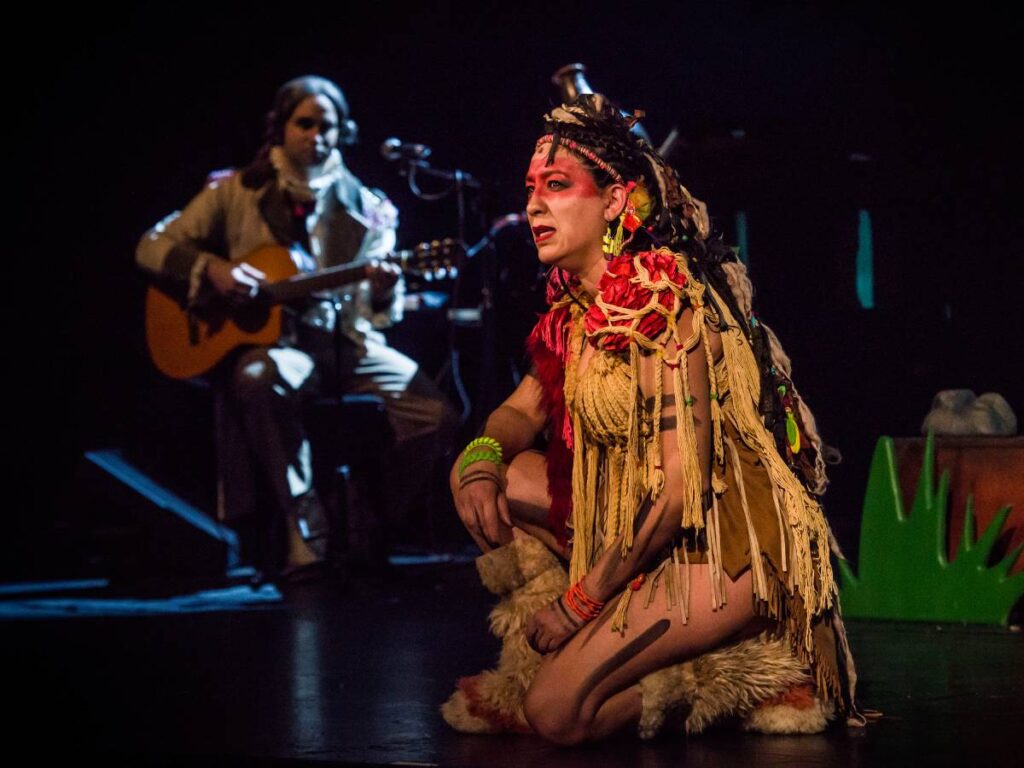
–Argentine literature was not only very puritanical, but also very heterosexual. Did you seek to disrupt that by telling a love story between two women?
I didn't think of it as, "I'm going to write a homosexual story or a heterosexual story." I thought, I'm going to write a love story, and I had this idea of the woman who is taken captive and the Native American woman from the tribe, and they escape together. Basically, that was the driving force, to write a love story, in this case between two women. But I don't know. It definitely wouldn't have been the same if it had been between a woman and a man, or between two men, I don't know. It was just where my imagination led me.
–Beyond the fact that I didn't plan it from the writing stage, what effect do you think this exploration of homosexual eroticism might have on the viewer? Did you receive any feedback on it?
My focus is always on fiction. Of course, one is influenced by political issues, and I try to ensure that my works reflect my political views. We are all influenced by a multitude of issues. It's true that, in my particular case, I try not to write with the intention of communicating or advocating something, like the idea of conveying a message. I don't want to convey any message; the work itself is the message. That's the perspective from which I work. The feedback I received was wonderful in every way, from all kinds of audiences, but of course, it was a very well-received piece within the LGBT community. I received a lot of praise and a great deal of affection. That made me very happy, firstly, because it's great to be able to engage with all kinds of audiences. And secondly, it's wonderful, given that the play, among other things, tells the story of the relationship between two girls, to suddenly see so many girls coming with their friends or girlfriends who were really into it. They would even greet me afterward, hug me, or tell me how special they found the play. It was amazing and made me very happy.
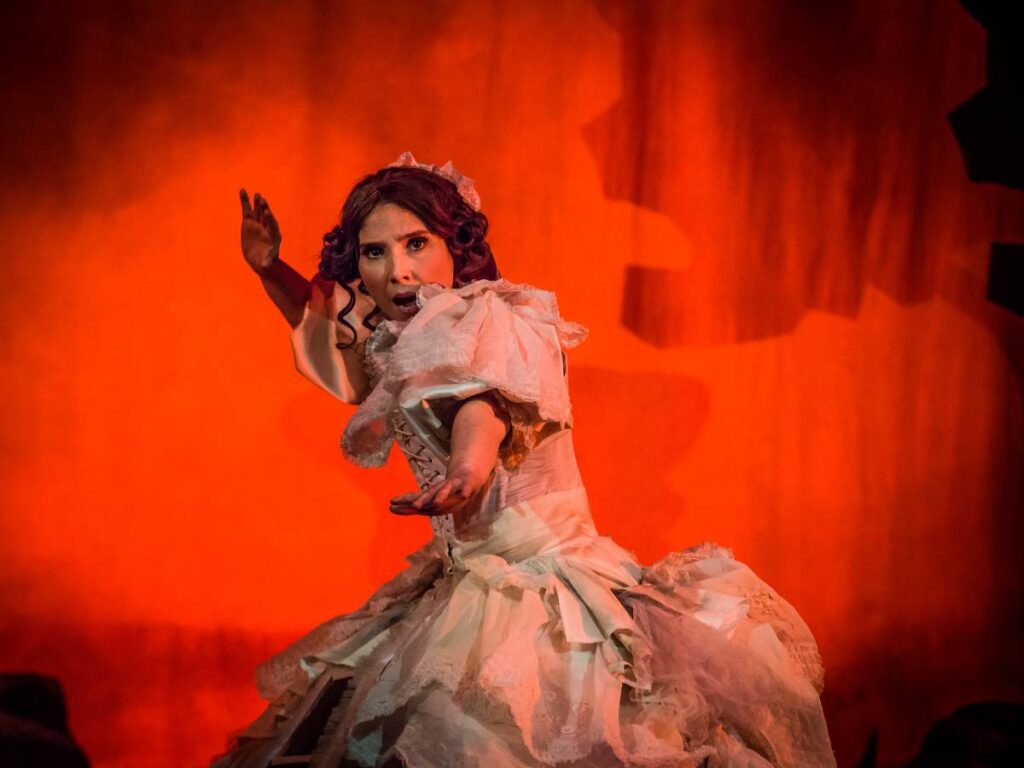
–What was the starting point in The Extraordinary Life ?
-In the case of The Extraordinary Life , the origin was to write a work using many different writing resources (letters, personal diaries, poems, monologues, etc.). There arose the idea that the characters could be two friends, two poets, two readers, and the idea of paying homage to Argentine literature.
–The play is a kind of emotional rollercoaster, with very funny and beautiful moments, and others that are quite sad and melancholic. How do you work with such different intensities?
-Often, we believe that, because of our ingrained habits, stories must have a beginning, middle, and end. Then we realize that nothing in life works that way. That life has extraordinary moments and horrific moments right next to each other. And that relationships begin, end, restart, end, restart, continue, and end again. Everything is much more multifaceted and much more complex. So it seemed to me that there was something about that structure where a very comical and absurd situation could be juxtaposed with a tremendously sad one, fulfilling the objective of showing the life, or a good part of the life, of these two friends with greater depth. There was something about that structure that was more powerful and potent because it resonated more deeply, or produced greater depth in terms of the emotions the work conveys.
–Theater offers the possibility of creating worlds through sets and the physical construction of scenes. However, you chose to do so through monologues, where we see almost nothing of what is being narrated. Why?
-I worked with a technique we call a monologue to the audience. This technique allows us to bring to the stage things that would otherwise be very difficult to narrate: a horseback ride across the Argentine pampas, a fight with a tiger, arrows, shotgun blasts, rivers, a monkey, etc. I like to think that we can expand the boundaries of theater, of what theater can tell, and for that I draw on resources from other disciplines, especially literature.
In 2023, The Extraordinary Life returns to the stage. Performances will be held from February 4th, Saturdays at 10 pm and Sundays at 9 pm at the El Picadero Theatre.
We are present
We are committed to journalism that delves into the territories and conducts thorough investigations, combined with new technologies and narrative formats. We want the protagonists, their stories, and their struggles to be present.
SUPPORT US

FOLLOW US
Related notes

We are present
This and other stories are not usually on the media agenda. Together we can bring them to light.