

Lesbian mothers in the Mexican state denounce that they want to separate them from their children
A newborn daughter and a six-year-old boy were illegally separated from their mother because she is a lesbian. At least ten cases have been reported in different states across the country.


Share

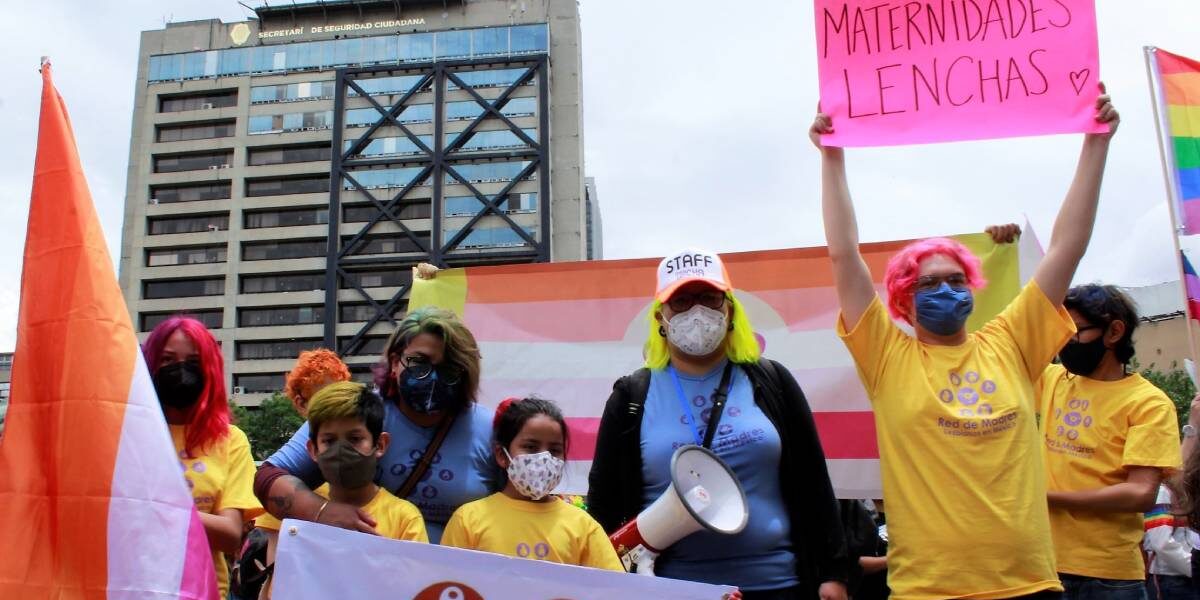
MEXICO CITY, Mexico. Julissa Chuc Hass, a 30-year-old lesbian mother, had her newborn daughter and six-year-old son taken from her. Since October 26, her children have been in the custody of the Yucatán Attorney General's Office for the Protection of Children and Adolescents (Prodennay) after a social worker criminalized Julissa for being a lesbian, having a male gender expression, and being poor. The Network of Lesbian Mothers in Mexico states that there are more cases of institutional lesbophobia in hospitals and civil registry offices across the country.
Following Julissa's case, the Lesbian Mothers Network is compiling information on similar cases. In an interview with Presentes , Miztli Leal states that there are currently at least ten cases in different states across the country. Lesbian mothers, both pregnant and non-pregnant, and their children are being denied their right to family, recognition, and identity.
“Julissa’s case is very particular. But we’ve detected similar cases on the Network where there is institutional lesbophobia in hospitals, both public and private, and in civil registries towards lesbian mothers, both pregnant and non-pregnant. This happens from Tapachula to Tijuana . Lesbian mothers have to pay for legal protection, lawyers, travel, and come to Mexico City to obtain a procedure that a heterosexual couple would never be denied ,” explains Miztli Leal.
Julissa's lawyer, Dariana Quintal, told Presentes that in Yucatán, Prodennay, which belongs to the state's DIF (Integral Family Development) agency, is a decentralized body coordinated by the National System of Public and Private Social Assistance . This institution has been violating the rights of minors from indigenous families in vulnerable situations for at least ten years.
“They separate children from their families unjustifiably, take them to shelters, and arbitrarily and opportunistically terminate parental rights, especially for Indigenous people and those from marginalized areas, using these children for adoptions. This is how the state DIF (National System for Integral Family Development) becomes involved in child trafficking. Through my work, I rescued 100 children in this situation,” Quintal denounces.
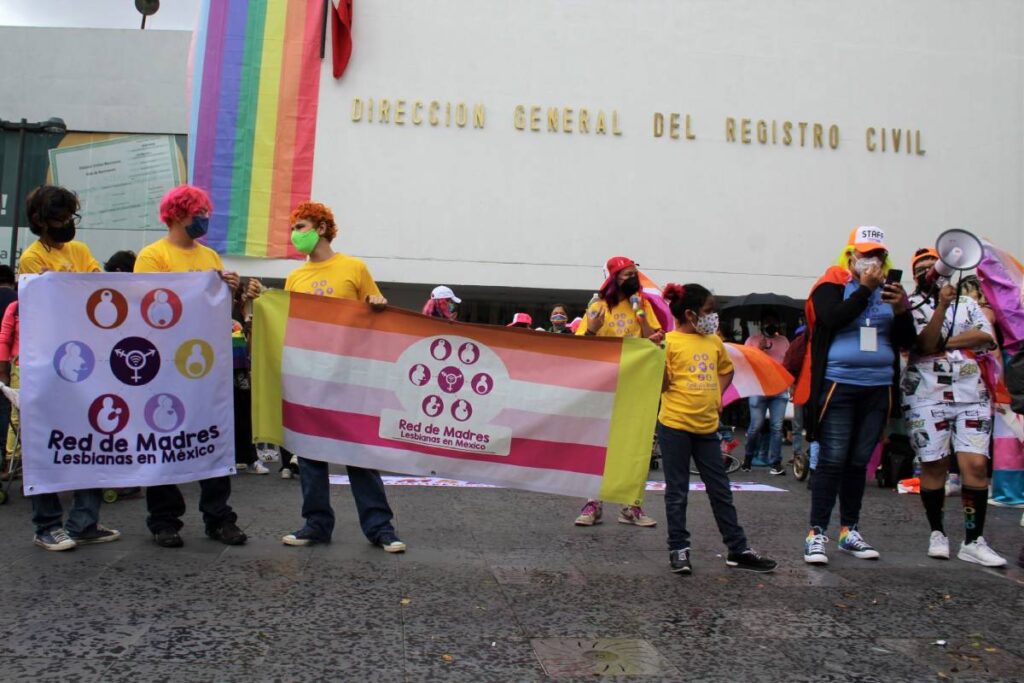
“In this country, the rights of lesbian-parent families are violated.”
In 2019, through an injunction filed by the organization México Igualitario , the Supreme Court of Justice of the Nation (SCJN) declared it unconstitutional to limit the right of filiation of minors born into lesbian-mother families.
The Supreme Court of Justice of the Nation (SCJN) has ruled that the right to marriage equality includes the right to family, co-maternity, social security, adoption, and the legal recognition of children and adolescents. However, despite the legalization of marriage equality nationwide this year, Mexican lesbian-parent families continue to be denied their rights.
Miztli Leal lists the cases that the Network of Lesbian Mothers in Mexico has detected regarding human rights violations in hospitals and civil registry offices:
-Public and private hospitals that deny the right to visits and information to non-gestational mothers during and after childbirth.
-Private hospitals where they deny birth registration with both mothers' surnames.
-Civil registry offices that recommend registering children as single mothers and denying recognition to non-gestational mothers.
-Cases where, despite the recognition of same-sex marriage throughout the country and the right to family, civil registries fail to safeguard birth certificates when mothers travel to Mexico City to register their children. And when they return to their home states to retrieve the certificates, the civil registries deny them this right and force them to pay for legal protection.
Children with denied rights
The children of these lesbian-parent families also have their right to identity violated. In Mexico, the birth certificate is the document that provides identity to its citizens and opens the door to other rights.
According to lawyer Ninde Molre, a member of México Igualitario, although there are several regulations that state that the right to identity implies the right to have a free birth certificate, this is not always fulfilled.
“It’s very common for hospitals to withhold medical records until exorbitant amounts of money are paid. This violence is perpetuated especially against people who lack insurance, information, and the means to defend themselves. And who also live in poverty or are indigenous,” she explains.
She adds, “In this country, the rights of lesbian-parent families are violated. That is why it is urgent that these rights be recognized throughout the country.”.
Julissa Case
Julissa is originally from Quintana Roo and migrated to Yucatán after surviving a hate crime for being a lesbian. She works as a bricklayer and domestic worker. On October 26, a social worker at the public hospital, General Agustín O'Horán, conducted a socioeconomic study to determine how much she would have to pay to give birth.
Furthermore, she questioned Julissa's motherhood because she is a lesbian with a masculine gender expression. Upon seeing scars on Julissa's body from the violence she endured, she accused her of drug use.
“The social worker criminalized Julissa. She claimed that because she is a lesbian woman with a masculine gender expression, she doesn't have the right to motherhood. She judged her based on her economic situation and said she would be a bad example for her children. This is how Julissa's ordeal begins, simply for being a lesbian, living in a vulnerable situation, and deciding to become a mother,” says her lawyer, Dariana Quintal.
The social worker who accused Julissa did so without evidence. She filed a complaint with the Office of the Attorney for the Protection of Children and Adolescents of the State of Yucatán (Prodennay), which opened an investigation against Julissa.
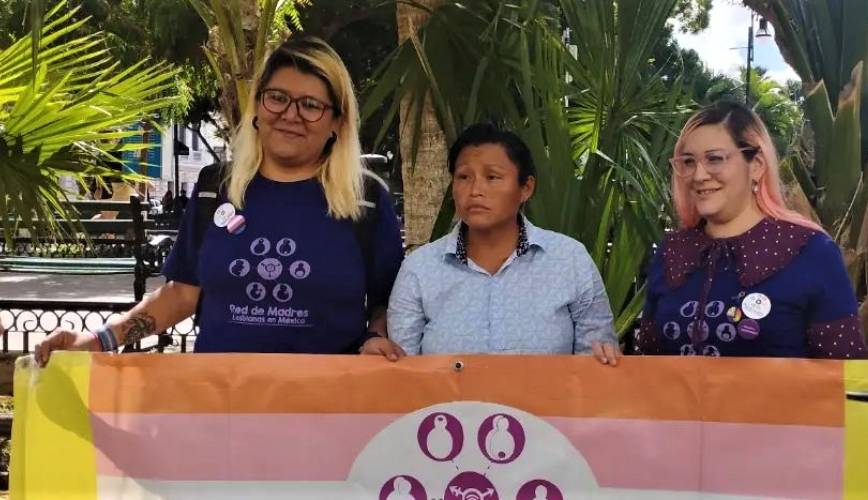
Photo: Georgina González.
To defend her, her neighbors gathered 60 signatures which they presented to the Attorney General's Office, supporting the claim that "she is a hard-working woman and a loving and responsible mother.".
For its part, the Yucatán DIF (National System for Integral Family Development) released a statement saying it had activated a protocol to "protect" two minors. Local media outlets reinforced this narrative .
“Julissa’s case is showing us institutional violence and discrimination in all its splendor. It shows how the system denies and tries to make any lesbian existence invisible. It is not only violating Julissa’s rights, but also those of her children,” adds lawyer Ninde Molre.
Multiple human rights violations against Julissa and her children
Julissa also experienced obstetric violence. During childbirth, she underwent an episiotomy (an incision in the perineum) without her consent. This practice is considered obstetric violence because it is "invasive and can cause physical harm," according to the National Human Rights Commission.
Once Julissa's baby was born, she was not allowed to see, hold, or breastfeed her. She was also unable to register her as her daughter. Since her birth 48 days ago, Julissa has only seen her twice, for one hour each time, under the supervision of the Yucatán DIF (National System for Integral Family Development).
Nine days after giving birth, the Attorney General's Office summoned Julissa and her six-year-old son. They asked her to bring a criminal background check, proof of income, and a toxicology report. Her son was separated from her for a psychological evaluation, in order, according to lawyer Quintal, "to determine if the child was a victim of violence.".
In addition to taking her newborn daughter away, Prodennay learned that her son did not have a birth certificate. This was reason enough for them to take him away as well. Her son does not have a birth certificate because when he was born, hospital authorities demanded 7,000 pesos from Julissa to register him as "live birth.".
Julissa does not have official documents that prove and certify that she is the mother of her six-year-old son and her newborn baby.
“Knowing this, the DIF (National System for Integral Family Development) should not violate the children's right to family and identity. They should find a way to guarantee their rights and Julissa's, but they are complicit and responsible,” adds lawyer Quintal.
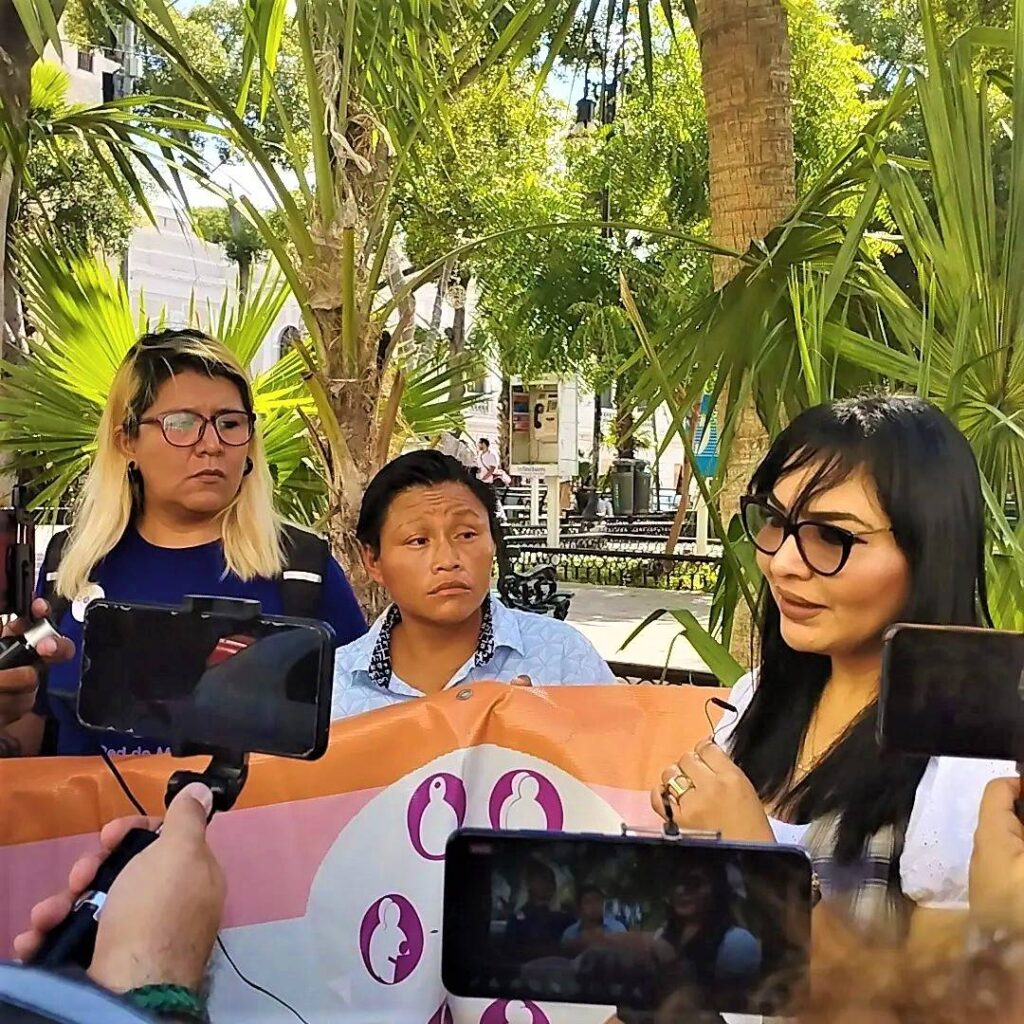
Photo: Georgina González.
“This cannot be left like this.”
Dariana Quintal, together with the Yucatán Prosecutor's Office, is preparing a defense strategy to get her children back to Julissa as soon as possible, so they can be registered and obtain their birth certificates.
According to her lawyer, the expert reports carried out by the Prosecutor's Office on Julissa's son did not demonstrate that he was a victim of violence and the children have weight and height appropriate for their age with respect to WHO standards.
Dariana Quintal denounced the expert reports, stating that Prodennay requested invasive proctological examinations of Julissa's son. "For the Attorney General's Office, the fact that his mother is a lesbian means she's bound to be violent and do something immoral. Just look at the way they judge Julissa," she added.
She also mentioned that part of the demand for justice is to ensure that those responsible for these human rights violations do not repeat them and that they repair the damage.
“We are going to do everything possible to prevent the human rights violations being committed against women and children from happening again. This cannot go unpunished; there are those responsible, and they are the state DIF (National System for Integral Family Development) and the head of the Prodennay (State Attorney for the Protection of Children and Adolescents), Teresita de Jesús Anguas Zapata,” she says.
On December 6, during a live broadcast, Julissa addressed Attorney General Teresita de Jesús and sent her this message:
“What you’re doing to me is unfair. I need my children. I love my children. And it’s not fair that you won’t give them to me. It’s unfair that I’m happily waiting for December 24th; I’ve already bought my daughter a new dress to wear, I’ve bought my son his clothes, only for you to come and take away that right as a mother.”
What options do lesbian mothers have to defend themselves?
Miztli Leal believes that one way to defend themselves is for lesbian mothers and lesbian-mother families to have information about their rights and to assert them. This includes making their existence as families visible, but also highlighting the violence they experience.
“Something we believe in at the Lesbian Mothers Network is that we must speak out when institutional and economic violence denies our rights. It is vital to share what we go through to show that these are not isolated problems,” she says.
On the other hand, she believes that "it is urgent" to raise awareness in public and private health institutions and in civil registry offices , where public servants can hear firsthand the experiences of lesbian-parent families and lesbian mothers.
“Visibility is also important because we are not a fad. I understand that coming out can be complex, but it is important to come out; that way we can come to see our experiences like any other family. Here we are, we exist, we resist, and we are not going anywhere,” Miztli insists.
We are present
We are committed to journalism that delves into the territories and conducts thorough investigations, combined with new technologies and narrative formats. We want the protagonists, their stories, and their struggles to be present.
SUPPORT US

FOLLOW US
Related notes
We are present
This and other stories are not usually on the media agenda. Together we can bring them to light.