

Salta: An attempt was made to assassinate a Wichí chief in a community resisting landowners' fencing.
The incident was reported to the police by representatives of the communities of the Weenhayek Kyelhyuk People (El Quebracho) and O Ka Pukie, Tartagal, Salta.


Share

A man known to the Indigenous people of northern Salta province as "Engineer Pablo" fired a shot yesterday at Chief Isaías Fernández, who escaped unharmed. Earlier, this same man had attempted to run over a woman and another community member, whom he also threatened with death. "Something horrible just happened. They tried to kill Isaías, they pointed a gun at him, thank God the bullet didn't hit him," recounted community communicator Nancy López, who is the niyat (chief) of the Oka Pukie Community (Mi Troja).
The incident was reported to the police by leaders of the Weenhayek Kyelhyuk (El Quebracho) and O Ka Pukie communities, located within the jurisdiction of the municipality of Tartagal, in the San Martín department, along National Route 86, in Salta province. These communities have been enduring the pressure of agricultural expansion in the area for years. They were even evicted in 2014.
The latest acts of violence occurred when a group of members of the indigenous communities attempted to destroy a fence that had been extended onto their ancestral territory over the past weekend. López reported that despite the aggression, they will remain “in the territory, defending it.” This afternoon, Isaías Fernández and Nancy López were summoned to the prosecutor's office in the city of Tartagal.
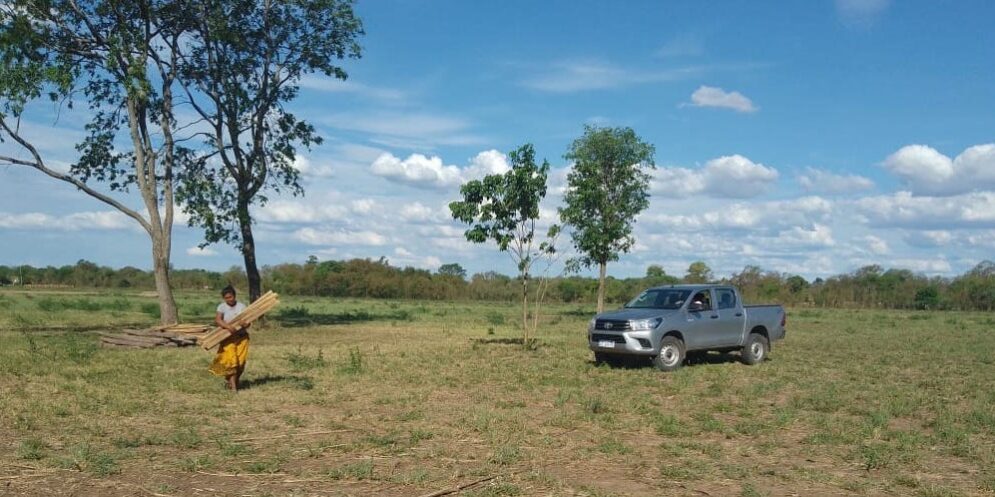
Mónica Medina, Isaías Fernández's partner, recounted that they were piling up some rods (thin sticks used to tension wire) and posts they had removed from the fence erected by a registered landowner with whom they have a land dispute. At that moment, “the engineer from the Aeroclub arrived and threatened the elderly Luciano Fernández. He said, ‘ Old man, I know you, I’ll kill you anywhere, ’ and he sped off in his truck, trying to run over the old man, but he missed.” “Then he pulled out a gun and fired, missing Isaías Fernández, the chief, in the head,” Medina described, visibly shaken.
Threats and intimidation against communities in ancestral occupation
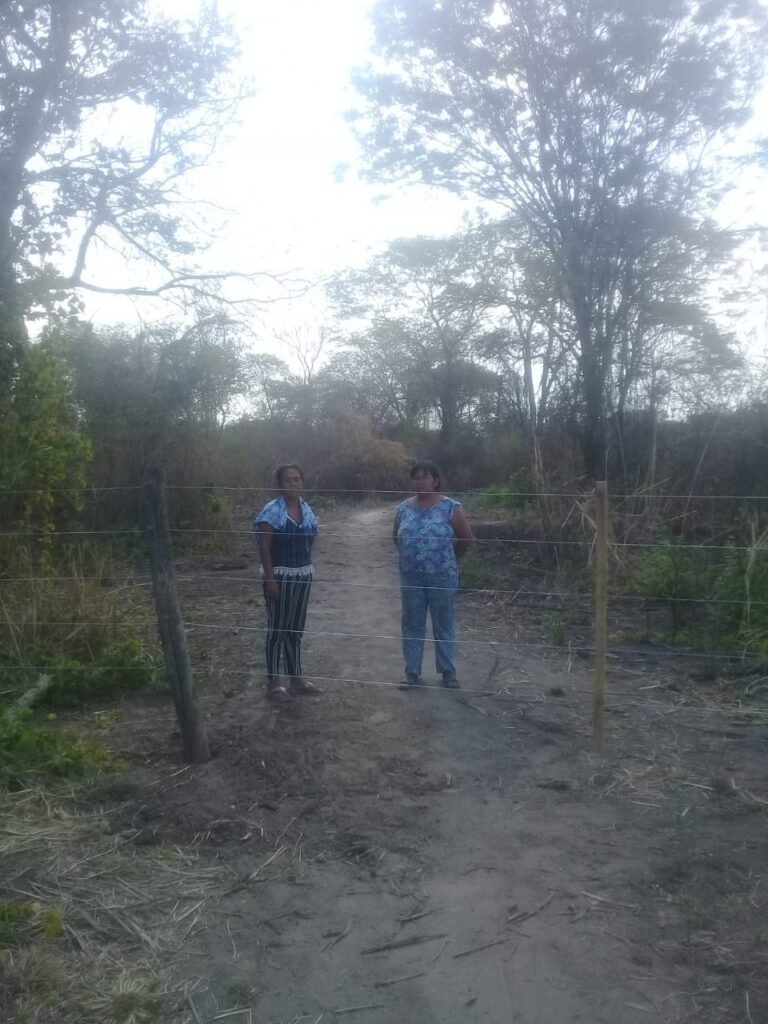
The Kyelhyuk and O Ka Pukie communities stated that they are facing an “extremely serious” situation. “ Despite the traditional, ancestral, and current occupation of the territory, intimidation, threats, and the construction of fences on our land continue ,” they expressed in a statement reporting the attack they suffered yesterday.
These communities share a territory where they dedicate themselves to planting crops, gathering wild fruits (which are becoming increasingly scarce), and crafting handicrafts. In their statement, they also recalled that during the 2014 eviction, “the mother of the current chief (Isaías Fernández) died from the trauma she suffered” at the hands of the Salta police. That eviction was carried out at the behest of the same registered landowners who are now fencing off the community territory.
The territory occupied by both communities has been surveyed within the framework of the provisions of National Law 26.160, which declares the emergency of indigenous community property throughout the national territory, and expressly prohibits the evictions of native inhabitants from the lands they occupy.
They are calling for a halt to illegal fencing.
“The legal and cadastral technical survey, in accordance with the aforementioned Law, was carried out in the KYELHYUK community (El Quebracho) by the ETO (Technical Operational Team), recognizing the ANCESTRAL AND CURRENT OCCUPATION OF THE COMMUNITY,” both communities highlighted in the statement, in which they recalled that this documentation was delivered to the community authorities with resolution No. 456, of 2018, of the National Institute of Indigenous Affairs (INAI).
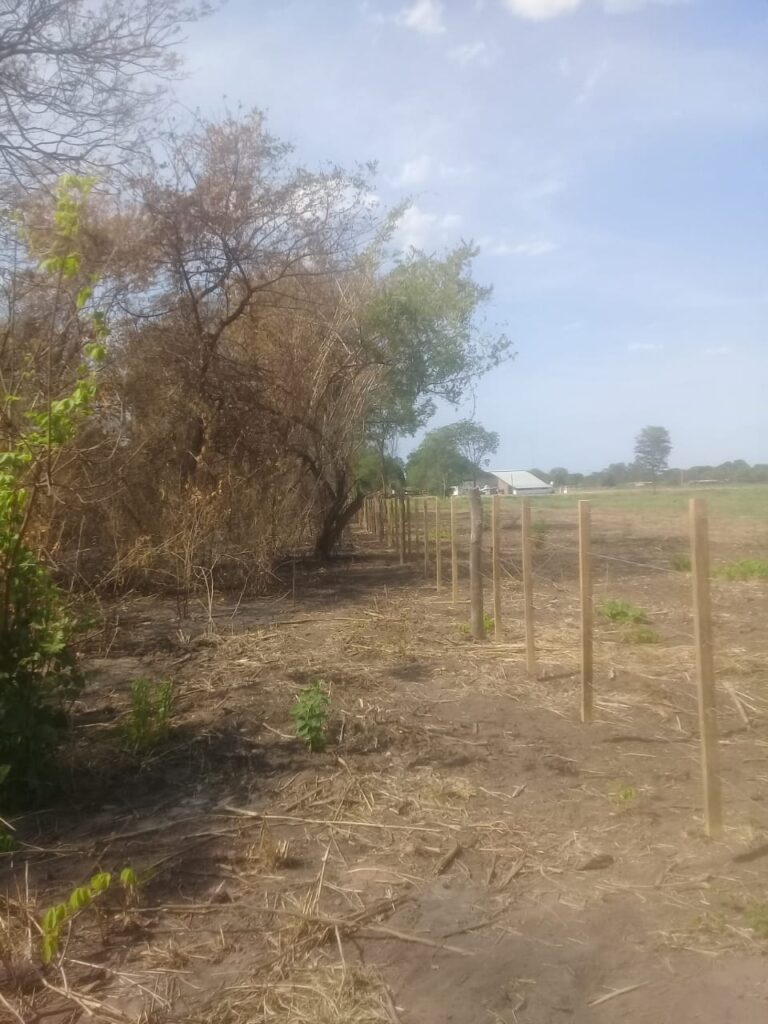
The installation of these fences “prevents (the communities) from accessing” 90 hectares that are part of their territory, the place they go to every day to gather firewood, medicinal plants, honey, and other fruits that the forest provides. “Furthermore, they have threatened us not to approach the fenced area, and the landowners come in their truck with the police,” whose officers “arrive at the site in the same vehicle as the registered owners,” they explained.
The communities requested “urgent intervention to halt the construction of fences and stop the violence and abuses.” They held the national, provincial, and municipal governments responsible for any acts of violence that might occur against community members. Furthermore, the expansion of large-scale crops, such as soy, and the use of chemicals sprayed just meters from community homes are causing all kinds of harm to the people of the area's Indigenous communities, from the death of native plants to health problems, especially among the elderly and children.
We are present
We are committed to journalism that delves into the territories and conducts thorough investigations, combined with new technologies and narrative formats. We want the protagonists, their stories, and their struggles to be present.
SUPPORT US

FOLLOW US
Related notes


We are present
This and other stories are not usually on the media agenda. Together we can bring them to light.