

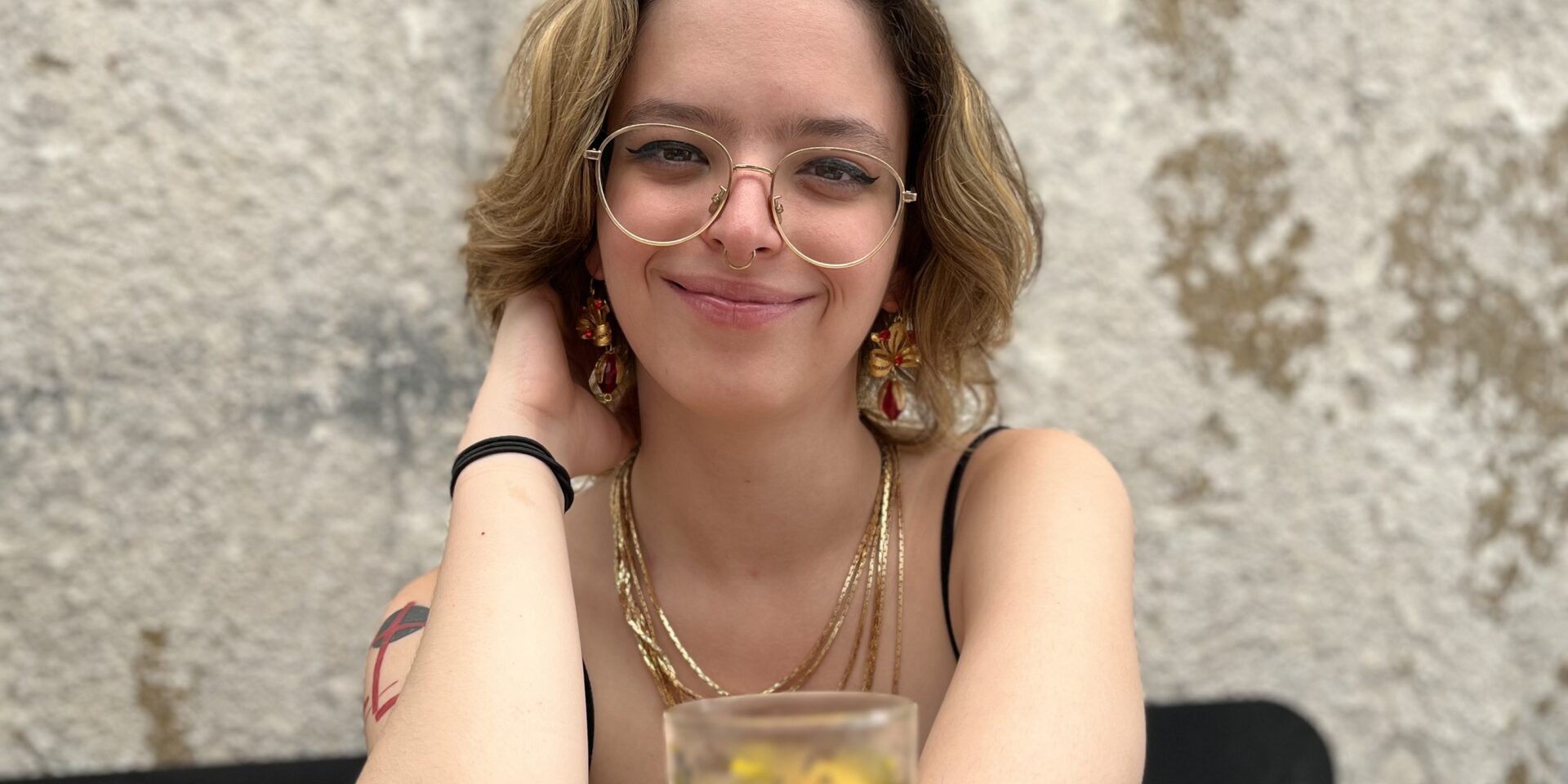
Elizabeth Duval: "There has been a great lack of role models for trans people."
In addition to being a writer, she has been an LGBTQ+ role model since she was 14 years old and a critical and insightful voice in identity movements.


Share

At 22, Elizabeth Duval has published an essay (After Trans, 2021), a poetry collection (Exception, 2020), and two novels (Queen, 2020 and Madrid Will Be the Tomb, 2021). The Spanish writer is the international guest of the Queer Art Festival . She is also a columnist and television contributor in her country. She has been an LGBTQ+ role model since she was 14.
Since becoming famous, Elizabeth Duval has been Elizabeth Duval. At 13, she came out as trans, and from the age of 14, through various writings and media appearances, she became the LGBTQ+ icon she is today in Spain and around the world. And yet, the morbid fascination is stronger. Duval tells Presentes that when she Googles her name, several suggestions appear, and one of them is "Elizabeth Duval before." There is no media record of her pre-transition life, and a short conversation with her is enough to realize how pointless that would be. Elizabeth Duval speaks with the clarity and certainty of someone who has always known who she is. She knows she is a trans icon, but she also knows she is much more than that . After all, at 13 she also began to write, and that discovery would also end up shaping her identity. She knows that the answer to the question of who she is contains multitudes, and she will speak from the perspective of the dozens of philosophers and authors who have accompanied her throughout her young but prolific career. She will tell us: yes, I am trans, but I am also all these things.
How did you start writing?
– I think the first time I wrote anything creative was in school when I was 12 or 13 and we were asked to write a poem, like an ode to spring. Then, due to a generational thing, my first experience with prose or narrative was with Harry Potter fanfiction.
– When did you realize that was what you wanted to do?
The more I did it, the more I realized I wanted to dedicate myself to it professionally. I don't think I had much contact with the figure of the writer until much later. I didn't understand that it could be a profession or a job. For me, at that time, books seemed to appear out of nowhere, spontaneously. I think I became more aware of it when I was 14 or 15.
– You started writing very young and became a role model.
Yes, and there's a kind of responsibility that comes with being a role model, regarding what you do, what you say, the image you project, which is complicated. It's not an easy responsibility. You mull it over and think about everything. I try not to let it hold me back, not to let it be some kind of obstacle or block. I also don't do anything specific to be recognized. While there's an overabundance of hate and negative comments on social media, people in real life are absolutely lovely and show so much love and admiration; sometimes it's even strange, and I want to say, "Please don't stroke my ego so much, it makes me uncomfortable."
– You talk about your responsibility as a trans role model, but also about your desire to speak from other perspectives. How do you balance those two things?
– I feel much more comfortable with the label of activist. An activist, beyond the marketable image of a personal brand, has to have a political, organizational, and daily commitment to what is presumed to be their cause. They have to be doing something beyond media appearances. I also can't do anything about the role of role model because it's something imposed on you or given to you from the outside, not something you choose. It's not a choice, and no matter what I write, I'll continue to occupy that position for many people. It's incredibly complicated, but I like it better as a way of referring to myself.
– Do you feel that you had role models or mentors?
– I've never been one to idolize figures or role models. There's been a great lack of role models for trans people throughout history. I think that within writing or the literary field, my role models have often been more lesbian than trans. I've felt much more admiration and identification with what Susan Sontag could do than with a trans figure, or with the media in general. But specifically trans people, I find it difficult to find them in any way. For example, in Spain, all the attention that's been given to La Veneno, but there's such a great distance from her story that I couldn't fully connect with her.
– That's another thing you said in the essay, that it's kind of absurd to put a bunch of people with such different experiences in the same bag.
– Of course! Regarding Valeria Vegas, she is placed alongside La Veneno as if their experiences were comparable, when there are all these gruesome twists and turns in La Veneno's story, with much more violence, much more pain that she experiences.
– Do you think there are now more figures who can serve as a reference?
– I think so, and there's a relative diversity in terms of where these figures are or what they're doing. The spectrum of models has broadened somewhat. It's also important that we can dedicate ourselves to something other than trans issues. That we can write creatively and theoretically about topics that aren't trans. In my case, it also means being able to analyze policies on Spanish television that have nothing to do with trans issues.
– Regarding politics in Spain, what are your thoughts on the Trans Law now?
The law is good, but it has generated far too much and too much debate for what the law actually does. I think that regulating the ease of changing one's name and gender marker on administrative documents is important and helps a great many people. However, there is a huge gap between what this law does or intends to do (it hasn't been approved yet) and what is being said about it. In Spain, all matters related to hormone therapy, surgery, and medical treatment are regulated by the autonomous communities because healthcare and education powers have been transferred to them. The national law cannot change that, and yet it seems to because we are talking about a debate concerning surgeries and hormone therapy. The law doesn't do much beyond changing documents, and beyond the administrative procedures, it has relatively minor importance. It's not enough for a former president like Carmen Calvo to say that it will call into question the identity of 47 million Spaniards. It's just a piece of paper; we shouldn't establish a cult of the idea that laws can modify the very foundations of reality itself, almost as if it were metaphysics.
– Is there a very large gap between what this new legal framework is trying to achieve and what is happening at a social level in Spain?
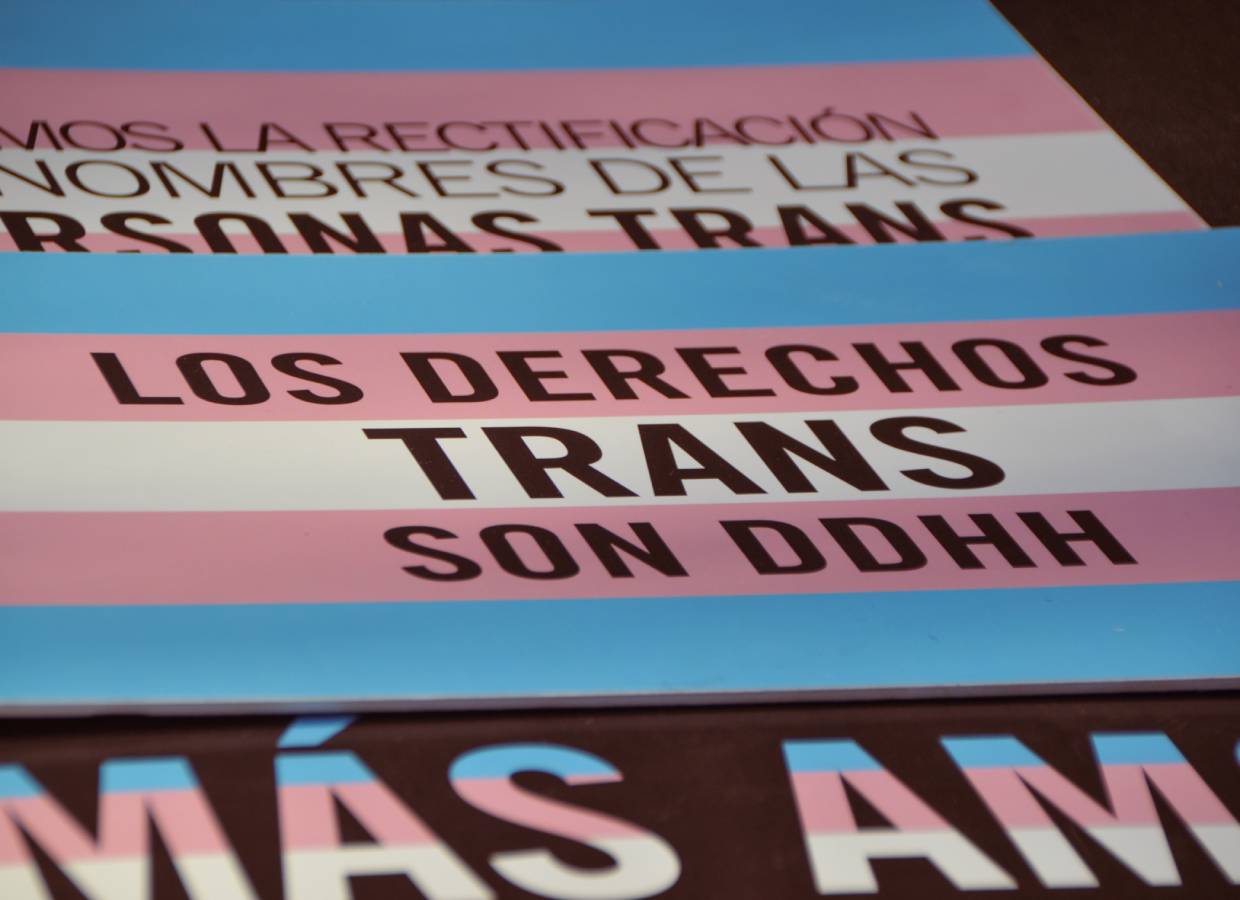
– In 2018, that gap was smaller. Now, the debate revolves around an internal political struggle between left-wing parties because the Socialist Party refuses to accept that another party, Podemos, holds the Ministry of Equality. This has been exploited to provoke a conflict that has been so inflated and amplified in the media that the media, political, and social climate is now much more hostile than it was some time ago. What's truly sad is that six years ago in Spain, the People's Party, the right wing, could have signed a Trans Law. Now they can't, but that's because these positions have been reclassified as the debate has taken center stage in the media. The left needs to engage in self-criticism regarding how the law has been defended. It has been defended with very basic and simplistic arguments. It has been said, for example, that the law must be defended because trans rights are human rights. I think that appeal is incredibly abstract, especially in a human rights context where those rights aren't even particularly respected in many circumstances. It also serves to appeal to those already convinced that trans rights are human rights, but it doesn't generate any of the empathy that I believe is possible to generate among a broader segment of the population. I think one mistake has been that, in terms of communication, it's been framed more as a struggle.
– Perhaps in a more combative than empathetic way.
– Of course, perhaps at a time when you had to try to be more empathetic than combative, because otherwise you ended up gradually losing ground. I think that retreat creates an increasingly smaller niche and demands ever greater degrees of purity and acceptance. It becomes very dangerous. In the long run, a significant retreat condemns you to irrelevance because, in the end, no one is ever truly pure enough.
– How did you find the process of writing your novel, “Madrid will be the tomb”?
– It was quite fun. I was interested in addressing certain themes, in this case the far right, but in such a way that there wasn't any kind of assertion, any external moralizing that I could impose on the text. Rather, the morality would be present in the novel's own narrative mechanisms. It would belong to the reader, not me, to how it's read and interpreted. It's not a novel that takes a neutral stance or says that both extremes are equal, but you don't see it because the narrator declares it, but because the events that unfold and the narrative mechanisms make that reading impossible. The novel leads in a very specific way. I locked myself away for a month to write it and allowed myself to be mentally colonized by fascism, and that was fun. I think of Foucault's phrase about the fascist we all carry within us; it's a matter of giving it free rein so that it doesn't appear elsewhere. Writing allows for a kind of purging of bad passions.
We are present
We are committed to journalism that delves into the territories and conducts thorough investigations, combined with new technologies and narrative formats. We want the protagonists, their stories, and their struggles to be present.
SUPPORT US

FOLLOW US
Related notes
We are present
This and other stories are not usually on the media agenda. Together we can bring them to light.