

Chile: An Argentine activist suffered a brutal homophobic attack
Alejandro Aymú was attacked by a group of men who beat and stabbed him.


Share

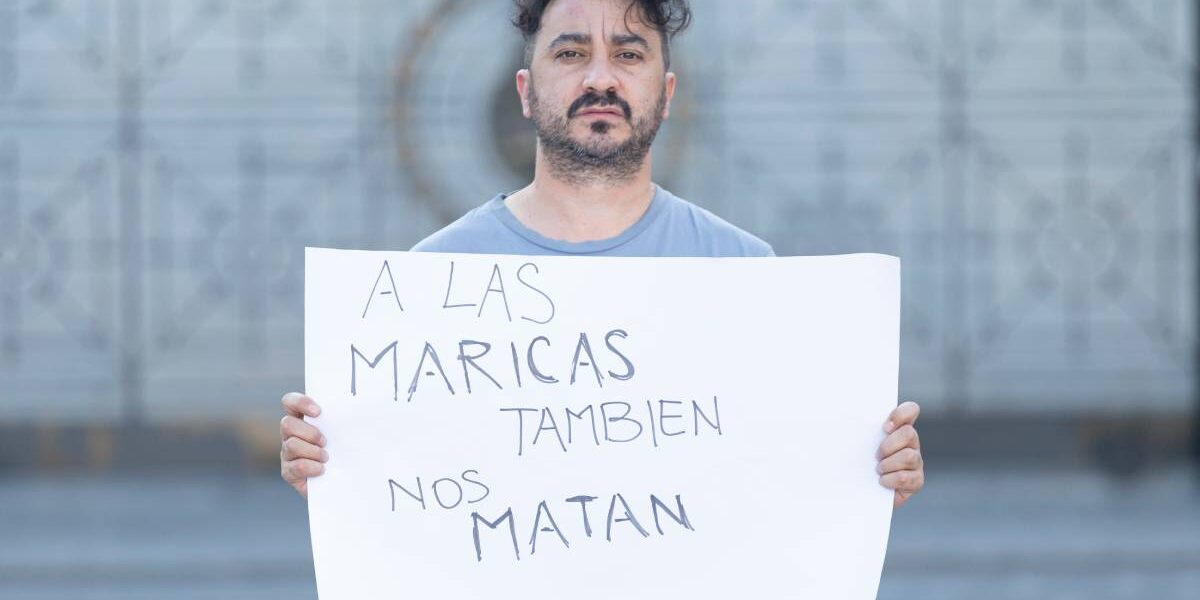
BUENOS AIRES, Argentina. Alejandro Aymú, a 45-year-old Argentine activist and journalist, was the victim of a homophobic attack in Santiago, Chile, by a group of men. Through coordination with the Argentine Foreign Ministry, he was able to give a statement last week. He is requesting that the charge be changed from "Robbery with Violence" to "Aggravated Robbery due to a Homophobic or Hate Attack Based on Sexual Orientation."
The incident occurred around 3 a.m. on October 28, when Alejandro was walking near the Purísima Bridge in the Bellavista neighborhood of Santiago, Chile. There, he was attacked by a group of men, he told Presentes . “They choked me and threw me to the ground, they beat me and called me 'faggot,' 'queer': so much hatred. I gave them my things and they threw me to the ground again, beat me, and stabbed me,” he recounted about the attack.
The investigation is being led by Dr. Patricia Varas Pacheco, head of the Specialized Gender Prosecutor's Office in Santiago, Chile . The case is currently classified as "Robbery with Violence."
The accompaniment
The Argentine Foreign Ministry and the Consulate General in Santiago have offered their support and assistance in this case. The Directorate General of Consular Affairs (DIGAC) and the Directorate of Argentinians Abroad (DIARE) have also intervened.
Following the investigations by the relevant authorities, Alejandro testified last Tuesday about the incident in order to have the charges changed. He is seeking to have them classified as "Aggravated robbery due to a homophobic or hate crime based on his sexual orientation."
This was based on sections 6 and 21 of Article 12 of the Chilean Penal Code , which establish aggravating circumstances for a crime. Section 6 refers to when the offender abuses “the superiority of their sex or strength, in such a way that the victim could not defend themselves with any probability of repelling the offense.” Section 21, meanwhile, refers to crimes motivated by “sexual orientation, gender identity,” among other motivations.
“The Argentine Foreign Ministry is committed to providing comprehensive consular assistance to Argentine citizens abroad who find themselves in vulnerable situations or are victims of violence,” Ana Laura Cachaza, Director of Consular Affairs at the Argentine Foreign Ministry, Presentes
Cachaza emphasized that those who are victims of any type of violence outside the country "can approach the consular representations, which beyond borders should be seen as their home, as a space open to receive them, listen to them and accompany them."
He recalled that one of the functions of consulates is to ensure that Argentinians "are treated in every country of the world in accordance with local regulations, accompanying them in administrative and judicial processes."
The Undersecretariat for Diversity Policies also contacted the journalist to offer its assistance.
A liberated zone
Regarding the area where the attack occurred, Alejandro specified that it was “dark” and seemed “abandoned.” “Everyone knows it; it seems these kinds of attacks are quite frequent. The police don't have much of a presence, and the State doesn't guarantee security,” he said.
After the attack, which involved a knife wound to the chest, the young man asked for help. Many cars passed by but didn't stop. Finally, a woman approached him, accompanied him to a public hospital, and told him that "these things happen often."
“They kill gay men too,” Alejandro pointed out. In this regard, he demanded that “the security forces, who are the first to receive reports, be made aware of the issue of hate.” He also called for “mechanisms and protocols” to facilitate access to justice.
“We lack information about where to go or how to interpret these events. There is much to be done. We have the experience of winning our rights as a reference point. This is happening to us both within Argentina and abroad,” she concluded.
We are present
We are committed to journalism that delves into the territories and conducts thorough investigations, combined with new technologies and narrative formats. We want the protagonists, their stories, and their struggles to be present.
SUPPORT US

FOLLOW US
Related notes


We are present
This and other stories are not usually on the media agenda. Together we can bring them to light.