

Life imprisonment for Alejandra Salazar's killer, but it was not condemned as a hate crime.
Alejandra Salazar Villa was a 54-year-old trans woman who had come to Argentina from Peru. She was murdered in 2020.


Share

The Oral Criminal and Correctional Court No. 26, presided over by judges Marcelo Alvero, Maximiliano Dialeva, and Carlos Rengel Mirat, sentenced Rodrigo Keilis, the transvestite murderer of Alejandra Salazar, to life imprisonment. However, the court did not take into account the hate crime based on gender identity.
Alejandra Salazar Villa was a 54-year-old trans woman who had come to Argentina from Peru. She earned a living as a sex worker and lived alone in her apartment located at 2200 Corrientes Avenue, in the Once neighborhood of Buenos Aires. She was murdered in December 2020.

Prosecutor Diana Goral had requested a conviction for homicide with the aggravating circumstances of gender-based violence (femicide) and hatred based on gender identity (transvesticide). The court ultimately only considered the first aggravating circumstance and therefore did not deem the crime to be transvesticide.
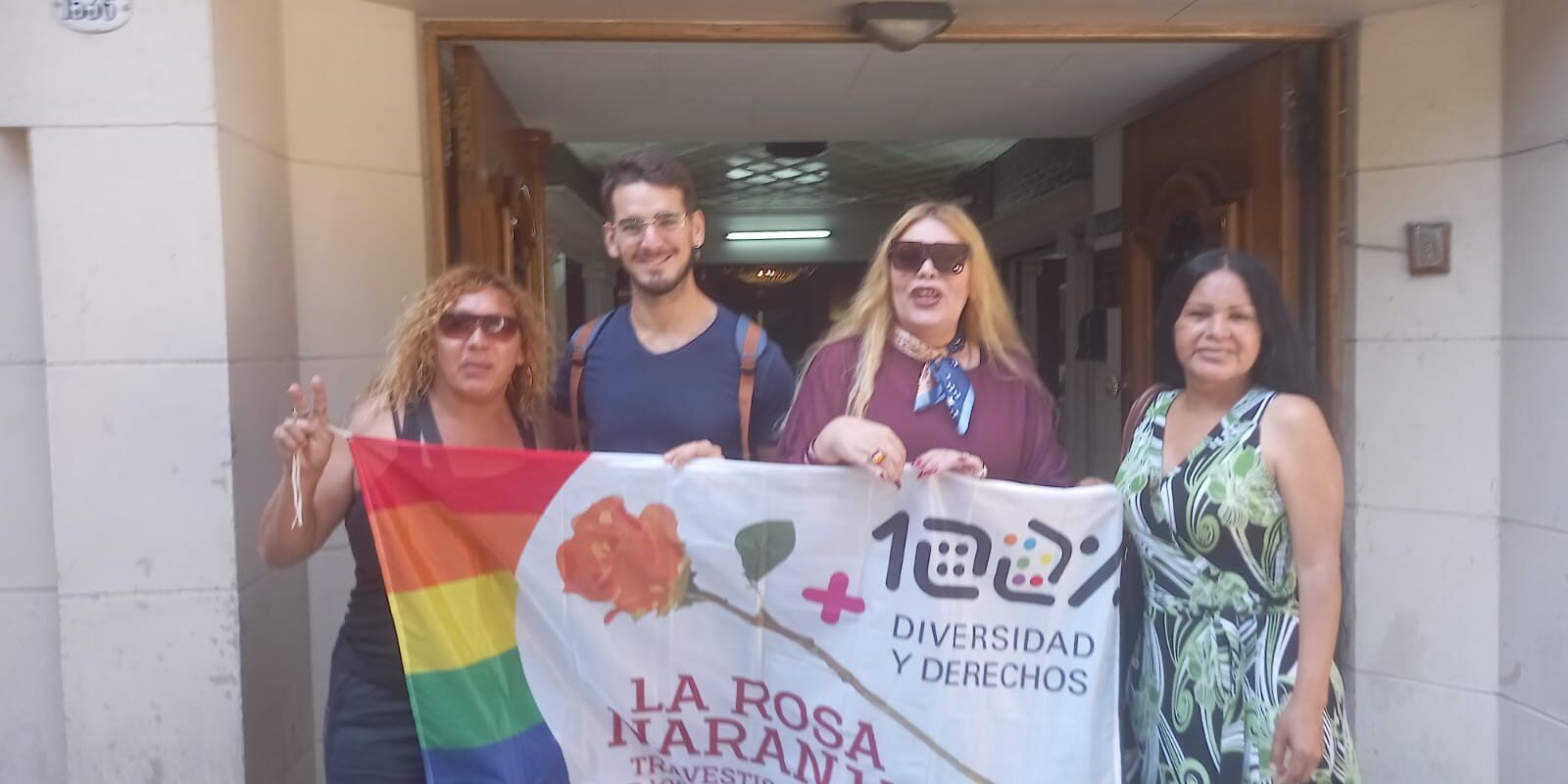
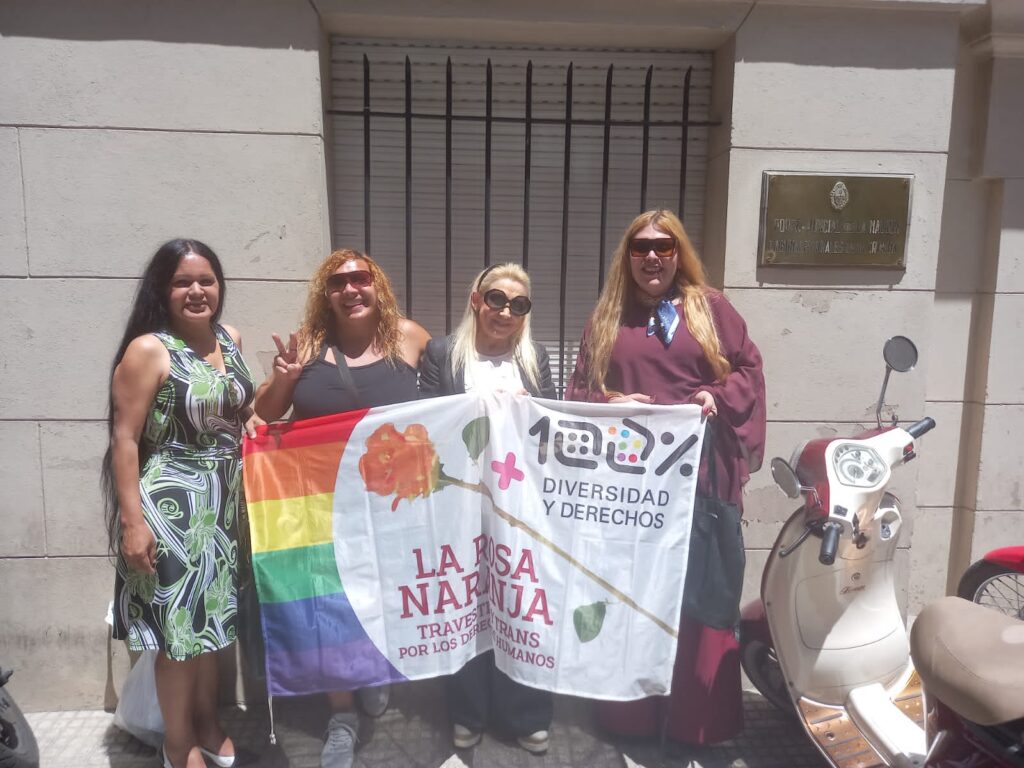
“We are satisfied with this sentence,” Marcela Tobaldi, president of La Rosa Naranja, told Presentes. “We achieved our goal, which is life imprisonment,” she added. However, regarding the aggravating circumstance that the Court did not consider, she stated: “They don’t want to apply the article on hatred based on gender identity because dealing with hate is too serious for judges.”
The crime
On December 6, 2020, Alejandra went out to buy apples at a supermarket near her home. Once she had made her purchase, around 6:30 p.m., she headed home and on the way crossed paths with Rodrigo Keilis and Pablo Getar.
Keilis was 20 years old at the time, worked unloading trucks, and was homeless. That day she was with her uncle, Pablo Getar, a day laborer and cardboard collector who was 40 years old at the time.
Both escorted Alejandra to her house and one of them, Keilis, went upstairs with her to have an alleged sexual relationship, while Getar crossed the avenue and sat down to wait.
Once there, Keilis “placed one of the nylon bags brought from the supermarket, specifically the one containing the apples, and grabbed her tightly by the neck, causing a fracture of the hyoid bone and death by neck compression and suffocation.” This is according to the indictment, signed by prosecutors Ignacio Mahiques and Mariela Labozzetta.
The man then took some of Alejandra's belongings, such as the electronic device for opening the building's door and a television. Getar was no longer outside—he had left ten minutes before Keilis left the building—so she took a taxi to the Constitución neighborhood where she met up with her uncle again.
The trial
The investigation that led to the trial was carried out by the National Criminal and Correctional Prosecutor's Office No. 35. Its head, prosecutor Ignacio Mahiques, together with Mariela Labozzetta, in charge of the Specialized Prosecutor's Unit for Violence Against Women (UFEM) , considered that the accumulation of evidence was sufficient to accuse Rodrigo Alejandro Keilis of "aggravated homicide due to hatred of gender identity in real concurrence with simple robbery."
Pablo Isaac Getar was also named as an “accessory.” However, Goral did not consider that there was sufficient evidence for this charge and therefore requested his acquittal.
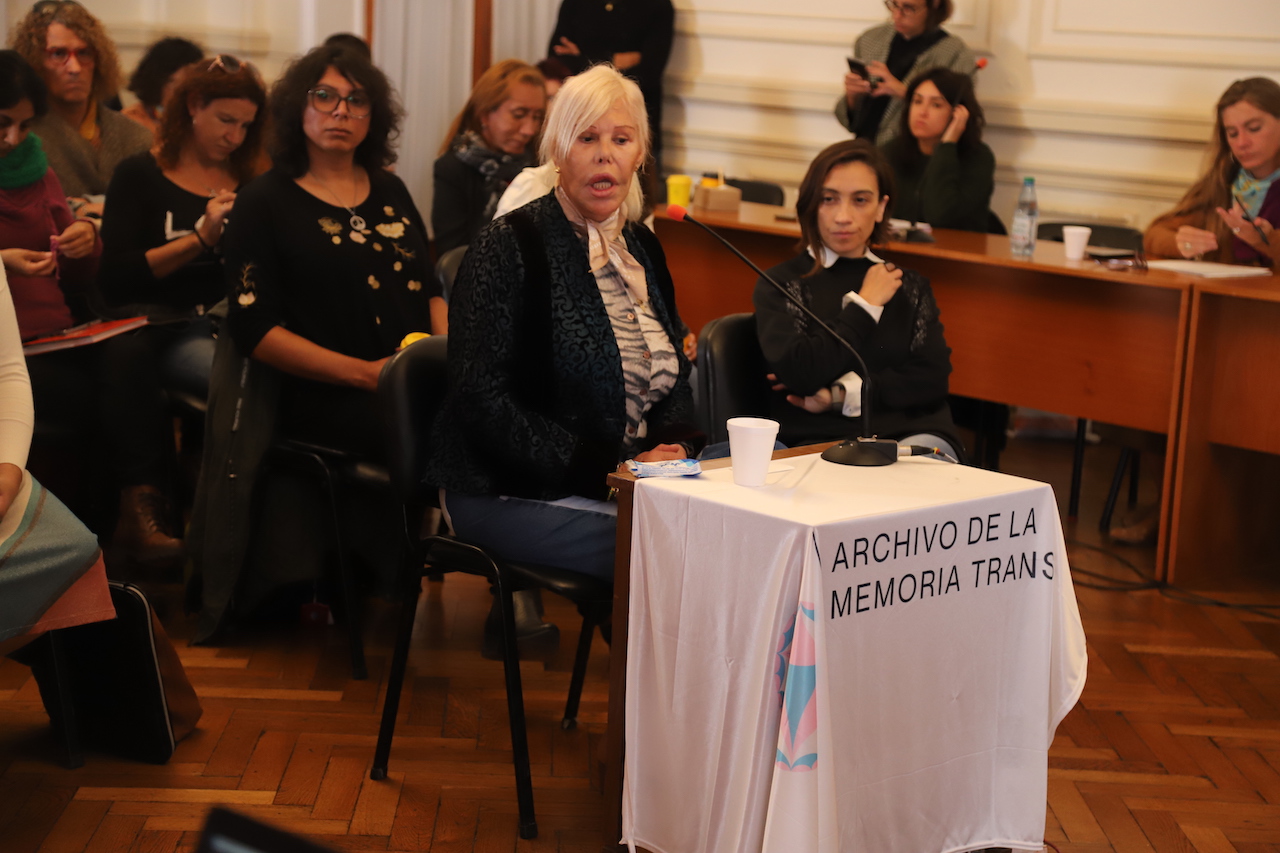
In addition, two specialists testified, explaining the problems faced by the transvestite and trans community and what a transvesticide entails.
Expert witnesses
One of them was the trans activist Marcela Tobaldi. She had met Alejandra “because she needed to transition.” “She approached me one day. At that time, I was working at the Ombudsman's Office in the city of Buenos Aires. She asked for me. She was very shy,” she recalled. “He had no right to kill her, to strangle her, to rob her, and all the other things he did. It was a transphobic murder,” she emphasized in an interview with Presentes.
“Transvesticide is a specific form of gender-based violence. It is consummated in the murder of people who express or affirm a gender identity that does not conform to the criteria considered 'normal' for femininity or masculinity,” explained anthropologist Josefina Fernández. Fernández is a specialist in gender, sexual and gender diversity, and public policy. Together with Lohana Berkins, she coordinated the report “The Quest for One’s Own Name” and its update, “ The Butterfly Revolution .” During the trial, she testified as an expert witness.
Her statement included a statistic compiled by the Inter-American Commission on Human Rights (IACHR) : the average life expectancy of transgender people in Latin America ranges between 30 and 35 years. “ Less than half the average enjoyed by the rest of the population,” Fernández emphasized. This average is a product “not only of lethal violence, but also of their life trajectories, generally linked to multiple experiences of vulnerability,” she continued.
She also brought an intersectional perspective to the analysis of Alejandra's murder. In addition to being trans, she was a migrant and a sex worker. Along these lines, she considered that "the trans condition must be considered alongside other factors and variables such as class and race." This can further aggravate "the living conditions of the trans community in terms of their access to rights. And, of course, to the justice system, which increases the impunity of the perpetrators."
According to an investigation by UFEM, 66% of the trans women or transvestites murdered were foreign nationals. And the overwhelming majority, almost 100%, were sex workers, Fernández added.
The sentence
The sentence was under article 80, paragraph 11 of the Penal Code: “Life imprisonment or life detention will be imposed (…) on anyone who kills (…) a woman when the act is perpetrated by a man and gender violence is involved.”
“The hate crime aggravating factor was missing, but it’s a landmark sentence. I’m happy,” prosecutor Goral told Presentes. She also considered this trial “important for the new perspective we need to have regarding the LGBTI community.”
In turn, throughout the hearings the prosecutor said that she learned a lot and thanked the members of the La Rosa Naranja .
In her argument presented at the hearing on October 31, the prosecutor considered it important to define this crime as a transphobic hate crime. "It allows us to identify, record, and quantify the crimes perpetrated against them, as well as enabling the recognition of the particularities that these crimes contain as an extreme expression of gender-based violence," she explained.
Other convictions for transvesticide
Previous convictions for transvesticide in Argentina were for the crimes of Diana Sacayán , Marcela Chocobar , Evelyn Rojas and Melody Barrera .
The first conviction was for the transvesticide of activist Diana Sacayán on June 18, 2018. There, the Oral Criminal and Correctional Court No. 4 of the Federal Capital sentenced Gabriel David Marino to life imprisonment.
Then came the life sentence, also handed down, for aggravated homicide motivated by hatred of gender identity (transfemicide) received by Oscar Biott in June 2019. He and Angel Azzolini were accused of murdering the young trans woman Marcela Chocobar. The decision was unanimous among the judges of the Criminal Court of Río Gallegos.
We are present
We are committed to journalism that delves into the territories and conducts thorough investigations, combined with new technologies and narrative formats. We want the protagonists, their stories, and their struggles to be present.
SUPPORT US

FOLLOW US
Related notes

We are present
This and other stories are not usually on the media agenda. Together we can bring them to light.