

Catamarca: serious attacks against trans women and human trafficking reported
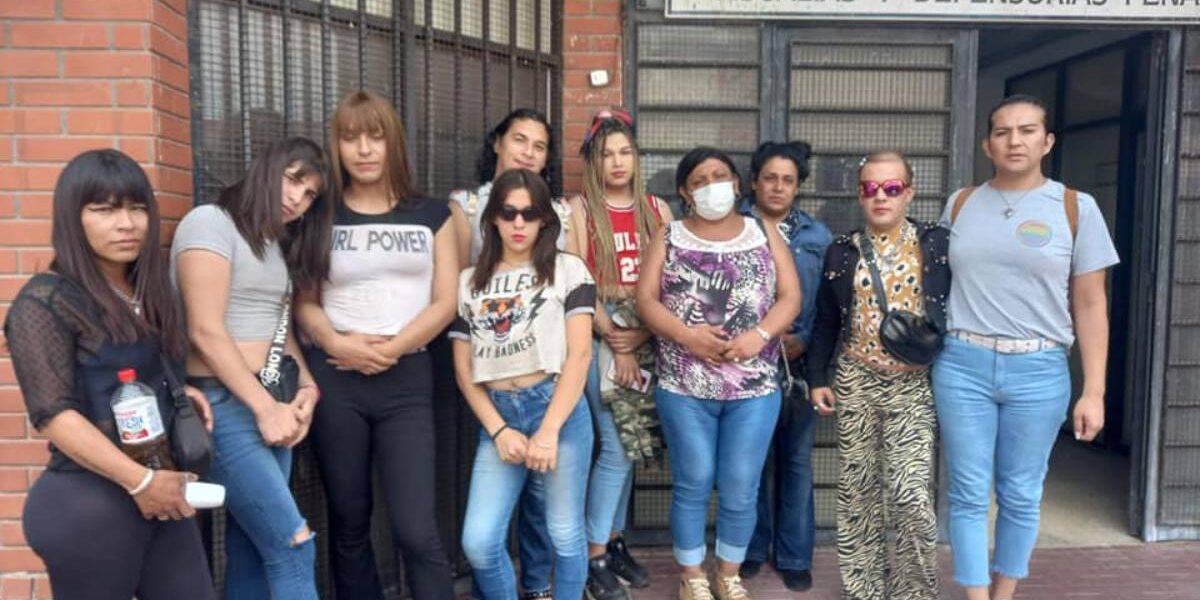
Several transgender women reported being beaten. They also recounted that many were forced into prostitution and made to hand over a percentage of their earnings.


Share

Catamarca, Argentina. An attack on transgender women has uncovered a pattern of extortion and threats against members of the LGBTQ+ community in the city of San Fernando del Valle de Catamarca. A federal investigation into possible human trafficking has been opened.
The attack occurred on Sunday, November 5, at 5:40 a.m. Four transgender women attacked three others, seriously injuring one of them. The victim, Nancy, suffered two cuts on either side of her mouth and one on her left thumb when she raised her hand in an attempt to protect herself.
Nancy asked not to be identified by her last name. She told Presentes that the attack occurred outside a nightclub located in the area known as Alto Fariñango in the city of Catamarca.
Along with a friend, Nancy accompanied another friend who was going to get a taxi on Arnoldo Castillo Avenue. It was then that the other women arrived. “They came in a group, because there were four of them,” Nancy recounted, attacking one of her friends. She described how she tried to intervene and at that moment was attacked by “little Naiara Guerrero, who raised her hand and cut my whole face” with a box cutter.
Nancy, and also Nataly Agostina Agüero, president of the Siempre Diversidad Catamarca Association (ASDA) , told Presentes that the aggressors had a restraining order against them. In mid-October, they had been reported for other incidents of physical assault, threats, and harassment.
A conflict that has been going on for months
Nancy recounted that they encountered the aggressors at the bowling alley. Since there was a restraining order in place, they notified the police officer on duty, but he told them he couldn't do anything. "We should call a family member to come and pick us up," he said.
The conflict has been ongoing for months, and according to the complainants, it stems from an attempt by a trans woman, Viviana Figueroa, to seize control of certain locations used as prostitution rings. Furthermore, the complainants allege that Figueroa pressures younger women to "work" for her.
“They had already beaten several of them. They tried to stab one of them,” Nancy recounted. Agüero added that in the October incident, six trans women were “severely beaten,” and that the attacks “didn’t reach the level of what happened to Nancy.” She explained that this happened to “the youngest ones,” and they decided, for the first time in a long time, to file criminal complaints.
This decision encouraged the older women, who had been suffering acts of violence for some time, and about twenty complaints were filed, which were initially processed before the criminal prosecutor of the Fourth Nomination of the Catamarca justice system, Antonella Kranevitter.
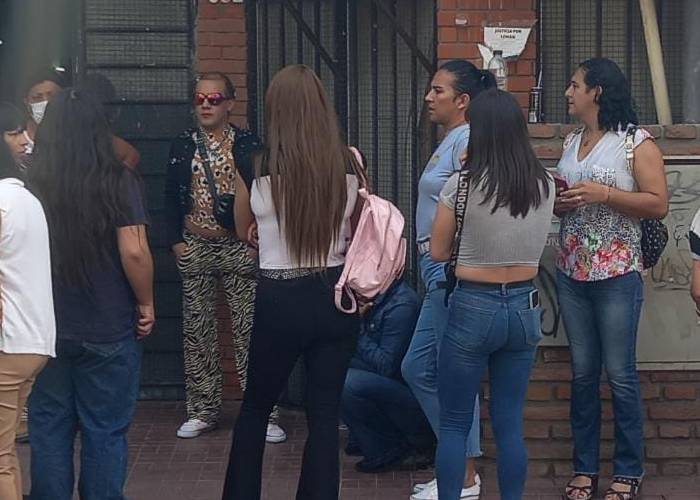
A long-standing conflict
Kranevitter confirmed to Presentes that the case was sent to the Federal Court on duty, so that a possible crime of human trafficking could be investigated.
Nataly Agüero recounted that the conflicts between the two groups are long-standing. Like Nancy, she maintained that they stem from Figueroa pressuring younger women into prostitution for his benefit.
Agüero said that young women who were no longer sex workers “felt they couldn’t go to the bus stop.” “They were forced, they were beaten,” they were pressured into prostitution and to give a percentage of their earnings to Figueroa , Naiara Guerrero, and Zoe Figueroa . “It’s a very serious issue,” she confirmed.
After the October attack, they decided to file criminal complaints. The younger women came forward first, but then other trans women also came forward to report long-standing incidents: “that they were mistreated, beaten, forced to pay cash if they wanted to work.” This is something that was happening “that no one dared to address, and now it’s coming to light,” Agüero asserted.
As a member of an organization that fights for the rights of the LGBTIQ+ community, Agüero highlighted the difficulty of the perpetrators being peers. “We thought we had left this behind. It hurts a lot. It also hurts a lot to see that it comes from a peer,” that “they harbor hatred for their own classmate, when they should be supporting each other,” she lamented.
He added that, while as an Association it is “very complicated” to support one of the parties in conflict, their support for the complainants is based on the fact that “the attack was very serious.”
Differences with the State
On the other hand, Nataly Agüero maintained that the State does not support transgender people in Catamarca. She said that “unfortunately,” in the twenty days between the first reports and the serious incident on the end of November 5, “there wasn’t even an attempt at contact from any government agency.”
He also criticized other organizations within the group for "not understanding the seriousness of the situation enough to offer support."
When contacted by Presentes , the Secretary of Women, Gender and Diversity of Catamarca, Ivana Ibáñez, referred the request to the Director of Diversity, Cecilia Navarro Santana, who did not respond to the inquiries of this agency.
Navarro Santana recently took over as Director of Diversity. Agüero recounted that on Tuesday, November 8, members of ASDA held a demonstration in front of the Secretariat “due to the absence of the State.” There they learned that “Cecilia Navarro Santana had been given a position. Theoretically, she is supposed to be in charge of diversity.” The official assumed her post on Monday the 14th.
They described the appointment as belated (because the Secretariat for Women, Gender, and Diversity has existed for four years). Agüero criticized the fact that the appointment was made without consulting members of the LGBTIQ+ community. “As a civil society organization, as an association, in the struggle we have been waging for many years, we believe that a trans person should be appointed” to the position, she stated. Trans people work in the provincial government.
According to Agüero, the Municipality of San Fernando del Valle de Catamarca also has a Gender Secretariat, but it does not have a Diversity Directorate.
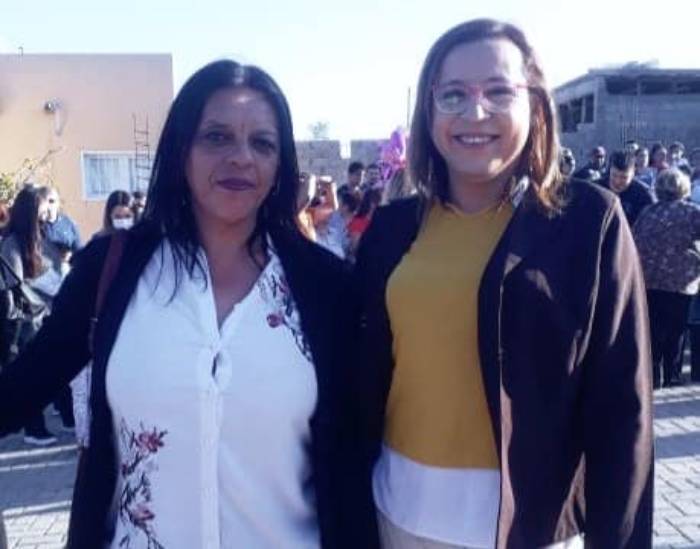
transgender employment quota
Agüero explained that the organization she leads has representatives in eight departments. In all of them, they promoted and successfully passed ordinances establishing quotas for transgender employment. In all of them, that is, except in the provincial capital, where they have been unable to get such legislation considered.
In the municipalities of Santa María, Andalgalá, Belén, Valle Viejo, Fray Mamerto Esquiú, Pomán, Tinogasta, and Capayán, ordinances were passed establishing a quota for transgender people in the workforce. Agüero said that, in general, “when they made the decisions, the mayors complied,” and one or two transgender women were hired into municipal positions. While acknowledging that some mayors did not fulfill this obligation, she believes that this can be achieved through more dialogue.
On the other hand, the civil association managed to get 18 trans women hired by government agencies, but only through scholarships , “not as job quotas.” Agüero explained that this came about when she was thinking about how to ensure they were qualified when job quotas were approved.
Furthermore, Agüero highlighted ASDA's work. "Sometimes, as a civil association, we do the work of the State," she stated. She said that this organization created the first provincial meetings, which were the first to "enter the province's prison system to give talks on diversity." And they succeeded in securing housing for two members of the LGBTQ+ community for the first time . "Our members also need places to live, and the State has to take responsibility," she asserted. ASDA also provides hormone therapy.
We are present
We are committed to journalism that delves into the territories and conducts thorough investigations, combined with new technologies and narrative formats. We want the protagonists, their stories, and their struggles to be present.
SUPPORT US

FOLLOW US
Related notes


We are present
This and other stories are not usually on the media agenda. Together we can bring them to light.