

Pride and remembrance: The red sky of trans and transvestite women in Salta
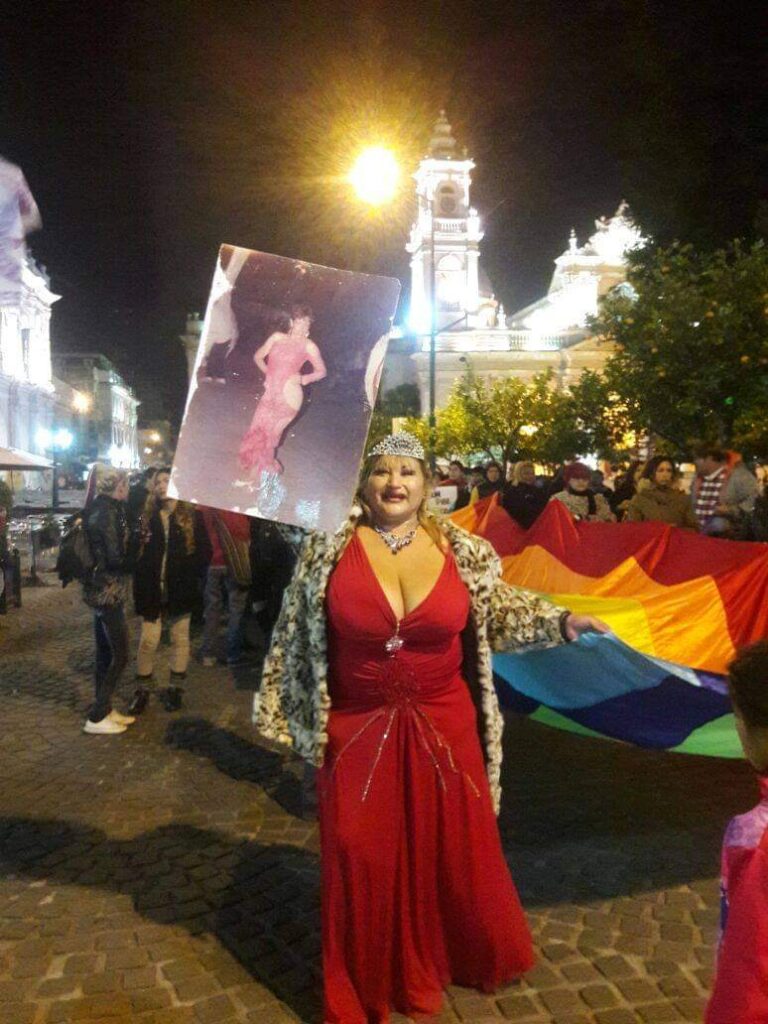
María Pia Ceballos, trans activist and communicator, remembers Pelusa Liendro, founder of the Pride march in Salta, and the trans women and trans people who together with Lohana Berkins are part of the memory of the struggles.


Share

Every November in Salta and many other places in Argentina, LGBTQ+ Pride is commemorated. In northern Argentina, this community gathering is rooted in the political history of street struggles, with bodies, demands for rights, and the defense of our Pachamama (Mother Earth). We are plurinational queer people against discrimination and the violence that breeds oppression and death. We have pride, but also the memory of resistance and how we got here, thanks to the struggle of so many trans and travesti sisters who join us this month from the red sky of trans women. For them, too, we hold our trans remembrance , to honor all those who have passed away, victims of violence and prejudice.
Marika, not one step back
Sister and trans activist Lohana Berkins taught us: “In a world of capitalist worms, you have to have the courage to be a butterfly.” In Salta, as in so many other places in Latin America, without that fighting courage, transvestites and trans people wouldn't exist. Salta is transvestite land: many of us were born here, some emigrated in search of better opportunities, some arrived expelled from their towns, others left in the face of police violence. And then there are those of us who fight from our territories, shouting for federalism. As Lohana told us when, in 2014, the women of the Plurinational Gathering in Salta transformed the courtyard and the Victorino de la Plaza business school into a transvestite space, creating agendas and building connections beyond this province: “Queer, we have to keep going, not a step back, you know that.”
Lohana's Salta, Pelusa and memory
Nineteen years ago, Lohana marched through these streets; today, her spirit continues to parade with feathers and glitter, shattering the colonial mold of a privileged society. Lohana's Salta is also the Salta of Pelusa Liendro, founder of the Pride march in our province. They are our historical figures, along with Pocha, Vanesa, Mirna, Sole, Pampita, and so many other women who fought to live in a different world.
Pelusa knew about the violence and inhumane abuses of the police force. Her body, and those of hundreds of her companions, bore witness to that cruelty. She denounced and brought to light the problem of the articles of misdemeanors, the regulations that legitimized the abuses against the trans and travesti community in Salta.

Pelusa: against police violence
More than 20 years ago, fueled by the fury of the transphobic murder of Tatiana Ortiz—whose body was found—Pelusa Liendro raised her voice. She became a leading figure in the trans and travesti struggle for the repeal of the provincial codes of conduct. She called for us to mobilize in the streets, to feel proud of who we are. She became the founder of the Pride march in the province.
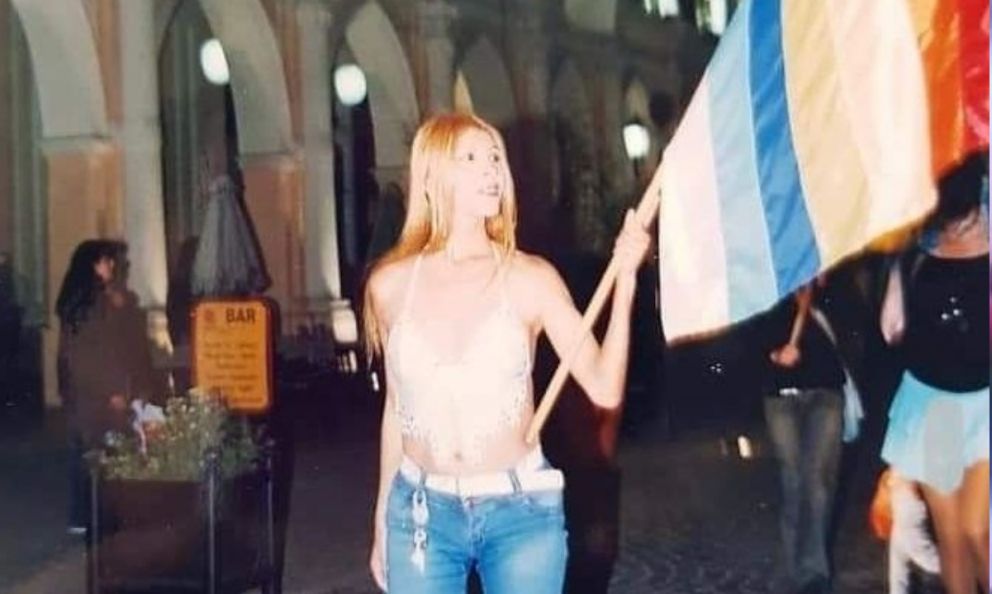
In 2003, she marched alongside a small group of trans women. From the sidelines and sidewalks, some gay and lesbian comrades accompanied her, fearful but convinced: it was time. Three years later, Pelusa was brutally murdered. Her friends share the same suspicion: it was the police.
Write so as not to forget
Rosario Sansone was Pelusa's friend and comrade. She remembers her as both moved and joyful, sharing many anecdotes of struggle and survival. "I remember my friend, whom I miss and love." Rosario is collecting newspaper articles, videos, and photos. She's researching while writing a book about her experiences with Pelusa and other trans women in the area. "I want to publish this book so we don't forget. So that it lives on in the memories of the trans community," she says.
Rosario is a survivor. “Other women didn't make it, but together we dreamed it, together we resisted. My wish now is that the State that persecuted us for decades apologize for all the harm done to us. Also, to try to heal my pain, I would like an acquittal,” she wrote. “Just as I was judged and imprisoned for being and belonging to a certain gender. One might think I lived a very sad life, but I want to tell you that I was immensely happy, mainly because I was true to myself and my feelings, and even though I couldn't be everything I am, I was still able to break established social norms.”

Jackie Miller and our first march in Salta
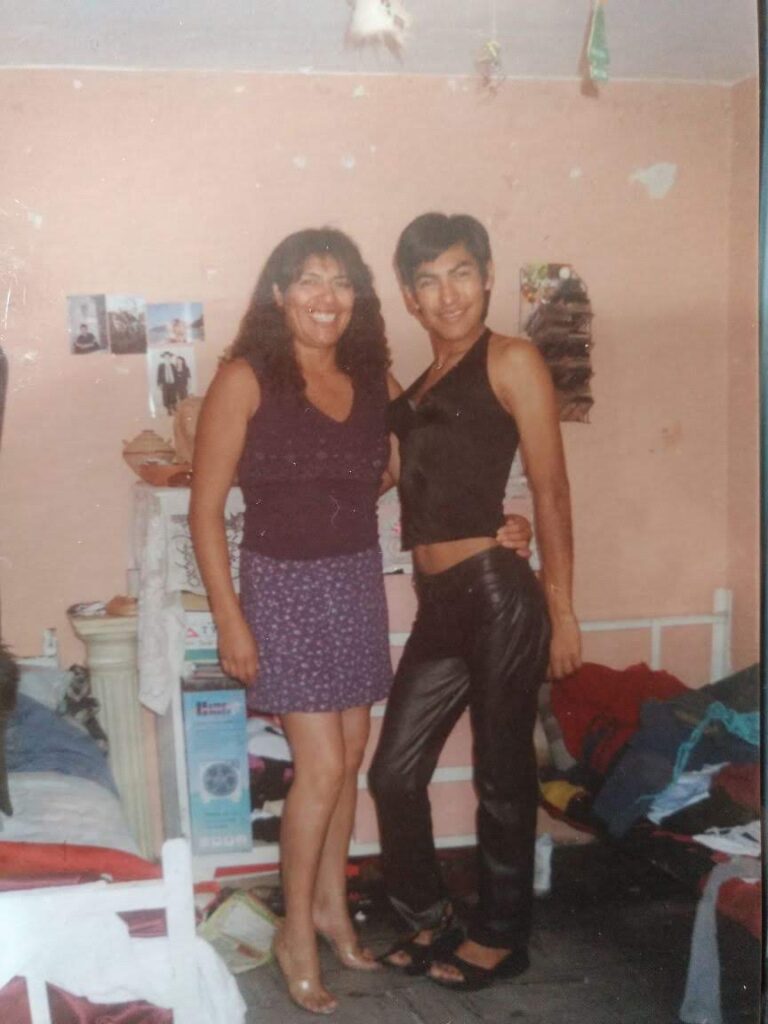
A little before the first march, I was living in the Limache neighborhood. There I met my friend Jackie Miller. Her parents soon forbade her from seeing me because “he was a faggot.” According to them, “he was going to turn their son into a freak, a transvestite,” “he talks like a woman and walks with a sway, very effeminate, the freak.”
I remember those whispered words, not only from my friend's parents but also from the neighbors. Long gone were the days of worrying about what others thought; I didn't care. Insults had become part of my shield, a way to soften the blow. Back then, Jackie and I found ways to see each other, escape the world, and go out together. We visited Wolf and África, two places where we met other trans women.
Jackie was already out on the streets at 17. Her family would kick her out, then call her back. We marched together in the first trans march of 2003. We were afraid. They threw garbage at us from the peaceful colonial-style houses of Salta, but we went. Jackie, my trans sister, the one I met when I was 13 and who is no longer here: she died a victim of social transphobic violence. Her memory deserves its own chapter to give visibility and recognition to the great artist she was.
We're never going back to the dungeon!
Today we continue to raise the banners of justice for our sisters who died victims of hate crimes and prejudice, shouting "Enough with transfemicides and travesticides!" The march is not over. Nor is the struggle. Articles 114 and 115 of the current Misdemeanor Code ( see end of note ) continue to be used by the police to harass and persecute our sisters.
It's not over
He has not died
roars from the red sky of the transvestites
The message roars in the friend
in Rosario
and the marches will continue
until the end of time
Every woman who survived the 80s, 90s, and 00s should be considered a survivor of the dictatorship. The same torture methods used during the last civic-military dictatorship were employed in the democratic era. Social violence has been constant throughout these decades, but police violence has been brutal and systematic.
Solitude and other butterflies from Salta
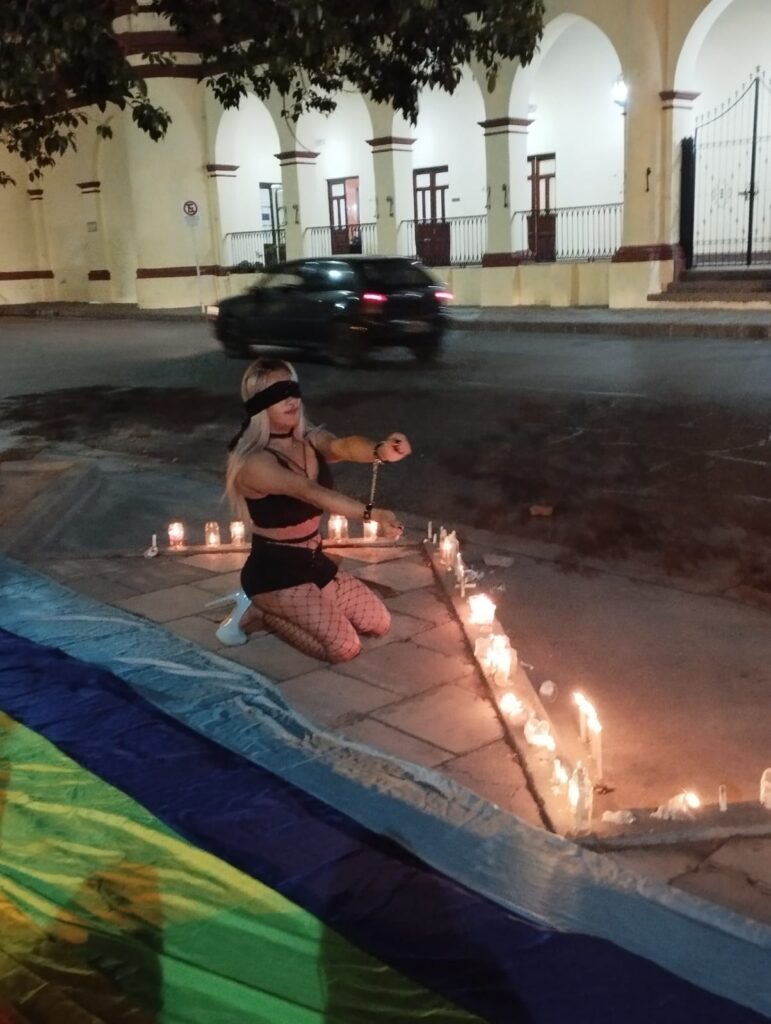
November is a month of struggle for us. On the first Friday, we lit candles at Police Headquarters. In doing so, we remembered our comrades, those who gave their lives fighting for a world more inclusive of our identities. The message to the police: “This way of beating people will end” and “Enough! Repeal Law 114 now!”
Another moment of the vigil was to call for the search for Tehuel de la Torre, a 22-year-old trans man who left his home in San Vicente on March 11, 2021, looking for a job and never returned. Where is Tehuel? We also remembered Santiago Cansino: the 14-year-old from Salta who disappeared in 2017. Four years later, his remains were found in an area near the courthouse. His gender identity was not respected by the justice system, at the school he attended, or even by his own family.
We also remembered sisters like Soledad de los Ríos. In the video, Sole asks for justice for Pelusa's murder. A friend and comrade, she opened her home and provided snacks to more than 25 children in the Libertad neighborhood, in the southern part of the city. Sole exemplifies the socio-community commitment of our comrades, showing how they build connections in neighborhoods, community centers, soup kitchens, after-school programs, and markets. We remember Sole for her leadership during the most difficult times, like the 2001 crisis. We were activists together in the neighborhoods; she was a great role model for me.
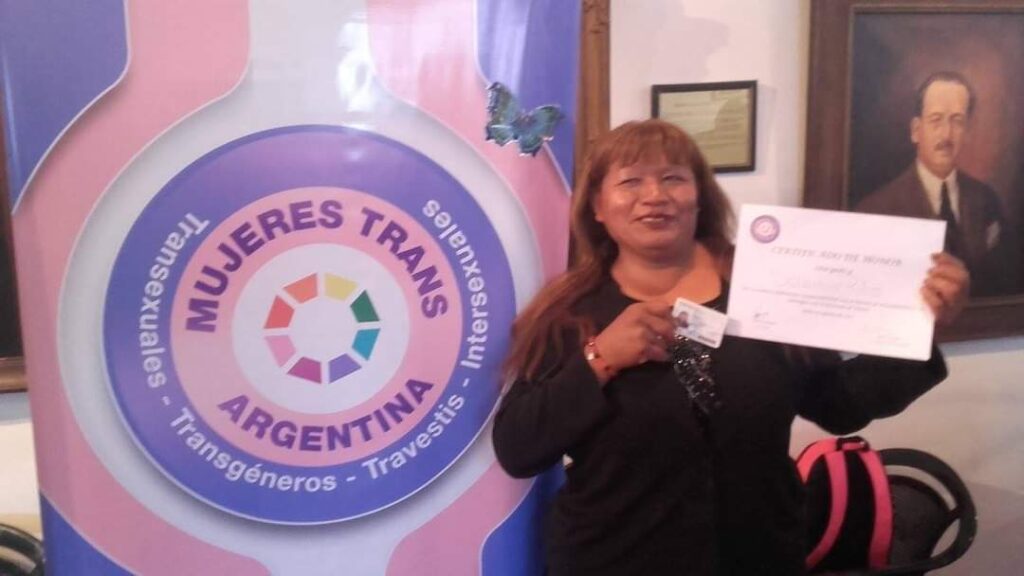
Remembering the butterflies that fly in the red sky of trans women is remembering sisters like Soledad, Vanesa Sanders, and also Sister Lorena Flores from Cafayate, and Goyo Martínez from the Guaraní community of Orán. It's remembering Celina Pampita from La Merced, and so many other comrades throughout the Plurinational State, who left behind invaluable lessons and fought for a better world. They will live forever in our memory. Now and forever, now and forever, is the cry from the red sky of the trans women of Salta.
What we are asking for at the 19th Pride March in Salta
-These are some of the points that the 19th Pride March will carry as slogans, allowing us to problematize the agenda of care policies, proposing the integrality of care and valuing the experiences of our community.
-The repeal of Article 144 is one of the slogans of the march, along with the demand for the effective implementation of the trans job quota in the provinces, federalization, and the realization of opportunities in our territories.
We are raising the banner for the effective implementation of National Law 27.675, the Comprehensive Response to HIV, Hepatitis, Sexually Transmitted Infections, and Tuberculosis. It is essential that the province adhere to the law and that it be put into effect. We hope it doesn't suffer the same fate as the trans employment quota law, which lapsed and, years later, Salta legislators continue to make no progress on addressing the quota, ignoring the fact that we are dying and doing nothing.
We demand that this province, its municipalities, and the executive, legislative, and judicial branches comply with Law 27.636, the Diana Sacayán-Lohana Berkins Law, which promotes access to formal employment for transgender and transvestite people. Access to employment for trans people is crucial as a public policy, yet debates remain fraught with prejudice, and years go by without transgender people entering the workforce, with a life expectancy of only 38 to 40 years. It is urgent to reverse this situation, and this requires affirmative action, which the government refuses to implement.
-The specific need for comprehensive public policies for lesbians and non-binary people and reparation and compensation for older adults is important, ensuring a dignified old age for the LGBTQ+ queer sexual diversity community.
EDITOR'S NOTE: The Code that remains in force in Salta: Law 7135. Contravention Code. TITLE XIII PROSTITUTION.
Article 114 – Persons who solicit or offer sexual services for money or other compensation in public streets or public spaces shall be punished with arrest for up to twenty (20) days or an equivalent fine. In cases where municipalities designate public spaces for the practice of the aforementioned conduct, the offense shall be waived.
ART. 115. – Anyone who, in public or private spaces with public access, displays conduct or actions, physical or verbal, with sexual connotation, against any person, which directly or indirectly affects or disturbs their life, dignity, freedom, physical or psychological integrity or free movement, creating intimidation, hostility, degradation, humiliation or an offensive environment, will be punished with arrest of up to twenty (20) days or a fine of up to twenty (20) days, provided that the act does not constitute a crime.
Share
We are present
We are committed to journalism that delves into the territories and conducts thorough investigations, combined with new technologies and narrative formats. We want the protagonists, their stories, and their struggles to be present.
SUPPORT US

FOLLOW US
We are present
This and other stories are not usually on the media agenda. Together we can bring them to light.