

Liz, Nicole, Kimberley, Martha and Karen: five transfemicides in the first 10 days of November in Mexico
The organizations denounce the poor performance of the prosecutors' offices and demand respect for the sexual identity of the victims.


Share

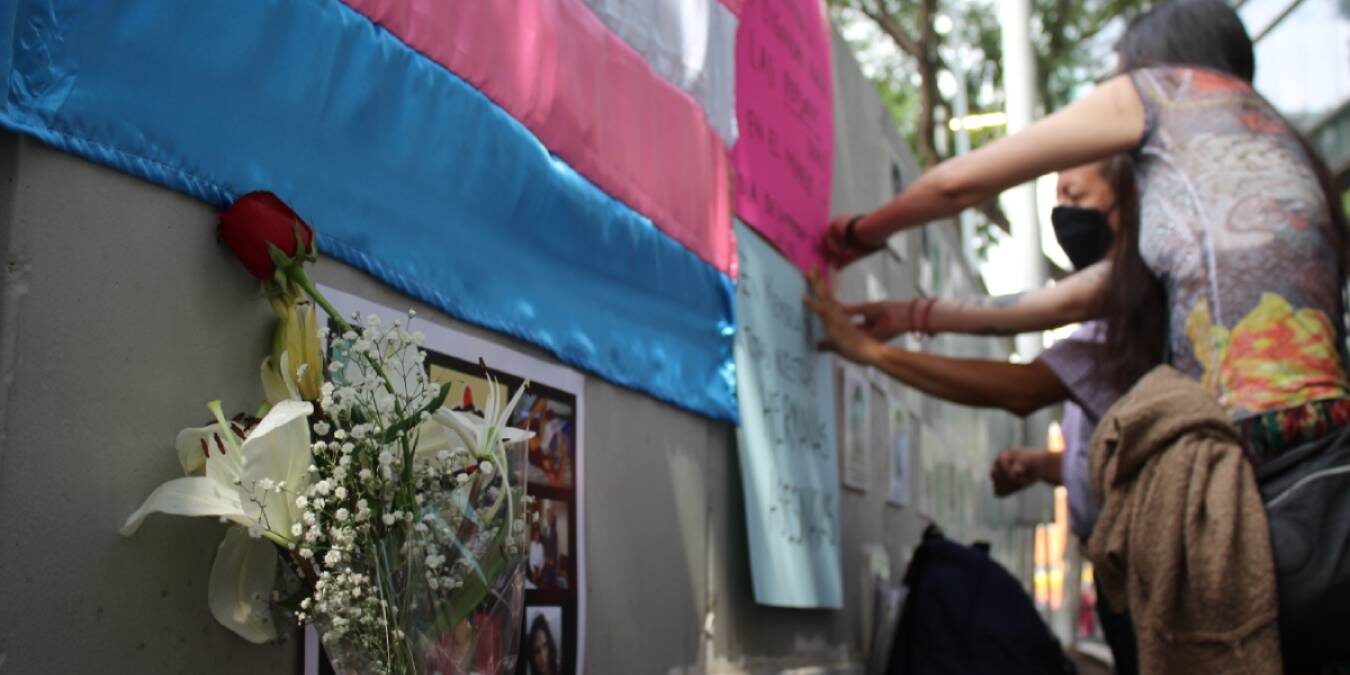
MEXICO CITY, Mexico. In the first days of November, five trans women were murdered in Mexico. Liz (18 years old) in Tamaulipas ; activist Nicole (29 years old) and Kimberly in Morelos ; Martha Torres (58 years old) in Guanajuato ; and human rights defender Karen Sánchez (21 years old) in the State of Mexico .
So far in 2022, at least 24 transfemicides have been recorded, according to the count by the organization Letra S. In recent years, violent deaths of trans women in the country have been on the rise: 55 cases were recorded in 2021, compared to 43 in 2020.
In other words, if trans women represented 54.5% of the victims of hate crimes in 2020, by 2021 they represented 70.5% of the total number of hate crimes.
Liz wanted to transition
Lizbeth Guajardo Hernández (18 years old) lived in Ciudad Victoria, Tamaulipas. She loved banda music and is remembered for dancing tirelessly at weddings, quinceañera parties, and anywhere else she could go.
She disappeared on August 16th in the municipality of Padilla. Her brother reported on social media that Liz had gone with a friend to the Vicente Guerrero Dam, about thirty minutes from Ciudad Victoria. That was the last her family heard from her. The friend told the family that they both returned to the city and Liz stayed at a shopping mall. But on the night of November 2nd, Liz was found dead on a path leading to the Vicente Guerrero Dam, between the municipalities of Padilla and Jiménez.
Press reports indicate that, due to the condition of the body, it was initially impossible to determine if there were signs of violence. The State Prosecutor's Office opened an investigation and an autopsy was performed.

Liz was rejected by her family for being a trans woman, a friend who chose to remain anonymous Agencia Presentes
Her loved ones said goodbye to her at the Ejido Juan Ramón cemetery on November 7th. They remembered her with dancing and music from Los Huapangueros de Hualahuises, her favorite musical group. Although the LGBT flag was placed on her coffin, Liz was not called by her chosen name during the ceremonies.
“I felt they were looking down on her because it was her, not him. That's how she chose to be, and we're not the ones to belittle people. She fought for what she wanted, and despite her young age, she lived a full life,” says her friend. According to her, Liz's dream was to cross into the United States to transition.
Fundamentalist groups and the rejection of the LGBT community
Liz's murder wasn't the only hate crime reported in the state that day. In Altamira, 55-year-old Benito "N" was murdered. He was a gay man who had moved to the San Juanito neighborhood two weeks prior. His body was found inside the house he rented. Benito suffered a large wound to his forehead, inflicted with a hoe.
Both incidents occurred a week after same-sex marriage was legalized in Tamaulipas. It was a hard-fought victory that faced strong opposition from evangelical and religious fundamentalist groups.
“They fostered absolute rejection of the LGBT community and hate crimes. Many people disagree with the rights being demanded: marriage equality, the trans identity law, the employment quota law for trans and non-binary people. Even those same groups wanted to put them to a referendum. Rights are not subject to referendum,” says Ana Karen, director of VIHda Trans , in an interview with Presentes .
The activist believes the increase in violence may be a reaction to the political influence of activist groups in Tamaulipas. Celso Pérez Ruiz, director of Tendremos Alas AC Tamaulipas, told Presentes that five hate crimes were reported in the state in the last month.
“With this political transition, the LGBT community is falling into a partisan agenda that goes beyond the rights agenda. That's why we've been among the last states to make progress,” says Celso Pérez about the state's context.
“We are demanding a human rights framework that needs to be legislated now,” says Ana Karen. On December 10, International Human Rights Day, the activists will present the gender identity bill to a group of legislators.
The Tamaulipas Human Rights Commission calls on the media not to misgeneralize
The Tamaulipas Attorney General's Office revealed Liz's real name when it issued her missing person report. From that moment on, when reporting her death, local journalists and media outlets used her birth name, masculine pronouns, and dehumanized Lizbeth.
On November 8, the Human Rights Commission of the state of Tamaulipas issued a statement urging media outlets to "refrain from publishing anything that directly or indirectly incites ridicule, hatred, violence, exclusion, or discrimination against members of the LGBT community." The statement notes that the right to gender identity is recognized by the Inter-American Commission on Human Rights (IACHR).
“This commission condemns any act that violates or threatens the conditions necessary for the progress of trans people and their right to gender identity and makes training available to them on gender equality and equity,” the organization says.
Nicole Reyes and Kimberly Mendoza, victims of violence
Renata Nicole Duarte Reyes (29 years old) founded the Cuautla Diversity Collective . She organized health fairs in her municipality, offered HIV and syphilis testing, gave empowerment workshops for trans women, domestic workers, and sex workers, and distributed condoms and lubricants to LGBT people free of charge. Nicole also had an impact in other states.
Nicole was murdered and her remains were found on November 4th in the Cerritos neighborhood of Cuautla, Morelos. The body of another trans woman, Kimberly Fernanda Mendoza, was also found at the scene. Both showed visible signs of violence.

"The murder of our comrades Nicole and Fernanda strikes us all in the deepest strife. We have lost young, resilient women. Nicole, an undisputed leader, who served as director of her collective, was not allowed to live beyond the life expectancy of a trans person, just like Fernanda. They were murdered by the bullets of hatred, of patriarchy, of the absence of the state," wrote Realitrans Ac, the Trans Collective of the State of Mexico and its surrounding areas, the Tenancingo de Degollado Trans Resistance Collective, and the Lázaro Cárdenas Michoacán Sexual Diversity Collective on Facebook.
The Morelos Citizen Observatory for Human Rights and Sexual Diversity lamented the two trans femicides: "We condemn the events that occurred in the eastern part of Morelos. We reiterate our request to the competent authorities for the clarification of what happened."
In Morelos, LGBT groups have fought to have hate crimes classified as crimes against women and to penalize efforts to change sexual orientation or gender identity (ECOSIG). The cases of Nicole and Kimberly are preceded by the murder of Paula Michelle on July 4th of this year. Her body was found on Plan de Ayala Avenue in Cuernavaca. And in April, Erick Castillo, a gay man, and Christian, a trans man, were also murdered.
Local media reported that three more femicides occurred in Cuautla in less than 24 hours. According to the report, the bodies of three women were found in six plastic bags in the Campo de Enmedio neighborhood.

Impact on activism
“Anger, sadness and frustration” are the feelings that the news of the transfeminicide of Nicole and Kimberly provokes in Tania Nava, director of Acciona, Diversity Committee of Morelos .
Nicole's activism, "is work that leaves a legacy, and it fills us with frustration that there is no justice. It generates uncertainty and fear. Many of our fellow activists no longer want to give interviews; they fear for their families," she states in an interview with Presentes .
According to Tania, who has been an activist for over fifteen years, there is still a great deal of work to be done in the country to raise awareness about LGBT experiences . In Morelos, there is a conservative mindset and prejudice against sexual diversity that is often fostered by churches. Religious groups tend to oppose same-sex adoption, do not recognize diverse families, and have even gone so far as to sabotage Pride celebrations.
The controversial performance of the prosecutors
On November 7, the head of government of Mexico City accused the Attorney General of Morelos, Uriel Carmona Gándara, of covering up the femicide of Ariadna Fernanda López Díaz. The case gained media attention because forensic authorities in Morelos claimed that the 27-year-old had died from aspiration pneumonia due to alcohol poisoning. They also stated that her body showed no signs of violence. However, forensic examinations conducted in Mexico City demonstrated that Ariadna died from multiple traumatic injuries.
This is not the first time that the forensic authorities of the State Attorney General's Office have been questioned.
In 2020, Elizabeth Montaño, a 47-year-old trans doctor and head of the Educational Quality Department at the Siglo XXI Hospital of the Mexican Social Security Institute (IMSS), disappeared. She was found dead on June 18 on a highway in Morelos, apparently without signs of violence. The Morelos Attorney General's Office concluded that Elizabeth had committed suicide.
“I feel like Morelos has been used as a dumping ground. Women are always left on the Mexico-Cuernavaca highway. What's going on with this situation?” says activist Tania Nava. She states that at least ten women have been murdered and their bodies dumped on that highway this month alone.
Murdered in her home
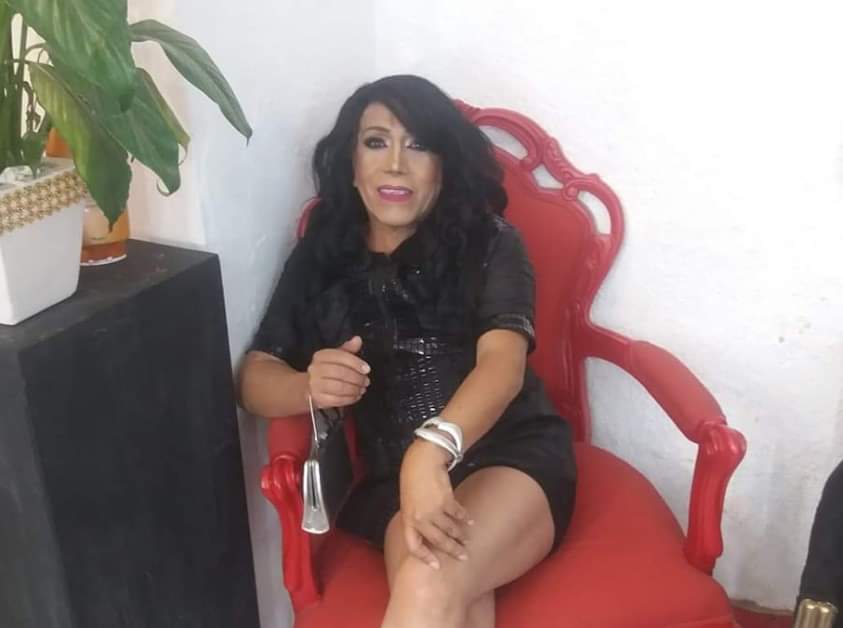
Martha Tomelí was 58 years old. She used the stage and social name Martha because she was a drag performer and enjoyed putting on shows. She also choreographed children's school dances and taught aerobics. She used her pronouns, "she" and "he," interchangeably.
Thursday, November 3rd, was the last day her loved ones heard from her. On Sunday, November 6th, neighbors called the police after noticing a foul odor coming from inside Martha's house. Around 8:00 pm, she was found dead inside her home in the Las Heras neighborhood of Irapuato, Guanajuato.
Local media report that Martha's autopsy revealed she died from asphyxiation by hanging. According to Facebook posts by family members, Martha's partner is believed to be responsible for the crime, as there was a history of abuse and financial violence in their relationship.
The next day, Martha's vehicle was found abandoned in the El Milagro neighborhood. No arrests have been made, and her family is asking for help in locating Martha's partner.
“You leave a huge void in our hearts, we will miss you so much. You were always so cheerful and such a lovely person. Thank you for your sincere friendship. May God have you in his holy glory, my friend. A kiss and a hug. We trust that wherever you are, you will continue to triumph as always,” Irapuato Pride wrote on social media.
Family and friends attended her funeral, demanding justice for Martha.
According to the Letra S organization's records, while Veracruz had the highest number of murdered gay men in 2021, with eight cases, Guanajuato had the highest number of murdered trans women, with seven cases.
The organization notes that in that year, “at least 16 victims had been subjected to threats, mistreatment, attacks and offenses. Or they were reported missing days before their lifeless bodies were found.”
A transfemicide in a public place
Karen Sánchez Álvarez (21 years old) was a migrant, activist, and sex worker from Toluca, State of Mexico . She was part of the State of Mexico Human Rights team, the State of Mexico and Surrounding Areas Collective, and the Realitrans collective. She participated in research projects to understand the health problems of Mexican trans women, focusing on HIV prevention and sexual and reproductive health.
She was murdered with a firearm on November 10th in the State of Mexico, in broad daylight. Activist Jazz Bustamante states that the location where the murder occurred is “highly dangerous.”

The Realitrans collective condemned the murder through its Facebook page: “The State is unjust. It continues to treat trans women as second-class citizens: there are not enough opportunities, no job quotas, and no ability to acquire quality goods and services, housing, food, and formal employment.”
The group stated that they have been in constant contact with authorities from the Attorney General's Office of the State of Mexico, the Executive Commission for Attention to Victims, and the Secretariat for Women, who have provided them with support.
Just this past August, Jessica Zoé was murdered in Ecatepec , State of Mexico. Since 2015, the state has recorded 27 trans femicides.
We are present
We are committed to journalism that delves into the territories and conducts thorough investigations, combined with new technologies and narrative formats. We want the protagonists, their stories, and their struggles to be present.
SUPPORT US

FOLLOW US
Related notes

We are present
This and other stories are not usually on the media agenda. Together we can bring them to light.