

Salta: Provincial deputy under investigation for sexual abuse of a Wichí teenager
The complaint was filed by her mother, who also reported that the police tried to derail the investigation.


Share

SALTA, Argentina. A woman from the indigenous community of Misión La Cortada, in the northern part of Salta province, filed a criminal complaint against provincial deputy Rogelio Segundo. He is accused of the alleged sexual abuse of her 17-year-old daughter. The woman also accused the legislator's driver—her son-in-law—of facilitating these abuses in exchange for money. She asserted that there are other victims of these practices.
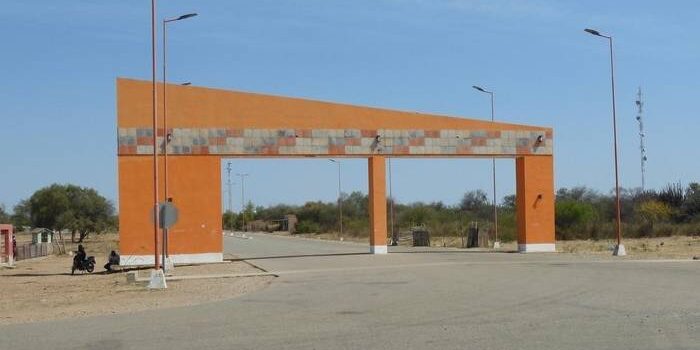
Misión La Cortada is a community of the Wichí people. It is located within the urban area of the town of Coronel Juan Solá (also known as Estación Morillo), more than 400 kilometers from the city of Salta, Rivadavia department , in northern Salta province.
The legislator in question is also a member of the Wichí people. He resides in the La Curvita community, within the municipality of Santa Victoria Este, on the tri-border area shared by Argentina, Paraguay, and Bolivia, more than 500 kilometers from the provincial capital.
What happened
The mother asserted that the alleged incidents have been occurring since last August and continue to this day. Her daughter recounted that in August, the driver and the legislator took her to the city of Tartagal, in the San Martín department, nearly 200 kilometers from Coronel Juan Solá. She also said that they took her to La Curvita and made her drink alcohol, causing her to lose consciousness.
The case is being handled by Lorena Martínez, the prosecutor specializing in domestic and gender-based violence in Tartagal. As a first step, she ordered that the teenager be examined by the medical service of the Criminal Investigation Corps (CIF). She also requested that the Victim Assistance Service (Savic) provide her with support and ordered a police presence at her home. The Salta Public Prosecutor's Office reported that the prosecutor also summoned the provincial legislator and his driver.
Sources close to the teenager's family informed Presentes that a medical examination confirmed the girl had been abused. It was also confirmed that she is pregnant.
Meanwhile, the Public Prosecutor's Office of Salta opened another investigation, this time concerning police officers from the 44th Precinct in Coronel Juan Solá, who received the mother's initial complaint and allegedly committed a series of irregularities. These included notifying the legislator.
In this case, the criminal prosecutor of Embarcación, Gabriela Souto, is involved. "Immediately upon learning of the situation, Prosecutor Souto sent personnel to interview the complainant so that she could be summoned to the prosecutor's office" to "receive her complaint regarding the police action." She clarified that the "appearance will be scheduled according to the woman's availability," as she is currently with her daughter.
A common practice
The mother told Presentes that these events began in August of this year, when her son-in-law and the legislator took her daughter "without consulting me" and returned her much later, in a state of intoxication. "They dumped her in the street near my mother's house," she recounted.
She said she learned of other similar incidents later. She recounted that she decided to file the report at the urging of her mother, the teenager's grandmother. Her mother warned her that her daughter risked losing her life by pursuing the matter. "I'm afraid that what happened to other girls will happen to my daughter," the mother said before recalling other attacks, some fatal, against girls from the Wichí community, such as the murder of 13-year-old Pamela Julia Flores, and the missing girls, like 14-year-old Norma Márquez, who was last seen in June of this year.
What also triggered her decision to report these events was the scare she experienced on Thursday, November 10th. She learned from acquaintances that her daughter had gotten into a car with the driver and the legislator, and had left for Tartagal.
Acculturation and addictions
The complaint from the mother in Misión La Cortada comes just days after the attack on a 12-year-old Wichí girl in the Bajo Grande community of Santa Victoria Este. A boy under 14, also a member of the Wichí people, has been charged in connection with this incident.
In both cases, the attacks occurred in contexts of acculturation processes and the growth of addictions, which affect indigenous children, adolescents, and young people in northern Salta more strongly.
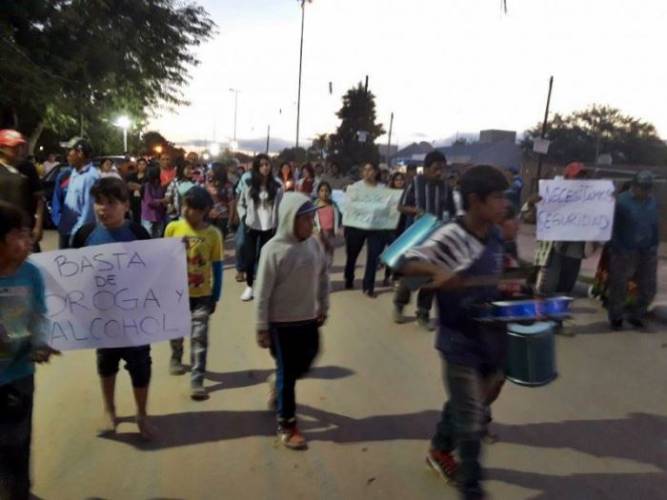
In fact, residents of both Alto La Sierra, the town to which Bajo Grande belongs, and Coronel Juan Solá held public demonstrations drawing attention to the rise in addiction among the younger population of the indigenous communities. In the latter town, cases were reported of children as young as eight inhaling gasoline and consuming other drugs and alcohol.
Constant violation of rights
The mother of a young woman from Misión La Cortada admitted that her daughter drinks alcohol. The woman, who works as a school custodian, is the mother of six children: five daughters and one son. Their ages range from 21 to nine.
The mother recounted that the abuse of her 17-year-old daughter allegedly began when she was in the Los Baldes community, 35 kilometers from Coronel Juan Solá. There, the teenager went to care for her niece, the daughter of the driver, and her 18-year-old sister. According to her initial report, the teenager moved to Los Baldes two or three years ago.
The case of the 18-year-old also highlights the human rights violations suffered by Indigenous people. Her mother recounted that she had reported her son-in-law earlier this year for assaulting her eldest daughter. They had been living together for four years, meaning the incident occurred when she was a minor.
The mother said she opposed the union because she feared the young man, now 26, would abandon her daughter. He had already done so in two other cases. She explained that her current son-in-law had previously been involved with another underage girl, whom he abandoned after the birth of a child resulting from that abusive relationship. He then did something similar with another young woman.
The woman currently has no contact with her son-in-law or her 18-year-old daughter. Therefore, she cannot know their current situation. The young woman lives in Los Baldes, the same town where the driver is originally from.
The irregularity when they report
On the other hand, the mother reported that in Coronel Juan Solá she encountered obstacles at the local police station and at the local hospital.
According to her account, on November 10th at 8:40 PM, she went to Police Station 44 in Coronel Juan Solá to report that her 17-year-old daughter had gotten into a vehicle driven by her son-in-law in Los Baldes. She asked for help finding her, as she was certain her daughter was in danger. The following day, at 2:40 AM, she reported that her daughter had been found and showed no visible injuries.
In that first complaint, the woman accused Congressman Rogelio Segundo. But the police officer who attended to her didn't record the legislator's name, and later allegedly informed him of the complaint against him. That's why, on November 12, the woman traveled to Tartagal to file another complaint, this time at Police Station 42. A person who accompanies the mother and grandmother in their legal proceedings told Presentes that what the police officer from Coronel Juan Solá did is a common practice in the area. It involves exchanging favors with people who hold a certain amount of power, such as a legislator.
In her complaint filed in Tartagal, the woman added that “a week ago,” when her 17-year-old daughter was in Los Baldes, her son-in-law offered her a bag of thousand-peso bills or a bag of clothes. He told her that if she wanted any of it, she had to have sex with whomever he told her to. When her daughter refused, the man insisted, saying that he would take her in his car to where someone else would be waiting.
We are present
We are committed to journalism that delves into the territories and conducts thorough investigations, combined with new technologies and narrative formats. We want the protagonists, their stories, and their struggles to be present.
SUPPORT US

FOLLOW US
Related notes


We are present
This and other stories are not usually on the media agenda. Together we can bring them to light.