

The Trans Memory Archive arrives at the Bicentennial Museum with a never-before-seen exhibition
The exhibition will remain open to the public with free admission until January 15, 2023.


Share

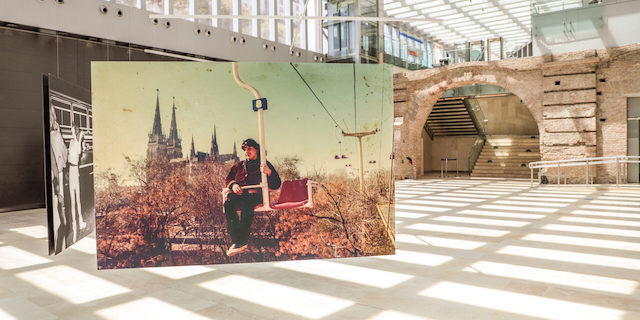
BUENOS AIRES, Argentina. A gathering of friends. A birthday party. Eroticism and romance. Everything that makes up the daily lives of so many people is, within the framework of this exhibition, truly revolutionary. The exhibition “Our Memory,” curated by the Trans Memory Archive and the National Bicentennial Museum, brings to the forefront something that has so rarely been given prominence: the voice of the trans community to tell its own story.
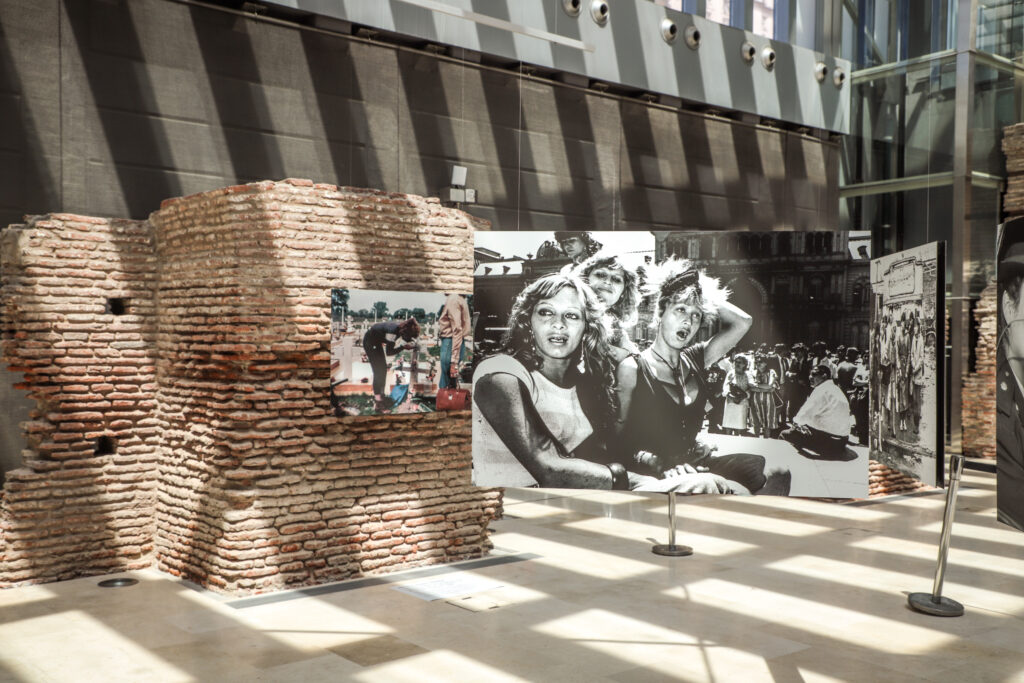
“Our Story” takes a journey through both those media and popular representations that have permeated the popular imagination and the way in which trans people themselves decide to show themselves to the world, and will thus reveal nuances and complexities of the community that are not usually explored.
The text from the Trans Memory Archive accompanying the exhibition underscores that representations of trans people can be classified into two main groups: as victims, passive and defenseless, or as perpetrators; deviant, associated with sex work and drug trafficking, criminal, sick, and dangerous. Never in a meeting with friends, a birthday party, or experiencing a romance.
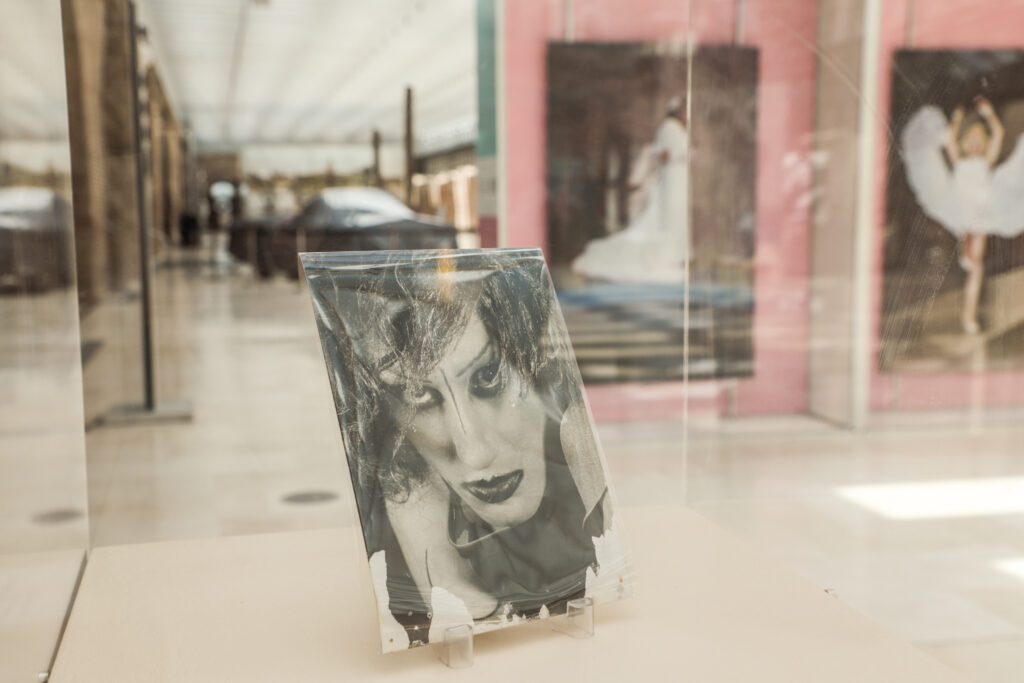
The exhibition begins with archival photos from the newspaper Crónica during the 1980s, where scenes featuring trans people are invariably depicted in police reports or tragic, morbid, and dramatic contexts. It also includes photos of the first protests by the trans community in Plaza de Mayo, even before they were politically organized. Finally, the exhibition concludes with images from the Trans Memory Archive itself, which offers a glimpse into the community's private life, including its activism, exiles, and celebrations, among many other everyday moments.
"A conversation between the General Archive of the Nation and the Trans Memory Archive"
“This exhibition is a perspective, a conversation between the National Archives and the Trans Memory Archive,” María Belén Correa, director and founder of the Archive, explained to Presentes . “This will allow the photographs to begin conversing with each other about a time of persecution, of various human rights violations that occurred with a complacent state.”
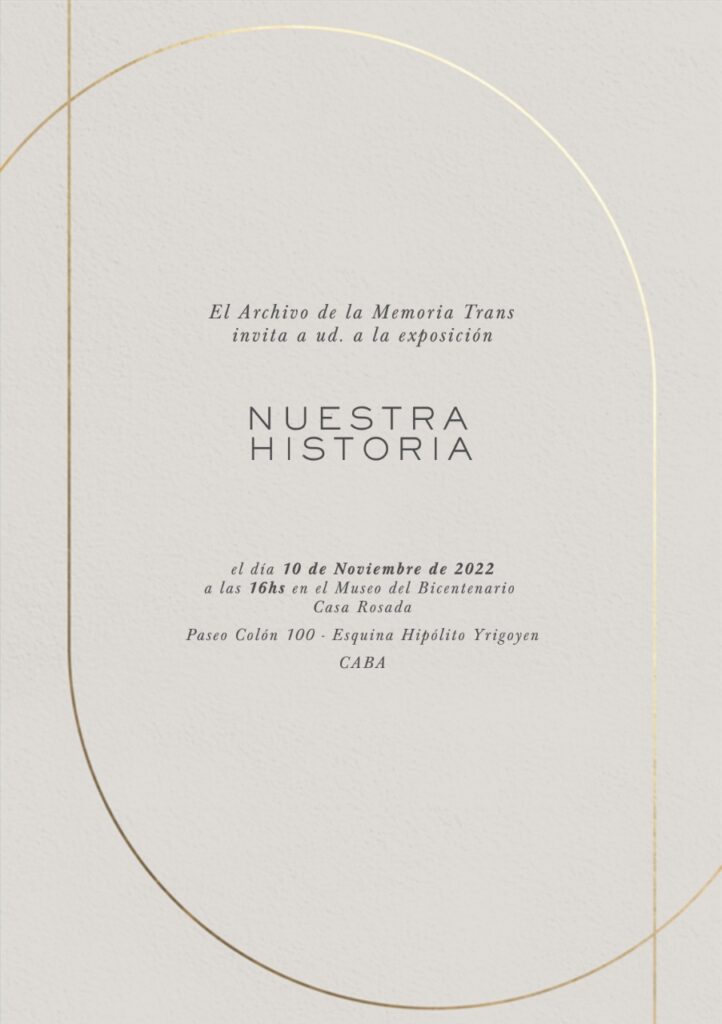
In this sense, it is especially interesting that the exhibition is taking place in the Bicentennial Museum, a space steeped in history and presidential traditions where the focus is usually on national heroes and institutional democratic processes. This time, the focus will be slightly shifted. Despite continuing to explore historical themes, the exhibition demonstrates, as Mariela Beker of the Bicentennial Museum's curatorial team told Presentes, "how popular organization and struggle are the path to achieving rights. When we talk about the democratic process, we only think about the right to vote and don't connect it to exercising citizenship through demands and organization." The timeline at the end of the exhibition also reinforces this idea, showing how laws are merely the end result of a very arduous journey that begins in the streets and through popular organization.
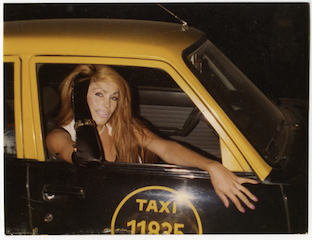
María Belén Correa, for her part, told Presentes that “bringing it to the Bicentennial Museum today is quite symbolic, especially considering that people over 50, to this day, do not have the right to historical redress.” That is why it is especially important to have an exhibition where trans people can be heard in their own voices and seen through their own eyes; that is, as they want to be heard and seen. So that, as the text accompanying the exhibition says, “tomorrow, when someone asks what their first memory of a trans person is, they will remember us as we truly are.”
The Trans Memory Archive
The Trans Memory Archive, created in 2014 by María Belén Correa and Claudia Pía Baudracco, comprises more than 15,000 documents dating from the early 20th century to the 1990s and includes photographs, testimonies, newspaper articles, national identity cards, passports, personal diaries, and letters, among other materials. Its objective is the protection, construction, and reclamation of trans memory.
In other words, the Archive seeks to expose all those lives that were erased for a long time in Argentina, and to highlight those identities that until just a few years ago had neither laws that named them nor social scenarios that accepted them.
Currently the AMT team is made up of María Belén Correa, Ceci Estalles, Car Ibarra, Cecilia Saurí, Magalí Muñiz, Carola Figueredo, Ornela Vega, Luis Juarez, Carolina Nastri, Sonia Torrese, Guade Bongiovanni, Julieta González, Marina Cisneros, Katiana Villagra and Paola Guerrero.
We are present
We are committed to journalism that delves into the territories and conducts thorough investigations, combined with new technologies and narrative formats. We want the protagonists, their stories, and their struggles to be present.
SUPPORT US

FOLLOW US
Related notes


We are present
This and other stories are not usually on the media agenda. Together we can bring them to light.