

Claudia Cabello Hutt: “There were women in the last century who did not submit to the norms”
The researcher is dedicated to studying queer lesbian networks at the beginning of the 20th century.


Share

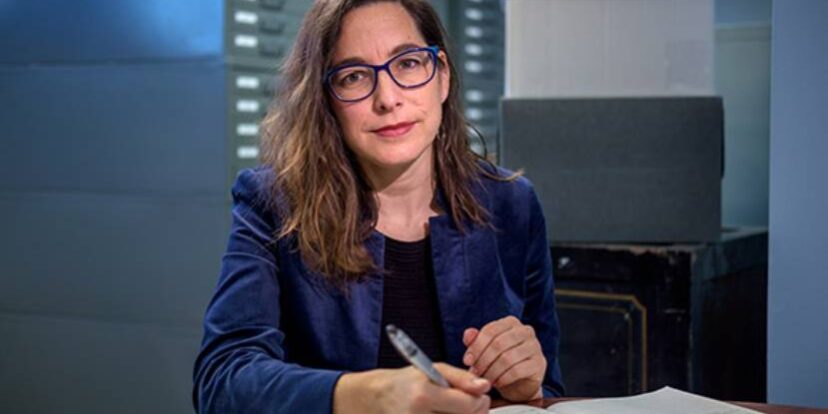
Claudia Cabello Hutt, a Chilean who has lived in the United States for 20 years, holds a doctorate in Latin American literature and is a professor at the University of North Carolina. She says she was very excited when she first saw the physical letters that were written between Doris Dana and Gabriela Mistral.
She proudly recounts that she was one of the first to see those files when a group of volunteers and representatives from the National Library of Chile began to review the thousands of personal objects kept by Dana (who died in 2007), recognized as her executor and partner in the last years of the Nobel Prize winner.
From there, she says, she decided to shift her doctoral studies – she is the author of “Craftswoman of herself: Gabriela Mistral, an intellectual in body and word” (Purdue UP, 2018) – based mainly on highlighting Mistral's prose and thought.
“When I started reading all her essays, her prose, her letters, her lectures, I was fascinated. I didn’t actually come to her because of the topic of dissent. I was interested in her thinking,” she explains via Zoom with RS from the United States.
But going back to the origins of Claudia's research, it began when she learned of Doris Dana's death in the United States in 2007. She says she was worried: “I thought that perhaps the things that would come out of that discovery were going to affect what I was writing. And I began to get more involved in the subject.”
From the moment she discovered Mistral's legacy, Claudia felt she should include this "queer perspective" in her research and future books on the subject, but another situation led her to focus her work more effectively: she slowly began uncovering networks. Yes, networks like maps and threads that intertwine and reveal that, indeed, Doris and Gabriela did not feel "alone" in the mid-20th century and that there were other couples with whom they exchanged letters and shared experiences.
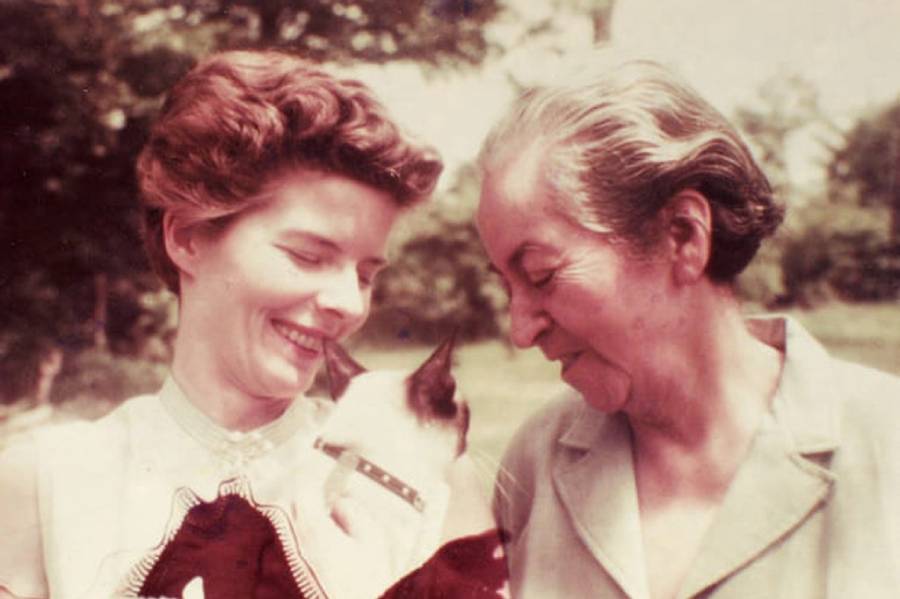
Photo: Argentina.gob.ar-FM Rock&Pop Chile
On these networks, some women shared the everyday aspects of their relationships: trips, beach outings, dinners together, and greetings between couples. Something so common today, yet surprising to many of us, given that it supposedly came from an era considered conservative and sexually repressive. But as Claudia has discovered, these networks existed in the mid-20th century and are worth exploring in their entirety.
Did a queer network, as Claudia calls it, exist among our ancestors? Chilean and Latina lesbians who connected, recognized each other as partners, and supported one another? Following Claudia's discoveries, she opened an Instagram where she shares information about these networks, not only in Chile but also around the world. She receives contributions and leads that allow her to document this vast network of relationships among intellectual lesbians from the 1920s to the 1950s, including not only Mistral and Dana, but also, for example, the sculptor Laura Rodig, who was also Mistral's assistant. Cabello Hutt analyzes this in *Queer Networks: Writers, Artists, and Patrons in the First Half of the 20th Century*. In it, she recounts Rodig's relationship with another woman, the intellectual Consuelo Lemetayer, with whom she lived in Paris in the late 1920s and early 1930s.
-You also mentioned that you were excited to see the physical letters between Gabriela and Doris…
Yes, it was exciting to see and read them. We were supposed to be taking notes quickly; there wasn't much time to read. There were many journalists from Chile interested in Doris and Gabriela's letters. I was afraid that Chilean institutions might keep those letters and make them disappear.
-And that you couldn't do anything about it…
"Well, from then on I decided to include those letters in my book, although I continued to focus on Mistral's intellectual side. I started putting all the pieces of the puzzle together. That's when I realized that this wasn't just about 'the two of them': there was a network, a network of friendship, where many women who led dissident lives were collaborating, and that seemed much more interesting to me than the simple idea that Mistral was queer. Besides, I'm already tired of studying Mistral!" she says, laughing. "I wanted to change the subject a bit."
-How did the process of unraveling this tangled mess unfold?
-I spent many years observing how these women connected and collaborated. That's when I asked myself the question: what was I going to define as "dissidence"? Because these weren't women who would necessarily self-identify as dissidents. I had to create another definition to be able to work with them. A definition that comes from a trans theorist named Jack Halberstam: women who resisted the normative model of heterosexuality, reproduction, and economic dependence on men.
I started investigating what they didn't actually do. And what they didn't do was submit to those norms. Some simply decided to remain single and earn a living on their own. Others decided to take their children and build their lives with another woman. So I broadened the definition to include these women who had lived all these lives. Because what is obvious is that these were dissident lives. These are women who actively decided, from a young age, not to get married. Even Gabriela Mistral laughed about it. There are several audio recordings where she talks with Doris and laughs because they were reading the poem "We All Wanted to Be Queens," and in the part where it says that Lucila didn't get married, they both start laughing and saying, "I wouldn't dream of it..." or they commented that she never wanted to learn to cook, etc. In those gestures, I see an active decision.
-Women who resisted the mandate…
-Exactly. I'm interested in all those women who resisted the mandate. Who they slept with, what they did, I don't know, but what I do know is that they decided to go their own way. By going their own way, they lose biological families, for example, they lose sources of income, and they have to manage things differently. They have to create networks in a different way.
“They were asking for proof that Gabriela and Doris had been a couple”
Is there any basis for saying that these writers actually had erotic or emotional relationships? Can our experience as lesbians serve as a basis for asserting that they had lesbian relationships?
-There's a real debate about who can talk about what. I think that as a researcher or historian, you can do excellent work regardless of your sexual orientation. But I think that when you draw on your own experience, it allows you to see things a little further. For example, having been in a heterosexual marriage for many years, and now having a non-normative family—I've been with my female partner for four years and have a daughter—my perspective has broadened to include a different interpretation of Virginia Woolf.
I wondered if her marriage was a "cover," how her bisexuality worked, and I realized that people haven't changed that much in a hundred years. If there are things we feel and experience today, there are also things that people experienced and felt a hundred years ago. All of this allows us to think far beyond the norm.

-In other words, you understood it more clearly from your own experience…
"In other words, it's possible that Virginia did indeed have a very intimate relationship with her husband; they collaborated closely on her writing, but that relationship may not have been sexual. And that her relationship with the writer Vita Sackville-West was something else entirely. But that those two people could coexist emotionally, I was clearer about that because I experienced it firsthand."
-If you started by investigating Mistral's thought and prose, what obstacles did you encounter when you tried to delve into her queer life?
-They were demanding proof of her private life. Especially from cisgender heterosexual men who questioned the nature of the relationship between Gabriela Mistral and Doris Dana. That somehow made me censor my own research, thinking, "They're going to attack me, I don't have proof..." Over the years I've become much stronger, defending my thesis much more firmly.
-And how did these cisgender heterosexual men demand proof?
-First of all, invalidating my opinion. I should have had proof that Mistral slept in the same bed as Doris. At some point, I stopped pursuing that matter. It wasn't my job to establish whether Mistral was doing something to Doris and Doris something to Gabriela… I mean, I know they slept in the same bed because I have it in the archives. I was fortunate enough to visit their house in Roslyn Harbor, near New York.
-What an opportunity!
Yes, it was very moving. We spoke with the woman who currently lives there. It's a very pretty, small house with a master bedroom. We know that they had a very precious, romantic, and intimate relationship, and that Gabriela Mistral bequeathed all her belongings to her.
-And are there other couples they corresponded with?
Yes. For example, the Venezuelan writer Teresa De La Parra had a relationship with Lydia Cabrera, a Cuban anthropologist, around the same time as Mistral. Teresa also left everything to Lydia. The beautiful thing is that Lydia also corresponded with Mistral. They wrote to each other in this spirit of dissenting friendship, and it was very obvious how they recognized each other in their correspondence: “Much love to Lydia”; “We are thinking of you…” This “we” to “you” seems very beautiful to me, and it appears in many parts of this correspondence. So they recognize each other in a very subtle way.
-There is more than enough clear evidence…
"Of course. These researchers want 'proof,' which I find absurd. We shouldn't fall for that logic. I think it's flawed. We also have many women who were married to men, with children, who held positions in society, and who led double lives. That wasn't unusual. If women lead double lives now, why wouldn't they have a hundred years ago? One of the few advantages we've had as women and lesbians is that we've been able to hide in plain sight without people noticing."
“We shouldn’t always think of our female ancestors as suffering women.”
These networks are almost always documented in other countries, like France, for example, which portrays a much more liberated society at the beginning of the 20th century, with dance clubs, writing groups, and more open circles. And when you think about Chilean lesbians from other eras, it's almost unthinkable because of the country's reputation as conservative. Was it really like that? Because of this conservatism, didn't they freely express their sexuality with other women?
I think it's actually been more of an era that's been made invisible and denied. I don't know why people think that people in the past were less sexual. It's precisely a conservative view to think that people of that time were conservative, because that's not the case. Throughout history, we've had periods of great social conservatism, and other periods of much greater openness. There have been waves. We haven't experienced a linear trajectory toward liberation. Just look at today and the setbacks, for example, regarding abortion in the United States. Things that one might think are victories won, but they aren't. I believe that at the beginning of the century there were many lesbian women living their sexuality. And many of them living it happily. We shouldn't always think of our ancestors, those who were dissidents, as people who "suffered," relegated to asylums or things like that.
-But they suffered violence…
"Of course! Many paid a high price. Or they resorted to other ways to protect themselves, like marrying a gay friend. These marriages were common. It was a way to leave the family home, and many went to live abroad and made their own lives. They were people who found a way to live their lives."
-Like those European writers about whom there is considerable documentation regarding their lesbian lives and who dressed in a way that subverted gender norms…
"Of course there were more brazen women, like Gertrude Stein or the Swiss AnneMarie Schwarzenbach, who were pictured in ties and jackets in their passports. The Latin American women I've studied lived more discreetly than that, but not necessarily suffering. They might have had too much to hide or created many lies, but discretion isn't the same as lying or self-hatred."
-Could what you're suggesting be similar to what happened with Gabriela and Doris?
I feel that Mistral had a kind of dissociation between what she experienced, what she did, and reality. For example, I came across a quote that really caught my attention in the book of letters "Doris, My Life," page 421, where Gabriela tells her, alarmed, about a friend who has spoken ill of another: "She's having an affair with another girl," she writes. I don't quite know how to interpret it. What's the transgression? Is it saying it? Or that the woman actually did it? It's as if she's attacking the person spreading the gossip more than the person committing the act. It's like saying, "Can you imagine she told me that?"
-Do you interpret it as internalized lesbophobia?
"I don't see any self-hatred. Nor do I see them creating a whole charade to cover it up. I don't see that, but we also don't see a 'oh yes, we're a couple' attitude. It was simply impossible, it couldn't be done. Mistral worked for governments and in education. She wasn't stupid. She knew that wasn't compatible. They were survival strategies."
-Does the fact that some were more brazen have to do with a class component?
The most provocative women I've researched are wealthy women. Those who adopted a more "kamikaze" attitude, so to speak, or who didn't care what people thought, were women who had grown up with privilege. And those women, perhaps, had less to lose. So why are we going to judge poorer or working-class women who depended on their jobs for their inability to come out? I think it's unfair. It's like being a lesbian mother 30 or 40 years ago—would they have risked losing their children? The price each woman pays is different. Class differences still make a difference today. So, I think that's what happened to Gabriela and Doris. I don't think they even saw it as a possible option.
Reconstructing memory
-Why do you think reconstructing memory is so important to make visible those who came before us?
Many people on their journey of self-discovery have said they saw something, heard something, said "this is possible," or said "I can be." If you don't see them, it's very difficult. That's why we always talk about the issue of representation. Representation is political and fundamental. I also believe we need to demystify the past because it becomes a tool of censorship for conservative sectors.
-So how can we get rid of the stereotypes we have from the past?
Discovering that there were also stories of pleasure and happiness. That not all of them ended in psychological torture, death, or suicide, because that wasn't the case. Being a woman was part of this suffering, because society was built against you. I discovered photos of these women traveling, on the beach, with friends, all in swimsuits, laughing—we need that kind of representation too. Lesbian women in the 1920s and 30s laughing on the beach with their friends, because that also happened, it was real. It also helps a lot to prevent that despair that sometimes occurs in young people. That feeling that happiness is impossible. Without denying the violence they suffered, that some of them endured many terrible things, but there was also enjoyment, pleasure, and happiness.
-How do you envision the continuation of this research project on queer networks?
I'm writing a new book on this topic in English. The last thing I wrote—which is also in English and is titled "Undisciplined Objects: Queer Women's Networks" (published in Revista Hispánica Moderna, vol. 74, no. 1)—is an article about dissident archives where I try to theorize what characterizes these archives and how we can approach the years between the 1920s and 1950s. There are many beautiful things in these archives: spaces that are queer, spaces of flexibility; they are spaces that can hardly be put into words.
-Why are they so important?
The archives of dissident groups are fundamental for reconstructing a genealogy of local and regional sexual and gender dissidence. However, these archives present many challenges: they are not necessarily found in institutional collections such as libraries and universities, they have suffered censorship, and some have been lost forever because many of these women had no descendants or relatives to preserve and value their materials. Often, they themselves destroyed these materials, such as letters or diaries. This is also due to gender discrimination, which, until very recently, did not value or protect these same 'personal' documents of a woman as institutional or family heritage, even in the case of artists or public figures.
-Did you reach any conclusion?
-I ended it with a quote from Mistral that I find beautiful, which explains a bit of what I'm saying. Doris Dana always kept this letter in a little wooden box; it's on the last page of the book "Doris, My Life":
“I know full well that no one, no person in this world, can know what our life is except ourselves. Beautiful life is so imperceptible, so delicate, full of imponderables, that it is almost impossible to see it. It is only possible to live it. I am living a kind of dream, remembering all the graces you have bestowed upon me. And what I am living is a new life, a life I have always sought and never found. It is something beautiful, sacred, and concentrated.”
-Beautiful…
Yes. There's a reading here that, finally, in her mature womanhood, also strikes me as very revolutionary. Imagine, she says, "finding the life she wanted to live" with this other woman. And what I tried to argue in this article—which won the Sylvia Molloy Dissent Award from the Sexualities section of LASA (Latin American Studies Association) for best essay in the humanities in 2021—is that there's a radicalism to these things that sometimes can't be grasped; and this creation, or these emotions, or these lives, aren't always describable. And instead of pushing against that, why don't we accept and celebrate it? That illegibility is profoundly radical and queer.
-Lives that are not regulated…
I write a lot against homonormativity. Against this idea of having a homosexual life identical to a heterosexual life. It's fine for anyone who wants to do it that way, but I've seen here in the United States, especially among women my age, this very normative aspiration, this desire not to question anything. I think that if we question sexuality, we also have to question the family, everything! If I'm a bit more rebellious about that, maybe it's because I've already had that life as a married woman, I've already lived that and I said never again. Absolutely not. Whether it's with a woman or a man, I don't want to repeat the same script. But, well, that has more to do with me and my private life. It must be because I'm used to talking about other people's lives.
The article Rompiendo el silencio website, with whom we share content from this agency.
We are present
We are committed to journalism that delves into the territories and conducts thorough investigations, combined with new technologies and narrative formats. We want the protagonists, their stories, and their struggles to be present.
SUPPORT US

FOLLOW US
Related notes
We are present
This and other stories are not usually on the media agenda. Together we can bring them to light.