

Peru apologized and acknowledged its responsibility for the human rights violations against Azul Rojas.
The measure was a ruling by the Inter-American Court of Human Rights. It marks a milestone for the rights of the LGBTI community in Peru.


Share

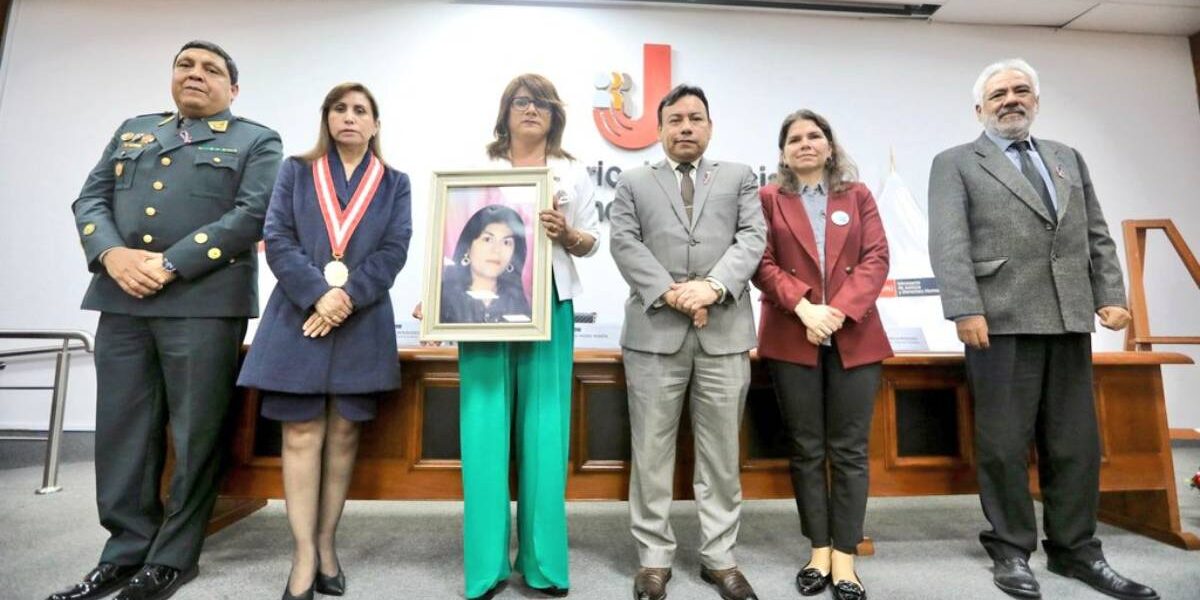
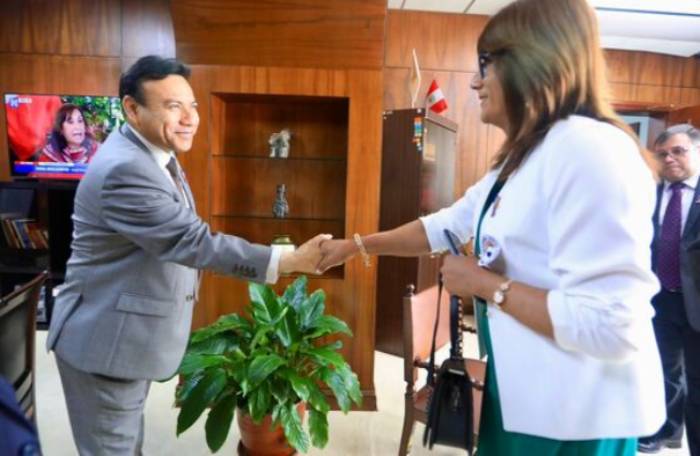
LIMA, Peru. On November 3, in a public act of recognition of international responsibility held at the Ministry of Justice and Human Rights, in compliance with the sentence issued by the Inter-American Court of Human Rights in 2020, the Peruvian State apologized to Azul Rojas Marín, a member of the LGBTI community, for the violation of her human rights.
The ceremony was attended by the Minister of Justice, the Minister of Women, the Attorney General, senior officials of the Judiciary, and representatives of the Ministry of the Interior and the National Police.
A candle was lit before the portrait of Azul's mother, Juana Rosa Tanta Marín, who passed away in 2017. The woman was also included in the ruling, pointing out to the Court that family members are affected by acts of discrimination by the State.
In her words of gratitude, Azul recalled her mother's struggle. “I want to share something with you from 15 years ago. During all this time, I suffered irreparable losses, like the loss of my mother. She was a very strong pillar of strength. She was also a fighter. She passed away with the conviction that this would have an outcome, that the fight we began together would not go unpunished.”
What's missing
She pointed out that the Peruvian State has still not complied with the comprehensive healthcare it was ordered to provide. Nor has it fulfilled its obligation to pay reparations or to establish standards of care for the LGBTI community by the authorities. “Ladies and gentlemen, I want to respectfully address all the authorities present here,” she said, “…This is a very gratifying ceremonial act. But I want to remind you that there are other reparations that the Peruvian State has yet to fulfill. For example, the comprehensive healthcare I need is very important, and the State has not yet paid for it. Furthermore, the State has not established standards for how our community should be treated by the authorities.”
Finally, she offered a message of hope to those who continue fighting for a justice that is slow in coming and sometimes never arrives: “This fight began when I was 26. I haven't been able to work, I haven't been able to study, but of course it wasn't in vain, because here we all are. I'm 41 now, and I arrived here suddenly exhausted, but not without the desire to continue defending human rights… If I smile today, it's because I'm tired of looking for someone to blame. I smile because it's my best weapon to achieve what I want, I smile because my heart remains sincere and transparent. And because I simply deserve to be happy.”
What happened to Azul
On February 25, 2008, she suffered abuse and torture during an arbitrary arrest by police officers from the Casa Grande police station, on the northern coast of Peru, while walking at night. At the station, three officers insulted, mistreated, and sexually assaulted her, releasing her at six in the morning.
Azul returned to file a complaint, but they ignored her. She reported these police officers for rape, abuse of power, and torture to the media and the Public Prosecutor's Office. The Prosecutor's Office dismissed the torture charges, and in 2009 the Judiciary shelved the rape and abuse of power complaints.
The international body
After exhausting national avenues, Azul took her case to the Inter-American Commission on Human Rights and it was the first case presented for violence, including torture by sexual assault, against an LGBT person.
In 2018, the IACHR determined that it "found sufficient elements to consider that […] there was a special cruelty with the perception of Azul Rojas Marín, at that time, as a gay man" and that "what happened to the victim must be understood as prejudice violence and that the constitutive elements of torture are present."
He also recommended reparations for Azul and her mother, Juana Rosa Tanta Marín, investigating the facts, imposing the corresponding sanctions, offering free medical and psychological treatment to the victims, and preventing these cases from happening again.
In 2020, the Inter-American Court of Human Rights issued a ruling against Peru for the illegal detention, torture, sexual assault, discrimination based on sexual orientation, and violation of Azul's right to due process and judicial protection. In 2022, the Peruvian State complied with the ruling.
Photos: Ministry of Justice and Human Rights of Peru.
We are present
We are committed to journalism that delves into the territories and conducts thorough investigations, combined with new technologies and narrative formats. We want the protagonists, their stories, and their struggles to be present.
SUPPORT US

FOLLOW US
Related notes

We are present
This and other stories are not usually on the media agenda. Together we can bring them to light.