

Hate crimes: three brutal consecutive transfemicides in Mexico
In three days, three women were brutally murdered. There is growing concern about the escalating violence in the State of Mexico.


Share

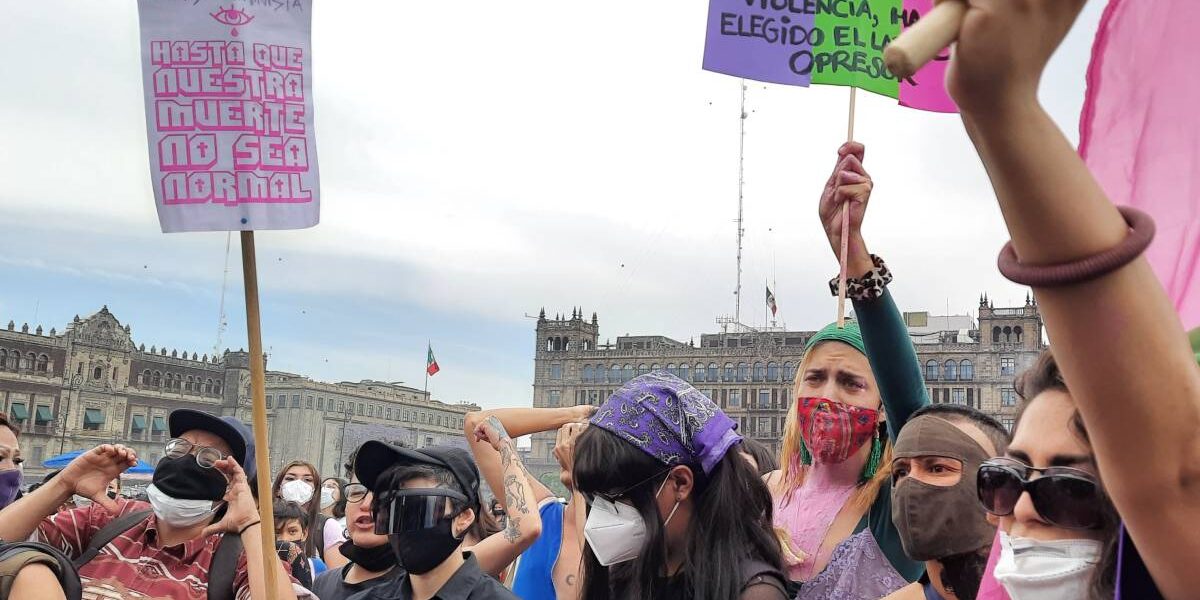
MEXICO CITY, Mexico. In Mexico, three transgender women were murdered on three consecutive days: Betty Castañeda in Michoacán on October 18, Britney Hernández Vargas in Veracruz on the 19th, and Jessica Zoé Vergara in the State of Mexico on the 20th.
This year the Rainbow Foundation has a record of 44 hate crimes committed against people because of their gender identity.
The murders of Britney Spears and Jessica Zoé, both trans women, occurred inside their homes. According to the report "Violent Deaths of LGBT+ People in Mexico" by Letra S, the victims' homes are the second most common location for such violence: there were 14 recorded cases in 2021. Fifty-one percent of hate crimes happen in public spaces.
Betty Castañeda was found on the highway with signs of torture and a gunshot wound along with two other people in Michoacán on October 18 in an attack within the context of widespread violence in that state.
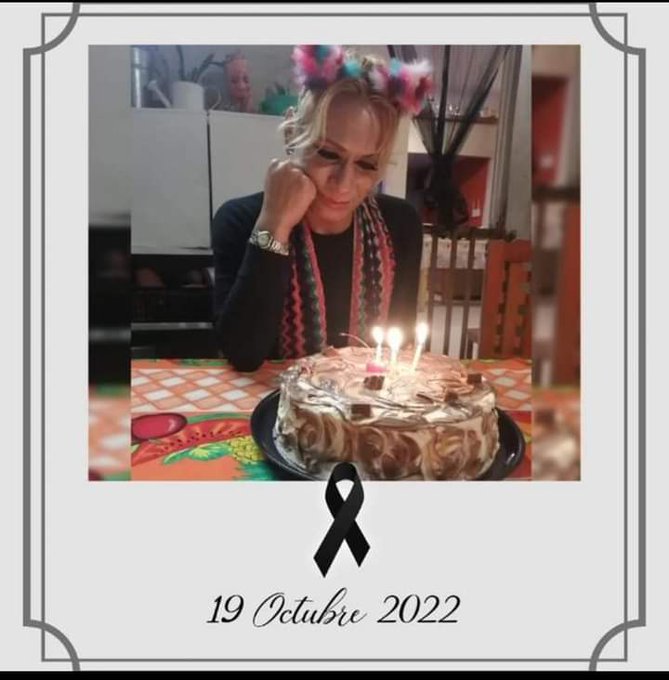
Jessica Zoé: “She could turn heads with her mere presence”
Jessica Zoé Vergara was a well-known trans woman in her community, kind and also a great dancer. That's how friends, family, and neighbors remember her.
Miguel Ángel, Zoé's neighbor, recently became a drag queen. He met Zoé when he was a child and saw her as a role model when he came to terms with his homosexuality. Although they weren't close, he respected Zoé.
“Through our gestures, we came to understand that if we weren’t friends, we were allies. Whenever we saw each other, it was good to know we weren’t alone in the neighborhood. It filled me with courage and bravery. Her mere presence on the street was electrifying,” she tells Presentes about Jessica’s visibility as a trans woman. A subversive visibility that boosted her own.
According to available information, Jessica Zoé was murdered inside her home in Jardines de Morelos, State of Mexico, on the night of October 20. Neighbors heard gunshots and alerted officers from the Public Security and Transit Directorate.
Police arrested 26-year-old Arturo N. He attempted to flee Jessica's home on his motorcycle and fired shots at officers. Despite the seriousness of the incident, no official statement has been released.

In Ecatepec “there are no actions against violence”
“The marks on my skin, the scars, show how many times I’ve been nearly killed because of who I am. How many times have they tried to hit or stab me,” says Josselin Aguilar, director of the organization Orgullo Ecatepec (Ecatepec Pride) . She says she has never felt safe in Ecatepec, where she lives. News like Zoé’s murder fills her with deep sadness and makes her reflect on the violence she has experienced.
“Sexist attitudes in the State of Mexico,” she explains, “are deeply ingrained and impact trans women’s self-perception, their aspirations, and their opportunities for development and education.”
Josseline recalls that before Zoe, there was the transfemicide of Alessa, a sex worker. Her body was left on the Mexico-Pachuca highway. She also the case of Nicolás Montiel Ramírez , a 13-year-old boy murdered in May 2020. “His mother said that Nicolás had asked to go to Mexico City wearing heels; his visibility was obvious. We don't know if he was a gay teenager or a trans man in transition,” the activist says.
Letra S estimates that the State of Mexico since 2015 has been the site of at least 33 hate crimes, 22 of which occurred in peripheral localities and there are records of 3 of them in Ecatepec.
The Mexican state still lacks official statistics on hate crimes. Josselin insists that the State Executive Commission for Victim Assistance must provide statistics on the support it has given to LGBT individuals and address cases like the ones mentioned above. It is also essential that the crime of transfemicide be codified in the State of Mexico.
Britney was beaten by police officers
Britney Hernández Vargas was a sex worker in the city of Xalapa, Veracruz, and a member of the Transformando Vidas . Local media report that Britney was beaten by at least a dozen police officers. She survived the attack for two months, until October 19th.
Britney was attacked at her home along with her partner, who survived the assault. According to local media, the autopsy revealed that she suffered a collapsed lung, liver, and kidney.
The motive for the beating is still unknown. But sex workers report systematic police harassment. Their homes have even been burglarized. Extortion has also been documented in the city since 2017.
Fear has prevented them from speaking out. Some of Britney's colleagues tried to file a complaint with the State Human Rights Commission (CEDH). The response was negative because they were not directly affected.
In 2021, Veracruz ranked, for the fourth consecutive time, as the state with the most hate crimes in Mexico with 10 cases.
Activist Jazz Bustamante indicates that even after Britney's transfeminicide, police continue to extort sex workers.
What can be done?
In Bustamante's experience, attacks like the one Britney suffered are not the norm but are very prevalent. They occur frequently in Coatzacoalcos, in the high mountain region, Córdoba, Orizaba, the port of Veracruz, and in Xalapa itself.
Soy Humano association has tried to hold meetings with municipal police and gender units of state police or the Navy, but every so often there are personnel changes and little initiative.
Impunity, he explains to Presentes , has to do with many factors: the lack of budget in the administration of justice, corruption, lack of specialists, consultants and work with civil society that knows the communities where the acts of violence occur.
“We need a specialized area, like the Council to Prevent and Eliminate Discrimination, where all areas and organizations of civil society participate and are in constant contact with gender units in justice institutions. Perhaps in that way the rates of violence by public servants against the trans community could be reduced,” the activist comments.
Betty was found with signs of torture.
On October 18, Betty Castañeda was found with signs of torture and gunshot wounds near the Sahuayo-Jiquilpan bypass, along with two other people. According to local press reports, personnel from the Forensic Services of the Michoacán State Attorney General's Office (FGJE) and state and municipal police arrived at the scene to cordon off the area.
According to the Interseca organization's report, "Gender Violence with Firearms in Mexico," five out of ten trans women had their lives taken with a firearm.
Betty Castañeda's death would be framed within the widespread violence in Michoacán, which in September alone, according to the National Public Security System, has claimed the lives of 212 people.

As a final farewell to Betty, her loved ones accompanied her through the streets of Sahuayo, a municipality in northwestern Michoacán.
The caravan was led by two people holding an LGBT flag. Behind them was a car adorned with rainbow-colored balloons, flower arrangements, and on the windshield, the blue dress Betty wore on perhaps one of the days for which she is most remembered within the community: when she was crowned the 2021 Golden Lady during the Pride celebration.
Behind the car, the hearse and more than fifty people who attended his burial.
We are present
We are committed to journalism that delves into the territories and conducts thorough investigations, combined with new technologies and narrative formats. We want the protagonists, their stories, and their struggles to be present.
SUPPORT US

FOLLOW US
Related notes

We are present
This and other stories are not usually on the media agenda. Together we can bring them to light.