

Rafaela Kennedy: “Society has very distorted ideas about what it means to be a transvestite”
The Brazilian photographer reconfigures her transvestite body as a political identity. Presentes asked her five questions; you can read her answers here.


Share

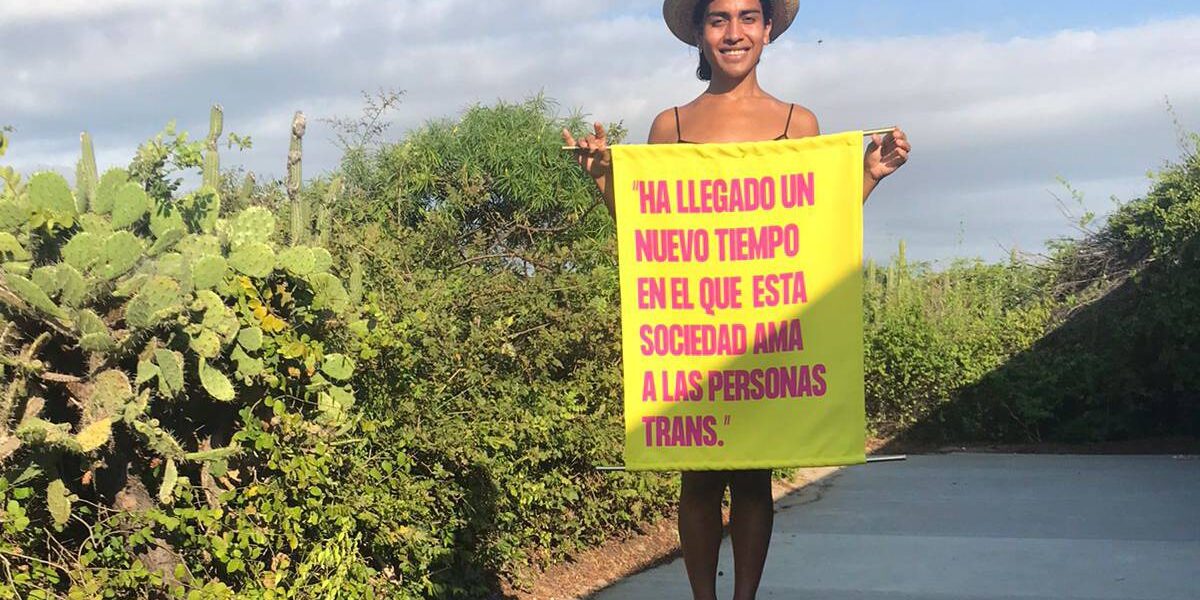
MEXICO CITY, Mexico. “I am a transvestite and an Indigenous woman in recovery,” says Rafaela Kennedy , a Brazilian photographer who was born and raised in Manaus, in the state of Amazonas. Presentes spoke with her about her work, the power of portraying the lives of the “belles”—as she calls other trans women and transvestites—and her desire to grow old dancing near a river.
For Rafaela, it's important to mention her trans identity as a political one. “In Brazil, even today, the image of the transvestite is directly linked to a dissident and marginalized body. I'm part of a Brazilian generation that wants to redefine that. I see myself as the daughter of older transvestites, those who resisted the various processes of social violence,” she says.
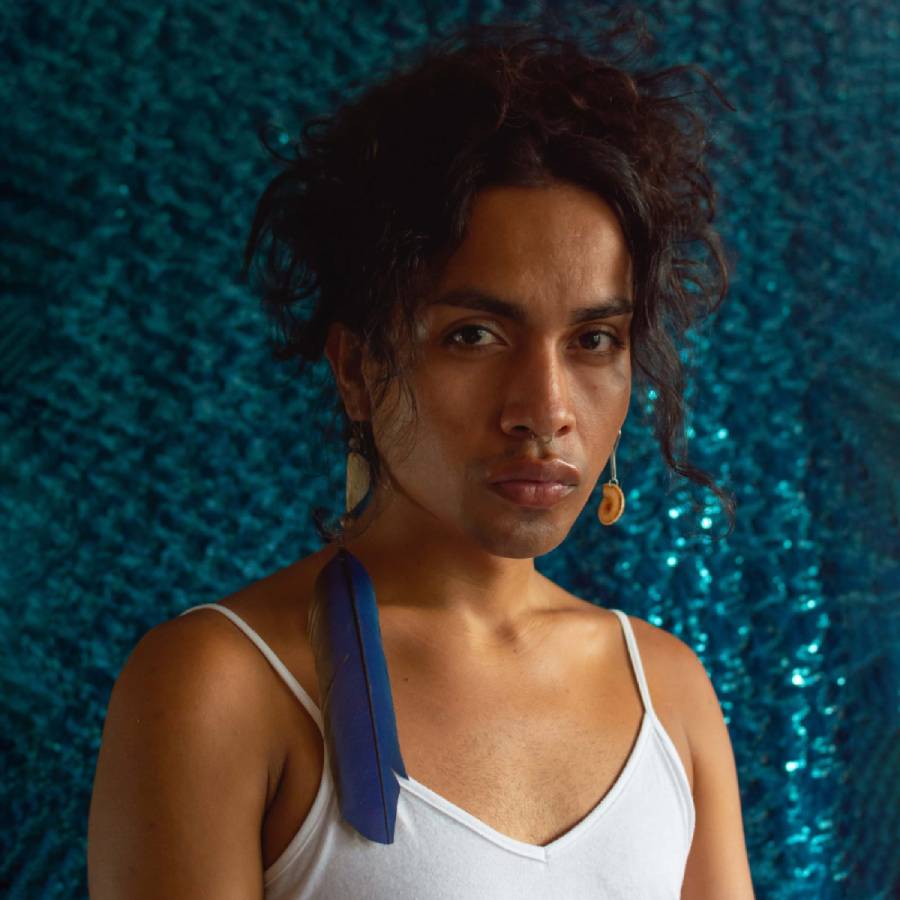
In February 2022, Rafaela exhibited her work at the ' Zona Maco ' art and design fair in Mexico City, where she won the Women Artist Residency Award, a place in the Casa Wabi , a civil association that promotes exchange between contemporary art and the communities of Puerto Escondido, Mexico City and Tokyo.
Rafaela Kennedy is the first transvestite to participate in the Casa Wabi residency program in Puerto Escondido, a coastal municipality in Oaxaca, Mexico.
From the seashore, Rafaela answers five questions for Presentes .
With your photographic work you seek the naturalization of the transvestite body, what does that imply?
Society has very distorted and fetishized ideas about what it means to be trans . We walk hand in hand with the repulsion for being a body that transforms, that transcends binary forms, that experiences and lives, breaking with hegemony and ideals of beauty. I want to normalize life in a free, courageous, and sensitive way. That we be present bodies, no longer absent, in everyday life. We are all diverse, with the relationship between our bodies and subjectivity, and we transition whenever we desire change and want to learn new things.
The truth is, we're only in marginalized places because the capitalist machine can't handle what it can't control . We're not willing to give up our truth, which is our bodies. We carry the cure to the world; our spirit is ancient, ancestral. The social repair of our community is urgent; we have to talk about this!
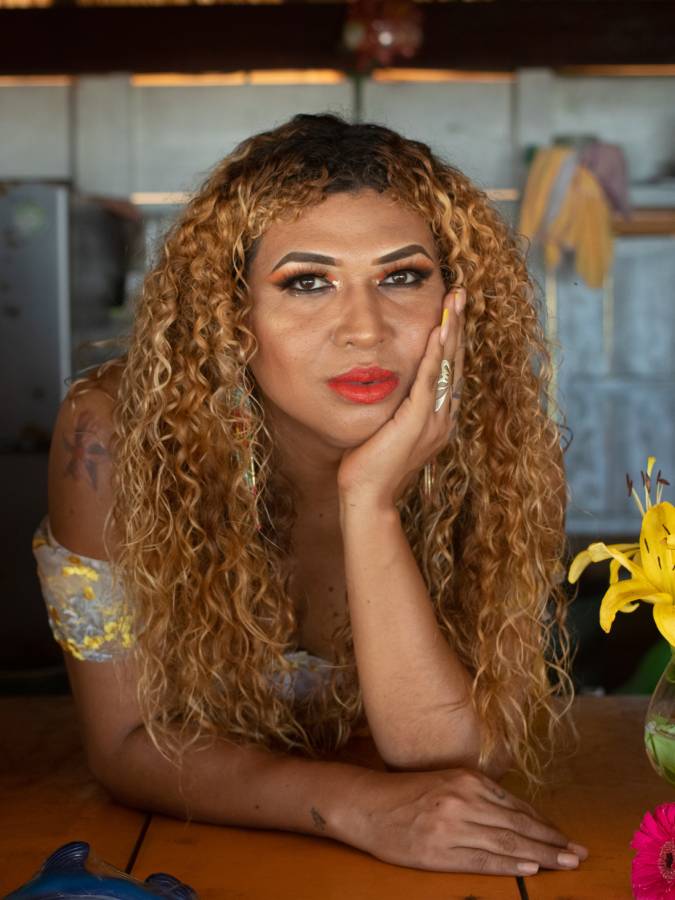
. Photo: Rafaela Kennedy.
What are you working on now and how does it relate to trans, indigenous, or black identities in Oaxaca?
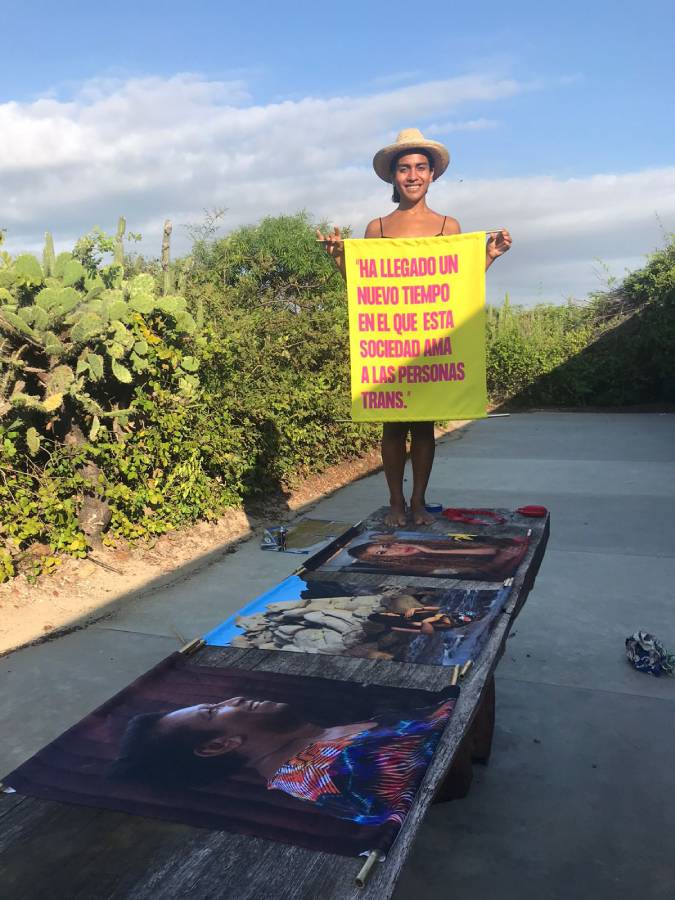
In the first few weeks of my residency, my task was to develop a community project with the people living around Casa Wabi. I met three trans women from two communities, El Cacalote and Río Grande. They are Shaky Paz, Astrid Barranco, and Mística Alondra. From our meetings and conversations, I created a portrait of each of them, and they are now part of a series of four works I call 'Celebração'.
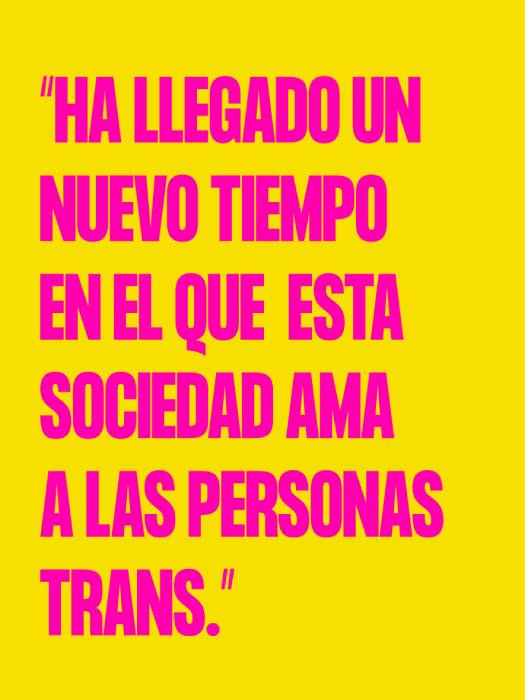
The fourth work is a quote from another Brazilian visual artist I invited to participate in the project, Manauara Clandestina , whom I consider a great thinker in contemporary Brazilian art. This set of photographs is an installation intended as a traveling exhibition, a call for social reflection on trans lives.
As part of my research process, I am creating a series of self-portraits that explore the feelings of being affected by territorial displacement, offering an outlet for a creative process that has been reflecting on conquest and possibility . Simultaneously, I am producing a series of photographic portraits and performances that continue my research, which I began in Brazil and which is now expanding through my connections with other trans, Indigenous, and Black women here in Mexico.
What does it mean professionally and in your daily life to portray other beautiful people (trans women and transvestites)?
My dissatisfaction with life due to the limitations of my body's expression brought me here. Through photography, I share perceptions, social critiques, and deeply personal reflections on my ongoing transition experience. Through other people's eyes, I make myself seen, while projecting other stories carried by the people I meet, strengthening a movement of life and myself.
I can sense, in those moments, that we are incredibly precious beings. We are imbued with a unique sensitivity; our perspective on the world is something I love, because despite all the impossibilities, we still yearn for life.
It is this sensitivity that drives my creative process. It is in this place that I feel I can sharpen the perceptions and feelings of those who encounter my work, feelings that are sometimes latent, such as empathy and respect.
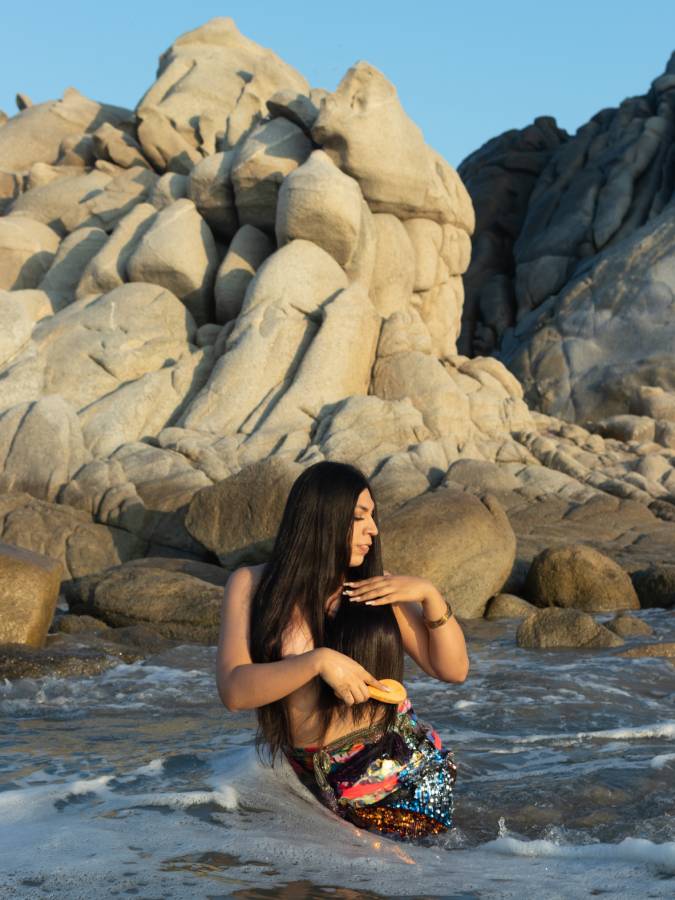
Photo: Rafaela Kennedy
What value do photography and self-representation have in the face of contexts of violence and a life expectancy of 35 years?
still necessary to construct reconfigurations through images that enable the idea that one can be here, that one can conquer other spaces beyond those that condition us . The construction of memory through images and the naturalization of our identities is what makes me believe that we can still live in a less violent society, able to grow old and remember through photographs of our youth . I always feel very honored when I photograph a trans woman who is over 35; photographing is also a way of giving thanks and celebrating.
I feel that every day we become more aware of the importance of amplifying our own narratives. Little by little, we are building a path led by us that will inspire a new generation of transvestites, trans women, non-binary people, and transmasculine people, not only in the art world but also in various professional spaces. It's a process of moving cisgender people from a neutral position, since they too are subjects and share responsibility for the violence that surrounds us daily. It's our time to speak out.
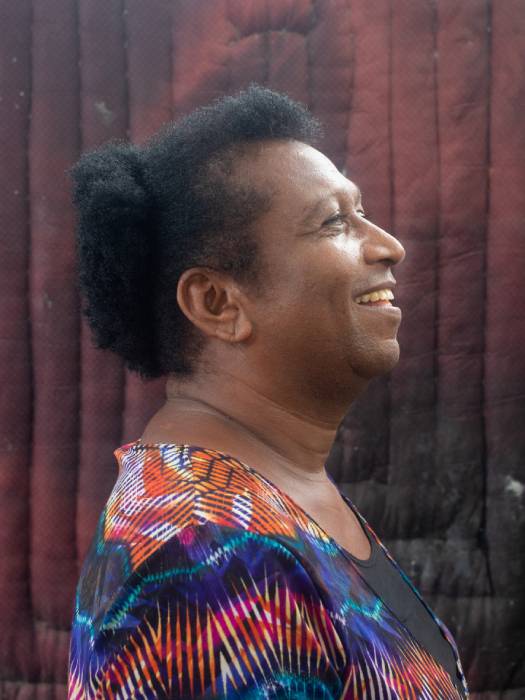
Photo: Rafaela Kennedy.
When you're not taking photographs, what do you enjoy, where do you focus your gaze? And how do you imagine your old age?
I like being around my friends, sharing experiences, and laughing with them at a bar over a beer or at home. I love riding my bike with headphones on, listening to music from Kali Uchis to Pop Som from the state of Pará, and now Bad Bunny. I'm happy when I return to my city and see my family healthy. I love the sky, the sunset, and the stars at night. The nature of life and its colors.
I imagine myself living in a house with land where I can raise animals, surrounded by trees and plants. I want to be able to go to a bar by the river and dance to a melody, reminiscing about the good times and loves I've built throughout my life.
* The photos are part of the work the artist is currently doing.
We are present
We are committed to journalism that delves into the territories and conducts thorough investigations, combined with new technologies and narrative formats. We want the protagonists, their stories, and their struggles to be present.
SUPPORT US

FOLLOW US
Related notes
We are present
This and other stories are not usually on the media agenda. Together we can bring them to light.