

Monkeypox in Latin America: Cases are increasing and governments are not reacting
Despite the increase in cases, no new prevention strategies have been implemented. With the exception of Chile and Peru, vaccines are not currently part of government plans.


Share

Cases of monkeypox have increased exponentially in different Latin American countries, and there are no concrete responses from governments.
According to the report issued by the Mexican Ministry of Health , published on October 18, from the first report (in May) until October 17, “2468 cases of monkeypox have been confirmed in the 32 federal entities.”
In Argentina, the Ministry of Health reported in its epidemiological report published on October 11 that 480 cases of monkeypox had been detected in the country up to October 4. This figure represents a 21% increase compared to the last epidemiological report (396), which covered data up to September 27.
The Peruvian Ministry of Health reported on Monday, October 17, that the number of confirmed cases of monkeypox in Peru had risen to 2,913. Through its Twitter account, the Ministry stated that all cases have been treated and that 2,572 patients have been discharged.
He also reported that 5,600 doses arrived on October 19, part of a total of 9,800 doses acquired by the country. The second delivery, of 4,200 doses, is scheduled for November 16, 2022.
Chile is another country that has experienced an increase in infections. But so far, it is the only one that has received vaccines, and inoculations began on Wednesday, October 19.
According to the report issued by that country, as of October 13, 1,093 cases of monkeypox had been registered. “One thousand and seventy-eight confirmed and 15 probable. Of these cases, 117 were hospitalized.
Vaccination in Chile
The first of three shipments of vaccines developed by the Danish laboratory Bavarian Nordic arrived in early October. The other two are expected to arrive before the end of the year.
In Chile, vaccination began this Wednesday the 19th and, according to the Undersecretary of Public Health, Cristóbal Cuadrado, the first stage will cover the population that has been in close contact with a confirmed or probable case and that presents a risk of developing a serious disease.
The San Juan de Dios Hospital in Santiago is the first health facility in the country and in Latin America to have doses for this disease, which has reported more than 70,000 cases worldwide.
“In this first phase we are going to begin with what is called post-infection prophylaxis,” Cuadrado explained at a press conference: “This means that people who have had close contact with someone who has been a confirmed or probable case of monkeypox will be contacted by the health authority, in this case the Seremi of the Metropolitan Region, and in that context they will be offered vaccination.”
The vaccine can be administered up to 14 days after close contact with a confirmed person and consists of two doses administered one month apart.
To care for people with this virus, the Chilean government replicated the model of the quarantine facilities implemented to treat Covid-19 patients. Admission to one of these facilities will depend on the individual's condition.
“In cases requiring hospital care, they will be isolated in hospitals. But in those instances (…) where they have been in very good condition, we will use the health residences,” said former Health Minister Begoña Yarza in June.
Peru's announcement
According to the Peruvian Ministry of Health, the first batch of the monkeypox vaccine was scheduled to arrive on Wednesday, October 19.
The ministry's website explains: "It has been determined that this significant batch of vaccines will be administered, in the first stage, to previously identified vulnerable populations at higher risk of developing severe illness."
It also reports that they are “Jynneos”, from the Danish laboratory Bavarian Nordic and that it consists of a live, non-replicating, modified third-generation Ankara cowpox virus.
The arrival of the doses was made possible, the statement says, thanks to the coordination of the Pan American Health Organization (PAHO) Revolving Fund.
Mexico
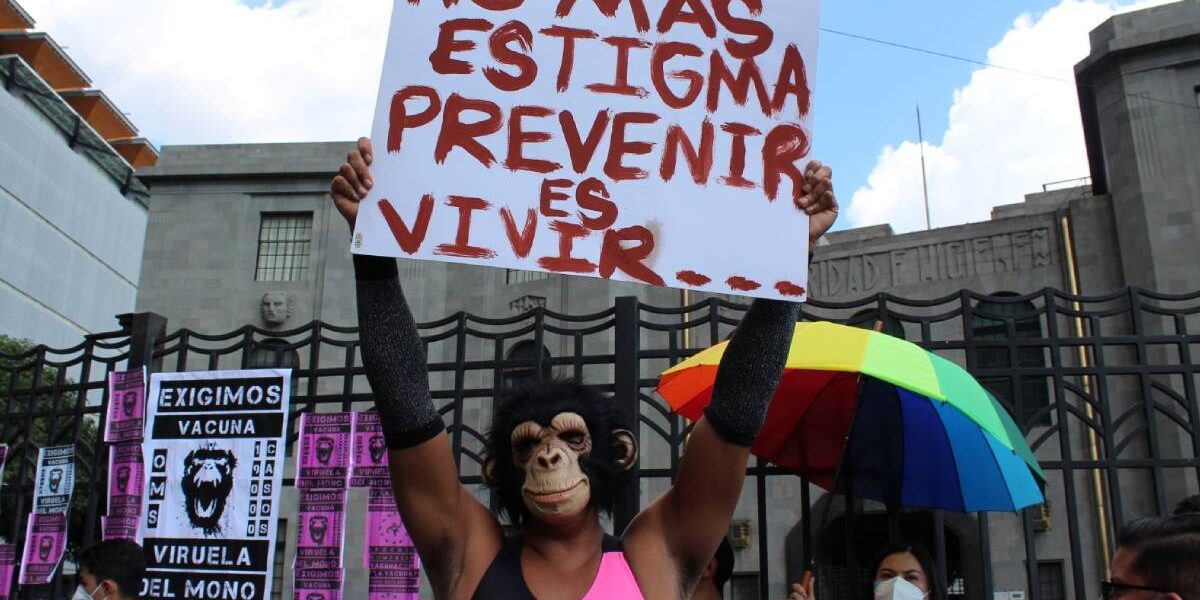
From September 5 to October 20, there was a 213% increase in confirmed cases of monkeypox in Mexico. Despite this surge, the government does not consider vaccination a prevention strategy.
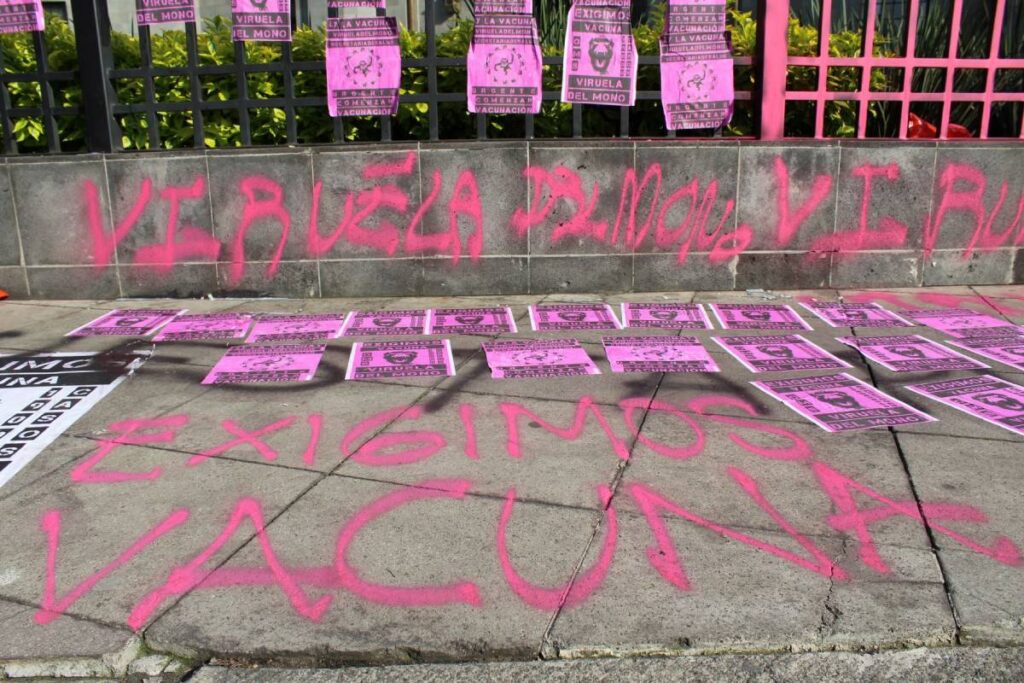
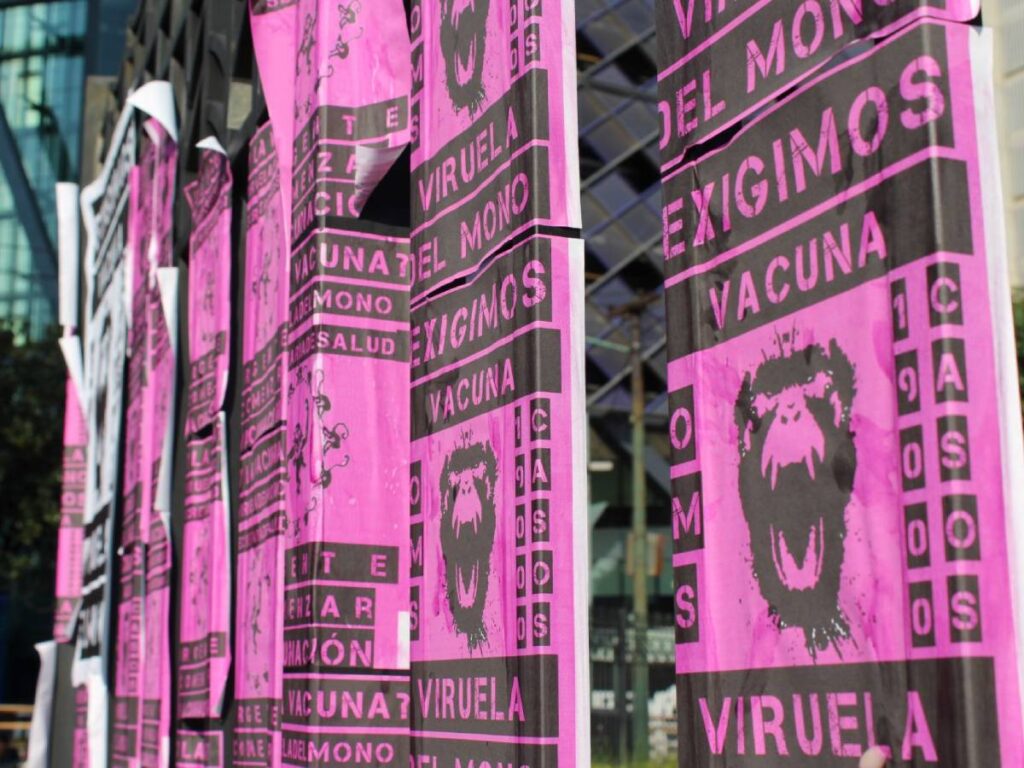
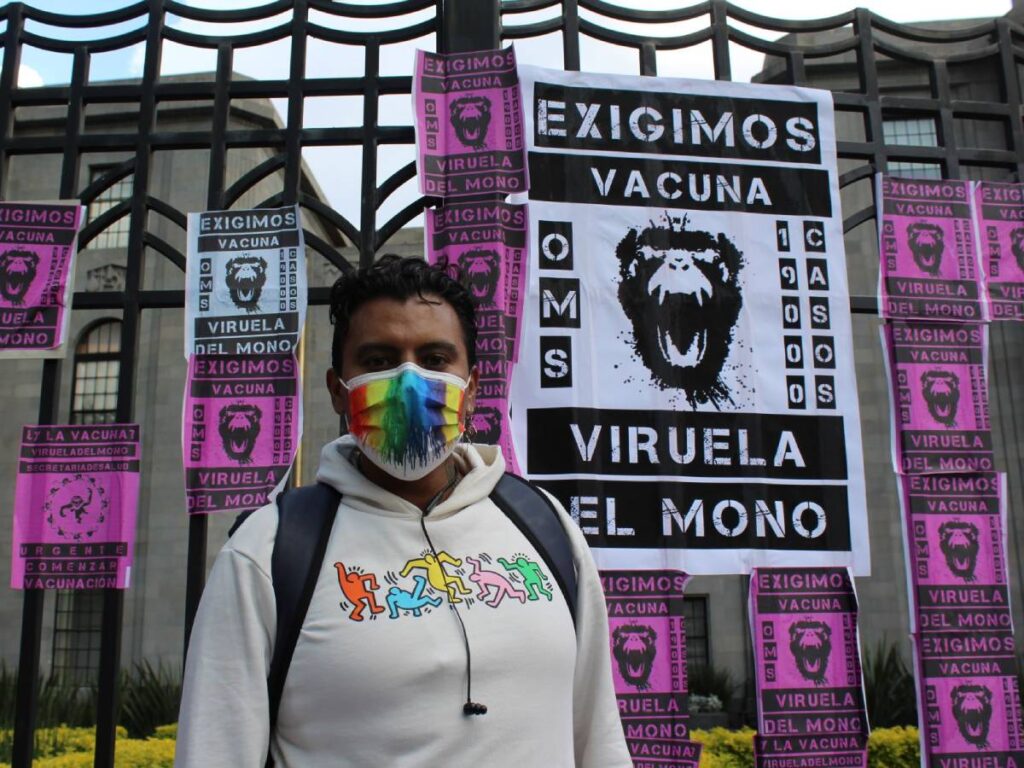
Faced with state inaction, activists organize, network, disseminate information, and create strategic alliances in order to obtain vaccines.
- 60% of the cases are concentrated in the country's capital.
- 98% of those affected are men.
- 57.7% of them live with HIV.
Collective legal actions to obtain vaccines
Faced with the lack of vaccines and prevention measures, an activist network of people who defend the rights of people living with HIV in Mexico have drawn up a collective petition with demands to guarantee the supply and application of the monkeypox vaccine to people living with HIV throughout the Mexican territory.
On October 11, 2022, they submitted their petition to various federal deputies and to the health, budget and public accounts, and finance and public credit committees of the Chamber of Deputies. This Friday, they will present their demands to the Senate.
The legal appeals will be filed on November 4th before various authorities, including the Ministry of Health.
“The only effective form of prevention is the vaccine. That’s the only way out. Denying the vaccine to men who have sex with men is institutional homophobia. The silence is being broken on all fronts, and I believe we have important allies in this fight and for acquiring the vaccine. Today we don’t have political alliances, but we do have operational work, and we must take advantage of those opportunities,” Alaín Pinzón, director of VIHve Libre, Presentes
If you are interested in joining this collective protection action, you can fill out this form . It is completely free, and your data is protected under the Law on the Protection of Personal Data Held by Private Parties.
Why isn't vaccination being carried out in other countries?
There is no possibility of moving forward with inoculation if it is not first acknowledged that there has been an exponential increase in infections. One of the myths surrounding the disease is that “cases have decreased in the Latin American region.”
, the Bavarian Nordic laboratory announced an agreement to supply vaccines to Latin America and the Caribbean. And in September, the Pan American Health Organization (PAHO) announced purchases for governments that request vaccines. But there has been no significant progress or concrete plans in the region yet.
According to the same reports issued by the governments, the increase is sustained. According to the Pan American Health Organization (PAHO), as of September 23, the Americas region had had the highest number of detected cases in the world for eight consecutive weeks.
Myths
Another myth is that the effectiveness of vaccines is not proven. According to the CDC (Centers for Disease Control and Prevention), the slowdown in the outbreak in countries like the United States (which reached 27,558 cases as of October 18) is due to a combination of vaccines and changes in the behavior of people who could potentially test positive. For example, those with multiple partners. Communication campaigns also play a role.
It is true that information on vaccine effectiveness is still being gathered. But a CDC study indicated that in 32 US jurisdictions, the incidence of monkeypox was 14 times higher among unvaccinated men compared to those who had received their first dose of the vaccine 14 days prior.
What should vaccination be like?
The Pan American Health Organization (PAHO) and the Strategic Advisory Group of Experts on Immunization (SAGE, WHO) recommend against mass vaccination. Instead, they propose primary vaccination for high-risk groups.
On October 12, both SAGE and the WHO recommended priority vaccination for high-risk groups. These include not only men, gay men, bisexual men, and MSM, but also healthcare workers.
Why is it important to say that the most affected population are gay, bisexual, and MSM men?
Disseminating this information is crucial for focusing initial urgent actions on these groups and highlighting risky practices. However, it should not be used as a tool for prejudice and stigma.
Anyone can get monkeypox. But given the vaccine shortage, the first priority should be given to these populations, and then to the general population.
This is an urgent action that should not be tainted by stigma.
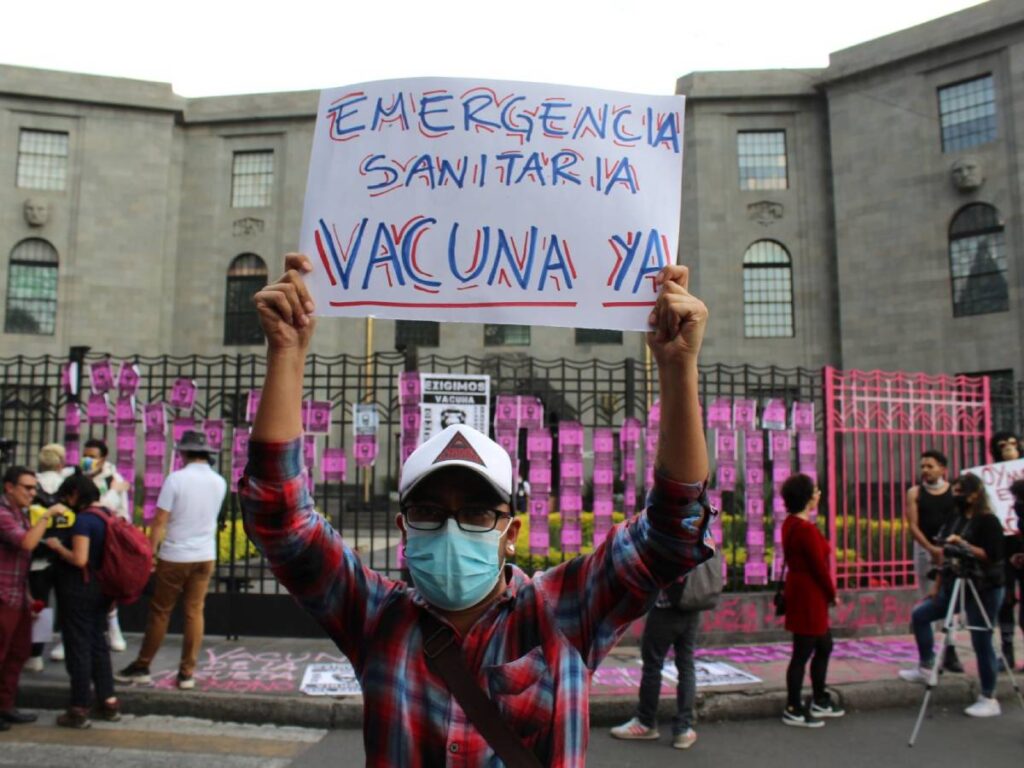
Poor communication
Many questions arise regarding the refusal to vaccinate. Why, instead of talking about risky behaviors and stigmatizing sexual and affective practices and identities, don't we rethink the production system that allows a single laboratory to produce vaccines? Why, when there is an immune response, is it denied to us?
States are responsible for more and more people continuing to suffer from smallpox.
In early September, the PAHO announced an agreement with the Bavarian Nordic laboratory to provide 100,000 doses of vaccines for Latin America and the Caribbean.
This came alongside a warning that the region is now the epicenter of the cases . Forty days later, vaccination (except in Chile) doesn't seem to be anywhere near.
Among the messages discouraging vaccination, governments are urging stronger communication, something that has also failed. To this day, no one really knows much about the symptoms, care, or actions to take if someone in their community tests positive.
Activists continue to demand not only vaccination but also denounce the fact that official case counts are underreported. They are also demanding widespread dissemination of information to all affected groups.
We are present
We are committed to journalism that delves into the territories and conducts thorough investigations, combined with new technologies and narrative formats. We want the protagonists, their stories, and their struggles to be present.
SUPPORT US

FOLLOW US
Related notes
We are present
This and other stories are not usually on the media agenda. Together we can bring them to light.