

For a feminism that includes disabled people
Women with disabilities need to organize a struggle that makes us visible and allows us to build a political subject that enjoys the same legitimacy as everyone else.


Share

The dominant figure in feminism in this region is usually a predominantly white, heterosexual woman fighting against the gender pay gap or the glass ceiling, neglecting other aspects that are also consequences of the oppressions we experience, such as the material conditions of the majority. This white, bourgeois feminism often ignores, consciously or unconsciously, the demands of other oppressed groups, such as racialized people, the LGBTQ+ community, and women with disabilities, among others.
From my own perspective, as a woman with a disability, I will highlight the oppressions that affect women with disabilities , oppressions that are sometimes overlooked by mainstream feminism. I would like to clarify beforehand that these forms of violence affect not only women with a disability certificate, but also those without one, who nevertheless experience various ailments, illnesses, psychosocial problems, and so on. The available data is clear: women with disabilities suffer intersectional discrimination, double or triple discrimination, and more sexist violence than women without disabilities. Specifically, 40.4 percent of women with disabilities have suffered some form of violence from their partner , according to the 2019 Macro Survey on Violence Against Women.
Data on violence against women with disabilities explains how this variable is a crucial factor in violence against women, whether physical, sexual, or controlling. “Women with disabilities are at high risk of experiencing violence based on social stereotypes and subjective factors that attempt to dehumanize or infantilize them, as well as exclude or isolate them. Violence can also contribute to the development of a disability,” notes the study 'Women, Disability, and Gender Violence,' prepared by the Federation of Progressive Women.
All these forms of violence, however, are often rendered invisible or not given sufficient consideration. Soledad Arnau, a feminist activist and philosopher, explained that “women with disabilities are part of that amalgam of excluded women, and therefore nonexistent, in the official Western feminist discourse.” Although we are becoming increasingly empowered, we are still often overlooked when feminist theories are developed or when rights are demanded.
Inaccessible places of activism
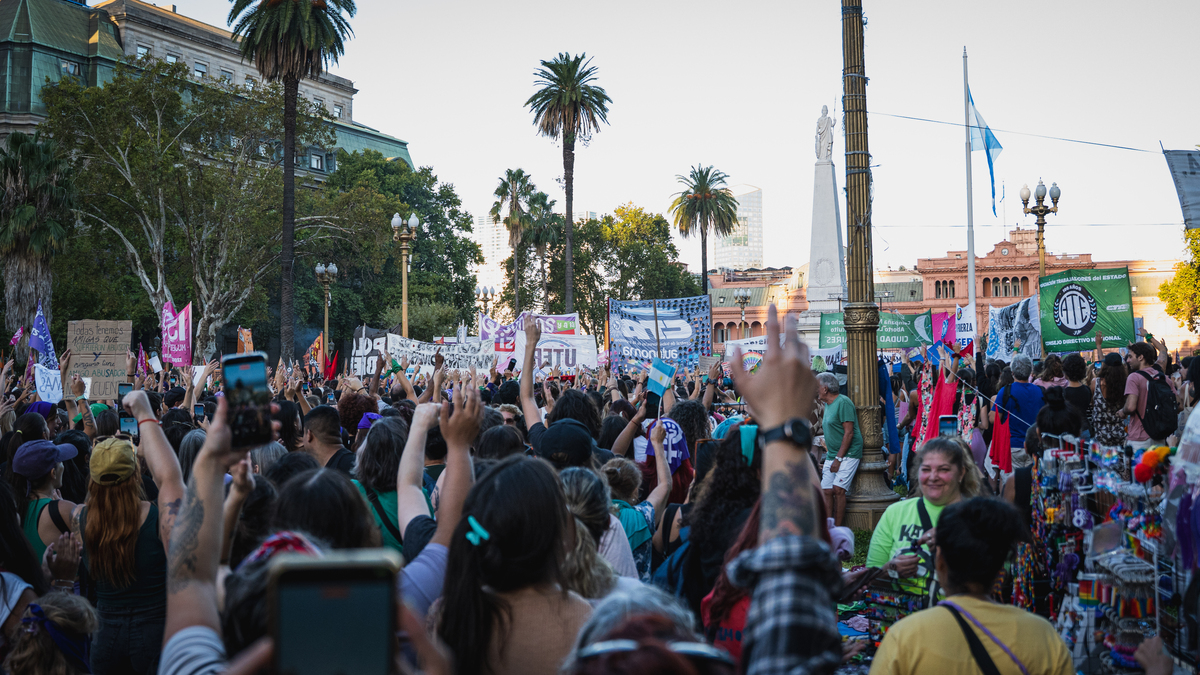
Many of us find it difficult to attend assemblies or decision-making spaces because these places are often inaccessible, as is the case with demonstrations—not everyone can afford the privilege or luxury of being an activist; that often requires time, money, and support. That's why we are sometimes not heard or seen , but we have a lot to say, because disability is one of the greatest forms of oppression, and a target of much of the sexist violence, as well as institutional violence, as has happened for years with forced sterilizations in our country.
To break down those walls that oppress us and prevent us from being more active political subjects, Dr. Nadia Domínguez Pascuales, that it is necessary that “spaces be free of architectural barriers, that sign language is always present, that the material used is understood by women with reading difficulties, for which it is required that it be in Easy Reading or in pictographic communication systems; likewise for women with visual functional diversity, in which case it must be in the braille system.”
Hierarchies
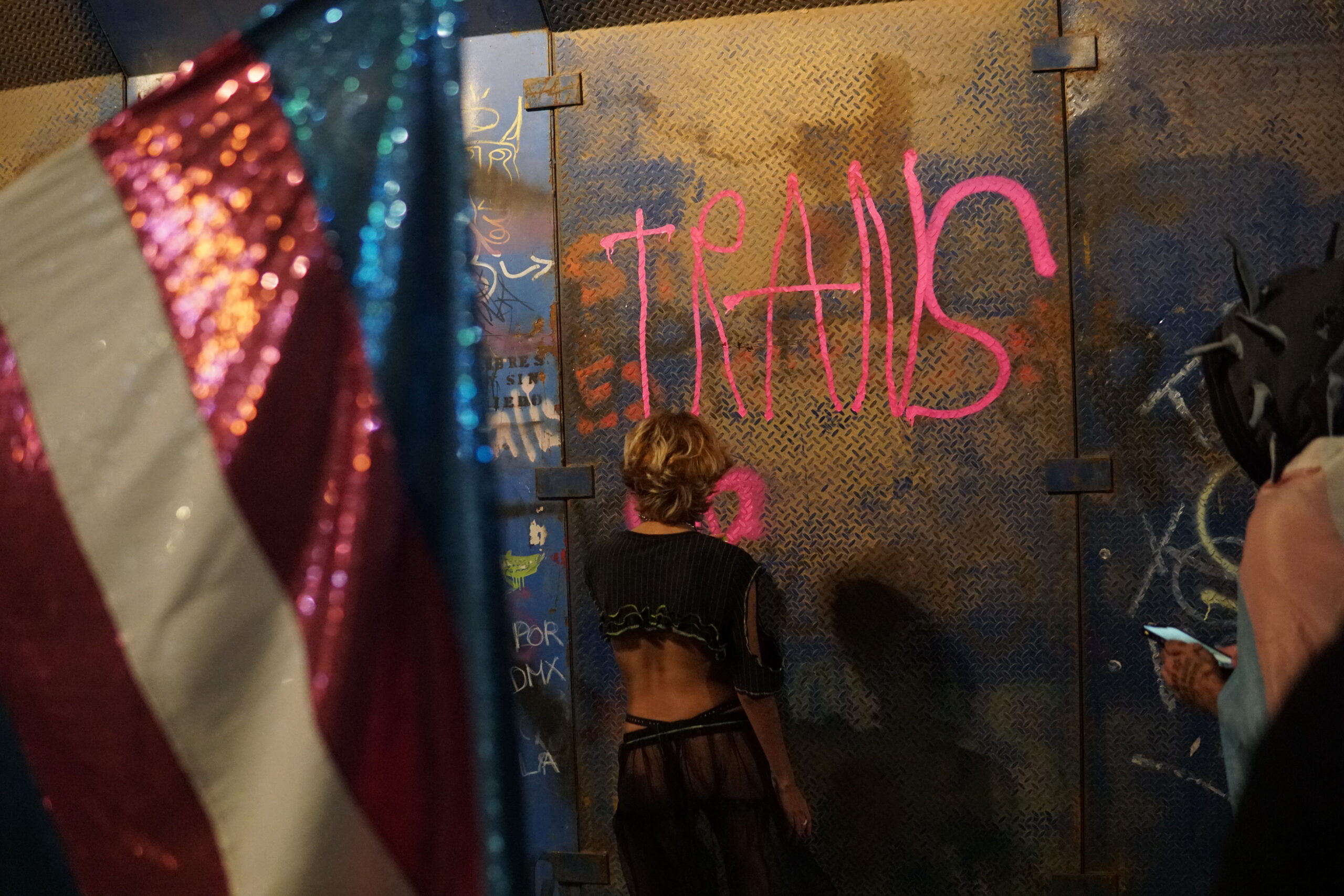
also necessary to put an end to the paternalistic attitude of white bourgeois feminism, which perpetuates power relations and maintains hierarchies among women , excluding the most vulnerable from spaces of participation and negotiation of rights. This bourgeois feminism tends to silence women with disabilities, racialized women, women from marginalized communities, and trans women. If they are named or represented, it is usually only from a " hegemonic position that defines them as objects of exploitation and not as active agents," as explained by Dr. María del Pilar Cruz Pérez in the article "Feminist Theory and Disability: A Complicated Encounter Around the Body." In other words, they talk about us, but without us, and tend to see us as objects of protection, ultimately repeating the ableist message that prevails in society.
From a decolonial feminist perspective and from the margins, we need to articulate this struggle so that we become visible and build a political subject that enjoys the same legitimacy as everyone else. It is essential that disabled people be given greater consideration within the broader feminist movement, beyond Afro, trans, and queer spaces, where inclusivity is already being shown to the various existing diversities. We need to rethink ourselves, build bridges between us, find ways to reclaim our rights, make ourselves visible, empower ourselves, and present ourselves as a political subject, something that has been nonexistent until now.
For an inclusive feminism to exist that challenges all feminisms, it will be essential that they all have their own voice, and only in this way will we be fighting for real equality.
Share
We are present
We are committed to journalism that delves into the territories and conducts thorough investigations, combined with new technologies and narrative formats. We want the protagonists, their stories, and their struggles to be present.
SUPPORT US

FOLLOW US
Related notes
We are present
This and other stories are not usually on the media agenda. Together we can bring them to light.