

Sex work in Mexico: after an initiative that criminalizes it, this is what sex workers propose
Sex workers analyze and respond with alternatives to an initiative presented by Mexican trans congresswoman María Clemente García.


Share

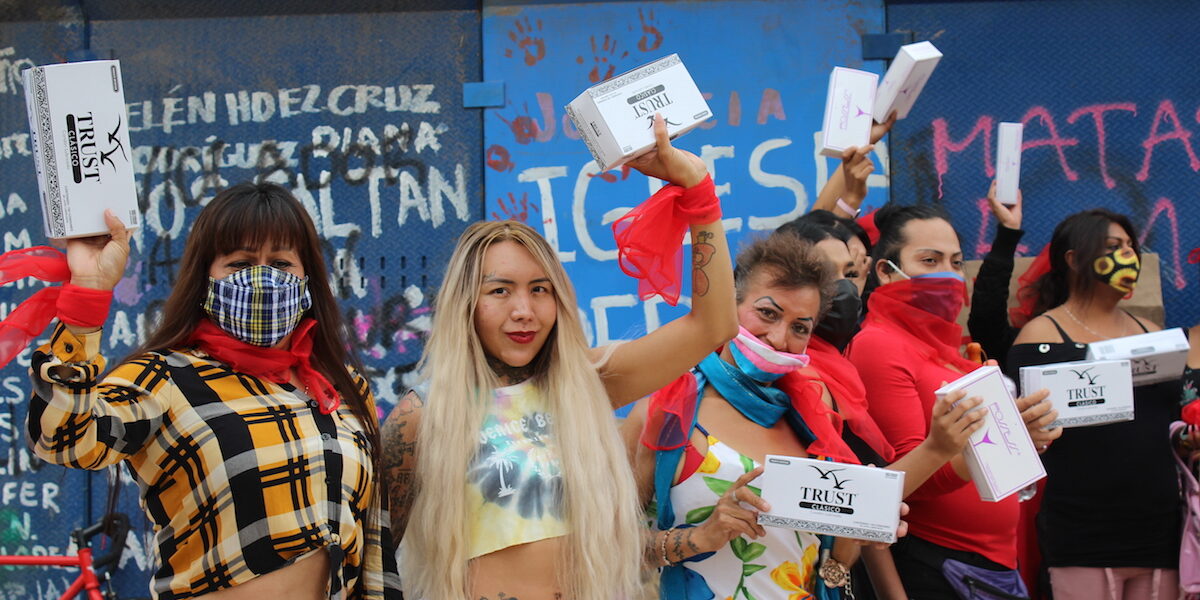
In Mexico, on October 6, transgender congresswoman María Clemente García presented a bill to amend the Federal Labor Law, seeking to regulate sex work. However, sex workers consider her proposal "a step backward for the rights of people who engage in sex work."
This initiative was denounced by sex workers for being launched without prior consultation with the affected populations. It was also criticized for containing a section that criminalizes sex workers and people living with HIV.
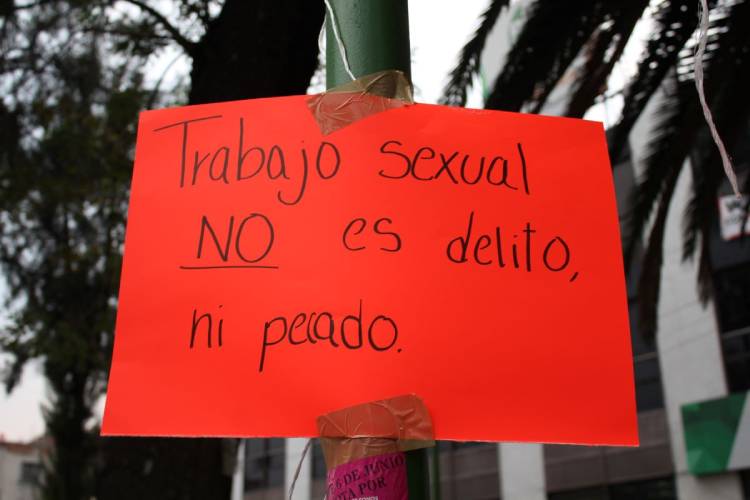
In Mexico, sex work has no explicit labor protections and is not illegal. However, there are laws that open the door to the criminalization of those who engage in street sex work.
To understand the urgent needs and shortcomings of the Mexican state regarding the human rights of sex workers, Presentes spoke with sex work activists. These included Irene Valdivia, a former sex worker and coordinator of the Michoacán Network of Trans People; Verónica Greyson, a sex worker who is part of the Latin American Platform of People Who Engage in Sex Work ( PLAPERTS ); and members of the Elisa Martínez Street Brigade for Women's Support , one of the first organized sex worker associations.
What does the initiative say?
The initiative of Representative María Clemente García contemplates adding a new chapter to consider sex work, and those who practice it, within the catalog of special jobs in the Federal Labor Law as a lawful employment.
In order to define sex work as “an activity that is carried out in public, in some commercial establishment or by digital means, in a free, voluntary, autonomous, consensual and non-coercive manner, between people over 18 years of age” .
Furthermore, it clarifies that sex work is distinct from the crime of human trafficking. Another article states that those who engage in sex work will be guaranteed the right to comprehensive healthcare. It alludes to Article 4 of the Mexican Constitution, which states that “every person has the right to health protection.” However, it provides no further details.
"The initiative adds article 353-Y which states: 'Sex work must be carried out in sufficient sanitary conditions to guarantee the prevention of contracting diseases or infections derived from sex work. Both sex workers and sex users (as defined by the client) are mutually obligated to avoid risks of contagion of diseases or infections during the performance of sex work.'"
And it concludes with, “failure to comply with this provision will give rise to the civil or criminal liabilities that either party may incur.”
“An initiative that criminalizes and feeds the punitive system”
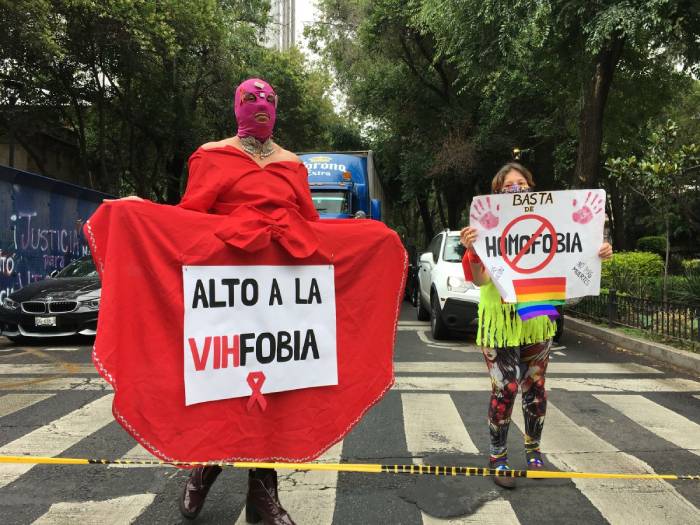
“This initiative is problematic because it prioritizes the State over individuals. It gives the State control over people's bodies. Forcing people to disclose their HIV status is, first of all, an unconstitutional violation of the human right to privacy in health matters. And it's dangerous. Even more so in a country where, last June, a young man was killed because it was discovered he was HIV-positive . I believe it's a direct attack on the lives of people living with HIV to propose that people be forced to reveal their HIV status. It's an initiative that criminalizes and fuels the punitive system,” says Irene Valdivia.
In that same vein, Verónica Greyson comments: “The initiative is poorly drafted; it uses incorrect language regarding STIs and HIV. There are no diseases specific to sex work. By using those terms, it is endangering not only sex workers but all people living with HIV. It could make it more difficult to repeal the crimes of 'endangering public health' that exist in the country. What is wrong with this reform is that it exacerbates violence, segregation, and stigma surrounding sex work. It recreates a kind of demonization that has been fought against for years.”
According to the report HIV is not a crime , the Federal Penal Code of Mexico and at least 30 of the country's 32 states contain the crime of "danger of contagion" in their penal codes.
“We don’t want to go back to health checkpoints.”
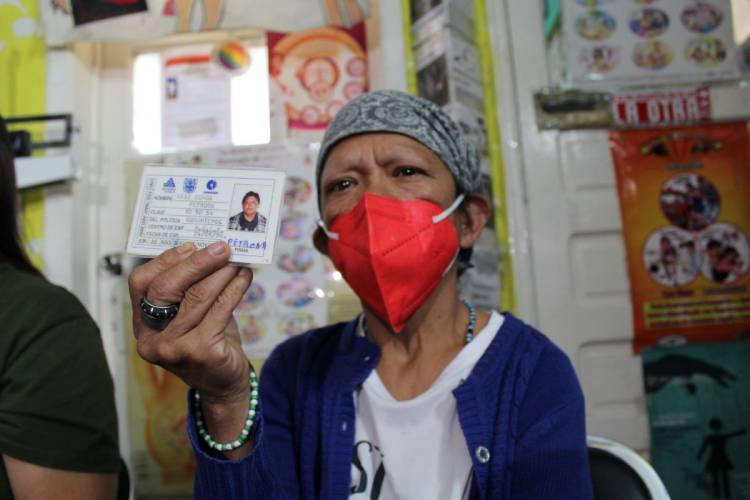
In 2000, Brigada Callejera succeeded in getting the "health control cards" that specified the serological status of sex workers removed from Mexico City. However, they report that these controls still exist in other states of the country.
“We don’t want to go back to health checks. They don’t serve any purpose for health; they serve to extort money. They’re cards that state your health status. Thirty years ago, we faced this during the HIV pandemic, and today these cards still exist in Puebla, Chihuahua, and Sonora. The first people to find out are the hotel and bar owners, and also the police. Requiring serological status is a violation of human rights and a setback for the social struggle of sex workers,” denounces Elvira Madrid Romero, president of Brigada Callejera.
“If the congresswoman is interested in health, she should improve access to healthcare for sex workers because 150 of our fellow sex workers died during the height of the COVID pandemic alone,” Elvira concludes.
Is a law regulating sex work enough to guarantee their rights?
“No. There needs to be a harmonization of more legislation regarding sex work to achieve full rights. I think it’s necessary to see how to incorporate sex work into existing legislation, including legislation that doesn’t even consider this reality,” explains Irene Valdivia.
Brigada Callejera won the amparo ruling 112/2013 that recognizes sex work as non-salaried work with legal protections and rights to health, sexual and reproductive health, housing, food, and labor rights such as the creation of unions.
However, this recognition has not been fully implemented by the Mexico City Labor Secretariat. According to Brigada Callejera, at least 2,500 applications for credentials for self-employed sex workers are currently being held up.
What rights urgently need to be guaranteed?
Irene Valdivia and Verónica Greyson agree that it is necessary to guarantee the right to comprehensive healthcare. This includes the right to healthcare free from discrimination for transgender women, the right to alternative employment opportunities, abortion, housing, pensions, a dignified old age, and maternity leave, and the need for a national care system that includes nighttime childcare "for all mothers with non-conventional work schedules."
“We need to talk about sex work as a social contingency. Yes, as a job option, but also as a situation where, for trans women, it becomes the only option, even with a certain level of education. When a woman decides to stop, how do you justify those years of sex work when you submit a resume? You either have to lie or face discrimination, and you'll probably be denied that other job,” explains Irene Valdivia.
Free from stigma
Regarding the right to security, she adds that “the human trafficking law makes security impossible because in street sex work or direct contact, security is self-managed, or sometimes, in the context of organized crime, a protection fee is also paid. There is no public force dedicated to protecting those who engage in sex work; on the contrary, we seek resources to defend ourselves against the police.”
Furthermore, it mentions that the right to guardianship “must be free of stigma and moral burden. Otherwise, it can jeopardize the guardianship of children, the right to adopt, and the right to motherhood itself.”
For its part, Brigada Callejera adds that it is necessary to guarantee: “social security, the creation of housing cooperatives, access to a fund or social program exclusively for sex workers, regulation of hotel costs, and the establishment of a regulatory body independent of the authorities to prevent the police from subduing, extorting, or intimidating sex workers and their clients.”
“Total respect for sex work”
At a press conference, Representative María Clemente stated that she will draft a new bill that eliminates the mandatory requirement "to avoid the risk of contagion." She added that over the next two weeks she will visit sex work hotspots in Mexico City and one in the State of Mexico to gather information on the needs of sex workers and use this information to present a new bill.
“The work that (Maria Clemente) wants to do in 15 days actually takes 15 or 20 years. We at Brigada Callejera will continue to be defiant; we will not remain silent. Our focus will remain on the streets, and that is why we say: total respect for sex work,” concluded Arlen Palestina, legal representative of Brigada Callejera.
We are present
We are committed to journalism that delves into the territories and conducts thorough investigations, combined with new technologies and narrative formats. We want the protagonists, their stories, and their struggles to be present.
SUPPORT US

FOLLOW US
Related notes



We are present
This and other stories are not usually on the media agenda. Together we can bring them to light.