

Five questions about how to use inclusive language and pronouns
When do we use the letter 'e' in inclusive language? And the pronoun 'elle'? These and other answers are in this basic introductory guide with examples.


Share

BUENOS AIRES, Argentina. Inclusive language has come to name people who were previously invisible in language. Those identities that fall outside the male/female binary did not have a grammatical gender to represent them.
Historically, the Spanish language used the "generic masculine" as the norm, that is, referring to everyone under the same masculine gender: "todos" (all). Currently, despite resistance from the Royal Spanish Academy , the inclusion of the ending "e" is becoming increasingly widespread.
In 2019, Andruetto gave a landmark presentation at the opening of the VIII International Congress of the Spanish Language in the province of Córdoba, where she addressed, among other topics, the use of inclusive language. During the Congress, which had previously denied the possibility of discussing this issue, her presentation received criticism, but it also became an essential point of reflection.
“Battles are fought in language, meanings are contested, gains are consolidated, and new ways of naming—those that appear with such virulence—make patterns of social behavior visible,” he said at the time. And he concluded: “Inclusive language confronts us with the ideological weight of language, which is usually invisible to us.”
“The use of inclusive language is a way to name something that wasn't being named, or something that was being named differently. Or something that wasn't visible, and in that sense it's important,” writer María Teresa Andruetto told Presentes. “It's not the E or the X that bothers people, what bothers them, what irritates them, is the ideological stance that underpins it .”
How is inclusive language used?
No “rule” is set in stone; rather, it is subject to reinterpretation. These recommendations and guidelines on the use of inclusive language arose from our coverage of gender issues in journalism and may be modified in the future.
– Inclusive language involves using articles, pronouns, adjectives, and nouns in a neutral or non-binary way.
-There are some words that are already so (individual) and others whose morphology must be modified to adapt them using the ending “-e” or “-es”.
-Non-binary pronouns and articles (elle, le, les) arise from the need to move beyond the generic masculine and also to include non-binary people, those who do not identify within the male or female gender.
When do we use the letter e?
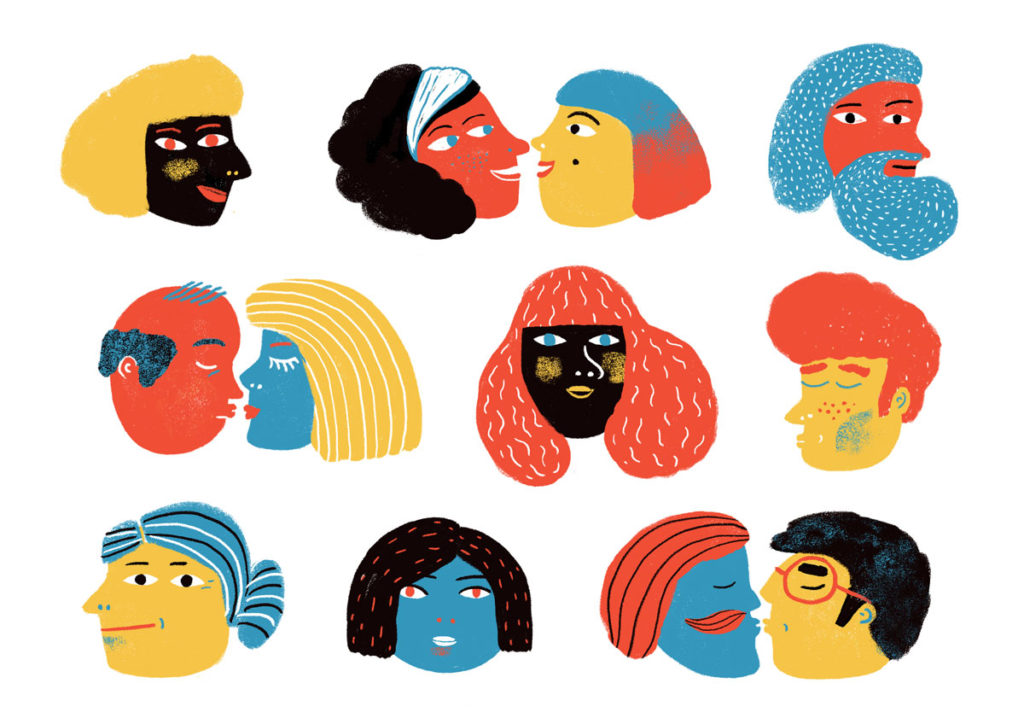
Inclusive language breaks not only with the hegemony of the masculine, but also with the male/female binary, recognizing otherness. The letter 'e' is often used for this purpose.
-Some people prefer to replace the letter e with x in written language.
The use of the letter e can be versatile and have different purposes:
1. The pronoun elle is used to name people who do not identify with the female or male genders.
2. In the plural, it has two meanings: to refer to people who do not identify as either female or male. It is also used to encompass different identities without resorting to the generic masculine. For example, the use of "todes" when referring to men and women, trans people, transvestites, non-binary people, gender-fluid people, queer people, or all those who do not identify with the binary.
¿How to adjust gender and number?
The words that are modified when using inclusive language are those that have gender: articles, pronouns, nouns, and adjectives. In Castilian Spanish—or its derivatives in different countries—we adjust the gender and number (singular or plural) of a word. This must also be respected in inclusive language.
-When using the article “les” with a noun, pronoun, and/or adjective, all these words must be in the neuter and plural form. For example: Todes les alumnes son destacades en Matemáticas.
How to use neutral words ?
–Some words are considered neutral: people, person, professional, adjectives that end in “-entity” (intelligent), in “-ble” (kind), and others.
While it is not necessary to neutralize these words, those that accompany them (articles, pronouns, nouns) must be adapted. For example: Le niñe inteligente .
-There are neutral words whose endings are changed due to political conviction. Examples of this are "non-binary person" or "president."
Using inherently neutral words is often helpful in writing. If you prefer not to use gender-specific words too often, you can look for synonyms. For example, instead of using "researchers," you could use "people who investigate."
How to use the forms of the pronoun elle ?
The most important thing in any case is something else entirely: asking people how they wish to be treated. At this point, it's crucial not to assume someone's gender identity based on their gender expression (how they present themselves to the world). Nor should you use pronouns beginning with "e" for just anyone.
For example, if a trans man is addressed with the pronoun "elle" (they/them) from the start, instead of "el" (he/she/it), he/she may feel disrespected. This is because he/she may have spent a long time—or a short time, it doesn't matter—trying to be recognized as male, and in this way, a pronoun he/she did not choose is being imposed upon him/her.
Asking about pronouns doesn't have to be awkward, as long as it's done respectfully.
-In the case of pronouns, in addition to "he" and "she," "elle" is also used. Elle is my best friend .
-For articles, “le” and “les” are used instead of “la”, “las”, “el” or “los”. The student passed the subject .
-In adjectives and nouns, the vowels “a” and “o” are also changed to “e”. The first-grade teacher.
We are present
We are committed to journalism that delves into the territories and conducts thorough investigations, combined with new technologies and narrative formats. We want the protagonists, their stories, and their struggles to be present.
SUPPORT US

FOLLOW US
Related notes
We are present
This and other stories are not usually on the media agenda. Together we can bring them to light.