

Indigenous Peoples achieved a working group with the Paraguayan State
Five thousand indigenous people marched to Asunción to accompany their representatives, who presented the government with 35 points.


Share

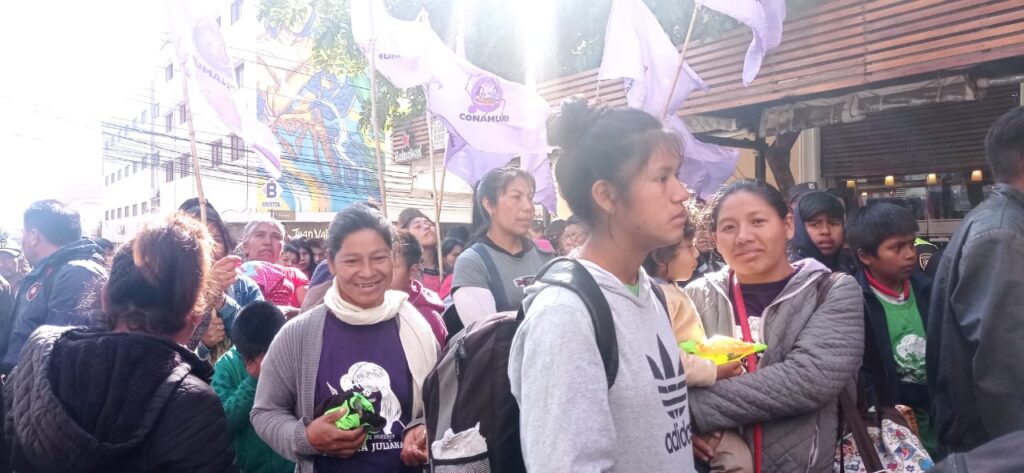
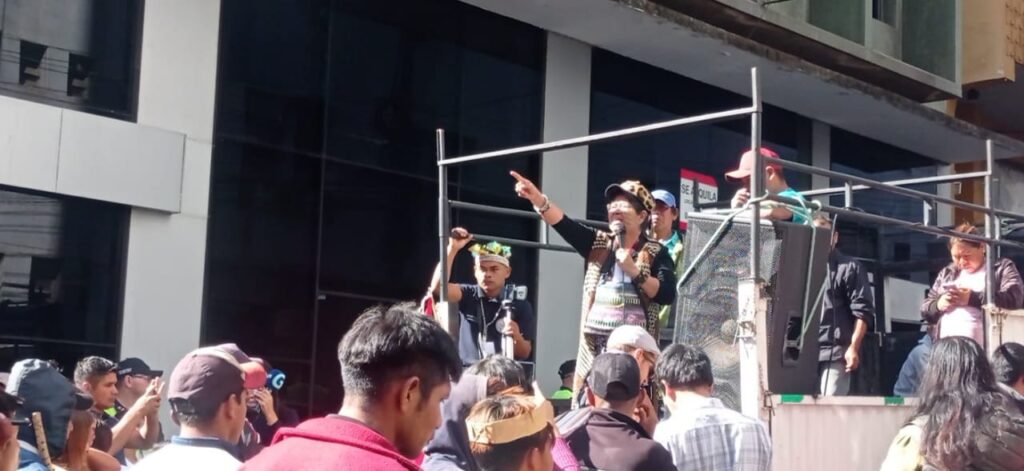
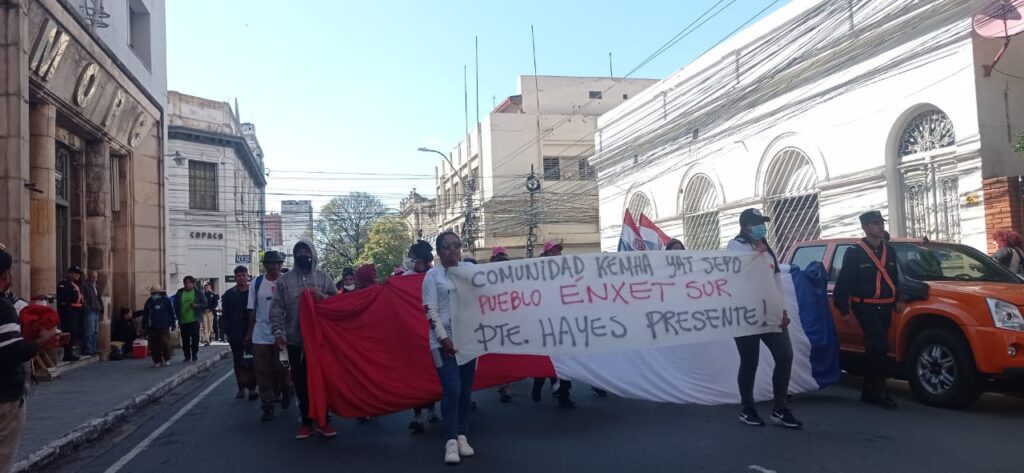
Around 5,000 Indigenous people from 18 of the 19 national groups marched for almost three hours through the streets of Asunción on the morning of October 12. Their representatives met with state institutions to demand the creation of a working group to guarantee human rights. This year, 35 demands were presented.
Starting October 10th, communities began arriving in Paraguay's capital to once again demand their rights from the State. The National Indigenous Articulation for a Dignified Life (ANIVID) had already presented 27 demands, none of which had been addressed. Additional demands were then added, and meetings with various State authorities took place over three days. A commitment was secured to establish a working group to allow for monitoring by Indigenous communities.
On October 10, they set up camp in the Plaza del Cabildo in Asunción, and on the afternoon of October 11, they held a discussion about the history of Indigenous peoples. They also held a festival called “The Last Day of Indigenous Freedom.”
After the conversation and in front of the Cabildo, they performed dances and songs from the Guaraní peoples, jeroky ñembo'e in the case of the Paí-Tavyterã.
The claims
ANIVID points out that the 19 indigenous peoples have the right to a comprehensive policy for the recovery and protection of their lands and natural resources, emphasizing those that were irregularly handed over by the Paraguayan State.
The demands directed at the Executive Branch are related to increased funding; regularization of communities and urban centers; access to healthcare, education, drinking water, housing, food, and productive policies; reparations in cases where the rights of indigenous communities have been violated; and expansion of telephone signal coverage for communities currently living in isolation.
They also emphasized the need to expedite a solution for the Hugua Po'i community, which has been evicted twice in less than a year. They also called for the creation of a law establishing indigenous funds earmarked for land purchases and development projects.
The demands directed at the judiciary also focused on judicial independence from economic groups and political parties. These groups are accused of profiting at the expense of Indigenous communities, primarily in land ownership issues. The protesters demanded an end to violent evictions, an end to the criminalization of land struggles, the enforcement of environmental laws, and freedom of movement for communities surrounded by ranches and soy fields.
Guarantee the land
ANIVID highlights the complete absence of the State in guaranteeing even the minimum conditions for the comprehensive development of Indigenous peoples. This population comprises 117,150 people in 453 communities, according to the Third Indigenous Census conducted by the General Directorate of Statistics, Surveys and Censuses in 2012. The next census will be carried out on November 9th of this year.
Ana Flores, the young Guarani leader who participated in the meetings with state institutions, mentioned that the date for the first meeting of the working group still needed to be determined. “There are 35 demands, ranging from the right to land to the most basic needs of Indigenous peoples. We were practically in several institutions, including the Ministry of Urban Development, Housing and Habitat (MUVH), the Ministry of Agriculture, and the Ministry of Children. Most importantly, our colleagues were at the Ministry of the Interior with some representatives, and a working group is being established to bring these demands to the community because we are fighting for these rights for the entire Indigenous population, not just for our organizations,” she stated.
She emphasized that land and territory must be guaranteed because without them, public policies such as education and health cannot be implemented; land is what allows people to exercise their rights. “They received us because we, the Indigenous peoples, are in Asunción. We agreed to create a working group and presented many documents, incomplete and unexecuted files—not just from now, but from 10 and 20 years ago. We came to reiterate that we must work with ministers, senators, and representatives of the Executive Branch, not with their officials who mistreat, discriminate against, and racialize us,” the leader added.
The exit is collective.
During the march, while I was taking a picture of a young Indigenous woman, Ña Secundina López Chavez curiously approached me. She is a Mbya Guaraní woman from the Mariwi 14 community in the department of Caaguazu. She is 68 years old, has five children, is a grandmother, and this is her first time participating in a march; on other occasions when she has come to Asunción, it has been to accompany others or seek medical advice. Ña Secundina explained that the situation in her community is difficult because there is no access to food in a community of 100 houses.
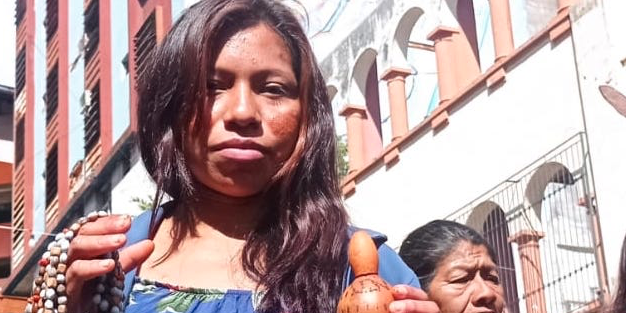
Kuña Rendy (Celia Valiente) and Elma Ramos are two young women from the Paí-Tavyterã people who sold seed chains made by them in their communities, they mentioned that the situation in their community for youth is also complex.
The struggle of Indigenous peoples in Paraguay is historical and ongoing; they experience discrimination and exclusion daily. However, they are very clear that unity among their communities is what will allow them to achieve the rights currently denied to them, and because a collective perspective is central to their cultures. “We are here for the girls, boys, and young people; if we don't guarantee them land and territory, we cannot guarantee them a future,” Ana concludes.
We are present
We are committed to journalism that delves into the territories and conducts thorough investigations, combined with new technologies and narrative formats. We want the protagonists, their stories, and their struggles to be present.
SUPPORT US

FOLLOW US
Related notes


We are present
This and other stories are not usually on the media agenda. Together we can bring them to light.