

Lesbian rebellions: rights and love for all
"One way to guarantee the rights of lesbians is, for example, with access to decent employment or other forms of income that allow them economic emancipation and thus prevent them from remaining in places where they are attacked for not having the resources to meet their needs. We must also fight for legislative equality."


Share

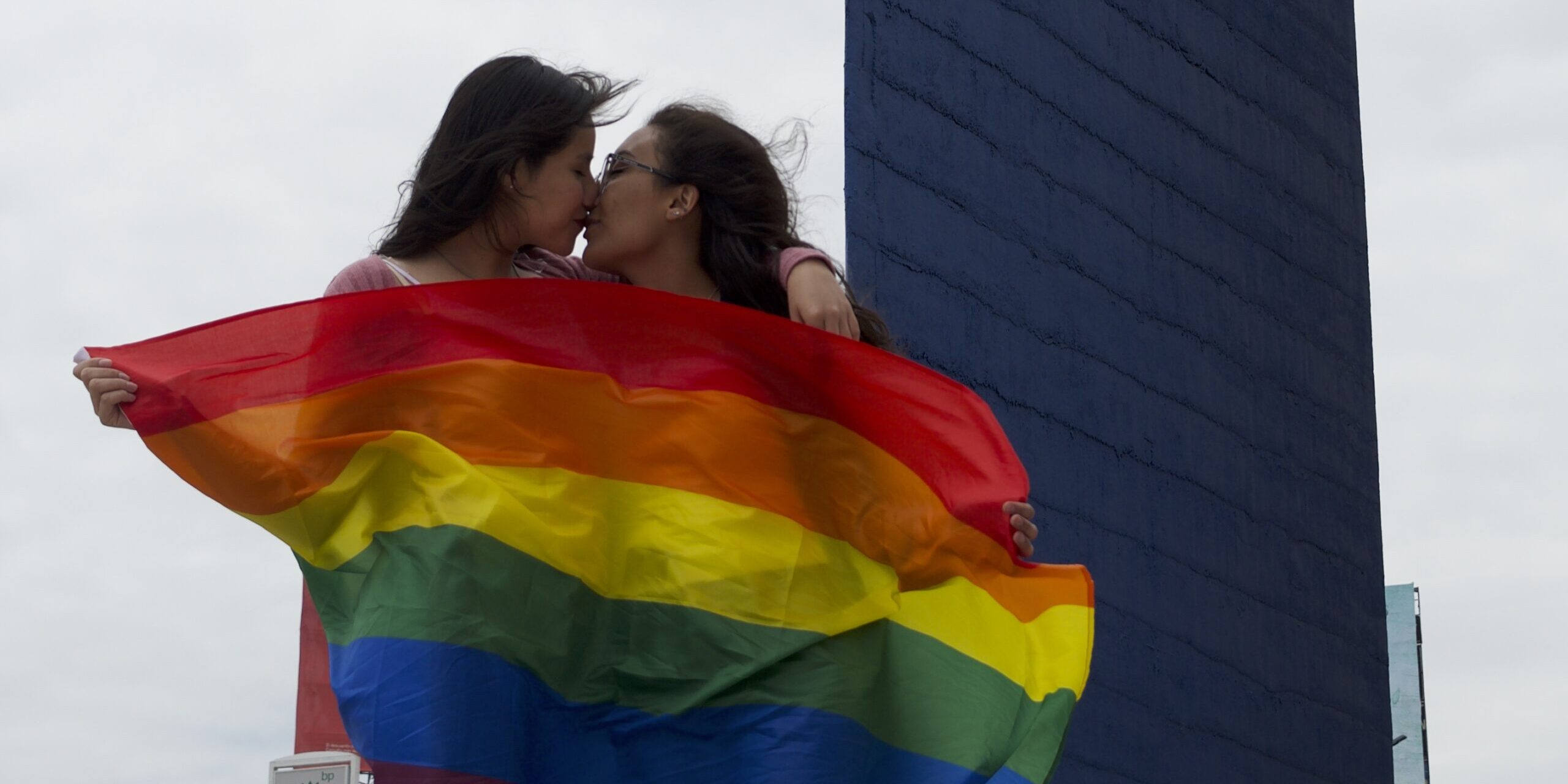
In Mexico and many other Latin American countries, lesbian women are invisible to the authorities. The moment a woman decides not to conform to heteronormativity and her partner is not a man, her rights vanish and discrimination intensifies. Considering lesbians as less than women is still an everyday stigma, noted Claudia Sanz, coordinator of the Diversa Collective (Codiver) in Ensenada, Baja California.
In an interview with Presentes, Claudia asserts that revealing you are a lesbian makes you an enemy of society for not wanting to fulfill the role assigned by the collective imagination, because revealing your desire to marry a man and start a family with him is understood by many people as an offense and not as a sexual orientation.
“One of the biggest fears is related to religion. Many women grow up in the religions their families choose, and in those religions they are told that feeling attraction to or loving people of the same gender is a sin. They make you believe that you can change, that you can reform because it is not normal or natural to have a relationship with a woman. They tell you that you are sick, that you need therapy because that is how they see sexual orientation. They tell you to repent, but the truth is that there is nothing to regret,” she says.
The home where Sanz first experienced discrimination for being a lesbian woman was in her own home, because when she revealed her sexual orientation and her desire to be with only women, her mother kicked her out of the house because "it was not possible for her daughter to be like that."
“In Mexico, gender violence is already prevalent, but it worsens when you are a lesbian woman. As women, we are already erased, murdered—between 10 and 11 a day. Now, when you are no longer for male consumption, your existence becomes null. We have less respect without a male figure in the relationship. We are not taken seriously, for example, when it comes to adoption; it is more difficult if you are in a relationship with a woman,” Sanz laments.
Violence against lesbian women
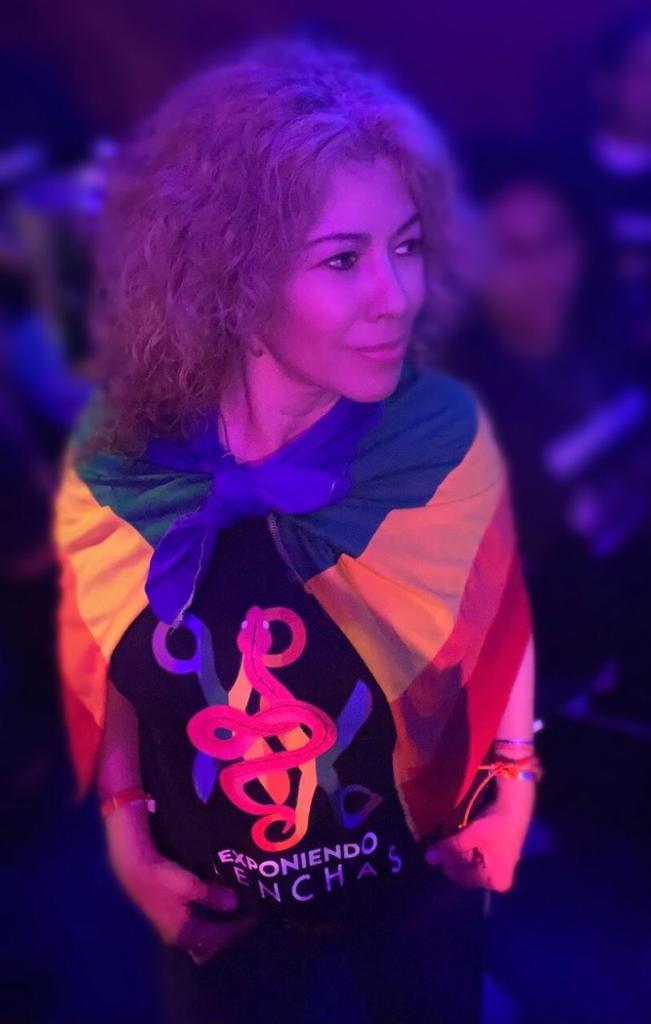
Physical, emotional, and even sexual violence against women who choose to love other women can be explained under three logics, says Sofía Jiménez Poiré, coordinator of Sexual Identity at the Balance organization.
“The first is heteronormativity . That’s the logic that every man should be with a woman, so any same-sex relationship is frowned upon and considered unnatural. The second is the destiny attributed to women, telling us that we have no value if we aren’t with a man or if we don’t fulfill the maternal role with him, for example, in families. The first thing they think when we say we’re lesbians is that they won’t have grandchildren anymore, and they ignore the existence of lesbian motherhood. And finally, there’s the automatic perception of us as men and the discrimination against butch women,” Sofía explains.
In Mexico, the 2017 National Survey on Discrimination ( ENADIS ) indicates that 66 percent of the population aged 18 and over believe that the rights of gay and lesbian people are respected little or not at all in the country . In addition to discrimination and restrictions on human rights, there is also femicidal violence.
In 2020, a study by the organization Letra S revealed that at least 79 LGBTI+ people were murdered in the country, an average of 6.5 victims per month. Lesbian women accounted for 10 percent of the victims in 2020, with eight victims, most of whom were killed with firearms.
In the document, the organization maintains that the most visible cases of violent deaths of lesbians occur within relationships, whether the target of the attacks was only one of them or both. It also mentions that during 2020, in three cases the violence was perpetrated in the victim's home, three in the workplace, one in a public place, and information is unavailable for the eighth case.
Letra S argues that the low number of recorded violent deaths of lesbian and bisexual women should not be misinterpreted or used to underestimate the impact of this type of violence, as these cases are usually investigated only in terms of gender, leaving aside the victim's sexual orientation as a possible motivation for the crime.
Obtaining official data from the state that would allow for the identification of the gay and lesbian population that suffers from violence is a difficult task, says Sofía Jiménez. One factor is the fear of revealing one's sexual identity, since there may be cases where women prefer not to identify as lesbians because the word "lesbian" carries more stigma than the word "gay."
Therefore, given the violence experienced against lesbian women, especially in private spaces, Sofía calls for a joint effort between society and authorities to provide the community with tools that allow them to protect their lives and their integrity to some extent.
“One way to guarantee the rights of the population is, for example, by providing access to decent employment or other forms of income that allow them economic emancipation and prevent them from remaining in places where they are attacked for not having the resources to meet their needs. We must also fight for legislative equality; we see this with lesbian motherhood, as same-sex unions are not fully recognized. We must also facilitate certain social benefits, such as insurance for same-sex partners, since these are rarely respected and have a different impact on a sexually diverse population,” she explains.
Furthermore, Jiménez Poiré advocates for implementing comprehensive sexuality education not only at the basic level but also in the workplace, as this could transform the mindsets behind the violence committed against lesbian women and any member of the LGBTTTIAQ community.
Love between women saves us
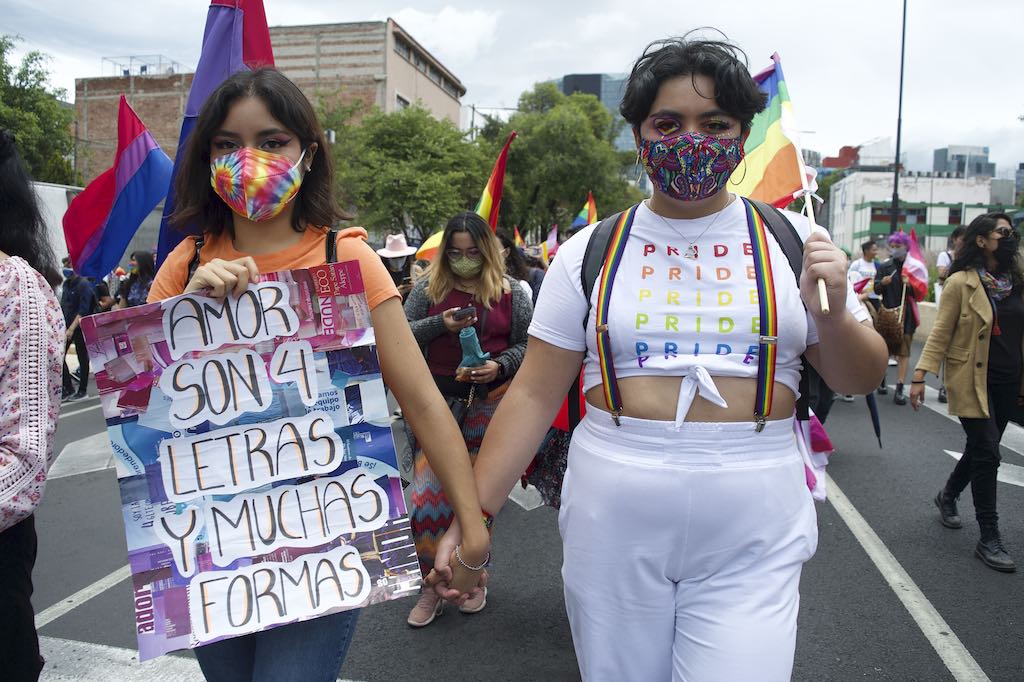
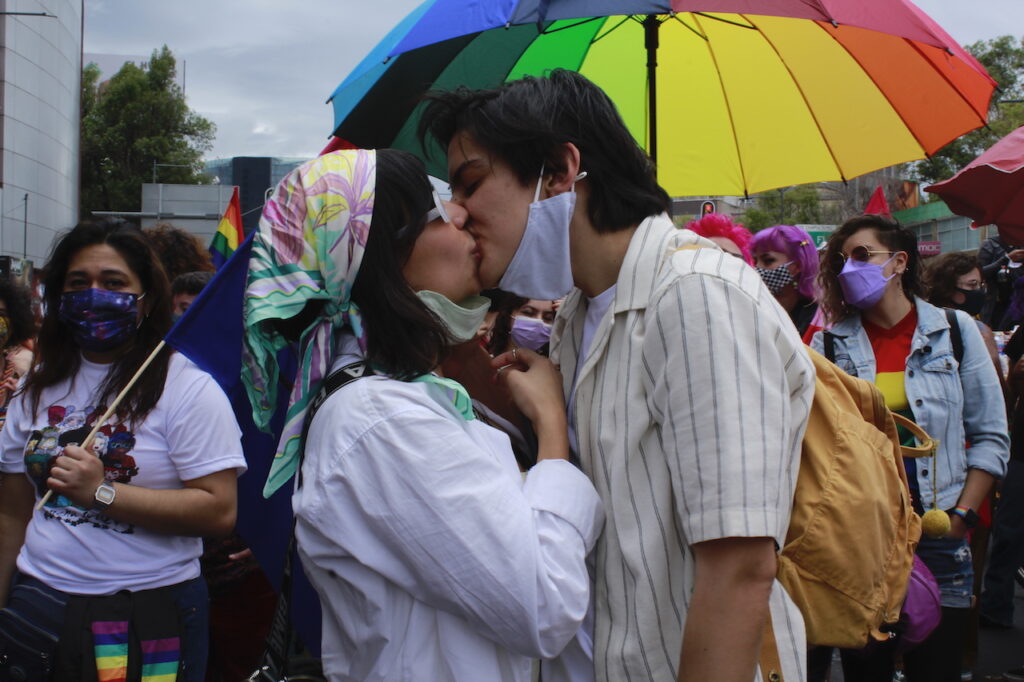
In the face of aggression, murder, discrimination, and violence, women do not lose hope that it is love between women that will make them stronger and prouder of who they are.
This is according to Andrea Cravioto, founder of jam de morras , an event producer that will hold the 2021 Lesbian Rebellions Meeting on October 13 in Mexico City.
“The idea arose from the initiative of the trans lesbian community to have a space where we can feel safe, where we can say that we love each other, admire each other, and we will do it hand in hand with the dissident market since it has been oppressed and it will be with them that we will hold this event which will be a statement to say that we exist and resist, that we are here to support each other, meet and of course rebel.”
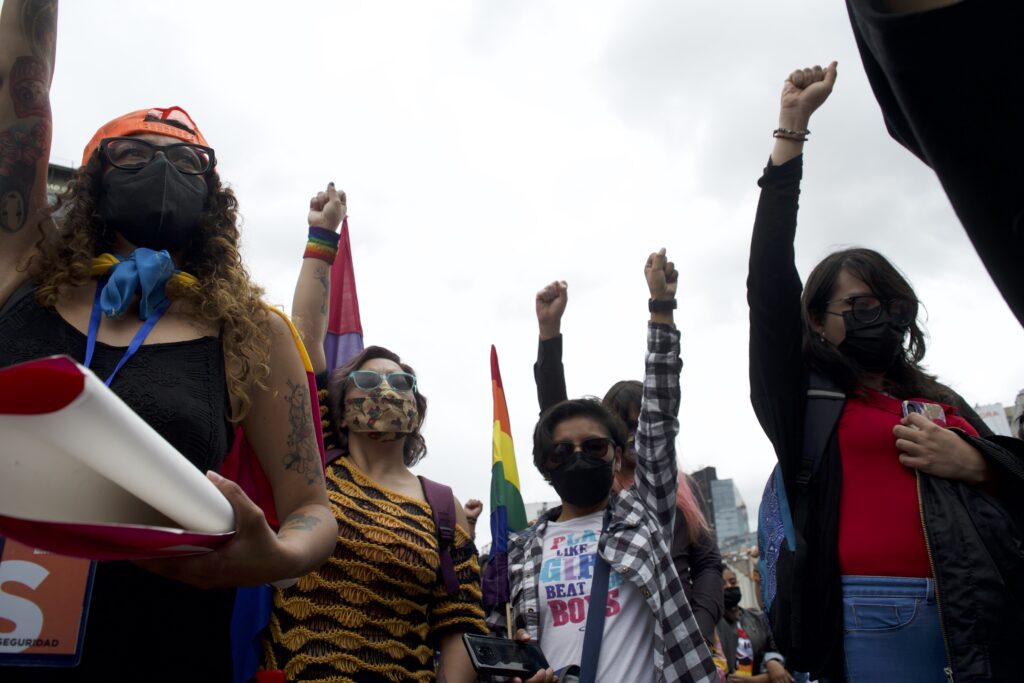
With the meeting point at the Glorieta de Insurgentes in the Cuauhtémoc borough, the call urges action to “look at each other, recognize each other, embrace each other, tell this conservative and patriarchal society that we exist and that our existence is an act of rebellion because love between women is revolutionary, because we do not conform to their mandates of gender roles nor do we serve their heterosexual capitalist regime.”
For Andrea, the importance of the meeting lies in being an opportunity to rebel against a system that has wanted to see them humiliated, invisible, a system that claims not to know that lesbian women are incredible and that they have found in their sexual orientation a welcoming space and that at the same time lets you know that you are not alone.
“We created our community when we didn’t have the support of society, and that’s what sometimes saves us. Lesbianism isn’t an insult; some people, when they see you with only women, call you a fucking lesbian and think they’re offending us. They don’t know that many times love between women is what saves us ,” Andrea says.
The upcoming Lesbian Rebellions Gathering will feature poetry, music, design, and the opportunity to use the microphone to remind society that lesbian women in Mexico exist, resist, love each other, and rebel.
We are present
We are committed to journalism that delves into the territories and conducts thorough investigations, combined with new technologies and narrative formats. We want the protagonists, their stories, and their struggles to be present.
SUPPORT US

FOLLOW US
Related notes

We are present
This and other stories are not usually on the media agenda. Together we can bring them to light.