

Mapuche women detained in Bariloche speak out: how the operation unfolded and how they are doing today
“They came in shooting, they came in to kill. Nothing mattered, whether there were children, pregnant women, elderly people,” says Celeste Guenumil, one of those arrested. Also heard are the voices of the machi Betiana and Romina, 40 weeks pregnant.


Share

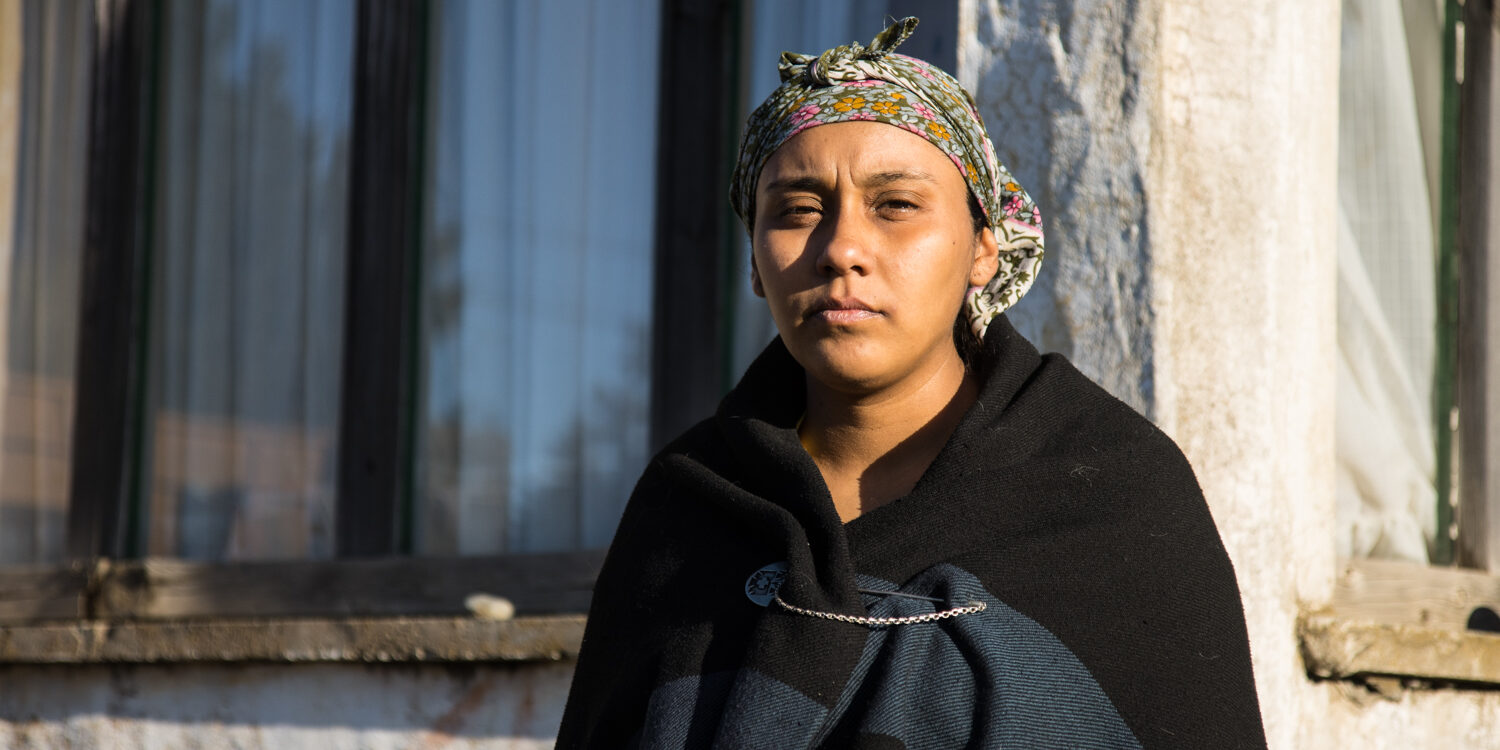
BARILOCHE, Río Negro. “They came in shooting, they came in to kill. Nothing mattered, whether there were children, pregnant women, or elderly people,” says Celeste Guenumil, holding her one-month-old baby, in the Ruka Mapuche, the community house in Bariloche where she is under house arrest along with three other women: the machi Betiana Colhuan Nahuel, Luciana Jaramillo, and Romina Rosas, who is 40 weeks pregnant. Two others, Débora Vera and Florencia Melo, remain imprisoned at the Bariloche Airport Police (PSA). The seventh detainee, Andrea Despo Cañuqueo, was released and acquitted yesterday (hours after this interview).
Celeste recounted to Presentes how she experienced the operation of October 4, 2022, in Villa Mascardi, Río Negro . That day, around 250 members of the Unified Command—including federal and provincial forces—entered the Lof Lafken Winkul Mapu , a Mapuche community where almost five years earlier the Argentine Naval Prefecture had killed Rafael Nahuel with a shot to the back.
On October 4th, Celeste recounts, “first they fired a shot and yelled, ‘ Get down, get down! ’ I was with my baby and my other daughter, and we immediately got down on the ground. Two officers came and pointed their guns at us. My baby has a little black crib that looks like a bag, and he started kicking it and kept saying, ‘What do you have there?’ He was kicking my daughter. I kept saying, ‘ Calm down, my baby’s in there .’ He didn’t believe me and kept saying, ‘What do you have there? Tell me the truth, what do you have there?’ and he kept kicking it, and my daughter kept saying, ‘No, it’s my sister.’ He unzipped the crib and saw her face, and then he calmed down a little.”
“There were two guys, who were apparently the bosses. They were saying, 'If they don't get down on the floor, kill them,' they were saying. The other women down and they were telling them to calm down, 'fucking Nazis,' and one of them looked at him and said, 'Yes, with honor.'”
Machi Betiana tells what happened
Next to Celeste is the machi Betiana Colhuan Nahuel, breastfeeding her four-month-old son. Both mothers were arrested with their babies that day. “In my case,” Betiana recounts, “I was upstairs with the baby lying in bed, and I heard a strange sound. I immediately realized it was something thrown inside the house. There was a 'beep beep' and the only thing I thought was to cover the baby's ears. The stun grenade exploded inside the house, and then tear gas.”
Security Minister Aníbal Fernández tweeted that same day: “There has been no repression whatsoever, not even a scratch.” Meanwhile, Betiana compares the operation to the one that ended the life of her cousin, Rafael Nahuel : “While many of us already suffered an attempted eviction in 2017, which also involved a large deployment, this one surpassed it. It was more intense, more violent.” According to the accounts, this violence was exerted on different people in different ways.
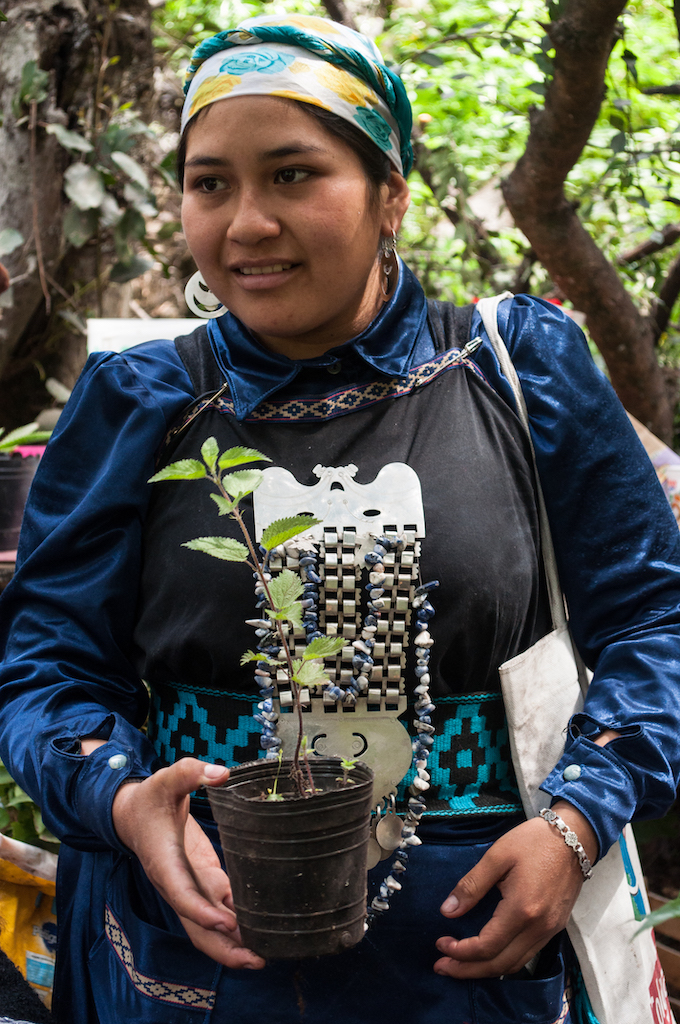
"They were playing psychological games with us, threatening to take our babies away."
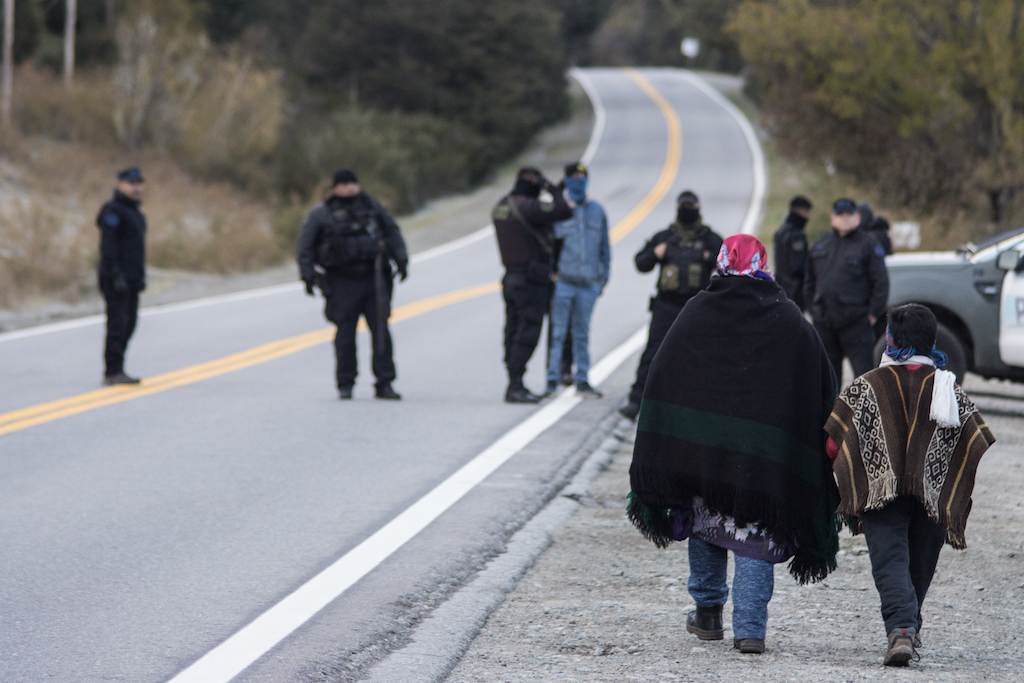
Celeste recounts that for them, the ordeal was just beginning. “We were surrounded by soldiers and they were marching us along the highway. They left us there for I don't know how many hours before they put us in the van. Everywhere we went, they searched us countless times, stripped us naked, searched the babies, the diapers. They checked everything, as if we had a bomb inside a diaper. I don't know what they were thinking. And when we were imprisoned there at the PSA (Airport Security Police) headquarters, they filmed us 24 hours a day. They filmed us even when we went to the bathroom. And we were constantly afraid they would take the babies away. They played psychological games with us, with the threat of taking the babies away.”
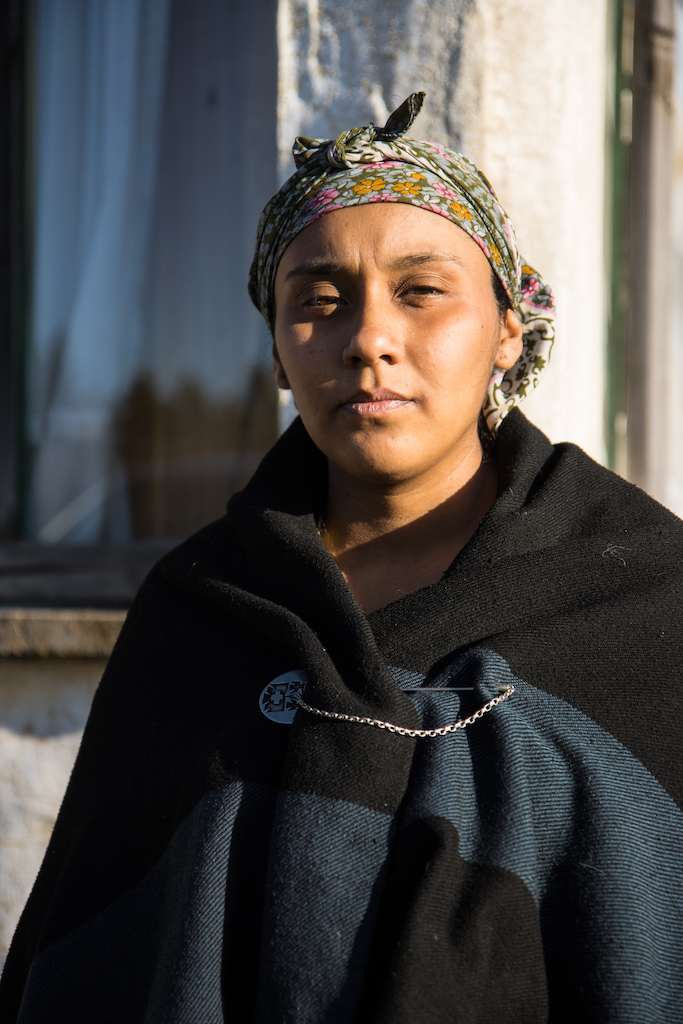
They were never separated from their babies, but they were from their older children. Some members of the Lof community managed to escape up the mountain, including minors. “We spent the whole day in the mountains with those children,” recounts a young woman, barely of legal age, who accompanied them.
“The mothers told them they had to go, and no matter what happened, they had to go up. We started climbing, and we heard gunshots, and we just ran. They never cried; they were very strong. Helicopters flew by, and the first thing they did was throw themselves to the ground so they wouldn't be discovered. We heard gunshots, and they threw themselves to the ground; they didn't want to be shot. In a way, they were already prepared for it. And that's the awful thing, that children so young get used to that violence, or that they know what to do in those situations when, in reality, the children should be free in the territory; they should be playing.”
After spending the day fleeing state forces, the children were finally released as night fell. Judge Silvina Domínguez allowed people she trusted, not Mapuche, to enter and remove them from the territory. The young woman added: “I don’t think any child should have to go through that. We walked quite a way, uphill; we were dirty, cold, and hungry, but even so, they didn’t give up. It’s something we value immensely, and it helps us grow. We learned, and they learned from us.”.
The transfers to Ezeiza
The following day, four detainees—those who were neither breastfeeding nor pregnant—were transferred to Buenos Aires, to Unit 31 of the Airport Security Police in Ezeiza. They were flown there in the early morning hours, without their defense attorney being notified.
Meanwhile, Romina, 40 weeks pregnant, was in the hospital under police guard, experiencing contractions brought on by her experiences during the operation . Between the forced transfers and her imminent delivery, comparisons to the 19th century are inevitable. Celeste, anticipating the notion that things have changed, declares: “They always talk about rights, about the rights of Indigenous peoples. For us, it has always been, from the time of the Conquest of the Desert until now, what our ancestors went through. We continue to live the same thing.”
Andrea Reile, the defense attorney for four of the detainees, agrees. “Here, in addition to violating several constitutional guarantees that protect any prisoner, the specific rights that protect women, children, and indigenous peoples have been violated,” Reile told Presentes.
These human rights violations also led to the resignation of the Minister of Women, Gender and Diversity, Elizabeth Gómez Alcorta. In her resignation letter, she stated that the imprisonment and denial of release for all of them, especially for a woman 40 weeks pregnant, the incommunicado detention, and the transfer more than 1,500 kilometers from their place of residence, “constitute clear violations of human rights.”.
How are the Mapuche women detained today?
Faced with massive mobilization and condemnation from communities and organizations , both in Bariloche and Patagonia, as well as in Buenos Aires and elsewhere, on October 8th the Judiciary ordered the return to Bariloche of the four Mapuche women who had been taken to Unit 31 of the Federal Penitentiary Complex in Ezeiza, and also granted house arrest to Betiana, Celeste, Romina, and Luciana. They are now staying in this group home, where the children run and play while their mothers try to organize the donations of clothing and supplies that have arrived.
They breathe a little easier, but they are not yet free. The house is just meters from the Police Academy. They remain worried about the two women detained at the Bariloche Airport Security Police station. They are also worried about those who escaped to the mountains and have been exposed to the elements for a week, and about their sacred space, the rewe .
They all emphasize: what makes this community unique in all of Puel Mapu (eastern land, what is now called Argentina) is the presence of the machi .
"They are attacking sacred space"
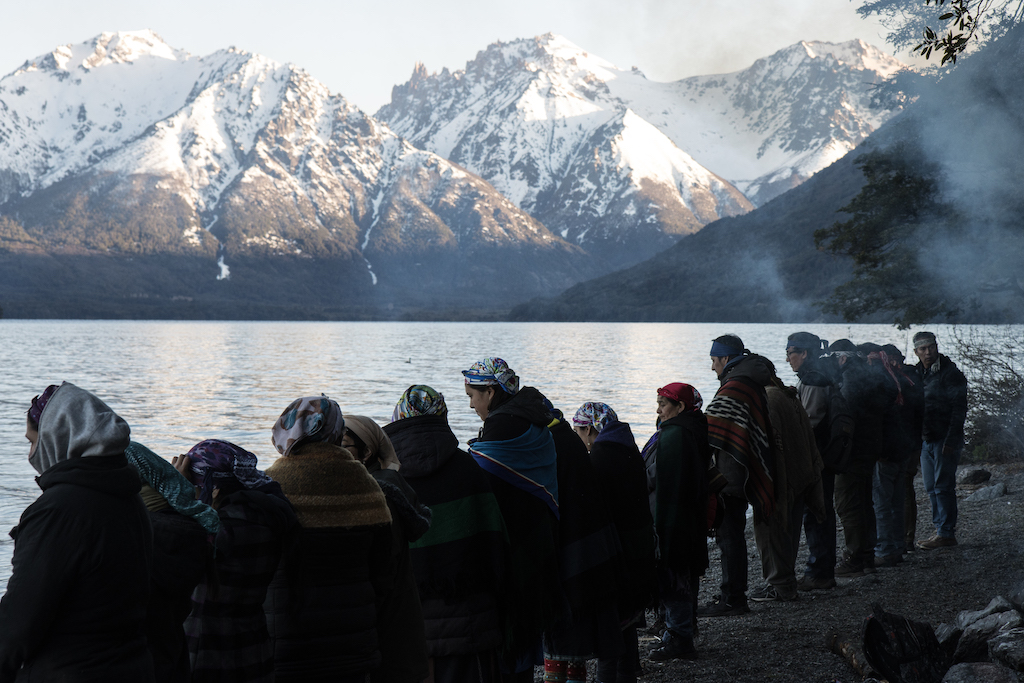
Romina says, “They arrived at our machi’s house, and at the rewe. They went straight to attack the rewe, the sacred space and our highest spiritual authority here in Puel Mapu . That’s where we started, right?” She speaks slowly, with the short breaths that accompany a pregnancy nearing its end. She proposes a purely imaginative exercise: “If we go to the Pope’s house and loot it, what are they going to do? Well, that’s what we’re going through. Our first right, our sacred space, is being violated.”
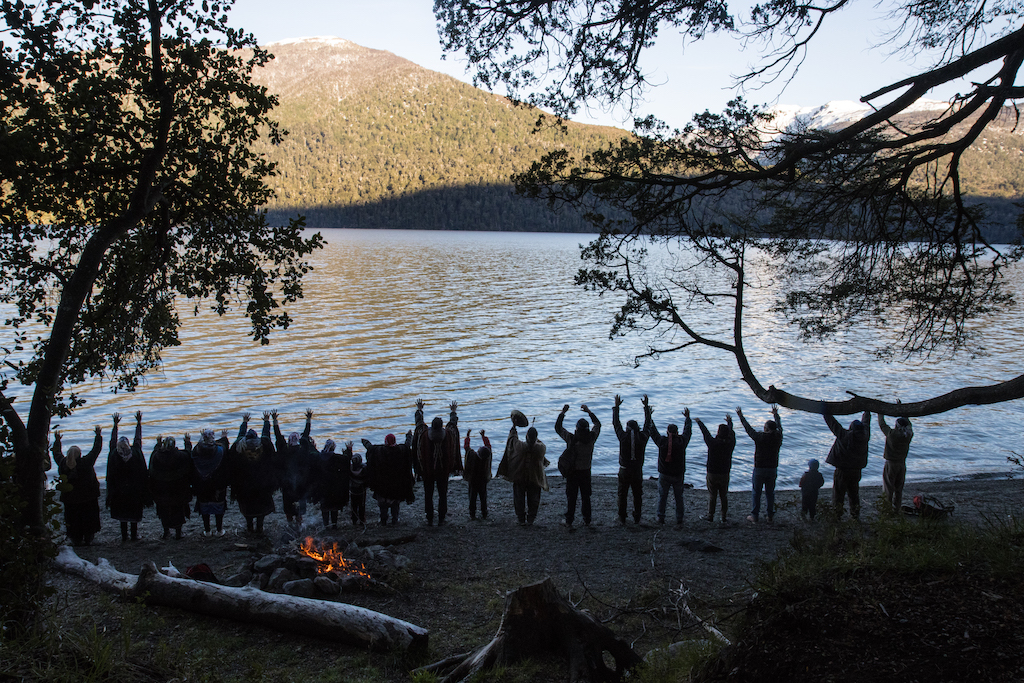
The protection of the rewe , the ceremonial space, is now a focus of the community's demands. On Monday, October 10, almost a week after the eviction operation, about thirty people approached the territory for a ceremony.
The entire area remains heavily militarized. Along Route 40, the Federal Police and Gendarmerie maintain numerous deployments of vehicles and troops, sometimes blocking traffic to allow helicopters to land on the road. Infantry troops are stationed within the territory. Upon seeing people get out of their cars for the ceremony, they fired shots into the air and launched a tear gas canister as a welcome.
Fortunately, the situation quickly calmed down and the ceremony proceeded peacefully. It took place on the lake shore because they were not allowed near the rewe lonkos participated in the ceremony —the Lof Pillán Mahuiza, from Corcovado, Chubut, and the Lof Curruhuinca, from San Martín de los Andes, Neuquén. Both emphasized the importance of joining forces at the sacred site and showing the support of other communities.
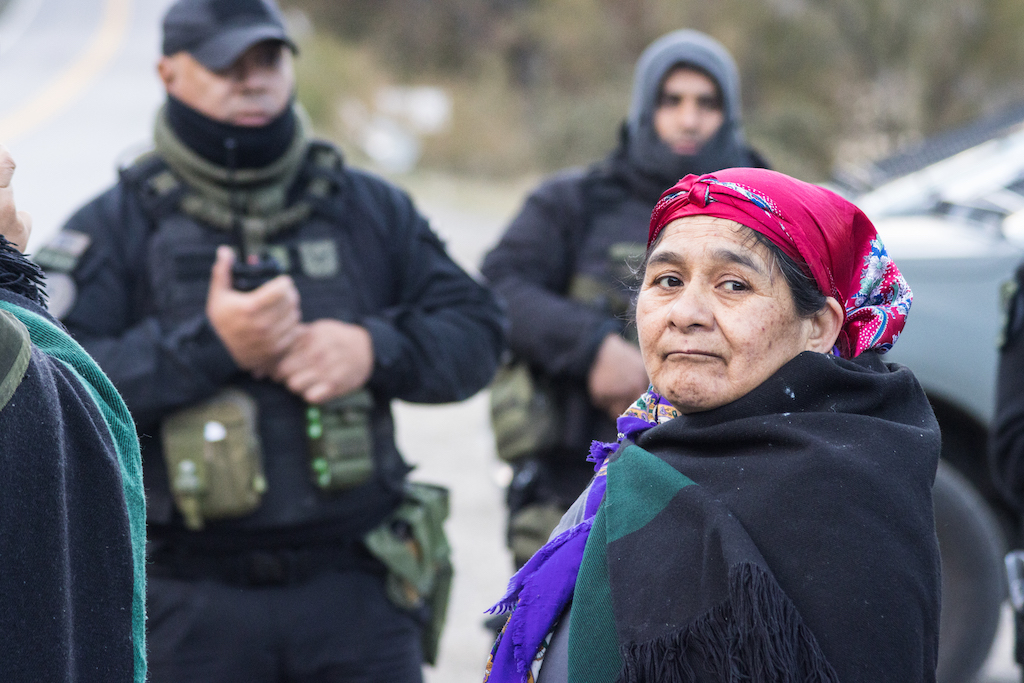
However, the image of the ngellipún (prayer) on the riverbank doesn't appear in many media outlets. In the Lof community, they have a clear understanding of the media coverage of the conflict. Machi Betiana explains: “The operation wasn't the beginning; rather, something had been developing for a long time, many days, even weeks, beforehand, through the mainstream media. They play an important role, in establishing this narrative of terrorism.”
Romina adds to what she believes is the point. “When a Mapuche person demands a right, there’s increasingly more weaponry,” she says. “Unfortunately, that’s what’s coming in the future: war over water, in general, not just for the Mapuche people. What will they have then?” she asks. “We’re always the bad guys, the terrorists. It’s a political setup. They came to show us their strength. The threat, the helicopter—it’s all a staged scene to instill fear in the population. To say, ‘Don’t get involved,’ whoever fights like these, look how they end up, like us… Wherever there’s a claim or a recovery of ancestral lands, the same thing will happen.”
We are present
We are committed to journalism that delves into the territories and conducts thorough investigations, combined with new technologies and narrative formats. We want the protagonists, their stories, and their struggles to be present.
SUPPORT US

FOLLOW US
Related notes
We are present
This and other stories are not usually on the media agenda. Together we can bring them to light.