

Without access to healthcare and hormones: the reality for trans people in El Salvador
In El Salvador, a trans person who wants to start hormone therapy has only two options: self-medicate or seek the support of an organization when starting treatment.


Share

Astor Elías is 35 years old. He is a biologist and university professor, but since October of last year, when he finished a consultancy, he has been unable to find work. During the pandemic, Dr. Andrés Bello University, a private institution of higher learning in El Salvador, laid him off along with 100 other professors.
His last job interview was in June. He hadn't felt so nervous in previous interviews, as he hadn't yet started hormone therapy as a trans man.
He started this therapy a year and three months ago. Astor is happy to see how his body changes every day, every month. He notices it most of all in his back, which is getting wider, and in his voice, which is becoming deeper.
But before he began to feel comfortable in his male body, he was afraid of hormone therapy. Afraid of doing it at 30. Afraid for his family. And afraid of the job opportunities that would begin to close when his gender expression aligned with his identity.
He researched hormone replacement therapy extensively: he looked for information online and also asked Javier, his trans friend, questions. Once he was sure, he visited the clinic of the Diké LGBTI+ , located in San Salvador. At the first appointment, they gave him the orders for his initial tests. The doctor told him that if the results were good, he could begin hormone therapy.
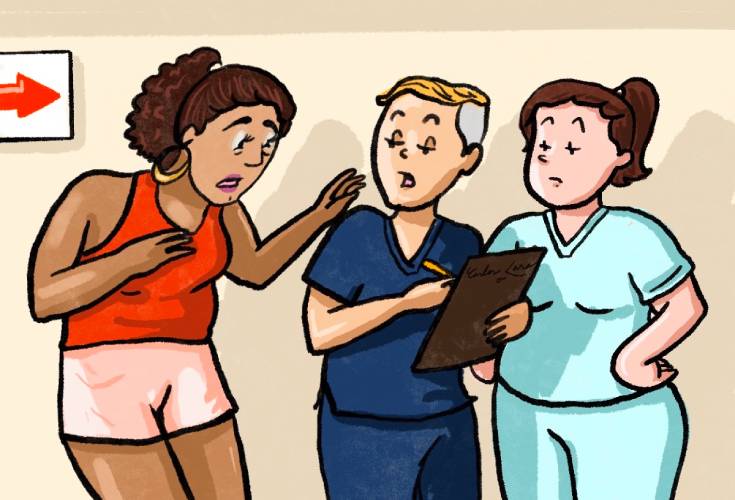
With savings from his tax refund for the hours he taught at the university, and thanks to a discount for being a Diké patient, he managed to scrape together $25 for the tests. During his checkup at the hospital, he was discriminated against by the nurses because his name and gender expression did not match the photograph and name on his ID.
The results were good, and at Diké, he received his first dose of testosterone. This marked the beginning of changes in his body. Emotionally, Astor felt stressed and suffered from insomnia for a few days. Practicing taekwondo once a week, attending therapy with a psychologist, and talking about these changes with a group of trans friends he met at Diké all helped.
But the gains from hormone therapy nearly fell apart. Without a stable job, Astor couldn't afford his testosterone for two months at the end of last year. And the Salvadoran healthcare system offers no options to help him.
An unequal system
The only direct link that LGBTIQ+ organizations have with El Salvador's Ministry of Health (MINSAL) is through part of the National HIV Program. In the last three years, dialogue between the government and civil society has been almost nonexistent, says trans activist Amalia Arévalo.
But people of diverse sexual orientations, who use the public system for different services, he adds, encounter staff who are not very sensitive or who do not even know the Technical Guidelines for Comprehensive Health Care of the LGBTQ+ Population , prepared in 2016 by the Secretariat of Inclusion, the Attorney General's Office for the Defense of Human Rights and civil society organizations.
These guidelines complemented Ministerial Agreement 202, approved in 2009, which prohibits discrimination against LGBTIQ+ people in the healthcare system. These few advances in favor of sexual minorities occurred during left-wing governments.
In June 2019, when Nayib Bukele assumed the presidency, one of the first decisions he made with his cabinet was to close the Directorate of Sexual Diversity, which operated within the Secretariat of Social Inclusion. Its functions were transferred to the Ministry of Culture through its Gender and Diversity Unit, which is responsible for ensuring compliance with these actions and implementing public policies in favor of LGBTQ+ communities.
Furthermore, the current Legislative Assembly—controlled by the Nuevas Ideas party, aligned with Bukele—shelved the draft Gender Identity Law last year. This law would have recognized transgender people in El Salvador and enabled their access to historically violated rights, such as health and education.
According to Arévalo, the healthcare system fails to meet the needs of the general population, but it exacerbates inequality for transgender people. If this is the case with basic services, she points out, then state-provided hormone therapy is a distant prospect .
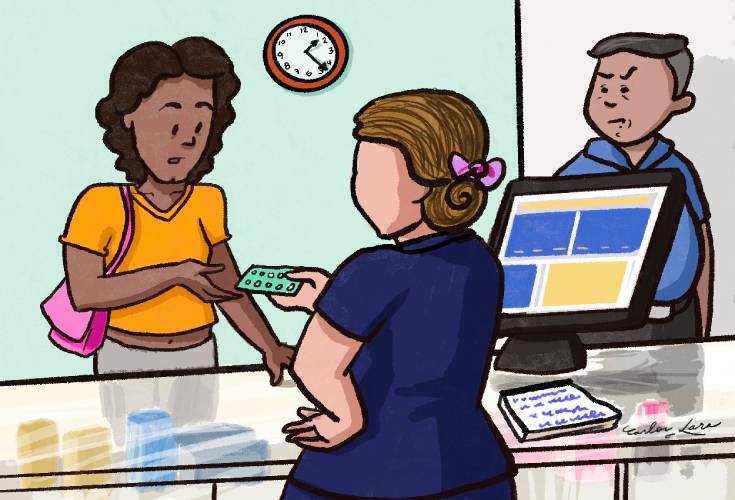
Mónica Linares, director of the Aspidh Arcoíris Trans , says that her organization has worked to raise awareness among MINSAL (Ministry of Health) staff on issues of sexual orientation, and gender identity. But neither Ministerial Agreement 202 nor the guidelines are being followed. “There is no comprehensive access to healthcare, because this should be mandated from higher levels,” she acknowledges. Under these conditions, trans people who want to begin hormone therapy turn to friends or organizations like Diké for information. Trans women who lack access to medical support during therapy end up buying contraceptives or over-the-counter feminizing pills at pharmacies, based on recommendations from acquaintances, say Arévalo and Linares. They do not rule out the existence of clandestine locations where women inject biopolymers—substances derived from petroleum or oil—to enlarge their breasts and buttocks. This has harmful consequences for their bodies, as the liquid accumulates in the muscles, freezes, and is difficult to remove.
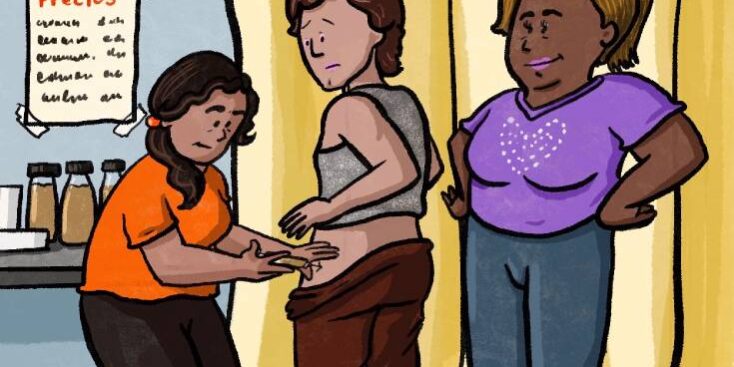
Trans men can also buy testosterone at pharmacies and self-administer it without medical supervision. That's what Javier, Astor's friend, does.
Personalized treatments
“The treatment is administered according to each person’s characteristics. In the doses that each person needs, according to the specific goal they are seeking,” explains Alberto Nagelberg, endocrinologist at the Trans People Care Group of the Carlos G. Durand General Hospital, in the Autonomous City of Buenos Aires, Argentina.
She emphasizes that there is no standard dose of hormones for trans men or women, because treatment is tailored to each individual. Speaking of a standardized dose would encourage self-medication.
Endocrinology is the branch of medicine that deals with the endocrine system, hormones, and the glands that produce them. In El Salvador, only four of the ten universities that offer medical degrees have a master's program in endocrinology. Specialists in endocrinology are available at the Ministry of Health (MINSAL), the Salvadoran Social Security Institute (ISSS), and in private practice.
Nagelberg maintains that hormone therapy should always be supervised by endocrinologists, but if that is not possible, he warns, it should be performed by a health professional with sufficient training.
The Carlos G. Durand General Hospital began providing hormone therapy to transgender people in 2005, seven years before Argentina passed its Gender Identity Law. At that time, 70% of the transgender women who started therapy were self-medicating with excessive doses, according to Nagelberg. In contrast, only 20% of the transgender men were self-medicating.
When this occurs and is detected during the initial check-up before starting hormone therapy, patients must first address the problems triggered by self-medication. Modesto Mendizábal, a doctor and director of the organization Diké LGBTIQ+, mentions that the clinic has treated trans people with the consequences of self-medication. He recalls, for example, cases of trans men who have come in with sleep problems, acne, and an excess of red blood cells.
Regarding biopolymers, Nagelberg points out that they cause physical deformities in trans women, and it is then impossible to remove these substances from their bodies. Mística, a friend of Amalia Arévalo, died in 2016 because the oil she had injected into her breasts reached her lungs, and she could not receive timely treatment at a hospital.
Mendizábal is not an endocrinologist. He is a general practitioner with a master's degree in Sexual and Reproductive Health. He also studied Sexology at the Institute of Sexology in Madrid, which is part of the University of Alcalá de Henares. Over time, he has developed the skills necessary to support individuals undergoing hormone therapy in a country that lacks legal protections for transgender people.
He asserts that endocrinologists in El Salvador operate without scientific guidance. They base their decisions on morality, which denies access to services for the trans community seeking hormone therapy. In Diké, he recounts, he took on the case of a trans man and woman who began therapy with the former director of a public hospital, but the dosages they received were inadequate.
Activist Arévalo confirms that, although endocrinologists exist within the public health system and the ISSS (Salvadoran Social Security Institute), it is impossible to access them. In the case of the ISSS, she adds, transgender people only have coverage if they have formal employment.
“It’s like we go through life asking health professionals if they agree with what you’re going to start or not, to subject your body to changes. I find it so grotesque,” she points out.
The lack of laws protecting the LGBTIQ+ community and a Gender Identity Law hinders transgender people from finding formal employment. Most work in the informal sector or, in the case of transgender women, engage in sex work.
Of Diké's group of friends, Ástor says he's the only one who was able to graduate from university. He did so before transitioning and before facing the discrimination he suffers now.
This context also limits Diké's work. Mendizábal says they prefer to maintain a low profile on social media, for fear that their work will be denounced by fundamentalist groups.
Alejandra Menjívar, the first trans woman to run in legislative elections, says she began her hormone therapy process by asking a friend who is an endocrinologist for prescriptions. Following the recommendations of friends or acquaintances who know about the process, she confirms, is the only way to access the treatment.
Menjívar lives in Mexico, where the public health system does provide hormones to transgender people. But she says it's overwhelmed, and appointments with an endocrinologist can take up to a year to get. However, there is state support for hormone therapy, as there is in Argentina.
“The lack of gender-affirming therapy exacerbates inequality and discrimination because, in the case of women, the femininity or facial features that are shaped with therapy are more evident. Therefore, the less feminine a trans woman is, the more questioning and discrimination she experiences,” says Menjívar.
Pay for hormones or eat
Astor still hasn't told his mother, a nurse, that he injects testosterone. He lives at home, and she sometimes helps him financially. Without a monthly salary, Astor barely earns enough to get by with a small business selling scented candles and shampoo, which he was able to set up thanks to training and support from ASPIDH. Every weekend, he also sells sweets at his taekwondo class.
He has forced himself to stop doing things that used to bring him joy, like eating out or going to the movies. Meetings with his group of trans friends from Diké are the few places where he feels like himself.
“I knew all of this was going to happen to me, because I knew that here there is no identity law or specific jobs for trans people. It’s more difficult,” Astor says, referring to his transition process in a country without protection for the rights of the LGBTIQ+ population.
Diké offers various services to the LGBTIQ+ community, but one of the best known is medical care. According to Mendizábal, the clinic currently supports approximately 100 transgender individuals, both men and women, through the hormone therapy process.
The hormone therapy for trans men that Diké follows involves administering 125 milligrams of testosterone every 15 days. In the case of trans women, cross-treatment occurs: alongside spironolactone, a pill that reduces testosterone, they also administer estradiol, the feminizing hormone.
Spironolactone, depending on the desired level of hormone therapy, is taken as half a pill, a whole pill, or two pills daily. Estradiol, on the other hand, is administered by injection. It can be substituted with a patch if these are available in Salvadoran pharmacies.
This year, Diké secured donations that allow them to offer free hormone therapy sessions for both men and women. The only cost for users is the initial exam. Last year, hormone therapy cost $5 per month for a trans woman and $12 per month for a trans man. The same treatment costs between $18 and $30 at a private pharmacy, Mendizábal notes.
These amounts may seem small. But given the precariousness and lack of job opportunities faced by trans people in El Salvador, paying for therapy means going hungry.
Diké has reached an agreement with the Profamilia hospital to reduce the costs of initial checkups. For the same purpose, they purchase 30 hormone treatments monthly from various pharmaceutical companies.
In addition to the lack of attention to the need of trans people to take hormones, there is also no response from the public health system when they want to have surgery to make their bodies harmonize with their self-perceived gender identity.
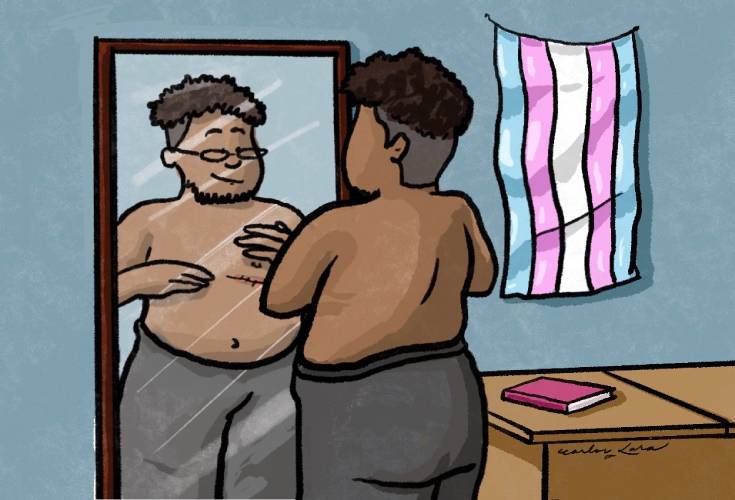
Mendizábal says that during the previous administration, a complaint was filed with the Ministry of Health (MINSAL) in Diké against a doctor who refused to perform a mastectomy (breast removal). The request had been made repeatedly by a trans man who had suffered from breast cysts for three consecutive years. Instead, the doctor prescribed tamoxifen, a medication used to treat breast cancer. But according to Mendizábal, this medication causes depression.
The doctor says there are other complaints within the healthcare system against doctors for refusing to perform surgeries on transgender people. So far, however, he says, they have not received any responses to these complaints.
Diké has already received approval from two units within the Ministry of Health (MINSAL) to develop a protocol for the care of transgender people, but this is a decision that depends on higher authorities. To date, Francisco Alabí, the Minister of Health of El Salvador, has not responded to their letter requesting a meeting.
With the goal of raising awareness about trans health among medical and psychological care professionals in El Salvador, Diké organized the first trans health congress in the Central American country in late July 2022. Members of the Legislative Assembly's Health Commission were invited to participate.
“The goal of the congress is to generate interest among people, even if it’s just 10, because with those 10 we can already refer others. We can support them while they begin to develop their skills, knowledge, and interest in working in El Salvador,” says Mendizábal.
For this report, attempts were made to interview officials from the Ministry of Culture, the Ministry of Health, and the ISSS, but there was no response from the communications staff.
NOTE: This report was produced with the support of the International Women's Media Foundation (IWMF) as part of its Reproductive Health, Reproductive Rights and Justice in the Americas initiative.
We are present
We are committed to journalism that delves into the territories and conducts thorough investigations, combined with new technologies and narrative formats. We want the protagonists, their stories, and their struggles to be present.
SUPPORT US

FOLLOW US
Related notes

We are present
This and other stories are not usually on the media agenda. Together we can bring them to light.