

New generation of Drag: "We fight in the most beautiful way, with minds, voices, bodies and art"
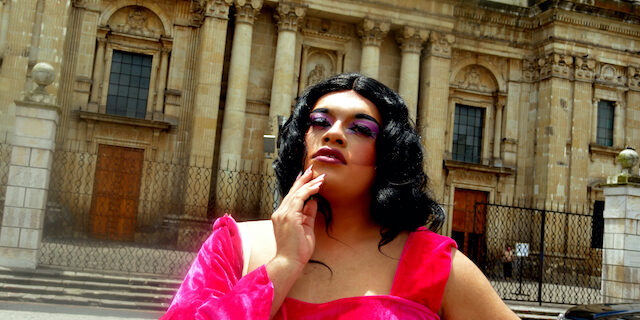
Badass Joto, Joan Who, and Gabo Quiroa are three artists from Guatemala's increasingly powerful drag scene. They are part of collectives that use drag as a space for resistance and political struggle.


Share

Drag is an art form and a popular culture movement that, in Guatemala, has its origins in the transvestism of the 1990s and beauty pageants . At that time, it brought visibility to other identities. One of the many theories about its origin is that it emerged as a way to exaggerate and mock traditional female gender roles in the second half of the 19th century. However, traces of this practice in reverse can already be identified in the 15th century, such as the masculinized performativity of Joan of Arc with the Drag King. Drag art in Guatemala began to gain more momentum starting in 2016.
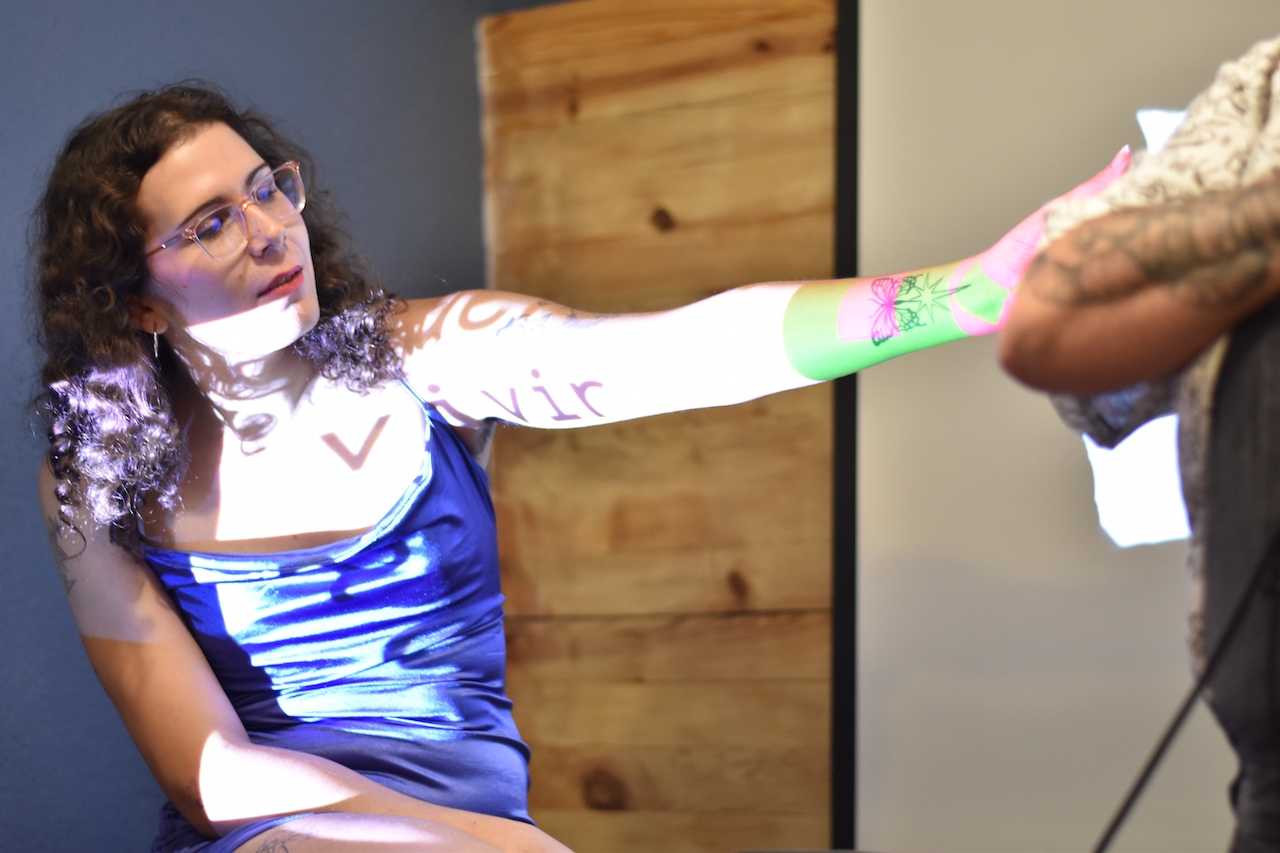
To learn more about this artistic and political form of resistance, we spoke with three young drag artists from the Guatemalan scene: Gabo Quiroa, Badass Joto, and Joan Who. They are members of the collectives Drag Besties , Orfanato Drag, and Las Hijas de la Drag Puta . They told us about resilience and visibility in a country where there are no laws to protect the LGBTQ+ community, and where being a drag performer becomes a political act.
Gabo Quiroa: “We are an act of rebellion and resistance”
Gabo Quiroa is a 25-year-old who identifies as non-binary and is a drag artist in Costa Rica. He is a professional publicist and belongs to the @Dragbesties collective, a group of diverse artists who have been promoting drag spaces for the past five years. Gabo loves pop culture, music, production, and plants. He is comfortable using any of the three pronouns: elle/ella/él.
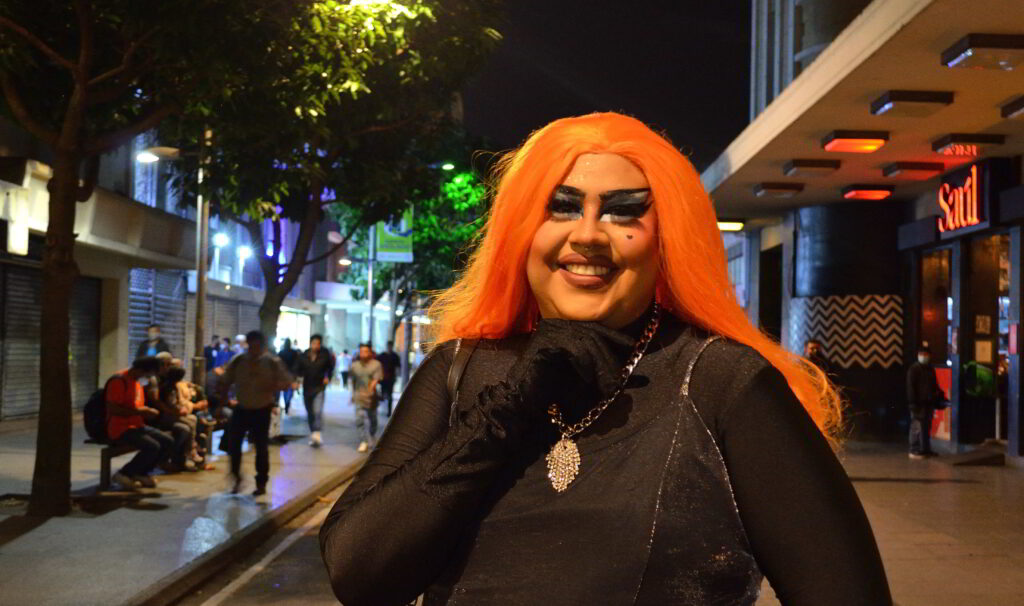
He says there's no difference on or off stage. He's the same there as in everyday life, without labels, he explains to Presentes. In a 2021 interview with a local media outlet, he mentioned that drag gained momentum thanks to the digital age, increased familiarity with social media, and current trends.
– What was school like for you, being a diverse person?
"Honestly, it was pretty normal. I always felt different and like I didn't fit in, but I was always a popular girl (laughs). Looking back, I realize that feeling of always being the different one was because I was already a LGBTQ+ person and I didn't know it yet. I went to several Catholic schools, and I always stood out. I was flag bearer, class president, or on cultural committees, on the basketball team. I did theater, public speaking, participated in cultural weeks, and sang. I just wish I had known I was LGBTQ+ at a younger age . I think I would have faced many things more bravely. But... everyone has their own time."
My mom and my grandma, along with my group of friends, are my family, and I receive unconditional support from all of them. I couldn't be where I am without them.
-When did you start in drag and what motivated you?
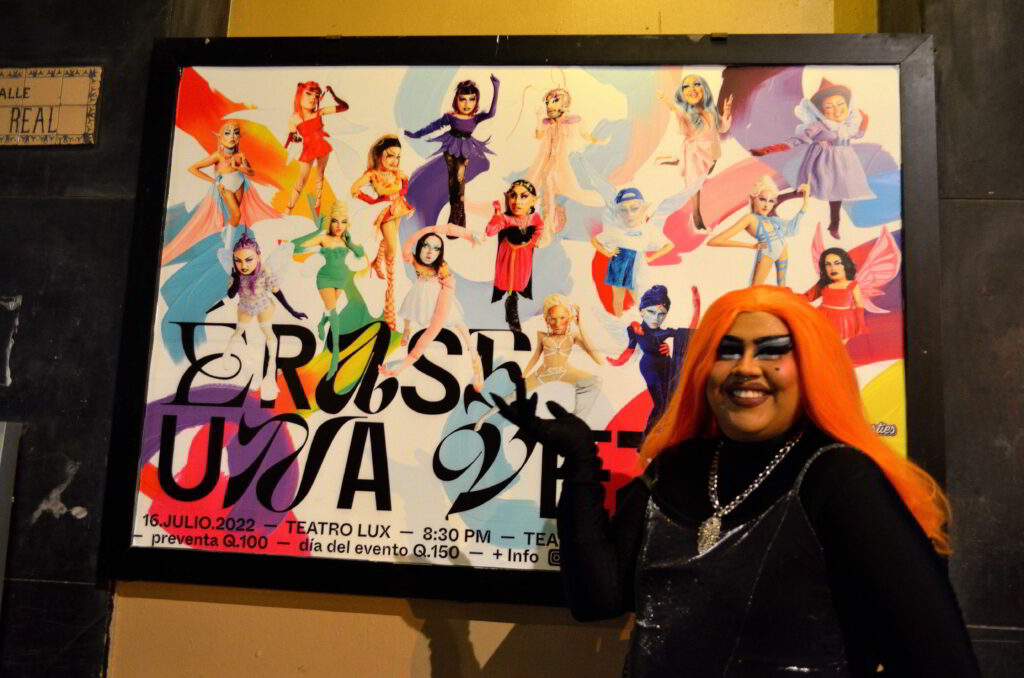
Since my desire to be an artist has been with me for as long as I can remember, it was that relentless pursuit of reaching the stage that propelled me and gave me the opportunity to start in drag, five years ago now. I've always been a showman, even more so after coming out at 18. Since then, I've been involved in the national art scene, meeting designers, photographers, illustrators, curators, and more. Those friendships and connections opened doors for me, giving me the opportunity to have my first two shows. One was at a Halloween party I threw with two other friends, called Halloqueen, in 2017. The other was my official debut as a drag queen in 2018 at the season 10 finale of RuPaul's Drag Race.
-What's it like to do drag in Guatemala?
It's political, from the very idea of it. We are an act of rebellion and resistance that fights against the system in the most beautiful way, using our minds, voices, bodies, and art. At a global, regional, and local level, drag is resistance against all types of oppressive systems . We are responsible not only for entertaining, but also for being spokespeople for many causes.
Joan Who: “Being a drag queen has saved my life”
Overcoming bullying, fatphobia, and homophobia were important milestones in Joan Who's life. At 24, Joan is a drag artist, a gender-fluid trans person who identifies with any of the pronouns she/he.
Her character stems from several points. One of them: the wordplay that can be heard: JuanJo. Another reason: Who means “quién” in Spanish and that fits her character, who can play between genders regardless of who she is: “Your man, woman, or whatever flows, I identify as a work of art made person, fun, fluid, and sexy.”
She started in drag in 2018, with just a set of brushes and a foundation that cost her less than 50 cents. Although she admits that she dreamed of this her whole life.
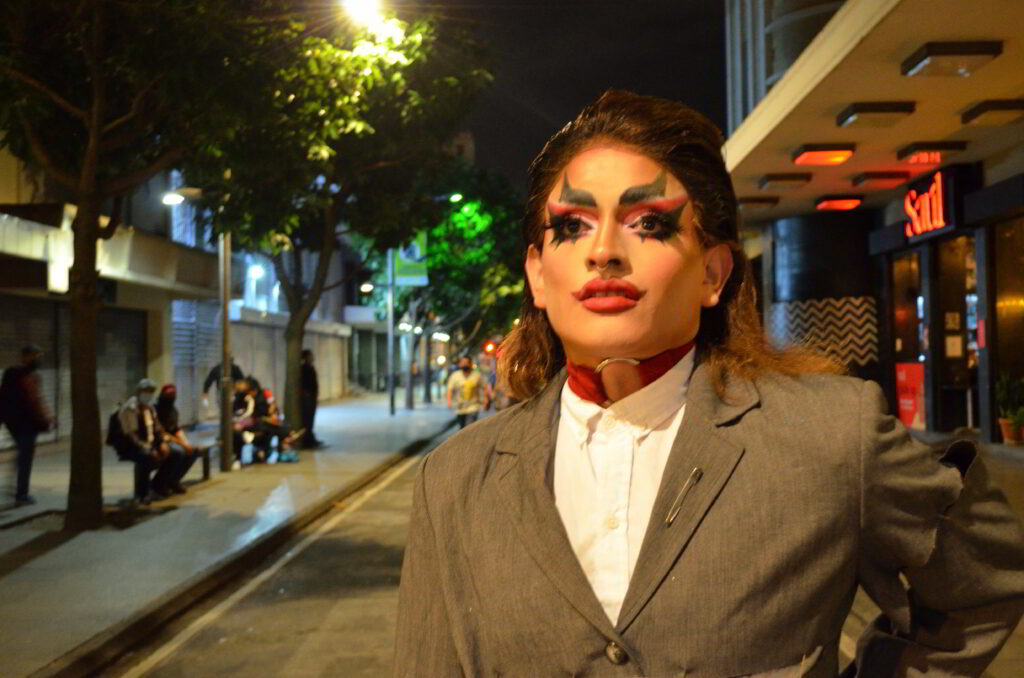
Outside of the drag scene, she works as a call center agent. She has a very close and loving relationship with her biological family, whom she says she receives a lot of support from and considers her biggest fans.
“I remember taking my sister’s clothes and my bed sheets, making some “dresses”, putting on music and feeling like I was on a stage doing a performance, I was literally living my dream,” she recalls.
Her childhood was difficult, filled with bullying and mistreatment for being different. She felt like her body didn't fit in. In high school, she received help from organizations like Otrans Guatemala and Somos to learn about and accept her reality, to love it and defend it.
-How does your drag persona influence you on a personal level?
I can say that being a drag queen has saved my life. I've been through experiences I wouldn't wish on anyone, where I felt no motivation or reason to keep living. Joan came along and showed me the beauty of life, the reason to be here, and the desire to show people who feel or have felt like me that there is light at the end of the tunnel. That there is always color and happiness even where everything seems gray and sad.
Joan belongs to the Drag Orphanage, which started in 2021. “A true family. The collective was born from 5 kids just like me, starting out in this scene alone, learning with tutorials, in the middle of the night. That's where we saw our potential.”
-Do you consider drag to be a political form of resistance?
Drag is inherently political because we challenge the system, its rules, and laws. It's an act of revolution because we make ourselves seen and heard. We assert ourselves for who we want to be, regardless of whether others like it or not, adding to the importance that drag and trans people have had in our community, since without them we wouldn't have the example and passion to demand our rights. It's about breaking free from the required and permitted standards, highlighting that diversity comes in many forms, and that each one is as valid as the next. I always try to convey the message that it's okay to be different, to validate ourselves, and not to settle for what's "acceptable."
Badass Joto: From insult to reinterpretation
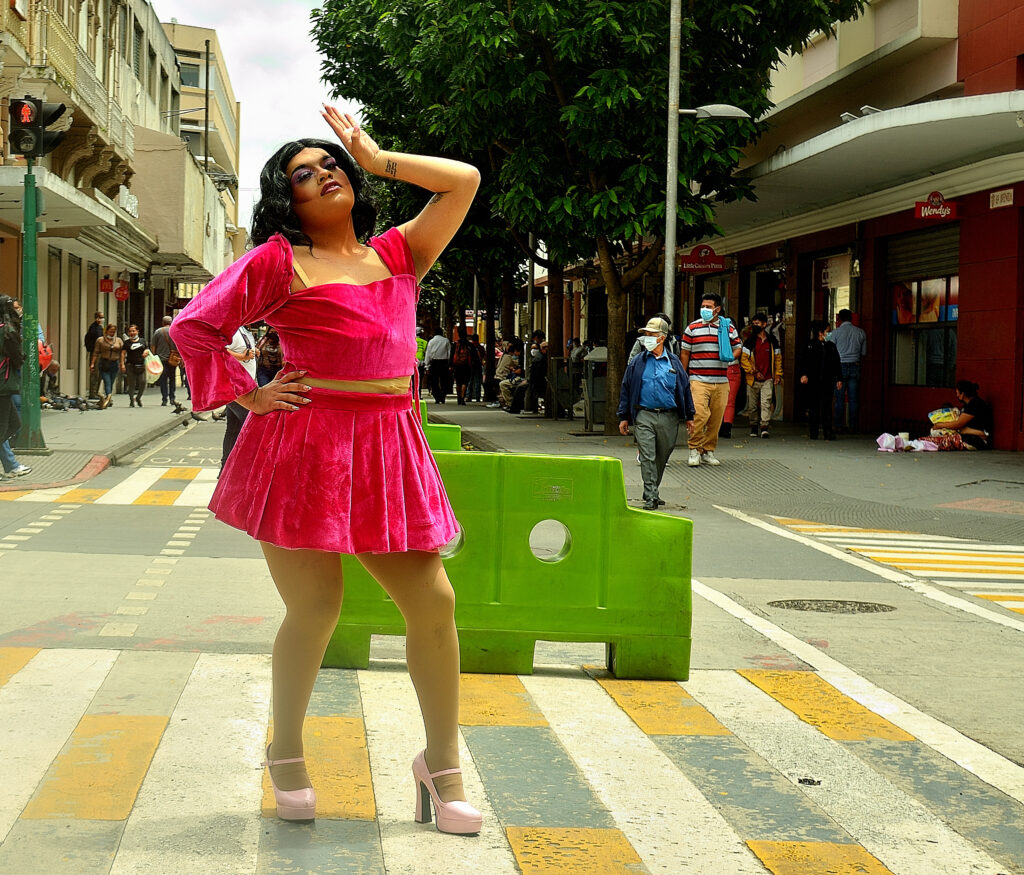
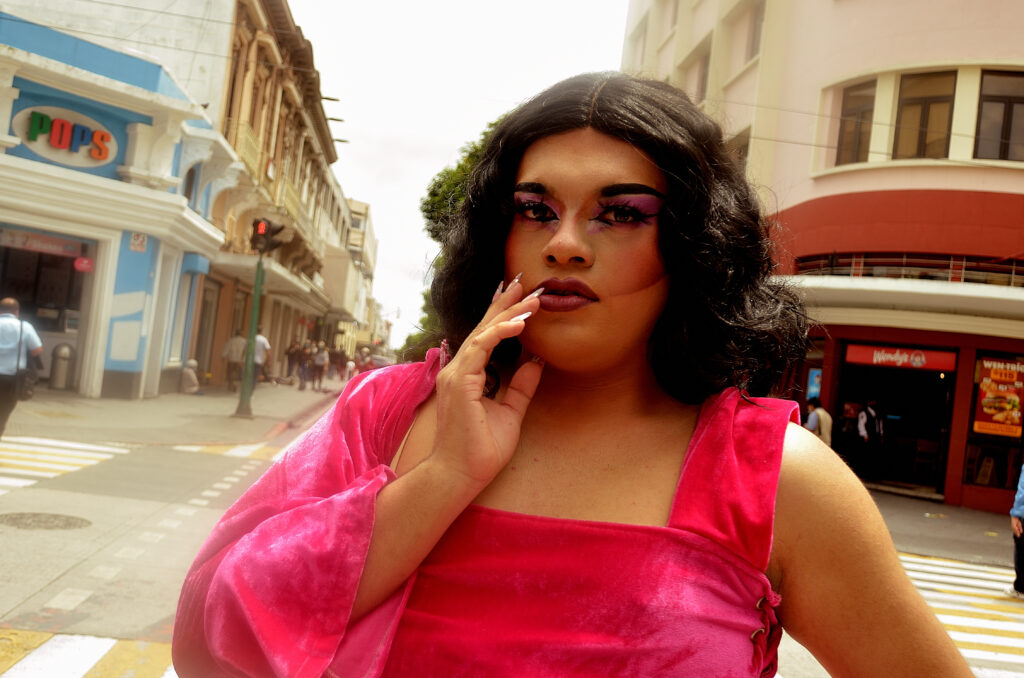
Eduardo, 23, is an industrial/organizational psychologist who performs as Badass Joto, his drag persona. He considers himself an extroverted, friendly, boisterous, and empathetic person. He is comfortable using he/she pronouns.
Badass Joto comes from using one of the words that has been used to humiliate people in the LGBTQ + community, "Joto ," reclaiming the insult to "empower" herself, while "Badass" reflects her feeling of power and indestructibility, she affirms. "I always wanted a name that wasn't entirely 'feminine' or 'masculine.'"
-How do you define yourself within this range of diverse possibilities?
-It's a question I've been thinking about a lot lately, and I haven't been able to reach a conclusion. For now, I define myself as a queer person, somewhere on the spectrum.
For Badass, her immediate family is her mother, from whom she has received a lot of support. Although she admits it wasn't immediate but rather a process of many talks and arguments about doing drag, she is now one of her favorite fans.
“My drag persona has helped Eduardo accept and embrace his femininity more. I've been able to live without some of the fears that used to haunt me. And the support and affection of the people make me feel embraced and loved.”
-When did you start in drag and what motivated you?
-I frequented DragBesties collective events a lot, and I immediately connected with drag art. I had the opportunity to go on stage in my first performance (I wasn't in drag), but from that moment I knew that's where I belonged, on the stage.
I started in drag after my drag mom, Peppe Pig, invited me to participate in a show. We got everything together, and she did my makeup.
Little by little, I started doing things on my own, which has helped me grow within my art. However, I have a chosen family and collective, Las Hijas de la Drag Puta (The Daughters of the Drag Whore), who have been a fundamental part of my learning and growth. We are a family of seven performers: Amelie Lumiere, Bocado de Reyna, Christina XCX, Fatty Mami, Nauxea, Peppe Pig, and myself.
-Do you consider it possible that drag could be a political form of resistance?
Being a drag queen is definitely a political act. It's a way of showing the government that we're not afraid and that we're fighting for the rights that the entire community deserves and needs . Sometimes, we even become symbols of the community simply by being visible. It's about being able to share your message with the people who will listen. Even if not all drag queens identify as political figures or activists, the very act of creating this art form is a political one.
Messages for the new generations of drag queens
We asked everyone what advice and messages they would give to new generations of the LGBTQ+ community based on their life experiences. And they all agreed on this:
Don't be afraid! They are strong and wonderful beings
Everything will get better if they're going through a bad time.
Let them dare to dream.
We need to stop complaining and learn to take action, because we can be the change we wish to see.
Seek your freedom, your happiness, and your essence.
Love who you were, and who you are. Self-love is the key.
We are present
We are committed to journalism that delves into the territories and conducts thorough investigations, combined with new technologies and narrative formats. We want the protagonists, their stories, and their struggles to be present.
SUPPORT US

FOLLOW US
Related notes
We are present
This and other stories are not usually on the media agenda. Together we can bring them to light.
1 Comment