

Sexiles in Paraguay: why and where LGBT+ people migrate
Five stories of exile narrate a migration motivated by sexual orientation or gender identity. Hope and what is left behind.


Share

ASUNCIÓN, Paraguay. In Carmen del Paraná, the town where Cuco Viveros was born, everyone knows everyone. In 2012, there were few young people, and practically none were LGBTQ+. At least none had come out yet. Carmen del Paraná is located in the department of Itapúa, in southern Paraguay. Its seven thousand inhabitants know almost everything about the lives of the people who live there, on the border with Encarnación, a larger city to which LGBTQ+ people often migrate.
Cuco says he remembers school as a horrible place, a space of mistreatment and discrimination. His gestures, his expressions, and the way he walked were a source of ridicule from both his classmates and his teachers. At 19, he told his family he was gay. That's when a meticulous and relentless process of recognition and struggle began, lasting ten years. His first move was to Encarnación, where he studied food technology and where he saw a trans woman dance for the first time in the country's largest carnival.
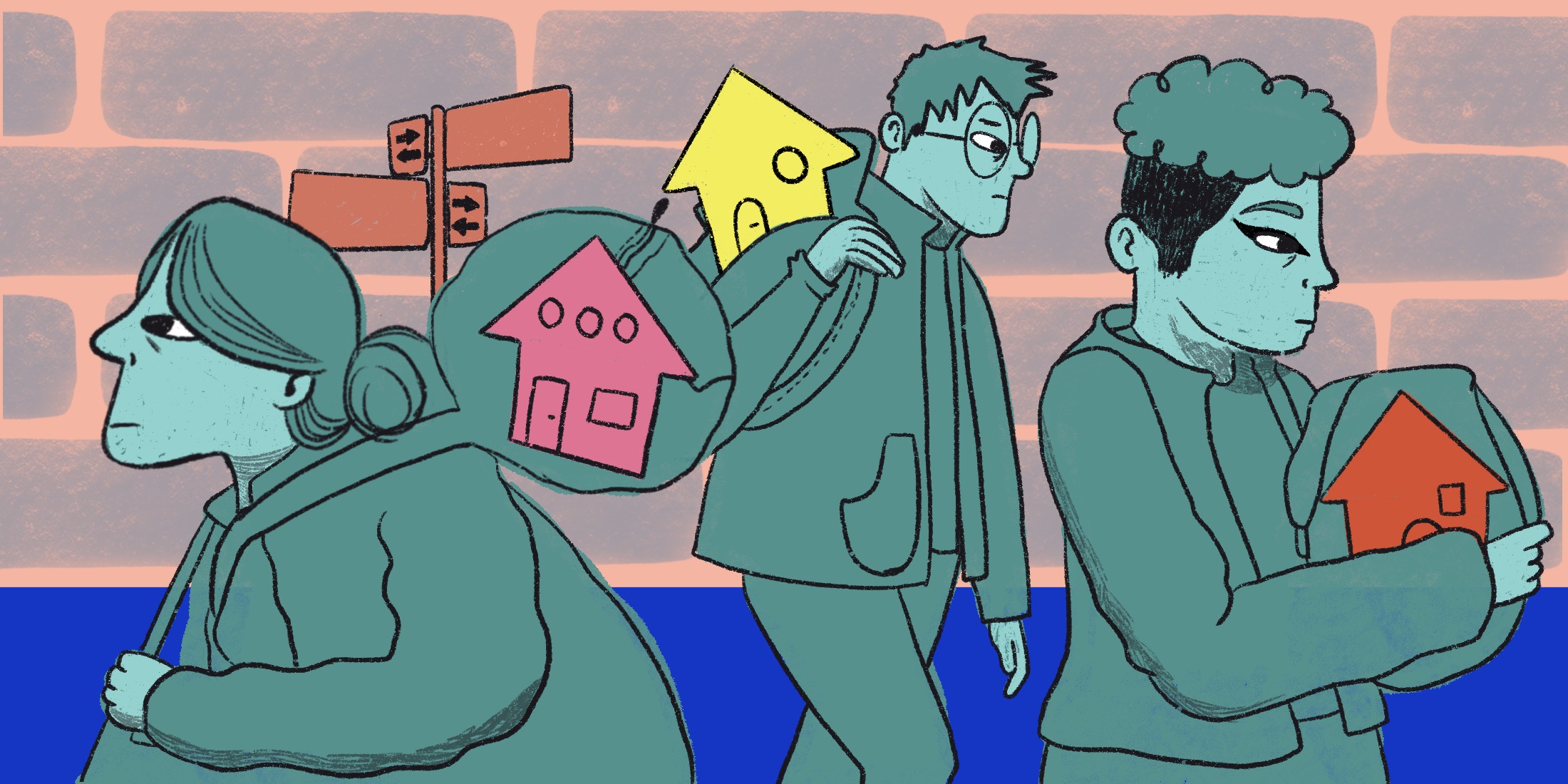
Cuco's story is like that of many LGBTQ+ people who migrate from their hometowns due to anti-LGBT laws or to seek more LGBTQ+-friendly environments. This is called "sexile," an exile motivated by sexual orientation or gender identity. Feminist lawyer Michi Moragas says, "In many cases, this allows them, for example, to come out when they can't in their own communities. Sometimes, this also involves physical distance from their families of origin because they don't know or don't accept them."
Drag refuge
“What was I going to do in Carmen del Paraná?” Cuco said. “I had no representation, I didn’t know any gay people, nobody talked about it, not even my friends knew about my sexual orientation. I don’t know if the kids who live there still talk about it or if they’re accepted. Obviously, my parents wanted me to stay, but it seemed really difficult to think about growing as a drag queen. I always saw it as a career,” he told Presentes.
She named her drag identity Severe Dyslexia.
Studies, profession, and exclusion weren't the only reasons he decided to migrate. “I thought: how am I going to find love? There was no one around. I didn't have the opportunity to have that teenage romance. Only as an adult was I able to develop my emotions based on my orientation. It robs you of some of that experience,” Cuco reflected.
Encarnación, bordering Posadas, is a conservative city with a history of LGBT resistance. Cuco wanted to move to Asunción, but first decided to finish her degree. “I worked at parties in Encarnación and Posadas, but I wanted more spaces for drag art. All the marches are here, the drag parties, the gay clubs, everything is here. And I wanted to be part of that world,” Cuco said. She arrived in April 2019 and became an emblematic figure of the drag in the capital.
But Asunción isn't necessarily a more tolerant or less violent city; rather, two specific phenomena are at play. On the one hand, diversity is embedded within a larger population. On the other, migration stems from various displacements to downtown Asunción, where many people from the LGBTQ+ community are concentrated. In fact, it's where most of the offices of social organizations working for LGBTQ+ rights are located.
“ People often think that it’s people from rural areas of Paraguay who come to Asunción escaping their communities. In reality, those of us who live in Asunción also had to leave our homes, move to the city center, share rooms with other gay or trans people, and start families again,” explains Erwing Szokol, a lawyer, researcher, and LGBTI human rights activist.
Leaving the family
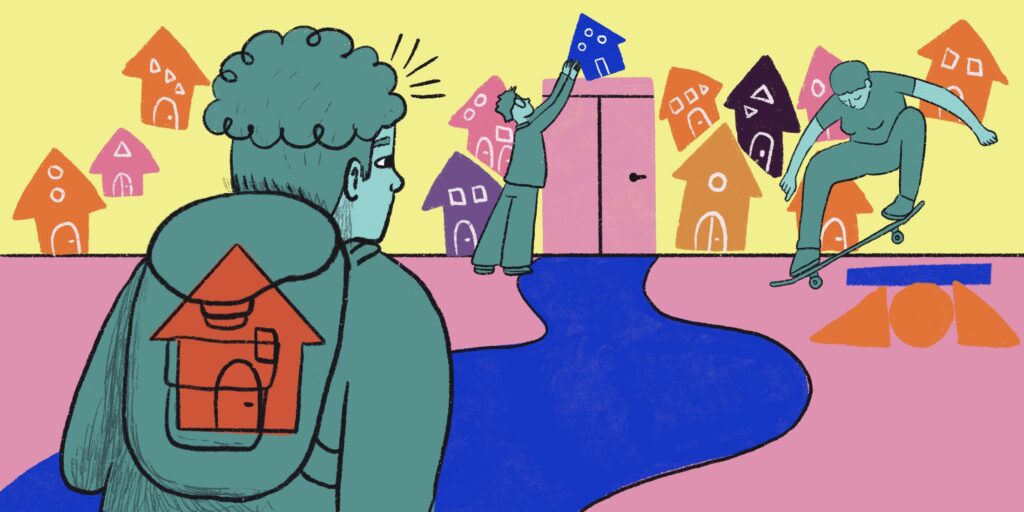
Migration doesn't just mean moving from small towns to big cities or abroad; it means fleeing home and family in search of a new place to belong. But in Matías Irala's case, migrating meant seeking his autonomy beyond the confines of Asunción. “Actually, I moved because I was in a relationship with a guy who had migrated to Buenos Aires. And I was also motivated by stories of young people who had found a freer space to explore their sexuality in the 'city of fury' ,” he adds.
Matías is a journalist and fashion designer. He came out at age 13 due to pressure from his family. One day, not wanting to attend church, he confessed he was gay, thinking he would receive understanding and empathy. That wasn't the case. Instead, it was the beginning of a long ordeal in which he faced a more violent and reactive stance from his family. “That situation forced me to seek out alternative connections that allowed me to cope. It made me understand that family can be created from shared experiences, understanding, and affection, beyond blood ties,” he says.
Something that profoundly affected him was the first time he went to the movies in Buenos Aires and saw LGBT couples freely expressing their affection in public. “This seemingly ordinary event made me realize the vast gap in rights that separates cities like Buenos Aires from our own, still conservative, city of Asunción,” he says. Matías believes that if he hadn't migrated, he wouldn't have been able to work in his current field . Nor would he have had the tools to understand his own sexuality and that of others around him.
What is lost
Pato Masera, co-founder of Nhi Mu Aerial Theater , assistant director, and production manager, believes that one of the most fundamental aspects of migrating was the ability to feel like an individual. In Paraguay, Pato didn't have a good relationship with her family and always felt on the periphery of their experience. Furthermore, her mother struggled to accept her bisexuality. While she didn't feel part of this family circle, migrating allowed her to leave behind a vital part of herself: the creative and emotional community that Nhi Mu represents, and her colleagues who became her family. Pato currently lives in Astoria, a neighborhood in Queens, New York, with her wife.
The act of migrating also brings losses, feelings of abandonment and distance. This is how Pato feels when she thinks about what she left behind. “I blame myself every day for not being there, for not suffering what my colleagues suffer, for not needing what they need. Sometimes I feel like I missed the opportunity to creatively do what I want, even though aerial theater is no longer the only thing that excites me.” And yet, she also feels that she has gained herself.
In this type of migration, there are many nuances ranging from expulsion, the feeling that the only option is to leave, the formation of families outside of biological families, the exploration of an oppressed and discriminated identity, to the desire to see the world with different eyes.
Ana Díaz Sacco had been talking about moving to the United States since high school. Ana is a musician, a sonic arts student in Portland, Oregon, and she also makes bagels and coffee to pay the bills. Before migrating, she lived in Asunción and was part of important musical projects in the Asunción music scene, such as EEEKS and Wilson Wilson. In that odyssey of leaving her life in Paraguay—leaving her community of friends and the music scene she was a part of—she gained perspective and very special connections. Like meeting her girlfriend, with whom she wants to spend the rest of her life. “I still can’t believe I’m so far away. It’s an adventure in a liminal space. Music is the common language that keeps me here,” she explains.
trans diaspores
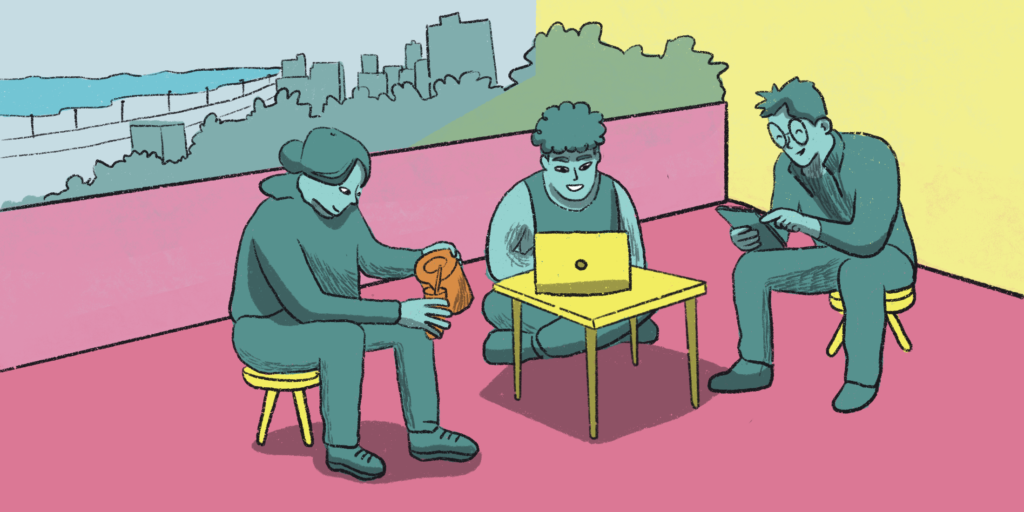
Sometimes, migration is driven by the search for better environments where they can be free to be who they are, whether it be their sexual orientation, gender identity, or gender expression. In many cases, transgender people migrate seeking better opportunities to transition, or to go to places where they can clearly find support for hormone therapy or gender reassignment.
The life stories of most trans people are ones of expulsion from their families and searches for another home, other places where their bodies are less at risk. “Being a transvestite in Paraguay and other Latin American countries is linked to prostitution because most are expelled from their families and schools when they rebel against the established gender mandate,” writes Verónica Villalba Morales, a communicator, founding member of Aireana, and lesbian and feminist activist, in her article “Guaraní Diasporas from Sexual Dissidences,” from the book “Migrants: Critical Perspectives on Migratory Processes in Paraguay.”
Member of the Paraguayan Women's Coordination . Founding member of Aireana , a lesbian rights group.
“Migration is never easy,” said Yren Rotela, a human rights advocate and founder of Casa Diversa, the first community center for LGBT people . “Coming to Augusto J. Saldívar wasn’t just a decision. We tried to avoid the serious situations of violence we were experiencing in San Lorenzo, a city that receives many people from different parts of the country,” she said.
San Lorenzo was for a long time a destination city for LGBTQ+ people because it offers opportunities for sex work. Casa Diversa was there for several years, and the trans women who lived in the shelter had easy access to health centers, markets, and transportation. But it also became the most violent city for trans people .
“Here (in AJ Saldívar) there’s also a lot of insecurity, we’re not immune to that. The positive thing is that we’re in a quiet neighborhood. It’s a very welcoming community that surprised us a lot. We go to the park, we play, things we never did before. We get invited to birthday parties, the girls now have friends their own age, from their own community, which is very positive,” adds Yren Rotela.

LGBT Diasporas in Paraguay in the 1960s
In 1959, during Alfredo Stroessner's dictatorship, after the assassination of Bernardo Aranda , accusing "the 108" of any act of violence became deeply personal. This event led to the sexual exile of many people. How to live one's sexuality and how to present oneself to others became a burden that weighed heavily on LGBT people.
Erwing Szokol explains: “The people who survived case 108 could no longer live in Paraguay. Due to the immense pressure, many of them had to migrate, primarily to Buenos Aires, Paraguay's largest and closest capital city.” This phenomenon was repeated on several other occasions.
The last case of mass persecution of homosexuals was that of Mario Luis Palmieri in 1982, where it is estimated that up to 600 people were arrested. “This becomes a mechanism for controlling bodies and discourse, both by law enforcement and the social system. You are excluded from social environments: schools, clubs, universities, work, and in this way they isolate you until you are completely deactivated as a person,” Erwing explains.
Among the main reasons for exile, Moragas mentions conservative contexts. “ People migrate seeking recognition of their rights or a context where they are not afraid to go out in public or have a partner, or to express their gender identity ,” said the lawyer from the Feminist Legal Clinic.
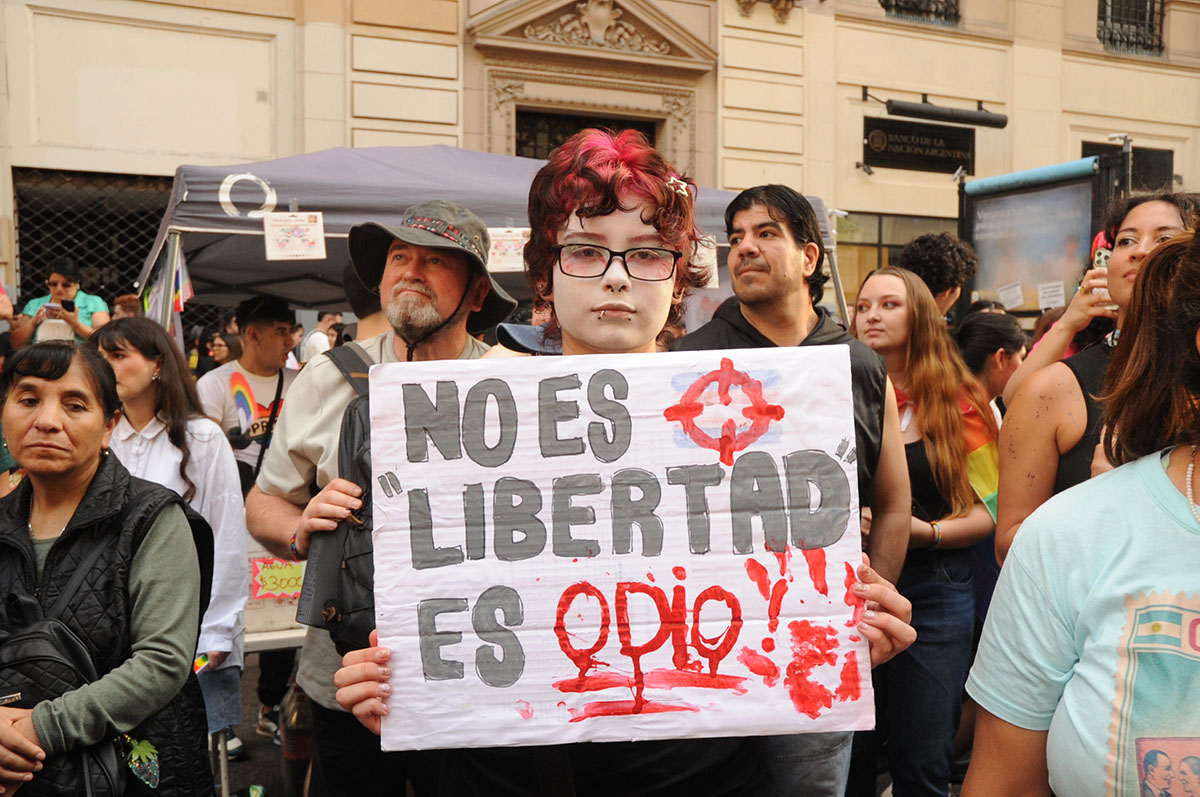
The fact that Paraguay is a breeding ground for anti-rights rhetoric creates a hostile climate toward LGBT people and reinforces existing stigma. According to Moragas, this discourse hinders societal growth, open debate, and the recognition of LGBT people's contributions to society.
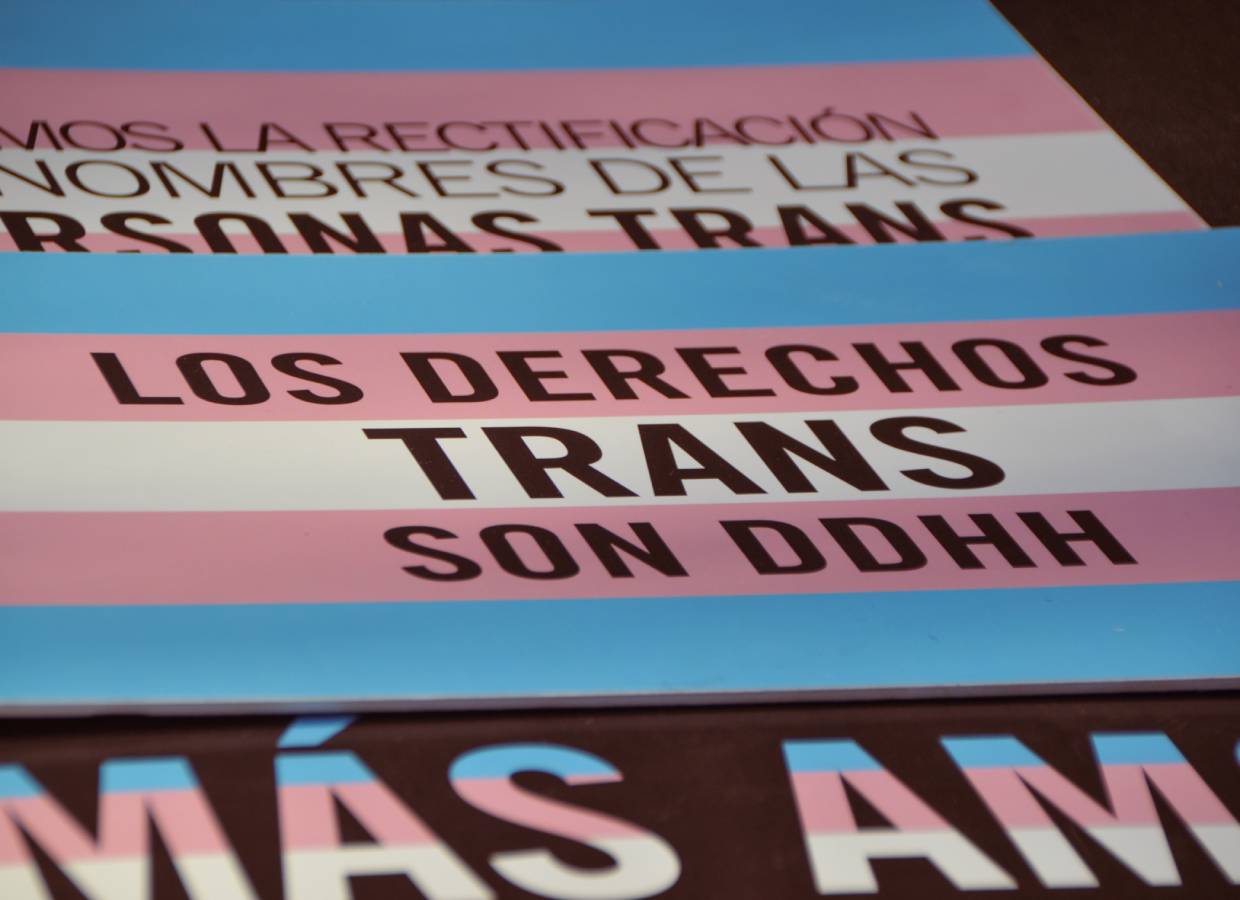
Regarding LGBTI public policies, Paraguay is in the same situation as under the dictatorship: no gender identity law, no equal marriage law, no law against all forms of discrimination. Migration patterns from fifty years ago are being repeated for the same reasons: “to migrate in order to be.”
We are present
We are committed to journalism that delves into the territories and conducts thorough investigations, combined with new technologies and narrative formats. We want the protagonists, their stories, and their struggles to be present.
SUPPORT US

FOLLOW US
Related notes
We are present
This and other stories are not usually on the media agenda. Together we can bring them to light.