

Young people in Paraguay are mobilizing to demand basic rights from the State
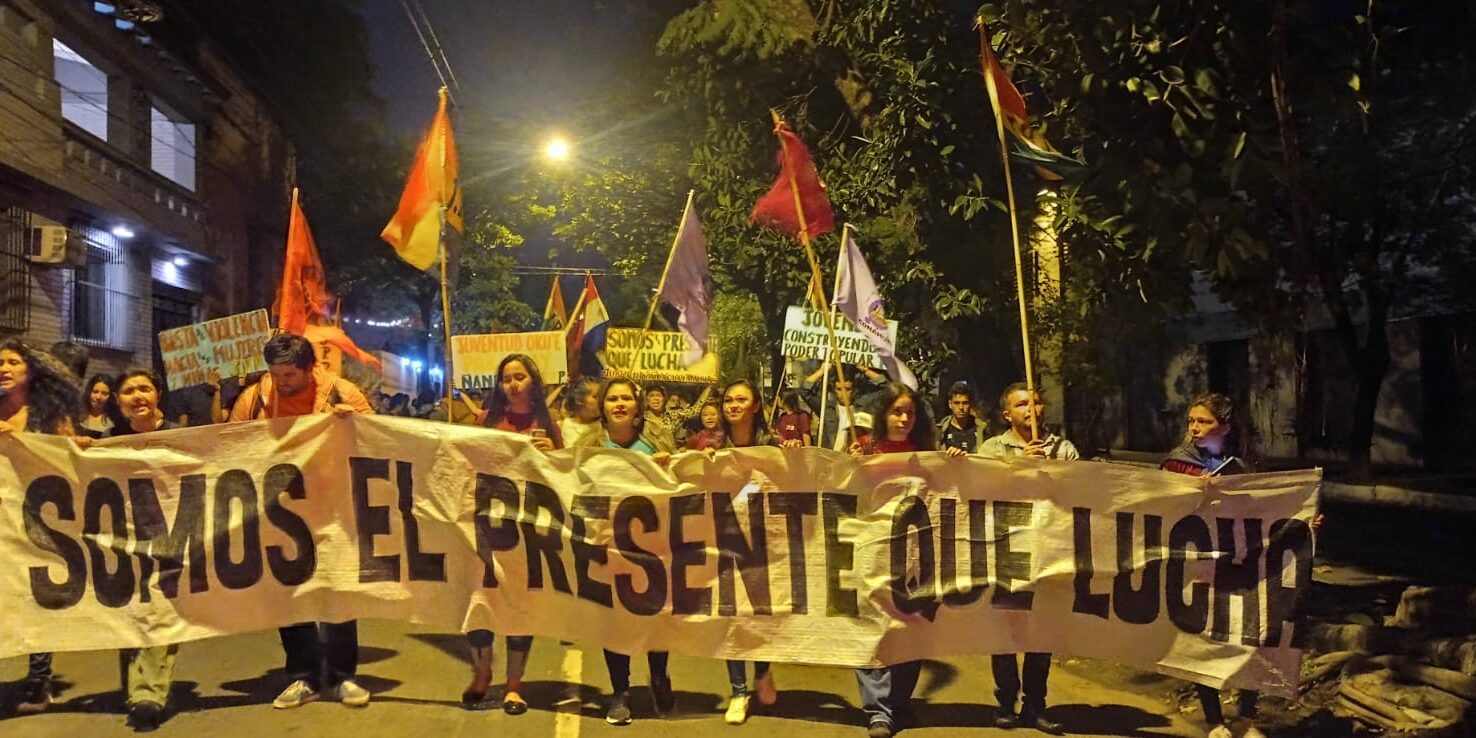
A group of nearly a thousand young people from the countryside and the city marched on Tuesday, September 20th in Asunción from Plaza Italia to the Pantheon of Heroes.


Share

ASUNCIÓN, Paraguay. A group of nearly a thousand young people from rural and urban areas marched on Tuesday, September 20, in Asunción, from Plaza Italia to the Pantheon of Heroes. Organized under the banner #SomosElPresenteQueLucha (We Are the Present That Fights), they held a festival to denounce the human rights violations committed by the Paraguayan state.
On a sunny day, bidding farewell to the Paraguayan autumn with a temperature of 26 degrees Celsius, young people from the Bañado Sur neighborhood of Asunción gathered, along with political party activists and farmers who had traveled from their communities in trucks at dawn. Members of the Conamuri arrived from San Pedro, Caaguazú, Cerrito-Bajo Chaco, and Filadelfia to join the march, which took place after the conclusion of the Juliana Indian School event.
The youth network #SomosElPresenteQueLucha (We Are the Present That Fights) was created to unite young people from both rural and urban areas. The organizations that comprise it analyzed the fact that the State does not guarantee them health, education, decent work, land, and much less a law against all forms of discrimination. They point out that for young people from marginalized communities, the only way to achieve rights is through mobilization and organization.
Griselda Aguilar from the Paraguay Pyahura Youth, Rosa Toledo and Zuny Flores from Conamuri participated in the organization of the march. They agree on the absence of the Paraguayan State to guarantee rights to youth and focused on those that affect their communities, land, health, work and education.
Without access to land
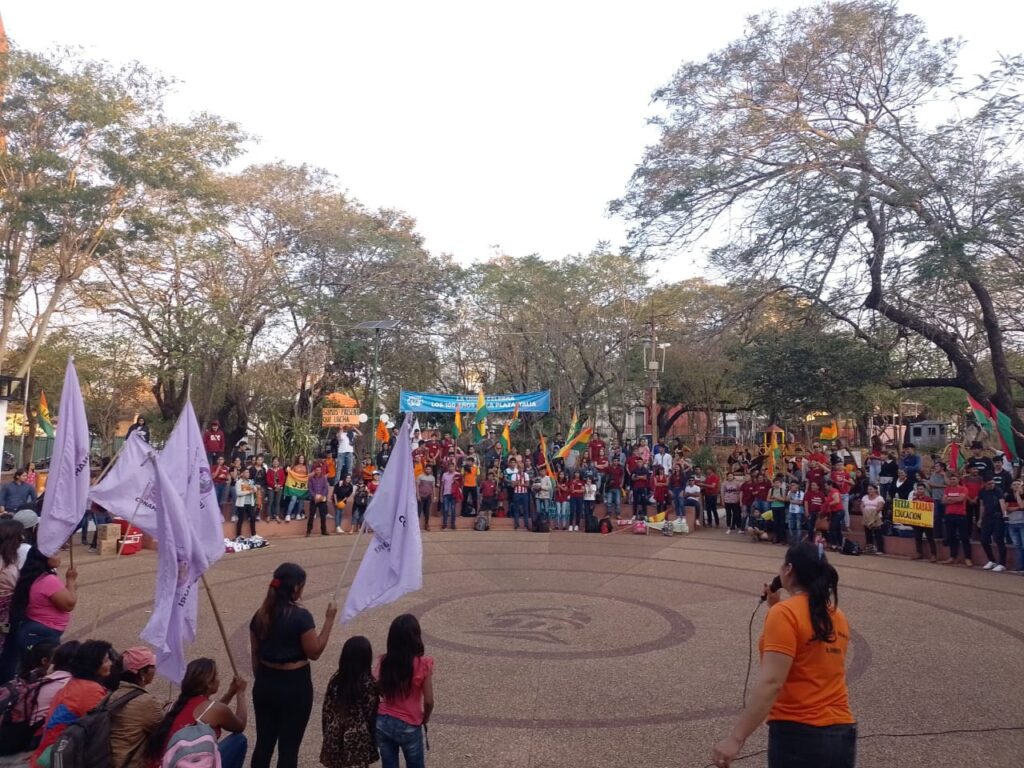
Griselda, a young farmer from San Pedro, was in charge of hosting and leading the festival, both in Plaza Italia and at the Pantheon of Heroes, the site of the main event. For several hours, she energetically enlivened the space in Guaraní.
“ What young people feel most keenly is the lack of access to land. The complete absence of it, and even if they do have land to plant, the harvest fails due to pests, production is too expensive, and there's no agricultural insurance to support them. As a farmer, if you don't have enough to eat, what happens? So, the most important thing is access to land and agricultural insurance for everyone, especially farmers,” Griselda told Presentes. She added that without guaranteed land access, there will be no development, and migration from rural areas within the country and to other countries will continue due to a lack of opportunities.
For her part, Rosa Toledo, a peasant leader from Conamuri, said: “We see that we are growing in numbers, but we don't have opportunities to buy land or even to win through struggle because of the Zavala-Riera Law. This law criminalizes and prosecutes us if we want to occupy a piece of land to have a place for our homes and also to produce and survive in this system. It affects women the most because in the event of evictions, it is the women who are left with their children and younger siblings . They have to manage the food supply for their families and their communities . For example, they are left on the side of the road without any protection from the State,” she emphasized regarding the constant criminalization suffered by communities. This year alone, 11 women have been charged for fighting for access to land in Paraguay.
"A state that violates all rights"
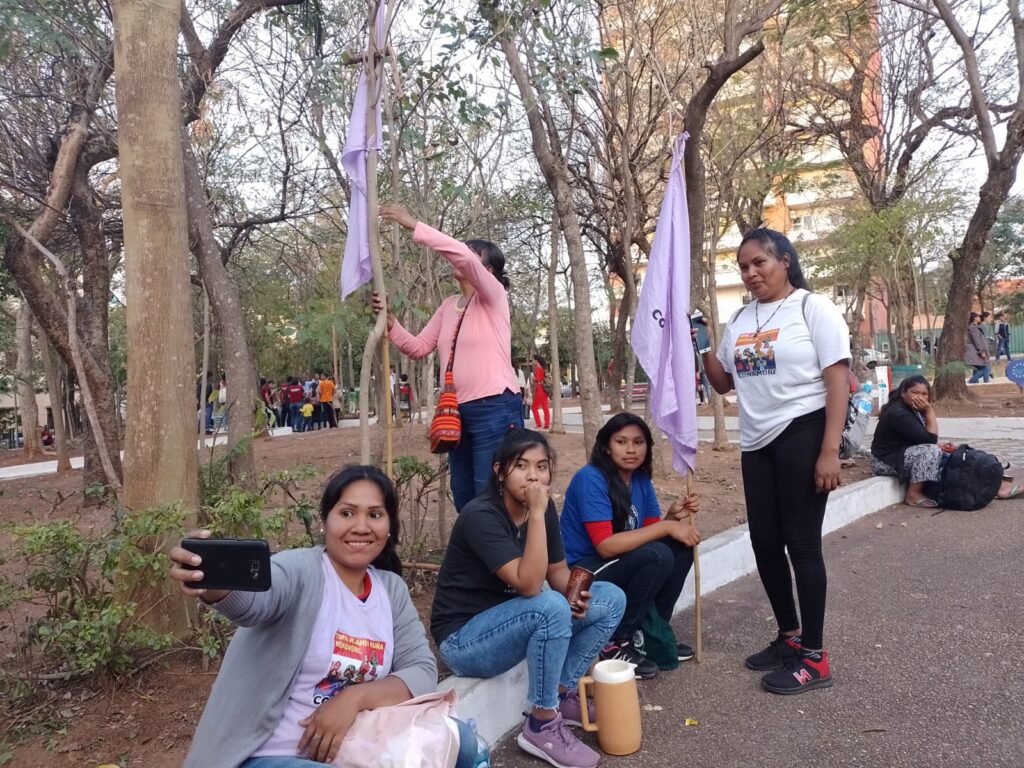
Zuny Flores, a mother of one and an indigenous Guarani woman from Filadelfia-Chaco, who acted as a security guard for her companions during the march, pointed out that young people in her community are completely abandoned due to an absent and corrupt state. “It is a state that violates all rights because there is no political will for progress in the country, much less for young people . There is no free education, no access to jobs that match university qualifications for those who manage to study, and jobs with wages below the minimum wage ,” she emphasized.
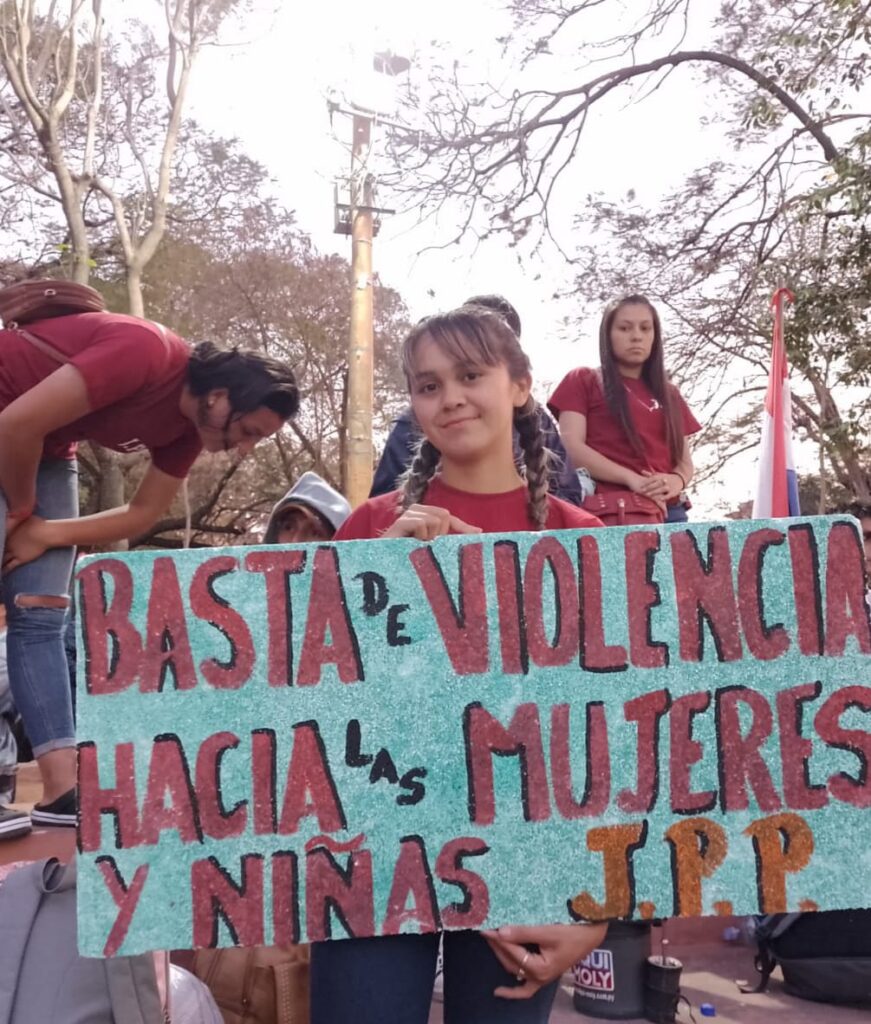
Regarding the situation of women in rural areas, both young women and adults, Rosa and Griselda stated that women are never valued for the work they do. “ Women know they must feed and care for their children. We see how every day a woman is murdered or abused, and there is no security,” says Griselda. Rosa added that during the pandemic, there were no contraceptives available in hospitals and health centers. Because of this, many women became pregnant again, unwilling to be mothers, forced into it by circumstances.
Uniting neighborhoods, settlements, and communities
After 8 p.m., the agreed-upon manifesto was read at the Pantheon of Heroes.
“Let us go to our neighborhoods, settlements, and communities to strengthen our collective power. Let us resist this state with its sell-out policies. Let us continue to maintain unity for our sovereignty and national development. Let us be direct protagonists in the 2023 elections, because we young people are always told that we are the future, but we lack education, jobs, land, healthcare, and any guarantees in our country. That is why we must elect candidates who are from the people and who have emerged from them. Let us continue building popular power, which is the path that will lead us to a new homeland,” concludes the manifesto presented by the Youth Network.
The organizations
Organizers of the youth mobilization: Paraguay Pyahura Youth, Febrerista Revolutionary Youth, Common Force Party, Conamuri, Solidarity Brigades, JuvenSur, Tekojoja Popular Party, Socialist Alternative, A Mano Alzada, Citizen Participation Party and Democratic Student Current.
We are present
We are committed to journalism that delves into the territories and conducts thorough investigations, combined with new technologies and narrative formats. We want the protagonists, their stories, and their struggles to be present.
SUPPORT US

FOLLOW US
Related notes



We are present
This and other stories are not usually on the media agenda. Together we can bring them to light.