

“Impunilandia”: a podcast recounts the stories of impunity and the search for justice in Mexico
A podcast documentary series reconstructs the struggles for justice in hate crimes in Mexico. The first episode tells the story of Paola Buenrostro.


Share

MEXICO CITY, Mexico. Impunilandia is a podcast documentary series about the pacts of impunity in Mexico and the willpower of those who have suffered under them in their pursuit of justice. Each episode is narrated by those who have experienced structural violence directly or indirectly, and by human rights defenders and experts who support them.
On September 14, Impunilandia premiered with the episode that narrates the impunity and search for justice for the transfeminicide of Paola Buenrostro, a trans woman and sex worker murdered in 2016. A crime that changed the paradigm on the search for justice for trans women in Mexico and the value that friends and chosen families have in that journey.
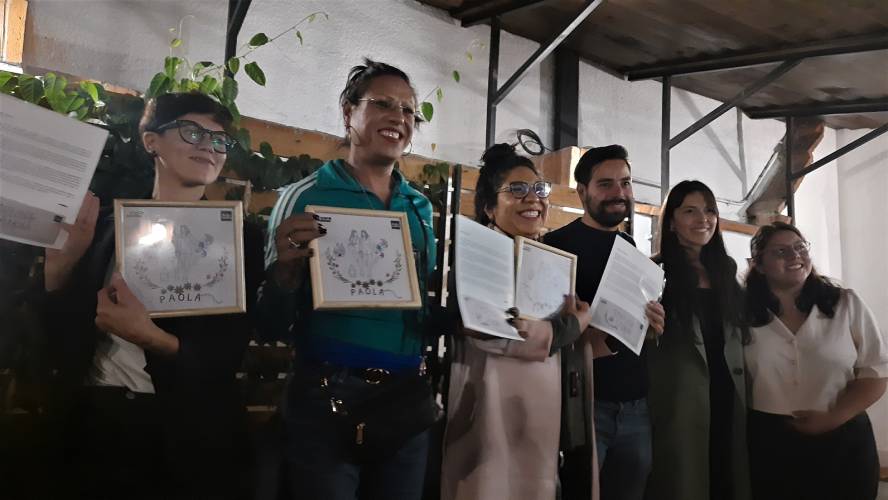
Episode 1, The Paola Buenrostro Case, features Paola's friend and human rights defender, Kenya Cuevas ; lawyers Viridiana Valgañon and Jessica Marjane ; and Milena Pafundi , communicator and coordinator of Agencia Presentes in Mexico.
“When we selected the stories, we had a very long list. In the final selection, which was a collective decision, we decided to tell the story of Paola and Kenya, and a key to that was Mile's political legitimacy with Kenya, Viri, and Jess; and we wanted to give that the spotlight as the season's debut story,” Andrés Torres Checka , producer of the series and collaborator of Antifaz, Presentes
Impunilandia is an original production of Antifaz , a platform for political reflection and communication, in collaboration with Audiocentro , the podcast division of Grupo Radio Centro, the leading radio station in Mexico.
“Impunity is more than the lack of punishment”
One of the core principles of Impunilandia , in the words of its producer, is "understanding that impunity is more than just the lack of punishment." This series aims to bring audiences closer to complex cases that demonstrate the chains of violence and injustice that perpetuate impunity in Mexico.
In this country, 94.8% of crimes go unpunished, according to the 2020 Findings by the analysis center México Evalúa. This figure “implies the lack of attention, investigation, and/or resolution of cases that come to the attention of the authorities through any means, whether due to the failure to reach a restorative agreement, the lack of an early resolution, or the absence of a sentence.”
“I think that right now, with what’s happening in the country, what we hope is that people will understand that impunity is more than just a lack of punishment; it’s something much more complex. We hope that the series will spark collective reflection to understand that impunity is eroding, that it’s an injustice that begins with the structural flaws experienced, especially by people who are already affected by inequalities,” says Torres Checka.
“For me, impunity was a cruel act of violence that left a mark on me.”
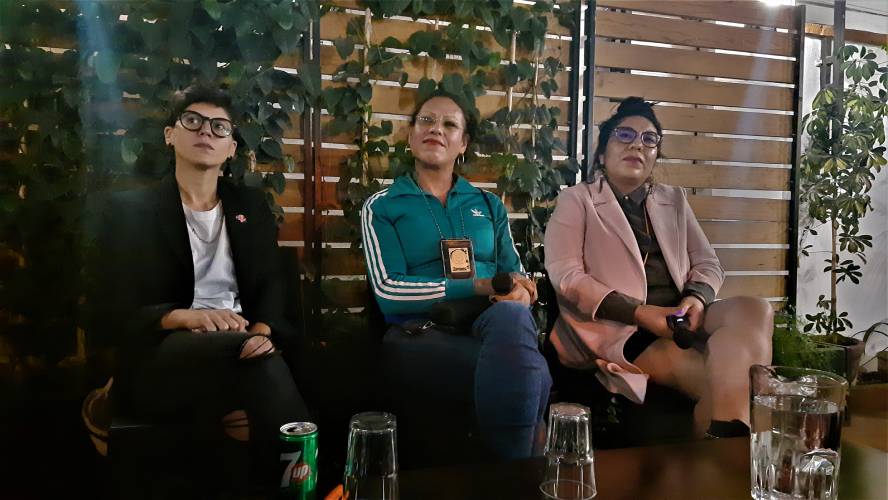
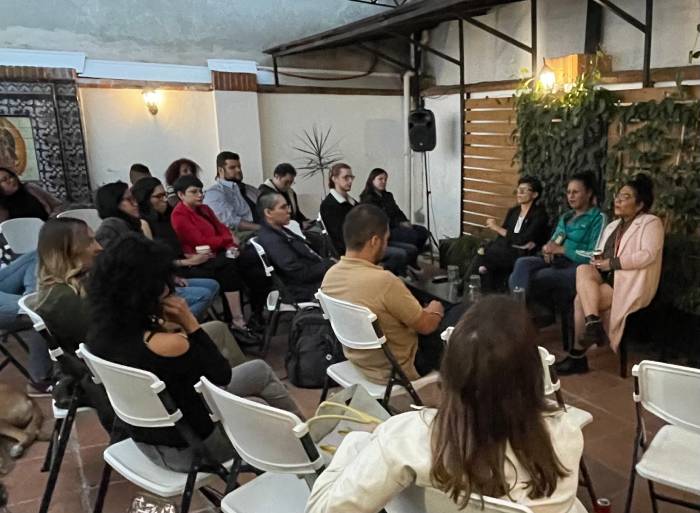
The premiere of Impunilandia takes place in the courtyard of Casa Creatura, the physical home of Antifaz and other organizations. At the front of a semicircle of chairs are three more, including Kenya Cuevas , Viridiana Valgañon, and Milena Pafundi. It is the first time Kenya has heard the episode.
“For me, impunity was a cruel act of violence that left its mark on me. It’s not the same to talk about it and say it every day—because that’s what it’s been like—as it is to listen to myself. I hadn’t stopped for a second to reflect and see the progress. Hearing everything that was brought to light, the before and after, I see that impunity has changed, and I think we’ve given our best efforts, not only Kenya Cuevas but all the women who rose up from their trenches to raise their voices. I think that from that moment we began, not to fight, but to make visible an impunity that already existed but that we also had to start confronting because we were even afraid of that, of facing our realities,” Kenya Cuevas commented at the end of the collective listening session.
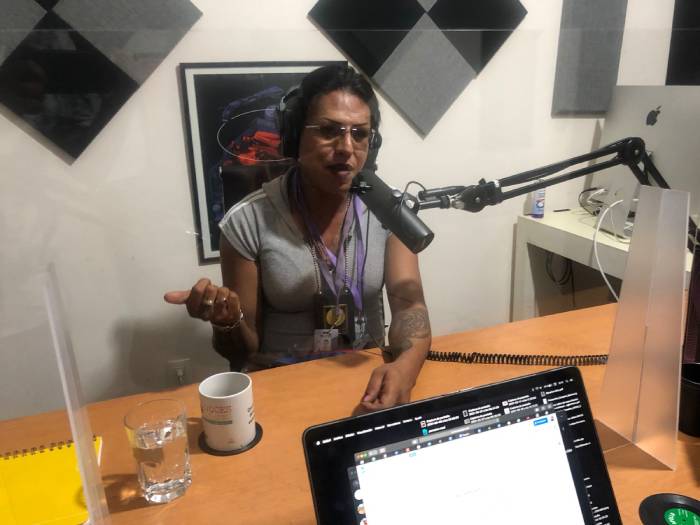
Photo: Courtesy of Antifaz.
The importance of the voices of those who experience impunity and seek justice
Another key aspect of Impunilandia is that the episodes are built using the voices of those who experience impunity and are forging a path toward justice. Their stories stand out in the episodes, highlighting how they have collectively built paths of resistance, struggle, and hope.
Milena Pafundi is clear in saying that “this cannot be told solely by an outsider. Interviews with victims, survivors, and experts amplify the voice of the story; they are the truth, they are the body that was and is there, resisting and even having the courage and strength to tell it again and again, so that they can be heard.”
Torres Checka adds that “first-hand experience is just as valuable as academic experience, and that’s why this partnership is so important. Every episode includes the voice of the person experiencing it and the person providing support. This helps us understand that these are real-life cases, not just distant observations by those who study these forms of violence, such as disappearances, forced internal displacement, transfemicides, and so on.”
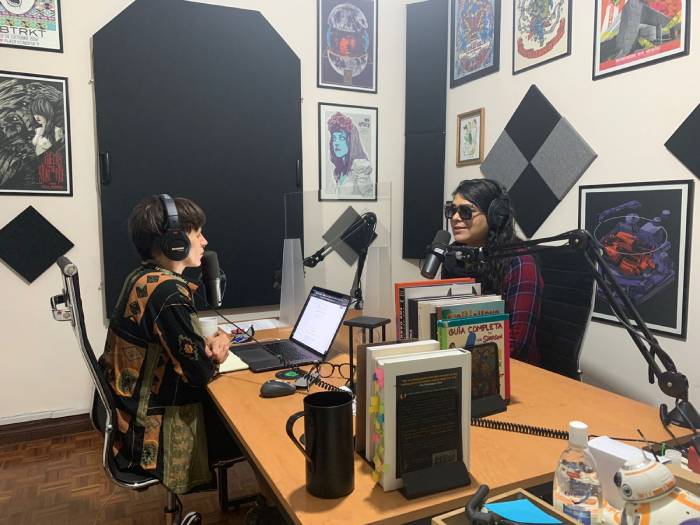
Photo: Courtesy of Antifaz.
The Paola Buentostro case: a 6-year story in 20 minutes
The story of the transfeminicide of Paola Buenrostro was a watershed moment in Mexico that revealed the impunity, prejudices, and misogyny exercised by those in charge of administering justice in Mexico when the victims and those seeking justice are trans women and sex workers.
It all began on the night of September 30, 2016, in Puente de Alvarado, a sex work hotspot in Mexico City. Six years have passed since then. What did it mean to tell this story, which is also still unfinished?
Milena Pafundi, who in addition to narrating the episode was in charge of writing the script, responds:
“To cover six years of a case and compress it into 20 minutes is no easy task. In this particular case, some milestones occurred that forced us to change and modify the script, such as the achievement of the public apology ; we were already wrapping things up, and then it reopened,” he recalls.
She adds, “None of these stories are truly closed, and that’s where impunity comes in. It seems that impunity also means that the case remains unresolved. The lens through which we were able to see and choose the moments and elements for constructing the narrative was always impunity, and also the resistance and struggle of activism and trans feminism. There’s a double story we tell there: the driving force behind the protests, which then began to change the discourse about trans people and the way people are viewed, their lives.”
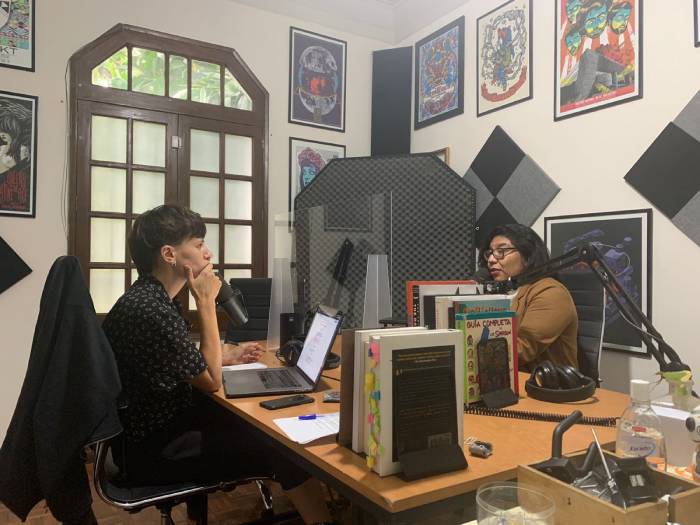
Photo: Courtesy of Antifaz.
Where can I listen to Impunilandia?
You can listen to Impunilandia on these platforms: Spotify | Google Podcasts | Apple Podcasts | Podtail . A new episode is released every Thursday.
Torres Checka hopes that Impunilandia will trigger collective listening in public spaces such as universities, squares, with organizations and government institutions.
“That is our great dream, to seek listening and collective conversations because I believe it has a different strength and listening to them (those who participate in the episodes and have lived these stories) is always very powerful,” she concludes.

We are present
We are committed to journalism that delves into the territories and conducts thorough investigations, combined with new technologies and narrative formats. We want the protagonists, their stories, and their struggles to be present.
SUPPORT US

FOLLOW US
Related notes

We are present
This and other stories are not usually on the media agenda. Together we can bring them to light.