

Rodo Bulacio: who was the pop queen who shook up life and art in Tucumán
An exhibition at the Borges Cultural Center (Buenos Aires) provides an opportunity to revisit the life and work of Rodo Bulacio. A profile of the artist who fused art and politics, and who died a victim of a hate crime in 1997.


Share

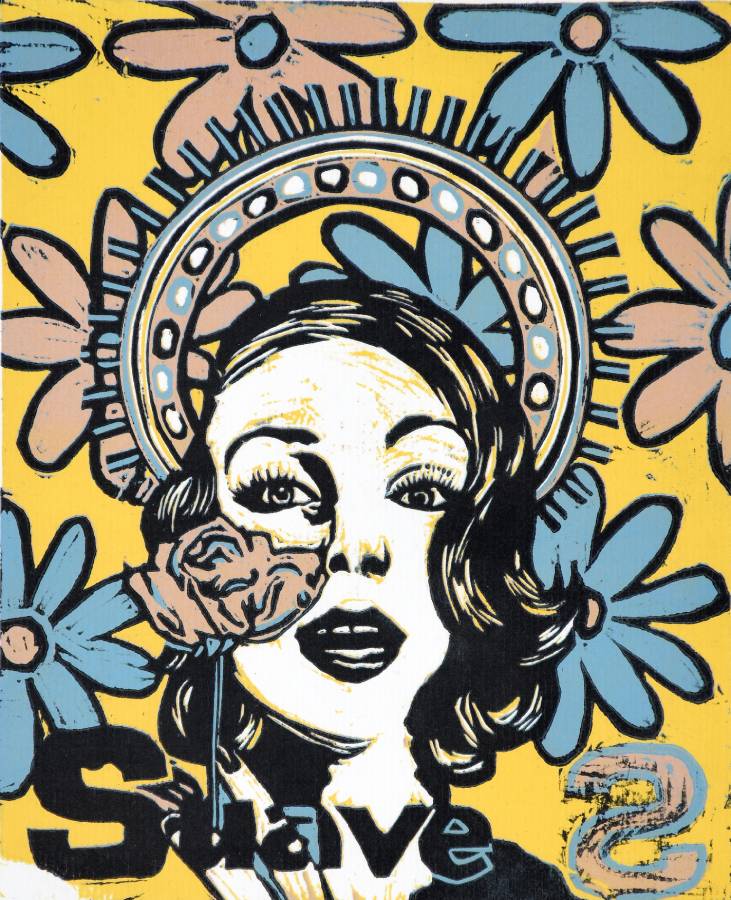
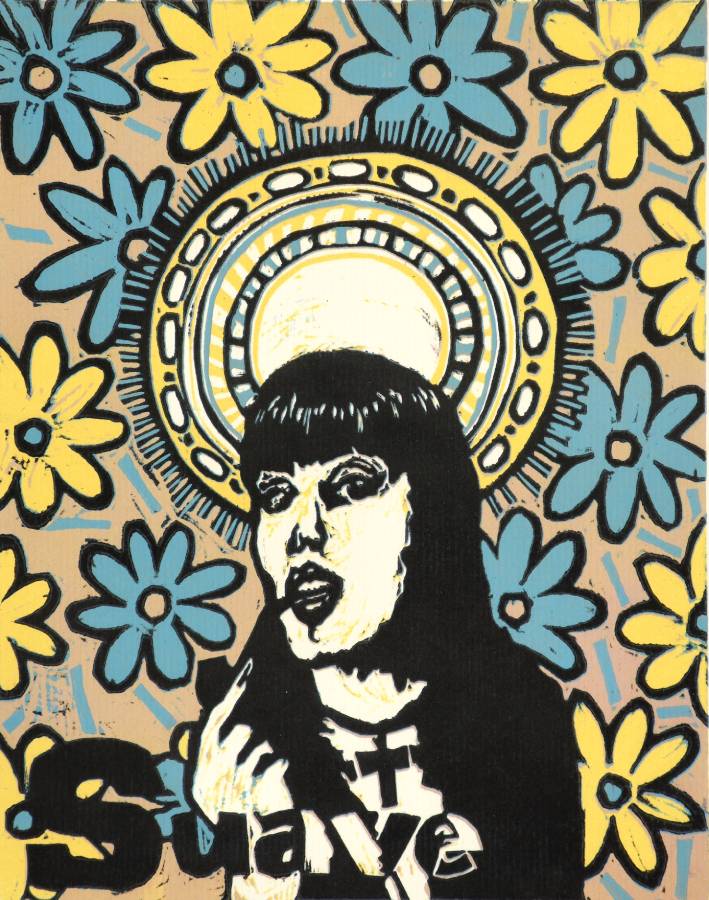
BUENOS AIRES, Argentina. Daisies, pop colors, a wedding portrait, and a dollar bill with a singular face: the face of Rodo Bulacio, the Tucumán artist murdered in 1997. Part of his work was inaugurated this week and will be on display until October 30 on the third floor of the Borges Cultural Center in the City of Buenos Aires.
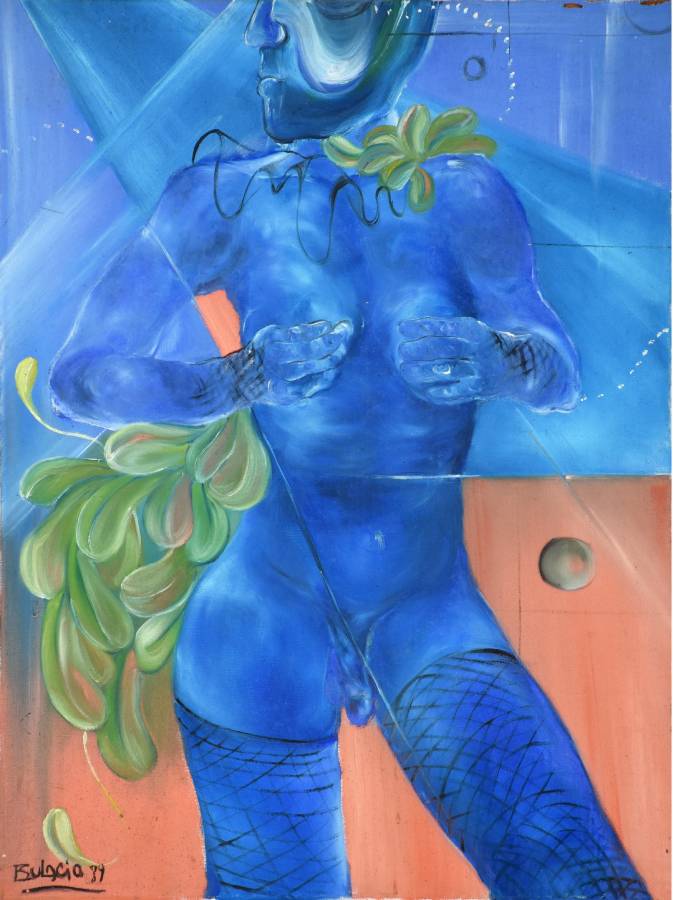
"Queer Fantasy of the People" is the name of the artist's retrospective exhibition, bringing together three of his solo shows, collective performance pieces, and some of his student exercises. These works were created between 1989 and 1996, months before he was the victim of a hate crime. Curated by Geli González and Guadalupe Creche, this exhibition was organized by Feda Baeza, director of the Palais de Glace, and the Las Margaritas Foundation of Rodo Bulacio .
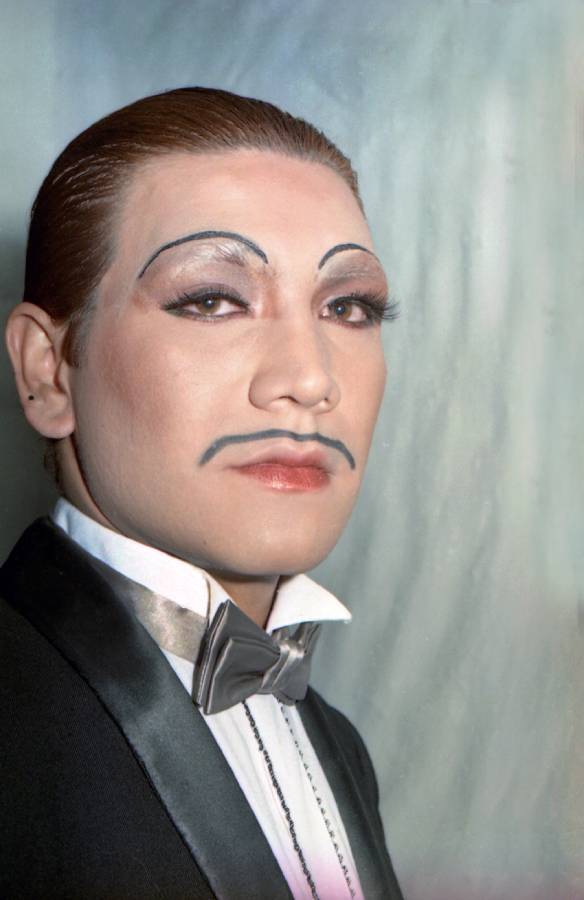
The exhibition installation encompasses the shows Karta Nova , Mucha Karakatanga en la koctelera , and Blanka… enseña lo que has conseguir (Homenaje a todos mis muertos). In addition, copies of the original catalogs and video recordings of the collective performances with La sangrada familia and Tenor Grasso are on display .
Rodo, pop, art and politics
Rodo Bulacio was born in Monteros, Tucumán province. From a young age, he knew he wanted to dedicate himself to art. He trained in various workshops in his city until the late 1980s when he moved to the provincial capital to study for a degree in Fine Arts at the Faculty of Arts of the National University of Tucumán.
His friends and sister remember that everything Rodo touched was destined to become a work of art. Objects, fabrics, clothing—in his hands, any element could be the seed of a performance. Even himself, in the tracing of a queer figure, circulating extravaganza through the streets of Tucumán.
Every time he returned to the bar in his hometown of Monteros, he aroused curiosity. "What's Rodo wearing?" the locals would wonder. Nobody wanted to be left out of the enchanting circle the artist created.
The province was going through difficult times. In June 1995, the repressive Antonio Domingo Bussi (sentenced in 2008 to life imprisonment for crimes against humanity) managed to become governor of Tucumán again through popular vote. But this time, it was under a democratic government.
In the months leading up to the 1995 elections, Tucumán's art scene reclaimed its rebellious spirit, organizing and protesting against the repressive offensive. Exhibitions and performances were commonplace in Tucumán's galleries. Rodo Bulacio was a central figure in these spaces of freedom, bringing vibrant colors and brilliance to the oppressive anguish of the time.
Family and Monterizo pride
The exhibition of Rodo Bulacio at the Borges Cultural Center is a dream come true for the family and friends of the young artist.
“ It’s difficult for someone from the provinces to get to Buenos Aires. For us, it’s a great achievement, really, an achievement for my mother. I think it’s a bit of a dream he had, and a dream that my mother made come true for him,” Nancy Bulacio, Rodo’s younger sister, Presentes
She recounts that, as a child, he would rehearse costumes and makeup with her. They had, Nancy recalls.
a close brotherly relationship. “ I always thought my brother was a little beyond , but I thought that because of the love I had for him, I saw it that way. Today I realize that yes, he was beyond,” he says.
“There’s a reevaluation of him as an artist, because people are getting to know him. He was tireless, constantly producing. But what’s striking is that his work is very contemporary . He was heavily censored, not only for his sexual orientation, but also for what he painted. He was misunderstood. As his sister, it’s a source of pride to know that he was ahead of his time.”
Transgressing from a collective perspective
“Rodo was always among those who led, who drove actions and activities,” recalls the exhibition’s curator, Geli González. She was Rodo’s teacher but also a colleague in the Tenor Grasso artistic group.
Rodo Bulacio's arrival on the Tucumán art scene was momentous. He left an indelible mark on the spaces where the artist displayed his talent and magnetic, transgressive personality.
“It was the period of Bussi’s government in a democratic context, a legacy of the dictatorship that still lingers in Tucumán. There was control over bodies and discrimination (which continues to exist), which is why Rodo’s figure in the art scene is iconic for his committed, collective, and activist behavior ,” he emphasizes in a dialogue with Presentes.
Twenty-five years after his assassination, Bulacio's influence on his short artistic life is clear. “His work has a great impact. Not only his individual production but also what he produced with Tenor Grasso. I think that group authorized a very visible and iconic type of production. There is a festive, celebratory, ironic, and critical mark regarding the characters, society, and show business,” González summarizes.
Queer Fantasy: activism and avant-garde
Geli González and Guadalupe Creche undertook a difficult, distressing, and loving task. “It was about discovering not only the artwork, but also the documentary material and his letters, what he wrote,” says González.
That contact was fundamental in tracing the artistic trajectory that is reflected in the exhibition and that they recognize as a fraction in the research on Rodo's work.
“We focused on making Rodo’s activism clear and visible. That activism and political awareness, which is surprising in the 90s , and also surprising because of his youth. A very clear awareness, an activism about his sexual orientation, his body, and about political issues that he channeled, for example, into student politics during his university years.”
Mama Porota
Porota Jiménez is Rodo Bulacio's mother. From the moment her son was murdered, she insisted on two things: that the investigation into the crime move forward, and that his work be collected and reevaluated.
With a mother's persistence, Porota managed to establish the Margaritas de Rodo Bulacio Foundation, which is celebrating its third anniversary, and which is responsible for revaluing and disseminating Rodo's art.
“Oh Poro! Why did you let him do that?” Porota recounts a neighbor complaining to her. It was 1988, and Rodo, then 18, had painted his work, Odyssey Sex Symbol, on the ceiling of the Marconi Cinema Theater for its reopening. They were paintings of naked men that caused a huge scandal.
Porota recounts the anecdote and laughs, recalling her son's audacity. That time, tired of hearing the town's complaints, Porota took 20 liters of paint to the Director of Culture and asked him to cover up her son's artwork. "Today I regret it because we don't have that record," she says.
“My son was a great rule-breaker and a great fighter,” Porota tells Presentes . “Even back then he was fighting for gender equality. The society in his hometown was very conservative and closed-minded. He was heavily criticized.”
As a mother, she was always there for Rodo. “He was my son, and as his mother, I didn't see anything wrong with him. When he was 13 or 14, he told me, ' Mom, I feel something else, my body isn't what you saw .' And I had to be there for him; I'm his mother. It's not an illness, as many people believe, and it's not something to be ashamed of. On the contrary, we should give him lots of love and help him keep going .”
Porota emphasizes time and again that Rodo didn't care about criticism. "His way of dressing, changing his clothes, and walking was his art, ever since he was little."
Always transgress
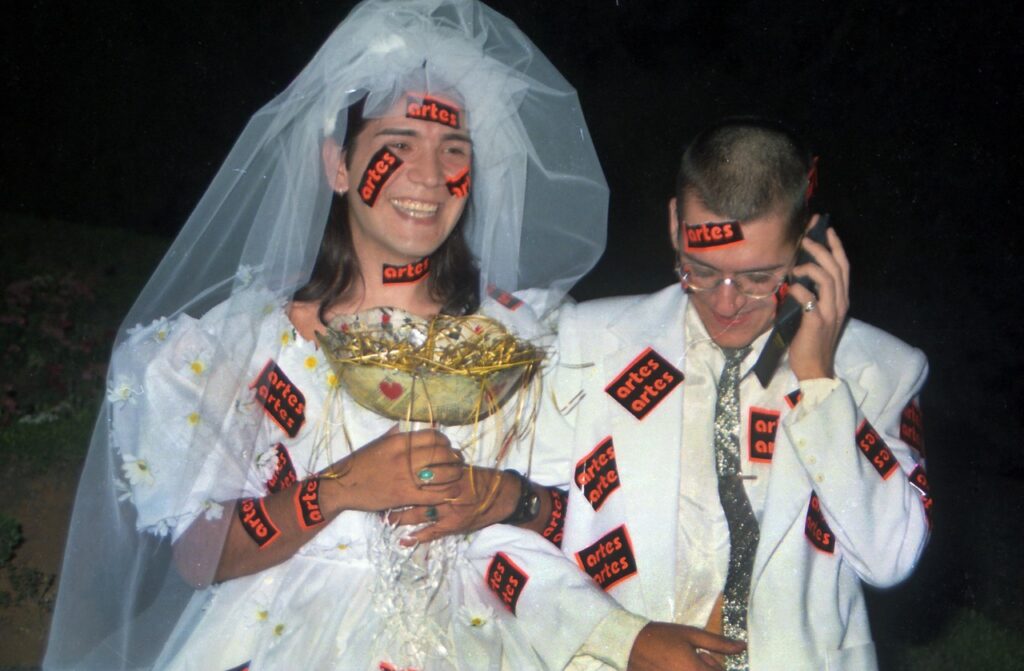
Rodo Bulacio's work reflects a strange era: the 1990s, marked by a false sense of economic freedom, the increasing presence of television in daily life, and an absurd attachment to tradition. It also reflects the violence he unleashed upon his own body.
One Rodo is one of the works created by the artist during the height of the convertibility period. Another work included in the exhibition is Escudo Nacional (National Shield) , where the laurels are replaced with daisies, his favorite flower.
One of her most memorable performances was in October 1995: “Mucha Katanga en la coctelera” (A Lot of Katanga in the Cocktail Shaker), where she proposed “marrying art.” It consisted of recreating all the rituals of a wedding ceremony, from the wedding dress and the party with a wedding cake (made by her mother) to a car parade. The wedding took place around a large clock in Parque 9 de Julio in the city of San Miguel de Tucumán, a popular spot for newlyweds to have their photos taken.
Violence yesterday and today
His murder was a shock and a turning point. Although it was a hate crime, there were no tools available at the time to define it as such.
On March 10, 1997, Rodo was returning from a gathering with friends when, upon entering his house, he encountered four robbers. They brutally beat him on the head and killed him. To destroy evidence, they set fire to his house, not only with his body inside but also with his last 70 works of art. Two of the three men charged with Rodo's murder are serving life sentences.
Rodolfo Bulacio 's exhibition, "Fantasía Marica del Pueblo," until October 30th It's open Wednesday through Sunday from 2 pm to 8 pm at the Borges Cultural Center , Viamonte 525. Admission is free.
We are present
We are committed to journalism that delves into the territories and conducts thorough investigations, combined with new technologies and narrative formats. We want the protagonists, their stories, and their struggles to be present.
SUPPORT US

FOLLOW US
Related notes
We are present
This and other stories are not usually on the media agenda. Together we can bring them to light.