

Justice for Melody: Jury found former police officer guilty of transfemicide, sentenced to life imprisonment
A jury in Mendoza found former police officer Darío Jesús Chaves Rubio guilty of aggravated homicide motivated by hatred of gender identity. He was sentenced to life imprisonment for the 2020 murder of 27-year-old Melody Barrera, a trans woman.


Share

(NEWS UPDATED 16/9/22)
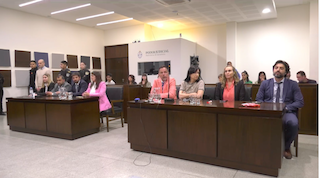
MENDOZA . A jury in Mendoza found former police officer Darío Jesús Chaves Rubio guilty of the transgender femicide of Melody Barrera, who was murdered at age 27 in August 2020. He was also found guilty of committing the crime with premeditation, cruelty, using a firearm, and while serving as a police officer. Minutes later, Judge Nancy Lecek announced the guilty verdict for the hate crime based on gender identity and the other aggravating circumstances, and the sentence: life imprisonment. The grounds for the sentence, the judge who presided over the trial said, will be released within the timeframes established by law.
The trial and sentencing are significant for several reasons. It recognizes that the murder was motivated by hatred based on gender identity and also takes into account other aggravating factors. In other words, it follows in the legal footsteps of the 2018 Diana Sacayán trial. Furthermore, it is the first time in Mendoza that a sentence has been handed down for a hate crime, and it also addresses the demands for justice from activists. It is also the first time that a verdict in a transfemicide case has been reached by a jury, as the trial was conducted using this system. The proceedings were also broadcast on the Mendoza Judiciary's YouTube channel.
“We, the jury, find the defendant guilty of the crime of aggravated homicide motivated by hatred of gender expression or gender identity, transvesticide ,” they read tonight at the Criminal Courthouse in the city of Mendoza, where the trial is being held. They also found him guilty of aggravated homicide with premeditation, aggravated homicide with the use of a firearm, with cruelty, and for being an active-duty police officer. In other words, they agreed with the prosecution's arguments.
Before the sentencing, the judge requested secrecy regarding the deliberations. "The law requires you never to reveal what transpired in the deliberation room," she told them. The sentence was read a few minutes later and applied the same homicide charges and aggravating circumstances stipulated in the Argentine Penal Code.
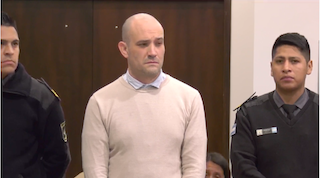
Chaves Rubio had been charged by the prosecution with homicide with five aggravating circumstances: hatred based on gender identity or expression, known as transvesticide or transfemicide; premeditation; cruelty; abuse of his position as a police officer; and use of a firearm.
A message against impunity
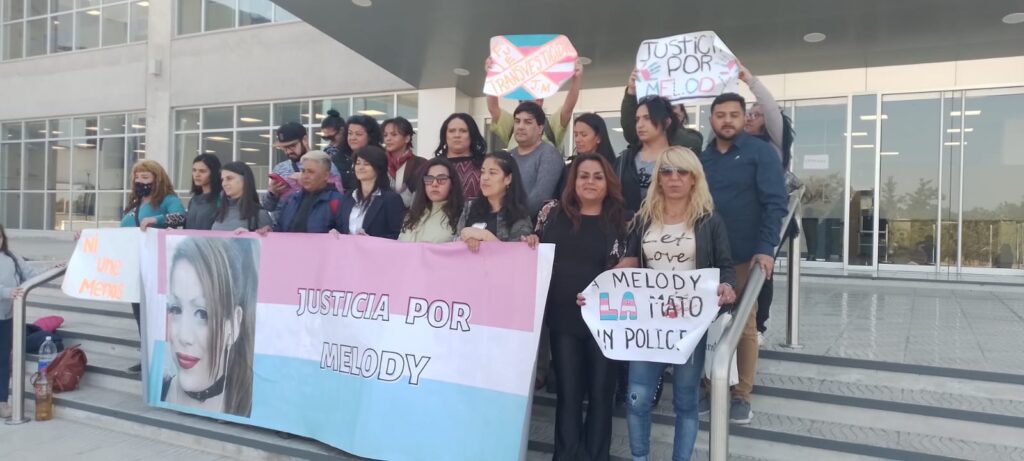
The Justice for Melody Commission—comprised of trans, travesti, and LGBTQ+ activists—considered the verdict a landmark. “Because it meant that, with a jury delivering the verdict on the murder of Melody Barrera, which occurred on August 29, 2020, both the community and the State took a stand in favor of the right to a life free from gender-based violence, to gender identity, and its expression . It sends a message against impunity: a message that says trans and travesti lives matter , that makes visible the ongoing violation of rights to which members of the community are exposed. It also sends a message against institutional violence: the jury determined that the crime was aggravated by the fact that it was committed by a police officer, who used his service weapon to take a life that, by virtue of his public duties, he swore to protect.”

First hate crime trial in Mendoza
It was the first time a hate crime case went to trial in this province. The trial began on Monday, September 12th, and continued until today. Throughout the week, the trans community of Mendoza held a series of activities, exhibitions, and talks. Activists Alma Fernández, Florencia Guimaraes, Daniela Ruiz, and Say Sacayán traveled from Buenos Aires for the trial. The Undersecretary of Diversity Policies, Greta Pena, is also present.
“Melody Barrera’s trans identity permeated the entire trial: the structural discrimination she faced, her suffering, her joys, and, above all, her right to live her life and develop freely. That is what the murderer attacked, and the jury understood it as such: it was a transphobic hate crime,” Pena told Presentes. She highlighted “the tireless work of the LGBTI+ organizations in Mendoza with the support of those throughout the country,” as well as the presence and written contributions of the Ministry of Women, Gender and Diversity. “Melody’s family and her lawyers. All of that combined effort made it possible for us to reach this historic verdict,” analyzed the Undersecretary of Diversity Policies of the National Ministry of Women, Gender and Diversity.
Marlene Wayar was called as an expert witness and testified at the trial. "This crime is one of many that reach us because of their high-profile nature, but it's just the tip of the iceberg, showing the number of crimes that don't go to trial and result in convictions. In the continuum of violence that trans and gender-diverse people suffer throughout their lives, this is the most extreme form of violence, ending a life. But these are all overwhelming conditions that mean that even today, life expectancy for the community doesn't exceed 35 years," she told Presentes. She warned, "Public policies are needed so that this doesn't simply end with an individual in prison. There needs to be work done by an entire society to prevent the creation of individuals capable of committing transphobic and gender-diverse murders.".
What Melody's body revealed
The final day of the trial began this morning with closing arguments at the Mendoza Criminal Courthouse. The prosecutors presented their arguments first. Chief Homicide Prosecutor Fernando Guzzo provided a series of technical explanations clarifying why there was no "self-defense," the argument put forward by the defendant's legal team.
Darío Jesús Chaves Rubio testified on the third day of the trial and once again claimed to have been attacked by Melody. “I was very scared, I don’t know how many times I fired,” Chaves said.
However, in its closing argument, the prosecution detailed that Melody's body showed no signs of defense, much less of a struggle. "The body tells us that Chaves Rubio riddled her with bullets."
“Until the day he was arrested, he lived his life as if nothing had happened. With absolute indifference, carrying the weapon,” Guzzo emphasized. “I believe he does this solely out of a sense of omnipotence stemming from his personality, a desire to avoid detection and ensure that this act would go unpunished. During his statement, he never mentioned Melody. He never apologized. Melody remained, and to this day, an object to him,” the prosecutor stated.
Chaves Rubio's web of lies was also exposed in the prosecution's closing argument. "The first thing that became clear in this debate is that Chaves Rubio lied. He lied to his wife, he lied to his family, he lied when he said there had been a robbery. He lied, tailoring the story to suit his needs.".
The judge presiding over the proceedings was Nancy Lecek. The plaintiffs were represented by lawyers Viviana Beigel and Lucas Lecour, from the human rights organization Xumek .
How the events were reconstructed
When requesting a sentence, the prosecution took into account the state of vulnerability – common to the entire transvestite and trans community – of which Melody was a victim.
On Monday, at the opening of the trial, he recounted the events. “There was an argument during which Melody ended up spraying pepper spray in his face. The accused left the scene in his vehicle. At 3:08 a.m., a Cabify driver was passing by, and he told him what he was going to do: 'I'm going to get a gun and shoot the trans women .' This is exactly what he did. Mr. Chaves Rubio, with complete coldness, rage, malice aforethought, and cruelty, began to attack Melody. He fired six shots, five of which passed through her. Of those five that hit vital areas of her body, four were fired from behind. He left her to die and fled his car at full speed.”
The evidence against the former police officer
The transfemicide of Melody Barrera was perpetrated in the early hours of Saturday, August 29, 2020. Melody was shot six times from a vehicle on Correa Saa and Costanera streets, in Guaymallén, a few meters from the border with the capital of Mendoza.
At the scene of the incident, several spent 9mm shell casings were found. Ballistic testing of Chaves's pistol determined that the bullets and casings matched. The accused was detained on September 17, 2020, at the police station where he worked.
The defendant's legal team was led by attorney Pablo Cazabán. Speaking on behalf of his client, he asked the jury to impose a sentence "commensurate with what happened." He stated, "Several things have been blown out of proportion. We have heard from qualified witnesses, but they demonstrate the shortcomings of the State and society in protecting the rights of transgender and transvestite people, and this cannot be remedied with a conviction," said defense attorney Pablo Cazabán.
“Melody wore headphones so she wouldn’t hear the insults”

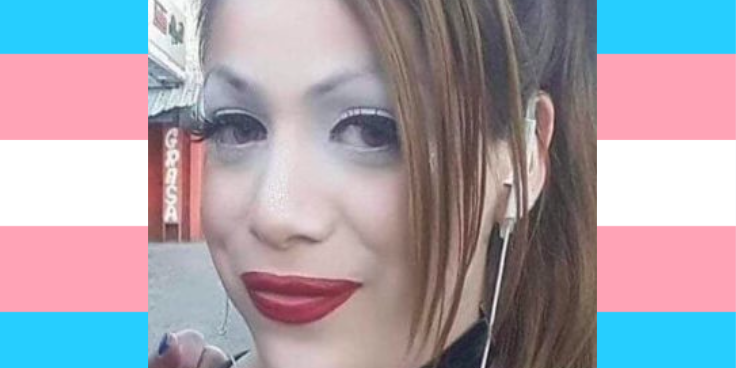
Melody Barrera was a 27-year-old trans woman. She lived with her mother and had transitioned when she was 16. “Melody dedicated herself to doing housework. Her mother said she was impeccable. Her house was spotless. At the time Darío Chaves Rubio murdered her, she wanted to study,” recounted defense attorney Viviana Beigel.
“I insisted she finish high school, and thank God she did. I also convinced her to start a degree in 2021, when the pandemic was over. She would have liked to be a child psychologist. I told her no, that she should study Food Science instead, which she also liked: she knew all the names of bacteria. But she didn't pursue that,” Victoria Pincheira, Melody's mother, told Presentes. She also recalled that “she played a lot of jokes, teased me, bothered me, hid my things, she was mischievous.”.
Melody couldn't escape the discrimination against the trans community. " She wore headphones because she didn't want to hear the taunts, the insults in the street, she didn't want to hear the discrimination she suffered every day for thinking differently, for wanting to be different, for wanting to be Melody ," Beigel explained.
And she added: “Melody is a person who deserves to be mourned. In her are thousands of other Melodys who could not be, who in their youth were victims of individuals who influenced and shaped their thinking in this society that hates transsexuality, that is homophobic, and that is discriminatory .”
Justice with a gender and diversity perspective
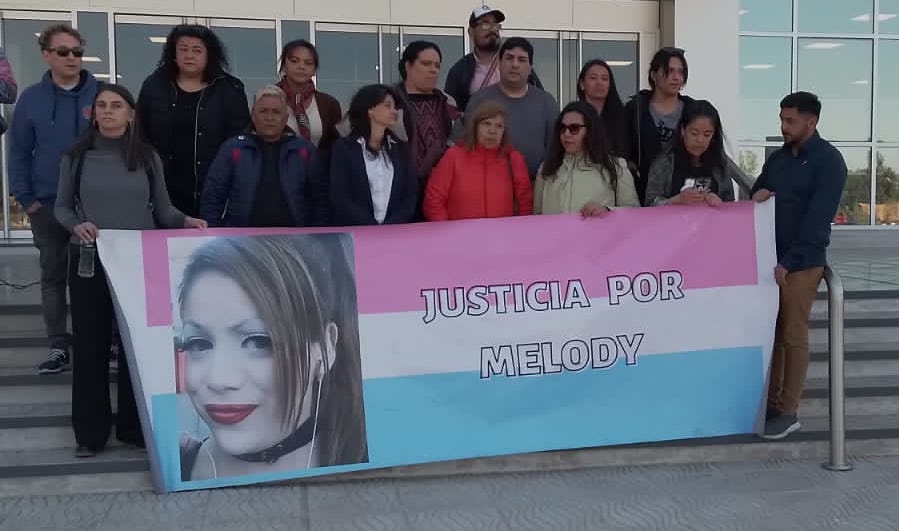
Homicide Prosecutor Andrea Lazo stated in her opening remarks that “ it is necessary for this justice system to respond with a gender and diversity perspective to these types of crimes .” She addressed the jury: “Today, you can represent this justice system, you can represent Melody, and you can represent the groups that have been violated or marginalized in our society, putting an end to the hatred, discrimination, and violence directed at those who feel different, who perceive themselves as different.” This trial was accompanied throughout the week by a series of activities organized by LGBTQ+ organizations to demand justice for Melody in Mendoza and also in Buenos Aires. Last Friday, trans and LGBTQ+ activists marched to the Mendoza Provincial Government House, near the intersection of Callao and Corrientes streets, to read a manifesto and demand justice . “In Mendoza and throughout the country, it is time for the State and its institutions to begin to redress so much violence against our lives.”
We are present
We are committed to journalism that delves into the territories and conducts thorough investigations, combined with new technologies and narrative formats. We want the protagonists, their stories, and their struggles to be present.
SUPPORT US

FOLLOW US
Related notes

We are present
This and other stories are not usually on the media agenda. Together we can bring them to light.