

Community resistance to defend water and life in Mexico
A large assembly of water and land defenders was held in Mexico. They discussed common ground and objectives to prevent the encroachment on natural resources.


Share

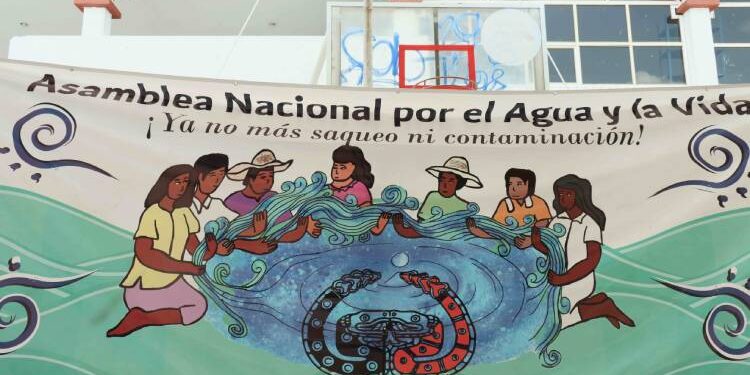
Defenders of the territory from different parts of Mexico have a common goal and they firmly reaffirm it: “ In atl to huaxca huan amo ni monaca: The water is ours and it is not for sale .”
This was the message conveyed at the closing of the First National Assembly for Water and Life: No more plundering or pollution. The first Assembly was held on August 27 and 28 in the Nahua community of Santa María Zacatepec, in the municipality of Juan C. Bonilla, in the state of Puebla, in the central region of the country.
Representatives from more than twenty organizations and groups participated in the assembly. They came from Mexico City, Querétaro, Morelos, Chihuahua, Veracruz, Nuevo León, San Luis Potosí, Tlaxcala, Jalisco, Quintana Roo, Oaxaca, Chiapas, Guerrero, and Michoacán. Representatives from the United States and Germany also joined.
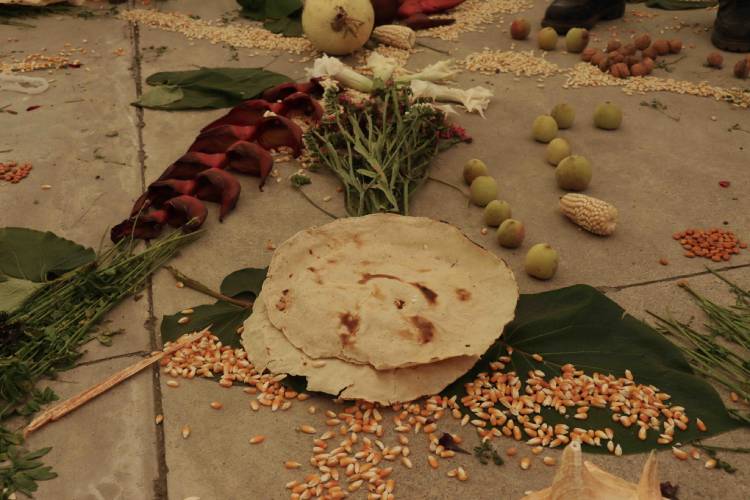
A meeting place
“The objective of the assembly was to come together and listen to each other in order to raise awareness, denounce injustices, and develop proposals. It was also to continue our fight against the dispossession, repression, exploitation, pollution, and destruction of water and life,” they stated after the working sessions.
The assembly was another step in a community process that began two years ago when the residents of Santa María Zacatepec saw the impact of the massive extraction of water.
“We began to notice the severe water theft and saw it reflected in our hand-dug wells. We had never seen such a water shortage, to the point that there were families who could only get a 20-liter bucket of water a day,” says Camilo —who prefers to be identified as such for this work—.
This led them to organize and join forces with other defenders from the Cholula and Volcanoes regions (in the same state of Puebla). On March 22, 2021, they shut down the Bonafont bottling plant, which is part of the French multinational Danone.
“The United Nahua Peoples of the Cholula and Volcanoes region released 50 million 871 thousand liters of water that will return freely to our aquifers… We are guardians of Mother Earth, any company that tries to profit from life in our territory will receive the punishment of the people,” they announced .
The bottling company denied the theft , claiming it operated independently of the local water supply. But the activists, organized as Pueblos Unidos contra Bonafont (United Peoples Against Bonafont), have not backed down and remain steadfast in their defense of the water.
“These 20 communities, historically affected by the state and capital, decided to come forward and send a message. As communities, we do not agree with what is happening,” Camilo adds. He points out that, due to the same water theft in the area, a sinkhole opened up on May 22, 2021.
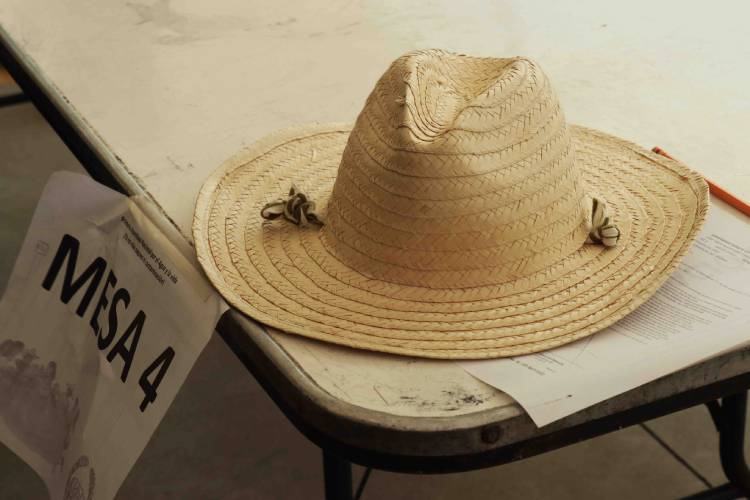
To pave the way
Another step that preceded the Assembly was the formation of the Caravan for Water and Life , which traveled through nine states of the country. It passed through Puebla, Mexico City, Tlaxcala, Querétaro, Veracruz, Morelos, Guerrero, and Oaxaca. It brought together different communities and organizations fighting against water dispossession.
The call to action was issued by the United Peoples of the Cholula and Volcanoes Region. It had the support of the National Indigenous Congress (CNI) of the Zapatista Army of National Liberation (EZLN), which rose up in 1994 to demand the rights of Indigenous peoples in the country, and which, starting in late 2019, after a period of isolation, reemerged to confront megaprojects in the country. Members of the Totonac, Nahua, Otomi, Mazatec, Triqui, Zapotec, Binizaa, Matlatzinca, Nuntaj Iyi, and Ayuujk peoples who live in the states traveled through also joined. “For those for whom water and land are sacred, who give their very lives to defend and recover what belongs to them,” the Caravan stated in its closing communiqué.
Key support for the Caravan, and now for the Assembly, has come from the Otomi community residing in Mexico City. This community occupied the facilities of the National Institute of Indigenous Peoples (INPI) on October 12, 2020, to demand their right to decent housing, health, and education.
A year later, the building was renamed the House of Indigenous Peoples and Communities, Samir Flores Soberanes , in memory of this environmental defender who was murdered in February 2019.
“What we saw while walking with colleagues was a realization of this great problem that we are all experiencing,” Camilo points out.
After evaluating what was shared in the Caravan, they returned to one of the main lessons of the journey: holding assemblies to oppose mining projects.
This is how the process unfolded: “The idea behind the Caravan was to get to know each other, to hear firsthand about the problems faced by those who are organizing and fighting in their territories. And the Assembly is now about taking action. The first one was about getting to know each other, about meeting along the way, recognizing each other and reconnecting, and now the Assembly is about carrying out concrete actions in our territories and also collectively,” Camilo explains.
To give free rein to resistance
“We have gathered here because we know that water is in the hands of corporations, governments, institutions, local bosses, and drug traffickers. And the little water we have is being polluted. We have been stripped of our culture, and through deception and violence, we are being filled with industry and death,” stated the communities, organizations, and collectives that make up the Assembly.
To shape the path forward, the assembly held a forum addressing topics such as the importance of water in individual and collective life; Miguel Sánchez, from the Totonac communities of the Sierra Norte of Puebla, discussed the spiritual relationship of these communities with water; Gabriela Pérez and Valentina Campos from the Ibero-Puebla University addressed the issue of water pollution in the Puebla-Tlaxcala Valley; and lawyer Licy Peralta discussed the issue of water and property. There was also music and dance.
Five working groups were outlined: "Spirituality, self-determination and community management of water"; "Analysis of dispossession, in whose hands is the water?"; "Legal strategies for the defense of water"; "Water pollution and diseases"; and "Criminalization and counterinsurgency against defenders and movements".
After the roundtables, a plenary session was held and agreements were voted on and shared in a statement that was only partially read.
It's worth mentioning that experiences are an important aspect of this collaboration. One of the many contributions came from Purépecha women from Cherán K'eri . This community has become a symbol of struggle and defense of their territory since 2011, when the women led an uprising to protect their town from illegal loggers.
Some voices from the Assembly
“Organized, we go on defending what is ours,” says Don Panchito. The man recalled that the people of Santa María Zacatepec have long been confronting projects that affect them. He remembered that in 2006, when they organized against the construction of a highway, they formed the People's Front in Defense of Territory and Water. He also recalled that in 2012 they fought against a gas pipeline.

Claudia Romero is part of the Tierra Museo de Agua (Water Museum) in Querétaro, where the criminalization of water defenders has been denounced. “We believe it’s important to make visible the relationship between local realities and struggles. We’ve seen that the dynamics are very similar; the large oligopolies are connected. So, the solidarity of communities with other territories is what provides support in the most adverse moments. Far from believing these are emerging connections, they could be permanent strategic alliances,” she stated.

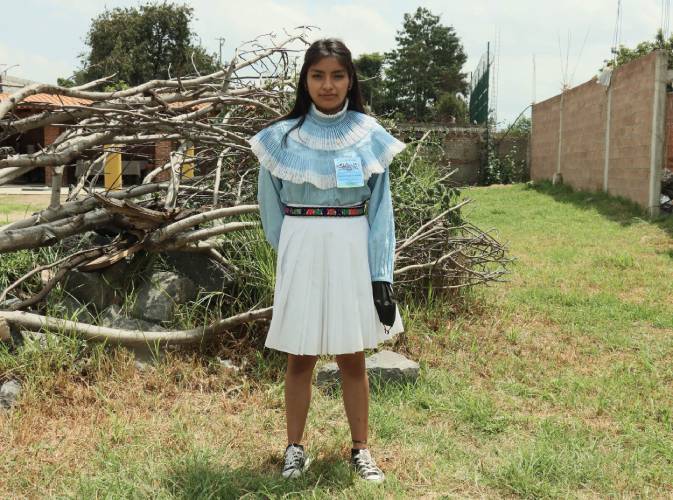
“We, as Indigenous peoples, have existed for many years. We are guardians of the land and of what Mother Earth offers us, but the capitalist system sees it as a means to profit. So, we Indigenous peoples take action and call on other peoples to fight with us to end this capitalist system that is destroying our Mother Nature,” says Abigail. The 17-year-old Nahua woman from Santa María Zacatepec has become involved in her community's struggle.
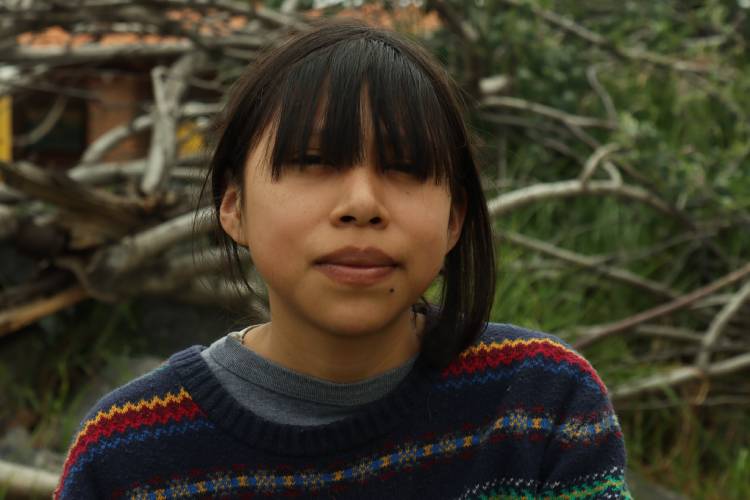
Anselma, a young Otomi woman, states, “We are all facing the same problem. So we share knowledge and we know that it all has to do with these transnational corporations, which are the ones that have come to plunder our water, that have come to privatize everything.”
The agreement
The Assembly agreed to undertake a permanent, collective process to strengthen what they call the law of the people. They indicated that they will carry out concrete actions in different territories through self-management, self-determination, and autonomy.
“Water is our memory and our legacy. Water is not a commodity, not property that can be hoarded and used for profit.” The Assembly will hold its second session in February 2023.
* Individuals referred to by a single name requested to be cited in this work.
Share
We are present
We are committed to journalism that delves into the territories and conducts thorough investigations, combined with new technologies and narrative formats. We want the protagonists, their stories, and their struggles to be present.
SUPPORT US

FOLLOW US
Related notes



We are present
This and other stories are not usually on the media agenda. Together we can bring them to light.