

Militarization in Mexico: A Message of Violence Against Women and the LGBT Community
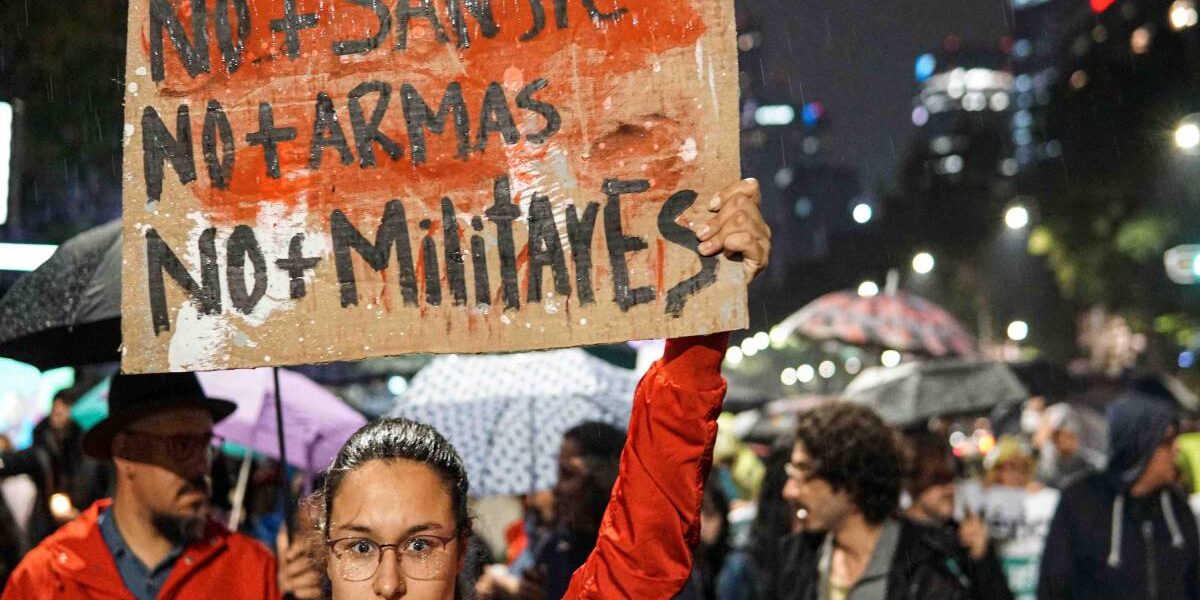
Cases of institutional violence against women and trans people are one of the main complaints against the intervention of the armed forces.


Share

The Mexican Congress approved a law sent by President Andrés Manuel López Obrador that perpetuates the militarized security strategy in the country and violates our Constitution.
To better understand the power of the armed forces, we need to understand our history with them, which can be traced back to the 1960s and 70s during the so-called Dirty War.
During that period, members of the military were used to suppress social movements opposed to the government. We know stories of imprisonment, disappearances, rape, torture, and murder from the victims themselves and their families. Even today, in 2022, the whereabouts of many missing persons remain unknown, and the perpetrators continue to enjoy impunity.
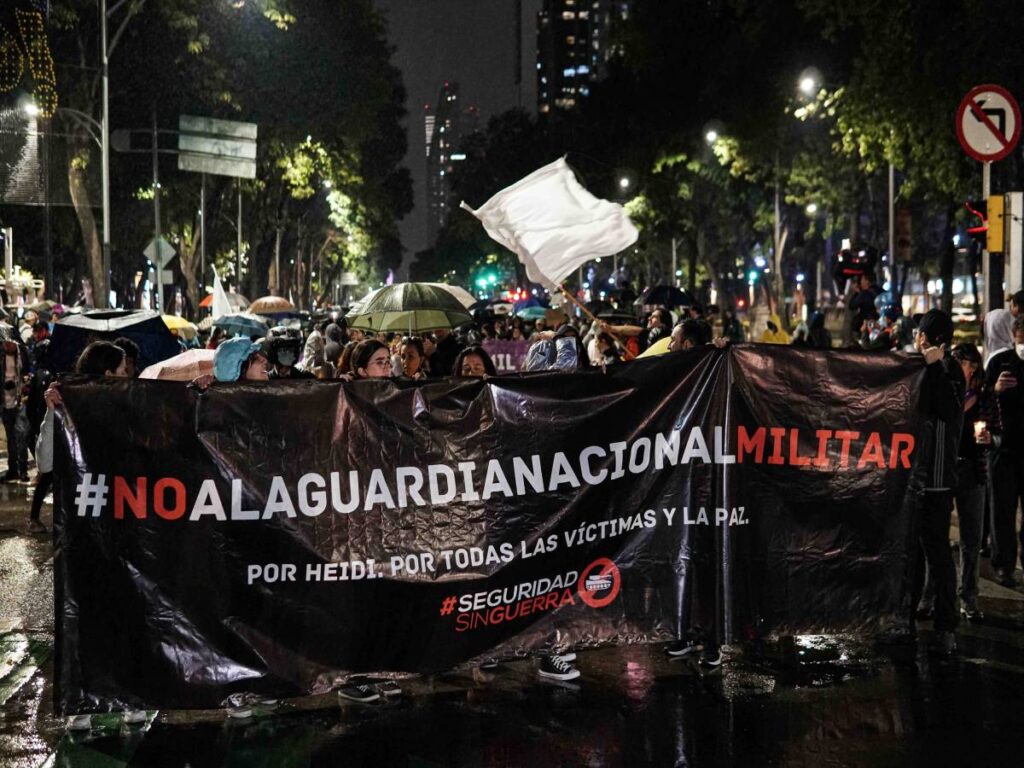
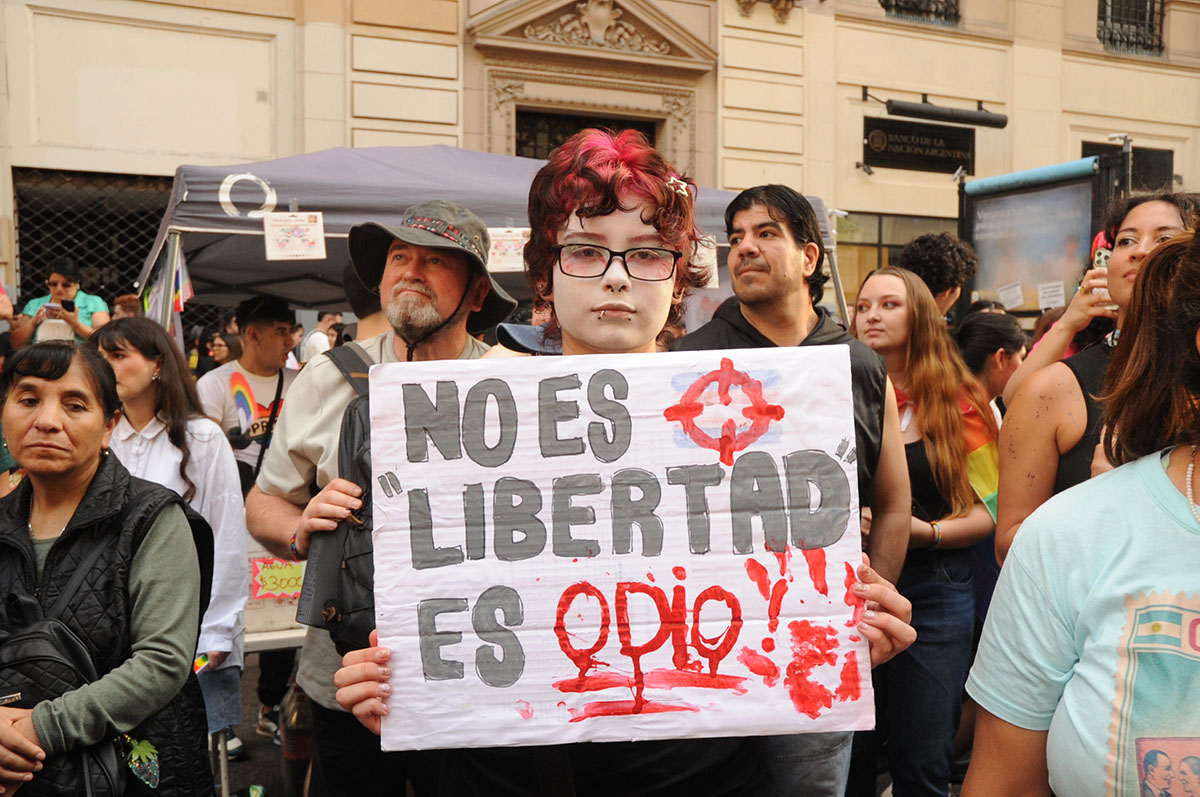
Photo: Milena Pafundi
Governments and armed forces
Over the past 26 years, the Mexican state has gradually handed over public security to the armed forces. It all began with former President Ernesto Zedillo and the (illegal, by the way) military checkpoints to prevent drug trafficking into the United States.
Then came the massive burnings of marijuana fields in the mountains of several states of the republic such as Guerrero and Sinaloa; later the accompaniment in some security tasks during the six-year term of Vicente Fox, and in 2006, the alliance was formalized with the Michoacán Joint Operation.
With this, former President Felipe Calderón kicked off the War on Drugs, where the armed forces would be used to combat organized crime head-on, and with all the "power of the State".
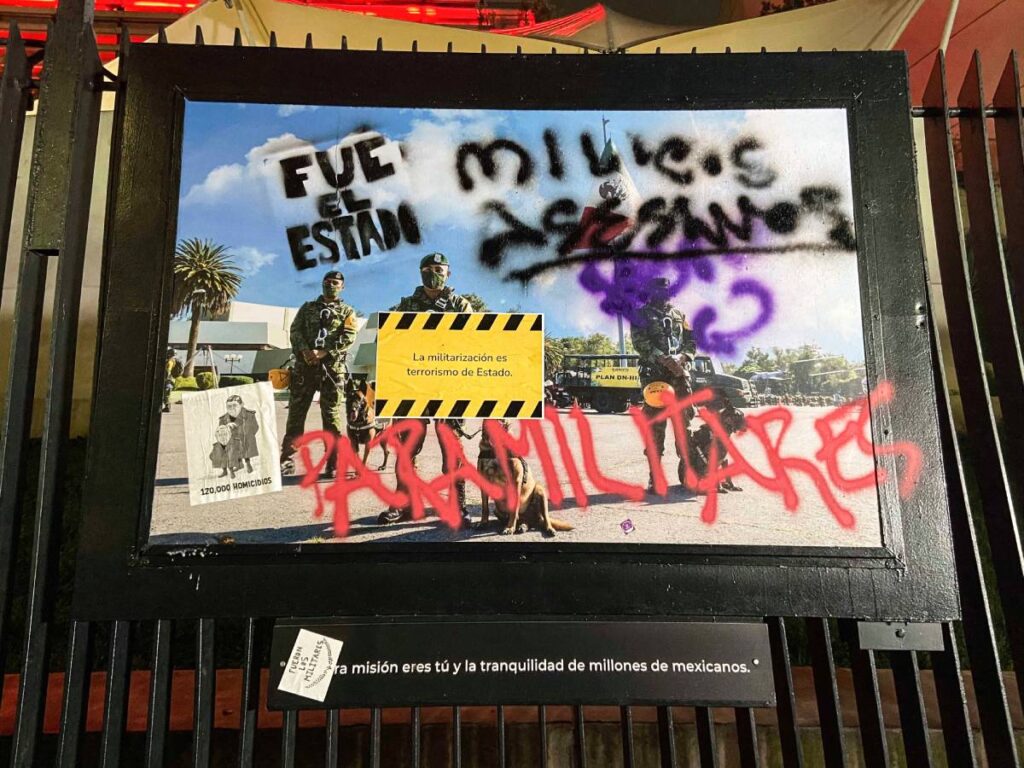
Photo: Milena Pafundi
Figures that do not change
Even so, the violence figures did not decrease; on the contrary, they increased. So did reports of human rights violations committed by the navy and the army. According to the National Institute of Statistics and Geography (INEGI), the average number of murders per month during Vicente Fox's six-year term was 973, while during Calderón's it was 1,689.
The government began calling them “collateral damage,” but behind each statistic was a person, a story. Furthermore, several of these homicides were the responsibility of the security forces. There's the murder of the students from Tec de Monterrey at the hands of the military; the killing of two children and three adults in Sinaloa, also by the military; and the family murdered in Nuevo Laredo by members of the Navy.
As the years passed, the escalation of violence continued, as did the alliance and the territorial and budgetary power of the armed forces.
Also, according to research by the organizations Intersecta, Equis Justicia para las Mujeres, the Ecumenical Studies Center, and Data Cívica , militarization has disproportionately affected sexual minorities and women. For example, in the early 2000s, three out of every ten women were killed with firearms. By 2021, that figure had risen to six out of every ten.
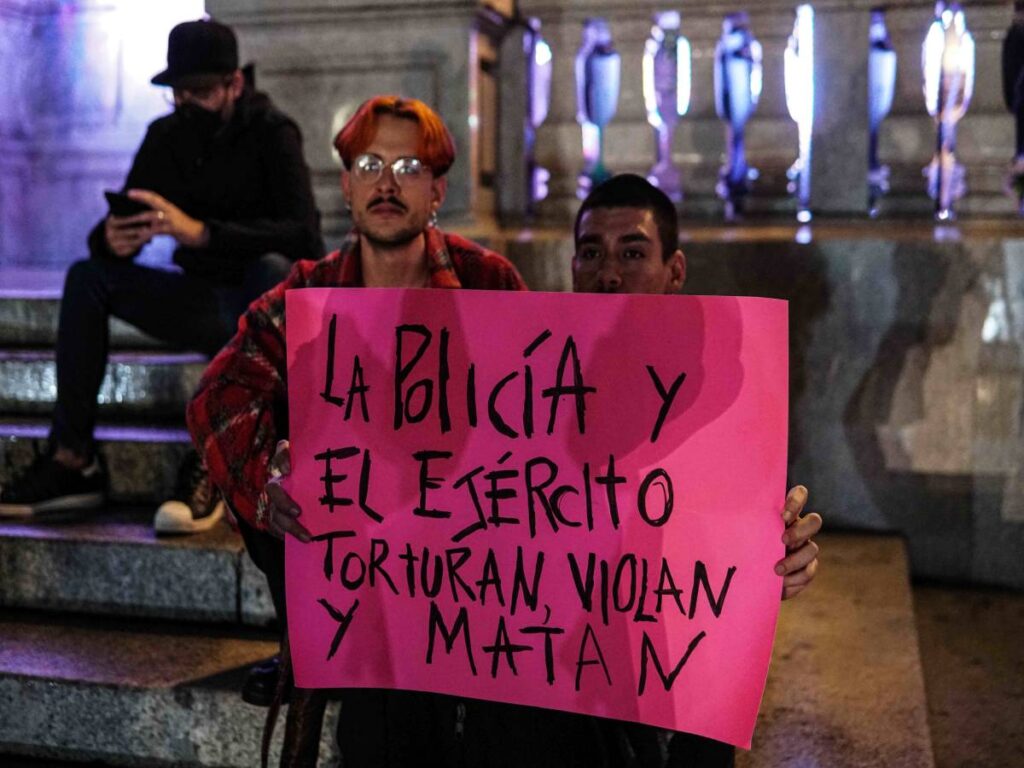
Photo: Milena Pafundi
Violence against the LGBT+ community
In the case of people from the LGBTTTIQ+ community, it is trans women in vulnerable situations and sex workers who top the figures for lethal violence with firearms.
Like the case of Naomi Nicole “La Soñare,” a 23-year-old trans woman who was murdered by two soldiers in Mexico City. Or that of Paola Buenrostro , whose murder was perpetrated by a former soldier.
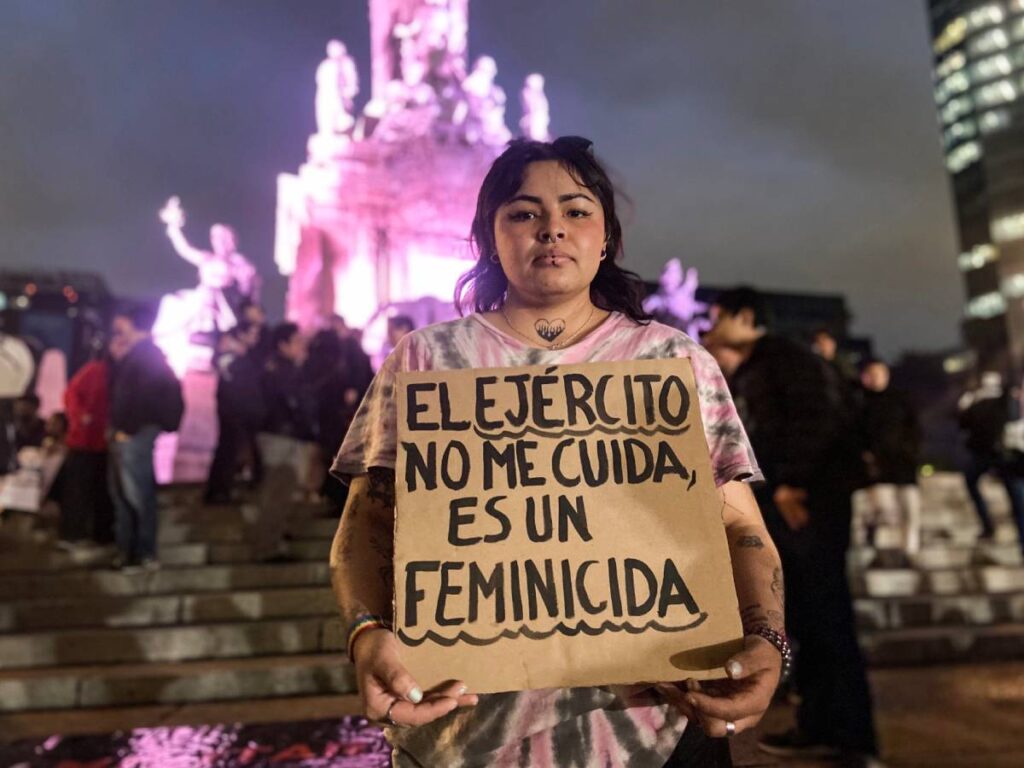
Photo: Milena Pafundi
According to the National Survey of the Prison Population , two out of every ten women detained by the navy are raped. One out of every ten women arrested by the army suffers the same fate.
This is what happened to the indigenous Me'phaa women, Inés Fernández Ortega and Valentina Rosendo Cantú, victims of sexual violence by members of the army in the state of Guerrero.
The law that the armed forces wanted
Under Enrique Peña Nieto's presidency, homicides also increased to 2,182 per month. During his six-year term, military and naval personnel lobbied legislators to pass the Law of Internal Security (LSI). This legislation granted the armed forces authority to perform security duties. This violates our Constitution, which clearly states that such duties can only be carried out by civilians.
What did this mean? It meant that citizens could now be investigated, spied on, and arrested. Furthermore, it lacked oversight mechanisms, was opaque, and relieved governors of the responsibility to clean up and improve their civilian police forces. Despite this, members of the National Action Party (PAN), the Institutional Revolutionary Party (PRI), and the Green Ecological Party of Mexico (PVEM) approved it in December 2017.
I'll pause here for a moment. I think it's important that we don't forget that those who are now the opposition in Congress and are tearing their hair out over President Andrés Manuel López Obrador's militarization plan once supported and used this same strategy.
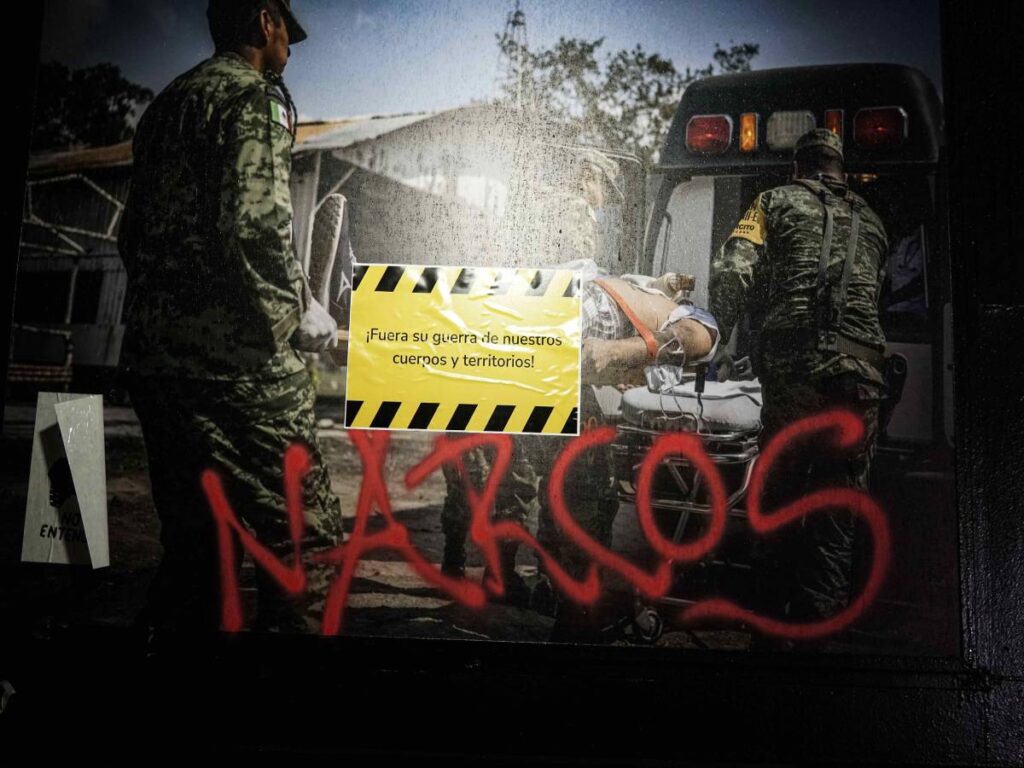
Photo: Milena Pafundi
Unconstitutional
Due to pressure and organization from society, the LSI was declared unconstitutional by the Supreme Court of Justice of the Nation in 2018. But the specter of militarization remained. And let's be honest, the army and navy continued to be used for security tasks, even when they violated the law.
Following President López Obrador's victory, the Mexican Congress approved a constitutional reform on the matter, which included the creation of a civilian-led National Guard and the gradual withdrawal of the armed forces to their barracks by 2024. This was intended to strengthen the civilian institution.
But that didn't seem to be enough for the military and marines, nor for the president, as he gave more and more functions to the Ministry of National Defense (SEDENA); he put them to work building airports, monitoring and managing borders and ports, or serving as a barrier against the migrant caravans entering through Central America.
Furthermore, they receive a larger budget each year; according to information gathered by analyst Carlo Brown and the organization Intersecta, in the last three years, the SEDENA budget has grown more than in the previous four presidential terms combined. It increased from 96,045 in 2017 to 147,037 in 2021.
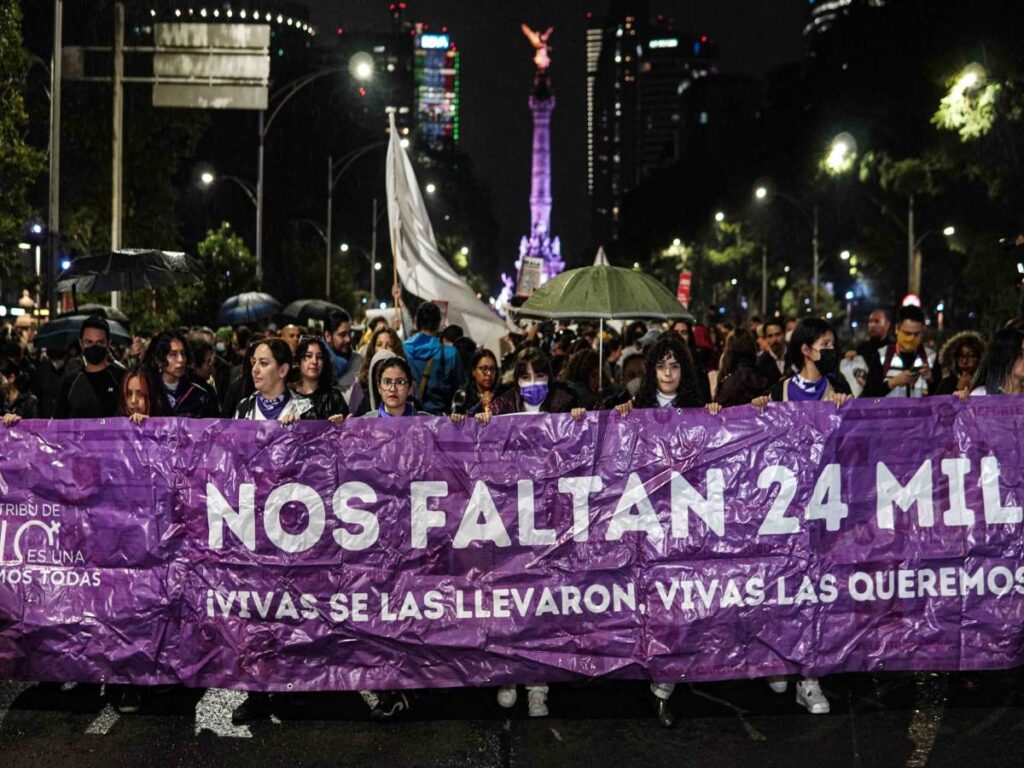
Photo: Milena Pafundi
The fight for the victims
The president says they are the only reliable security institution. For this reason, he asked his party's congressional bloc, Morena, to approve a bill that would place the National Guard entirely under the control of the Ministry of National Defense (SEDENA), which would then be responsible for its organization, operation, territorial deployment, recruitment, training, specialization, and professional development.
Like good soldiers, the majority of the deputies and senators voted for the president's proposal, regardless of whether it goes against the Constitution, without taking into account that it is a failed strategy and without listening to the victims.
Now all we can do is push again in the Supreme Court, for Heidi, Ángel Yael, Naomi Nicole, Jorge, Javier and the thousands of victims because violence in Mexico has a name and surname.
We are present
We are committed to journalism that delves into the territories and conducts thorough investigations, combined with new technologies and narrative formats. We want the protagonists, their stories, and their struggles to be present.
SUPPORT US

FOLLOW US
Related notes
We are present
This and other stories are not usually on the media agenda. Together we can bring them to light.