

The Argentine state acknowledged that it did not investigate the hate crime against Octavio Romero and signed a historic agreement
Prefect Octavio Romero was brutally murdered in 2011, but the justice system did not investigate it as a hate crime. To this day, it remains unpunished.



Share

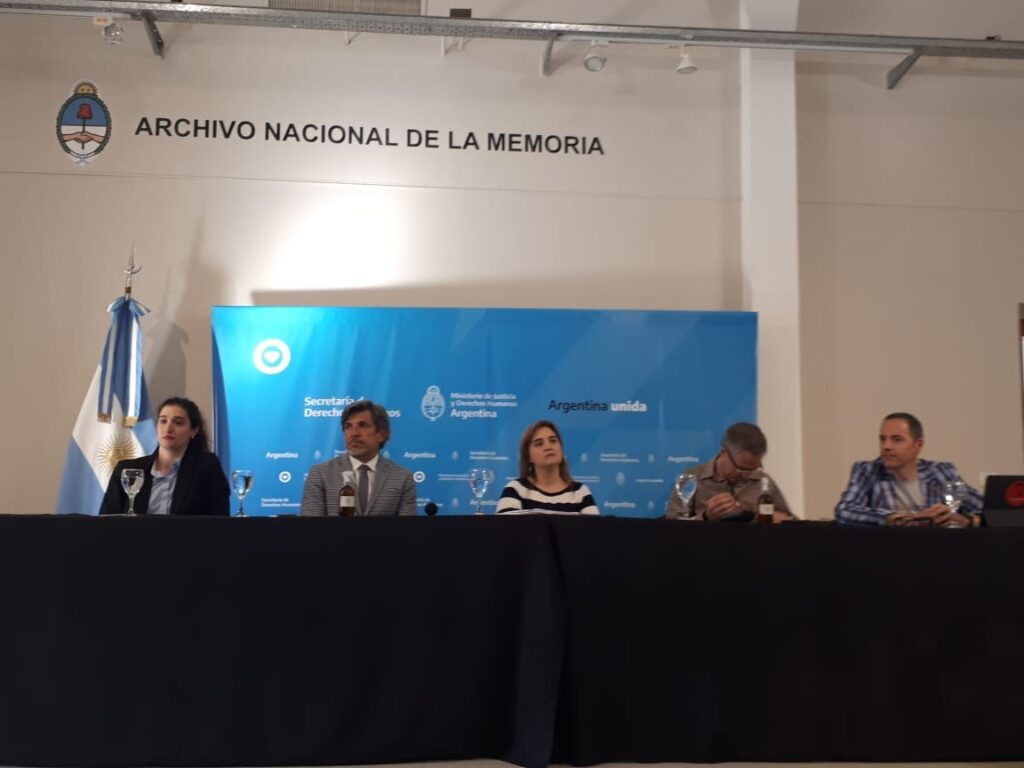
The Argentine State acknowledged its responsibility for failing to meet international standards in the investigation of the murder of Prefect Octavio Romero, which occurred eleven years ago. For the first time in the history of Argentina and the Inter-American Commission on Human Rights, an amicable settlement agreement was reached regarding a hate crime.
The agreement was signed today in the Puiggrós Room of the National Archive of Memory in Buenos Aires and was attended by Gabriel Gersbach, a plaintiff and Romero's partner at the time. They were about to be married when he was murdered. Also present were Andrea Pochak, Undersecretary for Protection and International Liaison in Human Rights; Pedro Paradiso Sottile, president of the Equality Foundation; Celeste Fernández, deputy director of the Civil Association for Equality and Justice (ACIJ); and Víctor Madrigal-Borloz, UN Independent Expert on protection against violence and discrimination based on sexual orientation or gender identity.
"This sets a precedent to try to prevent this from happening again. That there be no other Octavio Romero, no more cases of discrimination. This opens doors and soothes a pain that has lasted for many years," Gabriel said at the event , which he attended wearing clothes that had belonged to Octavio.
Thanks to Gabriel's efforts and the LGBT+ activism, the Inter-American Commission on Human Rights (IACHR) took up the case in 2018.
“The Argentine State acknowledges its international responsibility for the failure of the criminal investigation to meet international standards, especially the enhanced due diligence required in cases of gender-based violence, applicable to crimes against the LGBTIQ+ community,” the agreement states. It also acknowledges that “the lack of an adequate judicial response had a severe impact on the personal integrity of Gabriel Gersbach, Octavio Romero’s partner and cohabitant.”
Harassment and hate crime
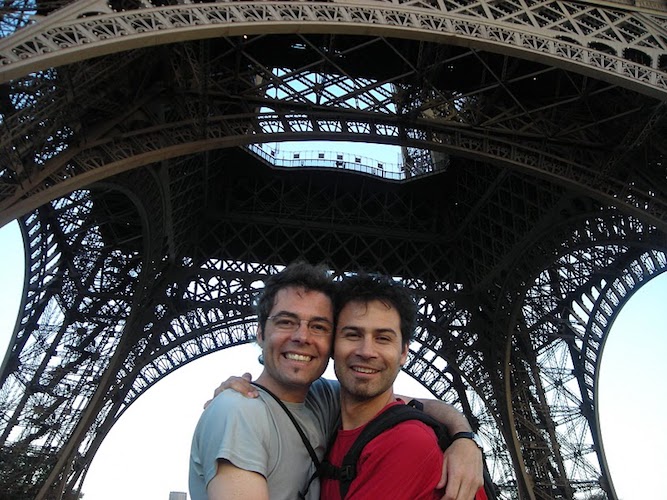
A year after the Equal Marriage Law (No. 26,618) was passed, Octavio and Gabriel were to become the first same-sex couple to marry within the Armed Forces. To do so, the Argentine Naval Prefecture petty officer, then 33 years old, had to inform his superiors about the marriage, as it was a mandatory request at the time. From then on, he began to receive harassment in his workplace, and seven months before the wedding, he disappeared.
“In twelve years of our relationship, this had never happened to me before. We were inseparable. We texted all the time, we were such good friends,” Gabriel told Presentes about the time he didn't hear from his boyfriend . When he didn't hear from him, he filed a missing person report at Police Station No. 15. After giving his statement twice, two of Octavio's superiors showed up. One of them offered him his card and said, “I'm here for you if you need anything.”
On June 17, 2011, six days after his disappearance, a boatman found his body on the shore of the Río de la Plata at its intersection with Avenida San Martín , in the Buenos Aires suburb of Vicente López. This location was within the jurisdiction of the Argentine Naval Prefecture. He was naked, beaten, and had a blood alcohol level of 2.06 grams per liter.
The legal case
LGBT+ organizations claim that this was a hate crime and that the case (No. 65761/11) was stalled for many years. Eleven years after the crime, the Judiciary has made no progress in the investigation. The case was handled by the National Criminal Court of First Instance No. 24, then presided over by Judge Juan Ramos Padilla. Currently, the Criminal Prosecutor's Office No. 40 of the City of Buenos Aires is investigating the case as an "NN ('no name', meaning unknown perpetrator) homicide."
“ The case in the judicial system never progressed. The perspective of diversity and human rights was not taken into account, nor was the fact that it was a hate crime. That's why we decided to go to the IACHR. Access to justice for the LGBT community is always difficult ,” lawyer and LGBT activist Pedro Paradiso Sottile told Presentes. He and the Civil Association for Equality and Justice (ACIJ) are representing Gabriel in the litigation through the Fundación Igualdad (Equality Foundation), which he heads.
Evidence and journalism
In 2015, a key event occurred in the investigation. Journalist Franco Torchia received a report detailing the events that led to Octavio's murder. The report stated that the prefect had been kidnapped and tortured by a group of members of the National Naval Prefecture to prevent a marriage between members of the force. Furthermore, it indicated that the operation was documented on a hard drive in the Coast Guard Building.
“It was a very strong anonymous report that detailed in great detail what had happened to Octavio’s body and why he had been murdered the way he was. I quickly gave it to Gabi so she could take it to the prosecutor’s office,” Torchia told Presentes. She has been covering the case for years on her radio program “You Can’t Live on Love.” However, she clarified that “it meant the same as nothing.”
The prosecution and the plaintiffs requested a search warrant to locate the hard drive. However, Judge Juan Ramos Padilla denied the request, deeming the report "lacking credibility." Two appeals were filed against this decision, both of which were also denied. Finally, on November 10, 2015, the Criminal and Correctional Court of Appeals approved the request. The search was carried out two months later. The device was not found, and by that time Octavio's superiors had either been removed or had retired.
For years the case received minimal media attention. “It was very well-known at the time: from the moment Octavio disappeared until his body was found murdered on Costanera Norte. Then, as the months passed, it disappeared from the media, as often happens,” Torchia stated.
Last year marked the 10th anniversary of the crime, and the media produced various reports. “What did I think of those reports? Bad. Very sugarcoated, very much framed as a love story, cowardly in many cases. What we need to talk about here is the impunity of the State,” the journalist added.
The journey in international justice
In 2012, Gersbach presented the case to the IACHR, and it was admitted in 2018. At that time, the Commission issued a report indicating that the case met the requirements for the Commission to assess whether Argentina had violated specific human rights. Since 2021, meetings have taken place between the Argentine government and Gabriel Gersbach and his representatives. These exchanges culminated in the signing of an amicable settlement agreement.
“This moment seems incredible to us: having the right to be happy, to feel joy. The terrible thing about impunity, complicit silence, and lack of access to justice is that it hinders the possibility of feeling good in the face of a historic event,” said Paradiso Sottile.
In addition to acknowledging the Argentine State's responsibility for the lack of investigation into the case, the agreement details a series of commitments. The Office of the Rapporteur on the Rights of Lesbian, Gay, Bisexual, Trans and Intersex Persons of the Inter-American Commission on Human Rights is responsible for monitoring and following up on these commitments. To this end, the State will prepare semi-annual reports on the degree of compliance with the measures.
The commitments assumed by the State
The State must disseminate the agreement within a maximum of six months from its publication in the Official Gazette. This will be done on the websites of the National Secretariat for Human Rights and the National Institute Against Discrimination, Xenophobia, and Racism (INADI), as well as in a newspaper with wide national circulation.
– He also pledged to provide “all the support that the prosecutor’s office may require in the investigation of the events related to the death of Octavio Romero.”
A special documentary will be produced through the educational and cultural channel "Encuentro." It will focus on sexual diversity within the security forces, in memory and tribute to Octavio. It will be available on the Cont.ar platform and distributed to schools.
– The State will provide support for the creation of a mural in memory of Romero.
The ministries
The Ministry of National Security will issue the “Protocol for Action in Response to Complaints of Discrimination Based on Sexual Orientation and/or Gender Identity, Expression, and Sexual Characteristics.” It will also promote an annual awareness day for cadets and applicants wishing to join the federal security forces. The Ministry has committed to working on incorporating a gender and sexual diversity perspective into the training of teachers and instructors at Police Training Centers.
The Ministry of Women, Gender and Diversity will take action to guarantee access to justice for LGBTIQ+ people experiencing gender-based violence. This includes expanding the number of professionals in the Legal Aid Corps for Victims of Gender-Based Violence and the "Acercar Derechos" (Bringing Rights Closer) Program. The Ministry also committed to developing general guidelines for addressing transvesticide, transfemicide, transhomicide, and homicides motivated by prejudice or discrimination based on sexual orientation, gender expression, or gender identity.
The Public Prosecutor's Office, through the UFEM (Specialized Unit for Violent Crimes Against Women), will undertake a process to adapt its "Protocol for the Investigation and Litigation of Cases of Violent Deaths of Women (Femicides)." The objective is to include a diversity perspective and to address crimes motivated by prejudice or discrimination based on sexual orientation, gender expression, or gender identity.
ad-hoc arbitration tribunal to determine the reparations due to Gabriel Gersbach “for the material and immaterial damages suffered due to the human rights violations recognized in this agreement.”
We are present
We are committed to journalism that delves into the territories and conducts thorough investigations, combined with new technologies and narrative formats. We want the protagonists, their stories, and their struggles to be present.
SUPPORT US

FOLLOW US
Related notes



We are present
This and other stories are not usually on the media agenda. Together we can bring them to light.