

Why don't trans people talk about violence in our relationships?
Following the transfemicide of her fellow activist and friend Alejandra Ironici at the hands of her partner, journalist Vicky Stéfano writes about the invisibility of relational violence against trans people.


Share

Why don't we know the names of our friends' boyfriends? Why is it that every time we talk about our relationships, we do so through jokes, unable to go beyond an exaggerated view of our sexual encounters? We urgently need to start talking about the warning signs and ask ourselves why we don't report them.
Although every year, based on data from organizations and observatories of gender violence, the horrific figures of femicides are published, trans women in particular, and the trans population in general, still do not have official statistics about the crimes that take our lives.
We are still far from being able to analyze, at least quantitatively, what is happening with that reality. Although qualitatively as well.
In addressing the realities of trans people in a comprehensive way, it seems that no matter how much we refine our perspective, we never quite get there. While we continue fighting for access to fundamental rights such as employment, education, and health, we forget one specific and crucial point.
The ongoing search
There is something we have begun to understand more recently: this path begins in our childhoods.
According to trans activist Marlene Wayar, trans people are expelled from our family environments – the initial framework of our attachments – between the ages of 8 and 14.
What kind of subjectivity develops in the face of ostracism, expulsion, and early hate speech? What happens when these are initially replicated by those who claim to love us and bear the responsibility of caring for us?
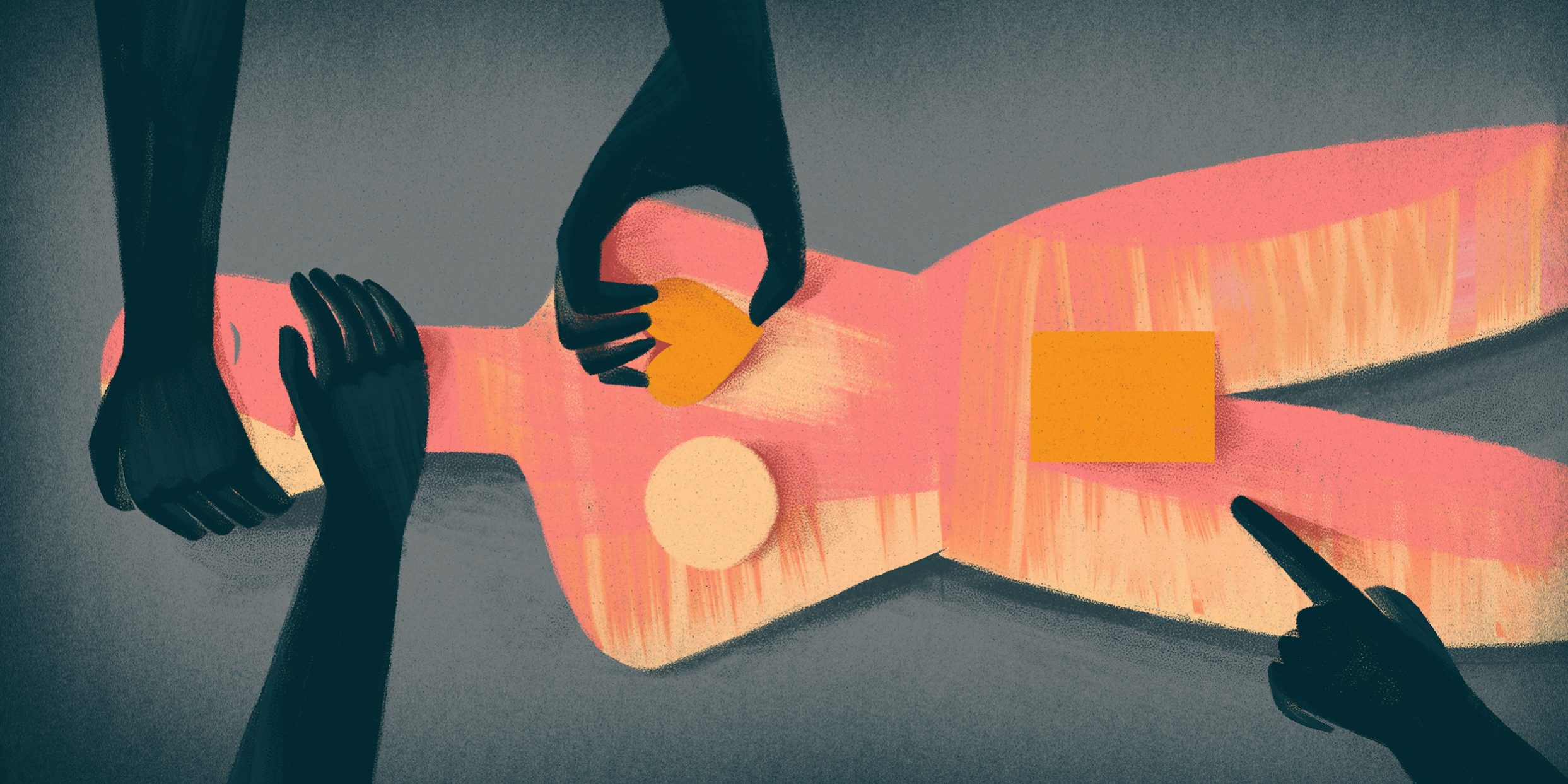
Only one, one where we understand that love and care overlap with levels of violence and hatred. One where we internalize that all the affection we receive directly invalidates our identity, accustoming us to the idea of accepting implicit violence in all our relationships.
It is then that the idea takes hold that you are only valid to be loved in one way: in secret. The families that expel us turn us into perfect victims.
The underground
The social stigma we experience rarely affects the people we interact with, because it's fair to say that violence happens to everyone. It's not only trans women who experience violence in our relationships.
The same invalidating dynamic is equally prevalent in relationships involving transmasculine and cisgender people . The entire trans spectrum is exposed to this violence because our starting points are very similar.
And there is at least one cocktail worthy of analysis regarding the initial female socialization to which trans men are exposed during the first years of their lives.
It is specifically to that non-place to which the institutional curtailment we experience at all stages of our socialization pushes us, where definitive forms of attachment are given shape that will continually seek to sow bonds of affection even in the most violent and invalidating places, weighing the reaffirmation of identity and the social validity of showing that we can be loved, even at the cost of the violence of what cis people call love.
Representations
What about the world of representation? The answer there isn't complicated either. Criminality is one of the fundamental traits attributed to trans people. It is from this perspective that our possibilities for identification are reduced to a gray area initially linked to ignorance and ultimately to dangerousness.
Do we know of any trans-affective representations that transcend social morbidity and serve as a projection for new generations? The answer is simple. No.
In that objective and substantive absence, all the necessary conditions are socially sown to promote and ratify hatred towards our existences, our bodies and our identities as the only filiation option.
And that's where denouncing the only thing resembling love you received becomes unthinkable, because there are no points of reference to compare it to, because what they give you, though it seems like love, isn't. But with what tools can you renounce the only trace of affection that constitutes your human validity, making you worthy of receiving love?
The affective transaction
Furthermore, the subjective formative model of sex work is also an operative factor that we cannot ignore. Is it merely a coincidence that while 90% of our population continues to resort to prostitution as a means of survival, our way of relating to others takes on strictly banking and transactional meanings?
There is another form of extractivism that we don't talk about because of the shame it causes us, which is that we financially support a large part of our partners, because we understand that affection must be compensated in money.
There is something about the configuration of prostituting thought that shapes the exchange of money for services, also assigning a financial weight to our bonds and that is permanently fixed in our subjectivity, because as subjects per se of questionable desirability we feel in the role of compensating in rents the fact of being loved.
Loving in enemy territory
It is then that we realize we are seeking identity reaffirmation based on emotional bonds. We seek affection from hands that punish us.
There is something about the trans body that puts the entire subjective experience of cis people . They see in us the ultimate limit of everything they were told was the unalterable end of their existence, the basis of cis and heterosexual subjectivity.
We are irrefutable proof that everything they created and accumulated power over is ultimately a fictional fact, and it is there that they undertake the ruthless search to tear away our existence, when not mixing it with an irrepressible desire to be us, to possess us.
But how do we reverse this trend? There's no other way, and there's no quick fix. The last bastion of survival for this system lies in its very backbone: education.
We need to re-edit the educational foundations from the beginning to learn to differentiate affection from fictions, to learn to critically examine relationships, and to differentiate, with concrete tools, what is love and what is violence.
Renew the agreements
We must dismantle the cultural absurdities in which we are socially inscribed and renew the rituals of pairing and filiation. We must reconfigure the maps of desire and desirability. We must dismantle the system of subalternity and redistribute affective social capital.
As a trans community, we need to sit down and think about ways to escape this murderous system and find spaces where we can rethink the emotional needs that drive us, becoming fully aware that we are asking for love in the midst of a war against our bodies.
We must re-educate the entire cisgender and heterosexual population from the ground up. So that they learn not to abandon their children because of difference. So that they stop creating exclusionary institutions, so that they stop pushing us to despair for affection and care. They will have to relinquish power before they force us to take it from them. Only then will we stop witnessing these inevitable deaths.
I suppose that in the face of so much hopelessness and desolation, all we can do is stop giving away our precious and vulnerable loves to those who know nothing but harm and hatred, and love each other, as a defense, as revenge.
We are present
We are committed to journalism that delves into the territories and conducts thorough investigations, combined with new technologies and narrative formats. We want the protagonists, their stories, and their struggles to be present.
SUPPORT US

FOLLOW US
Related notes

We are present
This and other stories are not usually on the media agenda. Together we can bring them to light.