

Schools in Paraguay are not a safe space for LGBT+ youth
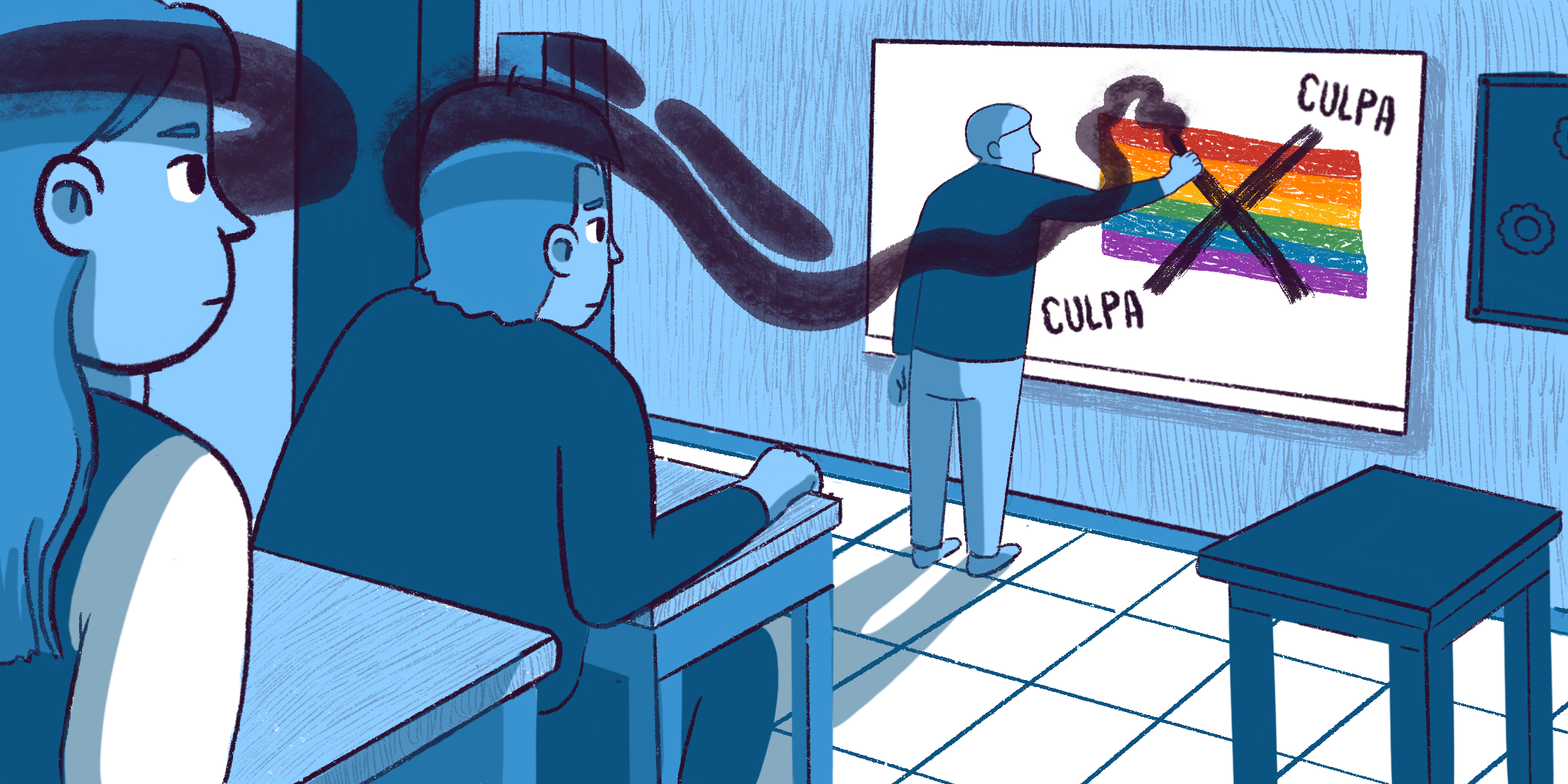
Since 2017, it has been forbidden to talk about gender in schools, and it is common for evangelical churches to teach sexuality in classrooms.


Share

When Marcelito, a second-year student, told his science teacher that he was bisexual, she responded with an Anichéne (“Don’t tell me,” in Guarani). “You’re probably just confused, and you were likely born with a chromosomal abnormality,” the teacher assured him. That day, they discussed genetic abnormalities in class and how these supposedly determine LGBTQ+ individuals.
In 2019, Renato was a sophomore at a religious school and hadn't yet transitioned. He was dating a girl. In the middle of class, a teacher asked to speak with him. She wanted to know if it was true that he was dating someone of the same sex. Renato was surprised; he didn't understand how that related to the lesson they were having, but he said yes. The teacher replied, “That's wrong. It's not right. It's not acceptable to God. Your parents won't like it; they'll be ashamed.”
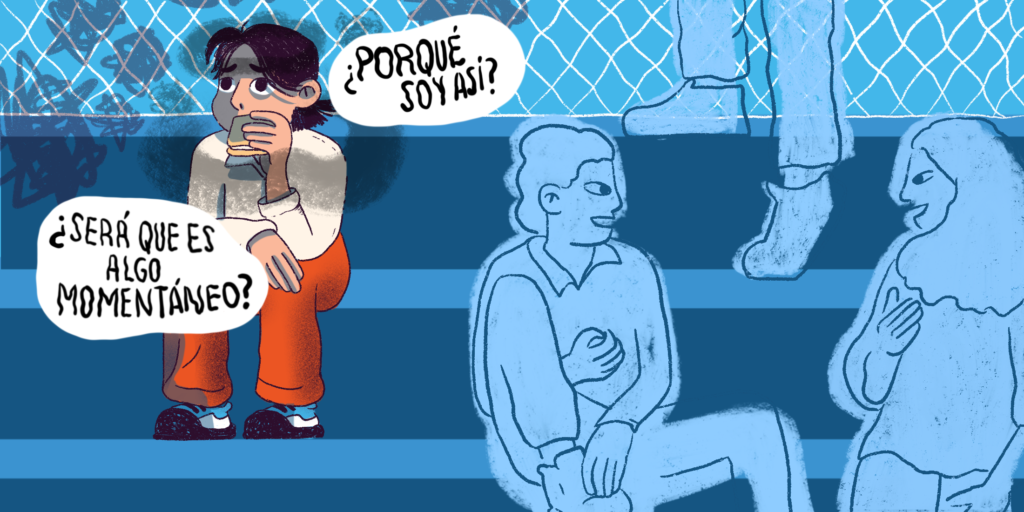
These are just two stories among many in Paraguay. Children and adolescents are forced to explore their sexual orientation or gender identity in silence, for fear of being discovered or exposed.
According to Daniel Ortellado, a member of the Somos Pytyvohara organization and advisor for the peer-to-peer EIS program, the current educational model is based on prejudice and taboos. Schools instill fear and seek to criminalize everything related to sexuality in general and diversity in particular.
“Young people often hide themselves. They hide what they feel, they hide their experiences. They live in constant fear because we don't have public policies to protect us, not even from discrimination . We are the only country in Latin America that doesn't have a law against all forms of discrimination, and that is already a very serious warning sign,” says Ortellado.
Who decides on the sexuality of children and adolescents?
Comprehensive Sexuality Education is not part of the educational curriculum in Paraguayan classrooms. Since 2017, it has been forbidden to discuss gender in the classroom. With the enactment of Resolution No. 29664, known as the “Riera Resolution,” promoted by the then Minister of Education Enrique Riera, the use of materials containing “gender ideology” was prohibited in educational settings. The aim was to protect the traditional Paraguayan family from any foreign doctrine. In other words, to “protect” them from gays, lesbians, trans people, and transvestites.
National Plan for Children and Adolescents 2020-2024 was presented , a project aimed at protecting the rights of children and adolescents. Self-proclaimed “pro-life and pro-family” groups opposed the plan and even managed to bring the Minister of Children and Adolescents, Teresa Martínez, before a public hearing for promoting a document that supposedly contained “gender ideology” and sought to corrupt children.
So far this year, the prosecutor's office has received 885 reports of child sexual abuse. Eighty percent of these incidents occur within the family. In 2021, 2,947 cases of sexual violence against children and adolescents were registered—approximately eight cases per day. According to Amnesty International's #TheyAreGirlsNotMothers report, an average of two girls between the ages of 10 and 14 give birth each year.
Biased and religious education
In May of this year, the first installment of the book " Can the Heart Be Educated? Proposals for Affective-Sexual Education for the Educational Community ," by Ecuadorian author María Judith Turriaga, was available with the purchase of one of the country's leading newspapers. The guide is recommended by the Paraguayan Episcopal Conference and is intended for teachers and parents.
Comprehensive sex education in schools in Asunción and the rest of the country is taught within subjects such as Ethics, Psychology, Guidance, and/or Science, from a pseudoscientific and religious perspective. In many cases, to avoid this responsibility, the institution invites other organizations or groups to speak on the subject.
This was the case with the evangelical organization Decisiones, which for six years used public funds to give talks containing false information about contraception, sexually transmitted infections, and the "origin" of homosexuality. Thanks to complaints from the group Somos Pytyvohara and an investigation by the media outlet El Surti, Decisiones was pressured to relinquish state funding and cease its activities.
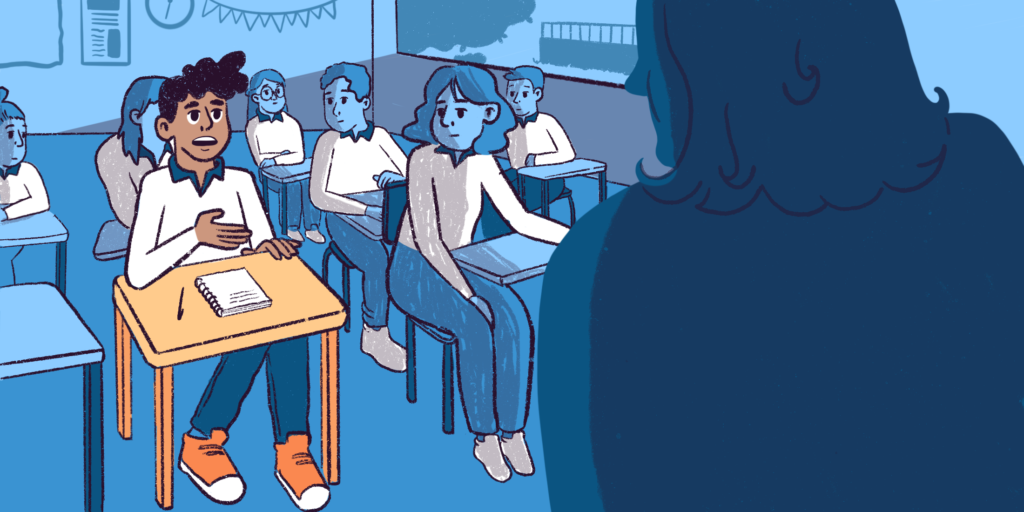
“The damage done by Decisiones was enormous. The teachers who participated and continue to participate in those workshops are deepening their prejudice by replicating that kind of biased information with their students,” Daniel explains.
Renato recalls that in his final year of high school, a man was invited to share his life story, a tale of overcoming adversity and "reparation." He was a man who couldn't have children, so he decided to adopt. He used his experience to invalidate and question people of diverse sexual orientations and gender identities, labeling them as an aberration and unnatural for not conceiving in a conventional way.
“He also shared the experience of a friend of his who supposedly ‘cured’ his homosexuality and had children because he realized he couldn’t waste his life like that. And nobody stopped him, nobody told him it was wrong. Hearing it was very powerful. Several of us from the community were there. It made us very uncomfortable,” she says.
Scapegoats
For researcher and activist Erwing Szokol, the entry of an outsider into the institution, presenting themselves as knowledgeable and arguing that being LGBTQ+ is wrong, directly impacts how young people choose to live their sexual expressions and identities. Furthermore, it creates a scapegoat: anyone exhibiting dissenting characteristics risks being labeled as the deviant who could "infect" the rest. This practice was established during the Stroessner regime.
“They generate more questions and push them to find the “deviant” or “abnormal” individual, to bully and expel them. But never as a form of containment or a search for support; rather, these interventions always serve as a way to denounce the person, to encourage parents to control, to encourage the school itself to repress these behaviors that are characteristic of these “deviant groups.”
Can children talk about what is happening to them without EIS?
Marcelito does the math and says they've requested the implementation of Comprehensive Sexuality Education (CSE) at his school at least eight times. "We've spoken with the principal many times, and he always tells us the same thing: that it can't be done because it's not in the Ministry's program and because it's a Catholic school," he adds.
However, some teachers don't hesitate to lecture on sexuality when they have the chance. Like the case of an accounting teacher who told students they weren't old enough to decide whether or not to have sex.
“Instead of offering information so that they can make responsible decisions, they force them to experience their sexuality through fear, shame, and guilt, internalizing prejudices. Without comprehensive sexual health care, they are more exposed to sexually transmitted infections. And often, in these situations, they don't know who to turn to, they remain silent because they can't speak out, and these infections worsen over time,” Daniel mentions.
Fake news and disinformation
In early May, a case of sexual abuse against a child at a private school in Greater Asunción came to light. The school reported the case to the Ministry of Education and Science (MEC), stating it was a case of "peer bullying." However, thanks to the mother's complaint to the Attorney General's Office, it was discovered that the abuse was actually perpetrated by a teenager.
A fake news story circulated by the platform InformatePy claimed that the teenager who committed the abuse supposedly "identified as transgender." According to the publication, he was admitted to the school as part of its "Inclusive Education" policy.
The organization Somos Muchos Muchos Más (We Are Many Many More) issued a statement expressing its condemnation of the incident. They further denounced that “arguments such as Inclusive Education and Comprehensive Sexuality Education (CSE) promote the perverse gender ideology from early childhood and become the most serious threat to the education of children and adolescents in Paraguay.” They demanded that the Ministry of Education and Culture (MEC) comply with Resolution No. 29664/2017.
Presentes contacted Sonia Escauriza, Director of Childhood and Adolescence at the Ministry of Education and Science, to find out if there is a protocol for cases of discrimination against LGBTI children, but we did not receive a response from her.
The Ministry of Education and Science website contains the material "Interinstitutional Intervention Guide for the care of cases of Violation of Sexual and Reproductive Rights in the Educational Field" which has protocols for cases of abuse, harassment and discrimination related to the sexuality of children.
Learning together
In Dani's words, the concept of discrimination is not yet established in educational spaces due to this lack of scientific information and a rights-based approach, so many students cannot identify or verbalize when they experience these types of situations.
“However, we receive quite a few questions about why I am like this, am I confused, is this just a phase, should I tell my parents or not, and what should I do? We get these kinds of questions a lot, stemming from a concern about wanting to define oneself. What am I?” explains the counselor from the peer-to-peer EIS support line, which offers attentive and respectful listening, providing support and guidance.
Marcelito believes that, these days, his classmates are becoming more open to topics related to sexual diversity. But when he was in 7th and 8th grade, he felt very alone. “I was bullied for being effeminate, for example. They made jokes about me, threw paper at me, hit me on the back, stuck gum on me,” he recalls. Now he no longer suffers mistreatment; on the contrary, he feels that every time he raises his voice to defend his rights, people are on his side.
In Renato's case, he felt there was a lot of openness and acceptance among his classmates. When he experienced harassment from his teacher, it sparked a whole conversation among his peers. He never received support from the school, but he had a close-knit group of friends who stood by him within the institution.
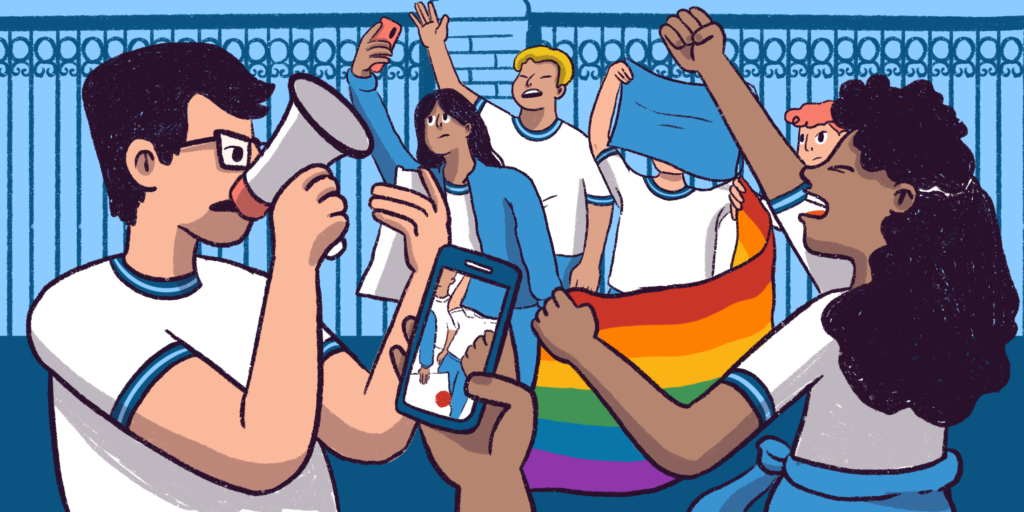
On March 11 of this year, a group of students from the Nuestra Señora Del Huerto school demonstrated in front of the institution against the de-enrollment of two lesbian students.
“This is a very clear example, where they were accompanied by their peers; there was no rejection, there was support. And that's what information does: it empowers you and allows you to make responsible decisions for your life. That's why we say so often that boys and girls have the right to receive quality information,” says Dani.
We are present
We are committed to journalism that delves into the territories and conducts thorough investigations, combined with new technologies and narrative formats. We want the protagonists, their stories, and their struggles to be present.
SUPPORT US

FOLLOW US
Related notes
We are present
This and other stories are not usually on the media agenda. Together we can bring them to light.