

Six queer artists from Argentine folklore to get to know
A guide featuring artivists who fill the space with voices, songs, and diversity, and who take action against prejudice in popular music.


Share

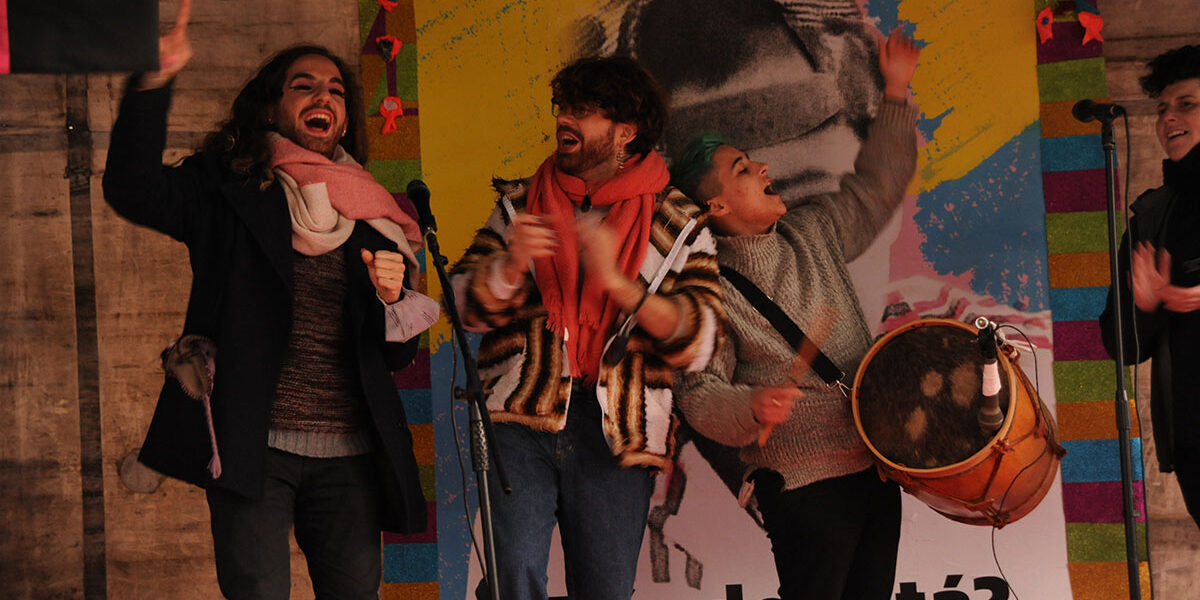
BUENOS AIRES, Argentina. Argentine folk music has been the subject of much debate. Most of these debates were resolved through the sheer volume of artistic production, winning over audiences with applause and, above all, with lived experiences. This has happened in recent times, when the binary model of the gaucho —tough, quarrelsome, romantic, and a singer—alongside the submissive woman in long dresses with flowing braids began to be questioned .
Long gone are the arguments about whether folk music can be played with electric guitar, whether it's produced in an urban context, or whether it can be fused with other musical styles or genres. The debate now centers on the patriarchal bias that has always dominated folk music performances and production .
These nine artists are some of the key figures in the folk music movement that has been developing for some time and is rapidly expanding. You can hear them on streaming platforms, but also in folk clubs and on festival stages.
Why is Folklore Day celebrated on August 22nd?
On August 22, 1846, the English archaeologist William John Thoms coined the term "folklore" to describe the entire body of cultural knowledge of peoples. He called it "folklor" in an essay published in the London magazine The Athenaeum. Thoms's concept derives from "folk" (people, nation, race) and "lore" (knowledge, wisdom). It is combined to form "popular knowledge."
Also on August 22nd, but in 1960, the First International Folklore Congress was held in Argentina. It was presided over by the intellectual Augusto Raúl Cortazar from Salta, and representatives from 30 countries participated. There, August 22nd was established as Folklore Day.
The date also coincides with the birth of Juan Bautista Ambrosetti (1865-1917), an Argentine ethnologist, archaeologist, and historian, proclaimed the “father of Argentine folklore studies.” Ambrosetti was the first to conduct archaeological explorations and dedicate himself to systematic studies of Argentine folklore.
Queer Folklore Artivists
This isn't meant to be an exhaustive list, but rather an excuse to explore other sounds. Do you have any other recommendations? Feel free to leave the names of other artists in the comments. We'll keep them in mind for future productions.
Diversity in couplets: Lorena Carpanchay
Lorena Carpanchay is the first trans woman to perform baguala music in Argentina. She was born in the Salta region of San Luis, a few kilometers from Cafayate, where she also learned the craft of weaving.
Lorena says that singing helps her overcome sadness. That's how she crafts her music, while forging her own path as a trans woman in the world of traditional Spanish song.
She participated in the film Terminal Norte, directed by Lucrecia Martel. And she performed on stage at the Serenata de Cafayate, one of the most important festivals in Northern Argentina.
“Daughters of Mother Earth”
Non-binary folklore: Ferni de Glydenfeldt
Ferni de Gyldenfeldt is passionate about folk music. In 2021, she registered for the Pre-Cosquín competition to represent the Autonomous City of Buenos Aires at the festival. Despite achieving the highest score, the Cosquín Festival Committee questioned her eligibility because she had registered as a woman when she was actually male.
The singer denounced this situation, and the committee had to not only reverse the ban on Ferni but also remove the "male-female" division from the competition. Ferni achieved a huge step: making Cosquín non-binary .
In one of the most important celebrations in Santiago del Estero, El Patio del Indio Froilán, which takes place every Sunday, Ferni was one of the most resounding artists of August, the month of Pachamama.
Paving the Way: Susy Shock
Susy Shock is a leading figure for trans and drag queens who have graced the folk music scene in recent years. Her band, La Bandada de Colibríes (The Hummingbird Flock), has already recorded two albums featuring a repertoire of folk rhythms. Buena Vida y Poca Vergüenza (Good Life and Little Shame), released in 2014, is one of them. The other, Traviarca, came out in 2019. That album allowed her to tour Europe and received a nomination for Best Conceptual Album at the Carlos Gardel Awards.
In addition, Susy Shock was the driving force behind Botecitos, the first trans songbook in Argentina, and behind beautiful artivist productions for popular culture.
Gauchosco Drag: LeGon Queen
LeGon Queen from Esperanza, Santa Fe, to study Folkloric Arts. Back home, she had already had her own ballet company. It was upon arriving in this city that she discovered something that had always interested her: Drag Queen culture.
One day she began incorporating the glitter and textures of that movement into her dances. She mixed them with gaucho clothing and gradually became one of the leading figures in the drag folklore scene.
Children of an era: Feel me Dominga
One of the first folk groups to fight against discrimination in the folk music scene was Sentime Dominga, founded by Juan Tauil from Santiago del Estero. It was formed in 2010 amidst the demands for gender identity and human rights that resulted in the equal marriage law and the gender identity law.
“Travesti toba” is one of Sentime Dominga’s most representative songs.
Diverse artivist: Valen Bonetto
Valen Bonetto made his mark on the Argentine popular music scene some time ago. With his second album, Otrxs, he fully embraced folk music. His first album featured pop and rock influences. A return to his home province of Córdoba inspired him to revisit the sounds of his childhood.
To listen live
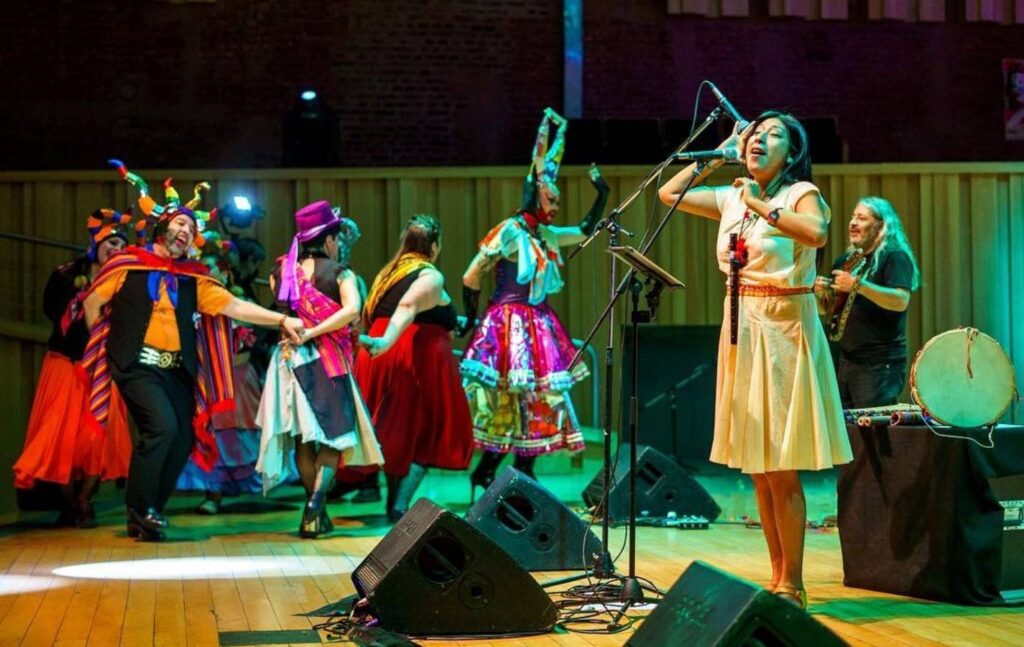
Dancing and singing free from prejudice. That's what Peña Folklorazo Queer, created by the Ñandutí Company more than three years ago, is all about. They offer dance workshops, in addition to evenings of recitals and dances. You can follow them on Instagram ( @folklorazoqueer) or on their Facebook .
To investigate
Colectiva de Folklore Pluridiversa is a space that brings together all the new expressions of diverse folklore. You can explore it on their YouTube channel .
We are present
We are committed to journalism that delves into the territories and conducts thorough investigations, combined with new technologies and narrative formats. We want the protagonists, their stories, and their struggles to be present.
SUPPORT US

FOLLOW US
Related notes

We are present
This and other stories are not usually on the media agenda. Together we can bring them to light.