

Trans women share their experiences in caregiving on a podcast
The Peruvian podcast “Trans-stories of care” is hosted by a trans woman and records the lives of four trans women affected by caregiving tasks.


Share

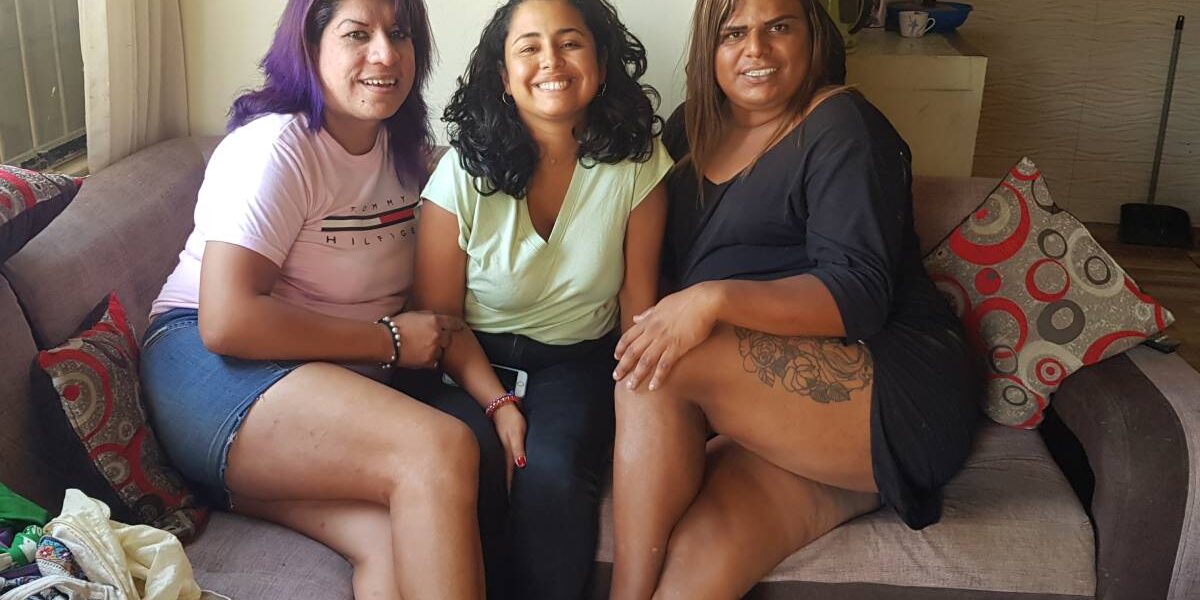
What is caregiving? Why do we care? Who do we care for? Who are the caregivers? These questions arise every time we mention the idea of "caregiving tasks," and there are few answers. That's why the Peruvian podcast "Trans-Histories of Caregiving" was created. It's the first production to explore the experiences of four trans women from Villa María del Triunfo, each of whom has been affected by caregiving tasks in different ways.
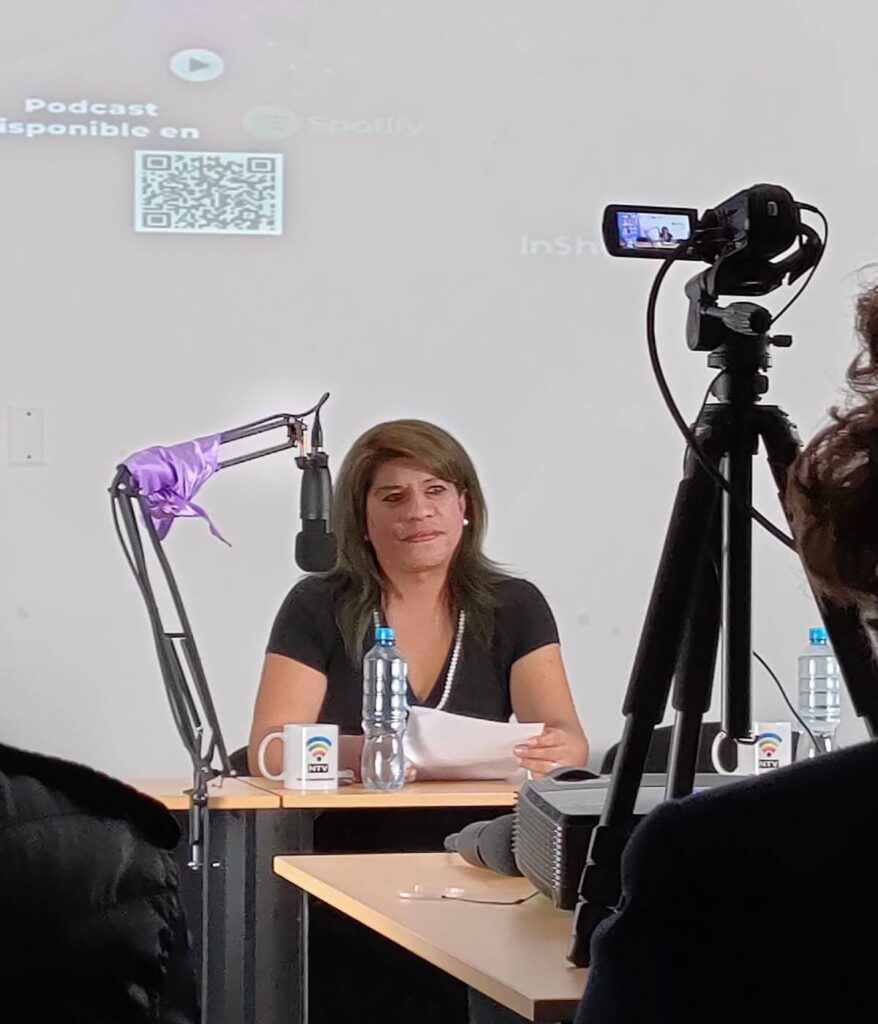
The podcast is produced and written by Maju Carrión, a trans communicator and activist; Angélica Motta, an anthropologist and PhD in Public Health; Carolina Ibáñez, a social psychologist; and Fernando Echevarría Alva, a professor. It is one of the winning proposals of the grant awarded by the Gabo Foundation and Oxfam to investigate and report on inequality in the distribution of care work and its socioeconomic implications in Latin America and the Caribbean. The research and production were mentored by María Eugenia Ludueña, co-director of Agencia Presentes. Each episode is between 15 and 20 minutes long and can be heard on Spotify .
Four stories
Débora, Fernanda, Sandra, and Pierina are the main characters, but another key person in the podcast's development is Maju Carrión. Her voice carries the narrative thread of each story. “It was a very interesting and educational process for me. I come from a precarious economic situation, I'm a trans woman without a university degree, I'm a self-taught communicator, and by profession, I'm a stylist,” Maju explains in an interview with Agencia Presentes.
Life experiences marked by discrimination and violence were what Maju heard whenever they spent their free time together. Because they've been friends for years.
“In Debora’s case, the central theme was her family. She was very close to them. Her 50 years are marked by her life journey and her transition, but her family was always present. Fernanda didn’t have a family present. But she had her own home, which allowed her to live a decent life and not be so needy. Sandra’s story was one we could have made into a novel. She’s been through everything: prostitution, drugs, HIV, and on top of that, she dedicates herself to community work,” Maju explains.
The scriptwriting process carefully considered each woman's story. Maju's participation was also fundamental in that initial stage.
“I want people to see that such strong and powerful trans experiences exist, and to make this visible. I suggested that they be present and that it be handled with sensitivity because it's about real life. They're not coming to tell me nonsense; they're letting go of something they've carried for many years, and it's difficult to detach from this or remember all those things.”
“Transhistories of Care makes a crucial contribution. It constructs a different kind of narrative about a topic that has only recently begun to gain traction in the media. And it does so from the perspective of care as a human right, in a country where the trans population has access to very few rights,” says María Eugenia Ludueña, who accompanied the research process.
“These are stories that address the complexity of the issue from an intersectional and innovative perspective. It was a wonderful process working with this transdisciplinary team that, in this podcast, manages to highlight the lack of public policies, amplify other diverse voices, and also fight against prejudice in a country where strong anti-rights rhetoric has gained ground in recent years,” Ludueña points out.
Different ways to care
Each story heard in “Trans Stories of Care” is marked by inequality and violence. But it also highlights the need to create loving bonds and networks of support and care that lie outside the boundaries of what is formally known as production.
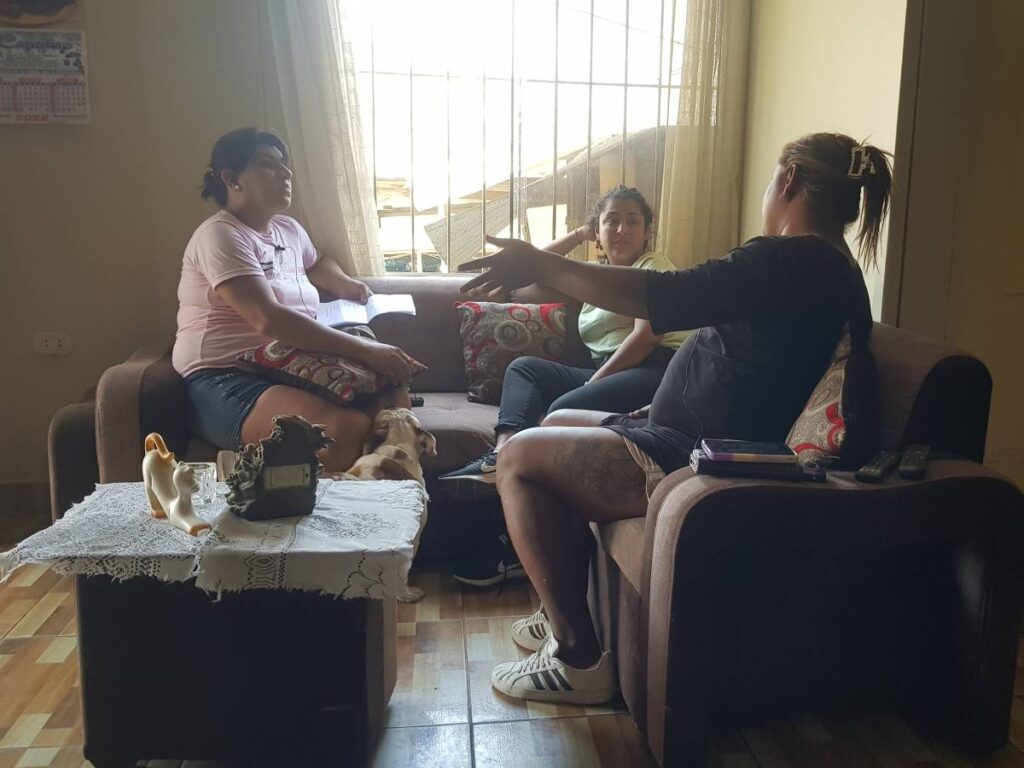
In the podcast, Débora recounts how she was her father's spoiled child until she began to fully embrace her identity. Before leaving home, her mother would delegate all the household chores to her while they went out to work.
Fernanda gave up the economic comforts that her family life provided in order to be herself, without being conditioned by either her family or her economic position.
From childhood, Sandra was known for defending herself. As an adult, she was the one who protected her female colleagues who worked on the streets.
Pierina left home to live with her partner. Her family had accepted her dressing as a woman but not her having male partners. For years she worked as a domestic worker, in precarious employment, like the vast majority of domestic workers.
“Everything that’s being talked about has been happening for years. And it’s still happening. Society itself has to acknowledge its own shortcomings. A cis woman heard it and told me, ‘My children cried. We knew this was happening and we never said anything.’ Having that awareness is a first step for society to repair a historical debt it owes to trans people,” says Maju Carrión.
Unpaid work
“Classical economics has focused on the generation of value and not on the conditions necessary for that value to be generated,” Nasheli Noriega, Regional Coordinator for Gender Justice at Oxfam in Latin America, Presentes This organization produced a report on care work. “These conditions are provided and produced within the domestic sphere, usually by women and girls. Talking about care allows us to see the whole picture and not just what generates value in the productive sphere.”
And she adds, “It may sound terrible, but for example, women are raising the future workforce that will be producing. These workers—speaking in more orthodox capitalist terms—didn't just appear out of thin air. They weren't born in a river; they were the product of the work, time, and energy invested by their mothers, sisters, and grandmothers so that they could finally go out and produce. It's crucial at a time like this to see the full scope of what caregiving represents.”
“Many feminists, rather than talking about care, speak of the social reproduction of labor. They started by talking about domestic work, then about unpaid work, and lately, technically, they talk about care. Because it also involves issues related to affections and emotions, which are very difficult to measure, especially in economic terms,” she added.
In the case of the LGBT community, these inequalities are even more profound, to the point that there are not even figures that account for how caregiving tasks are carried out among trans people, who are often expelled from their homes early on.
“It’s clear that caregiving is feminized, familial, and stratified. Feminized because it’s primarily done by women, and familial because it takes place within families, even when there are public policies in place. And that’s when we talk about families; we identify that transvestite and trans people don’t fit into the families recognized by statistical systems. They organize and structure their coexistence and survival through structures that function as families. Because they aren’t blood relatives, they’re difficult for certain statistical mechanisms to identify,” Nasheli explains.
Begin to trace the story
The story of transvestite and trans lives is often told through the lens of their deaths. That's why this podcast is valuable; it tells the story of the present-day lives of trans women living in Peru.
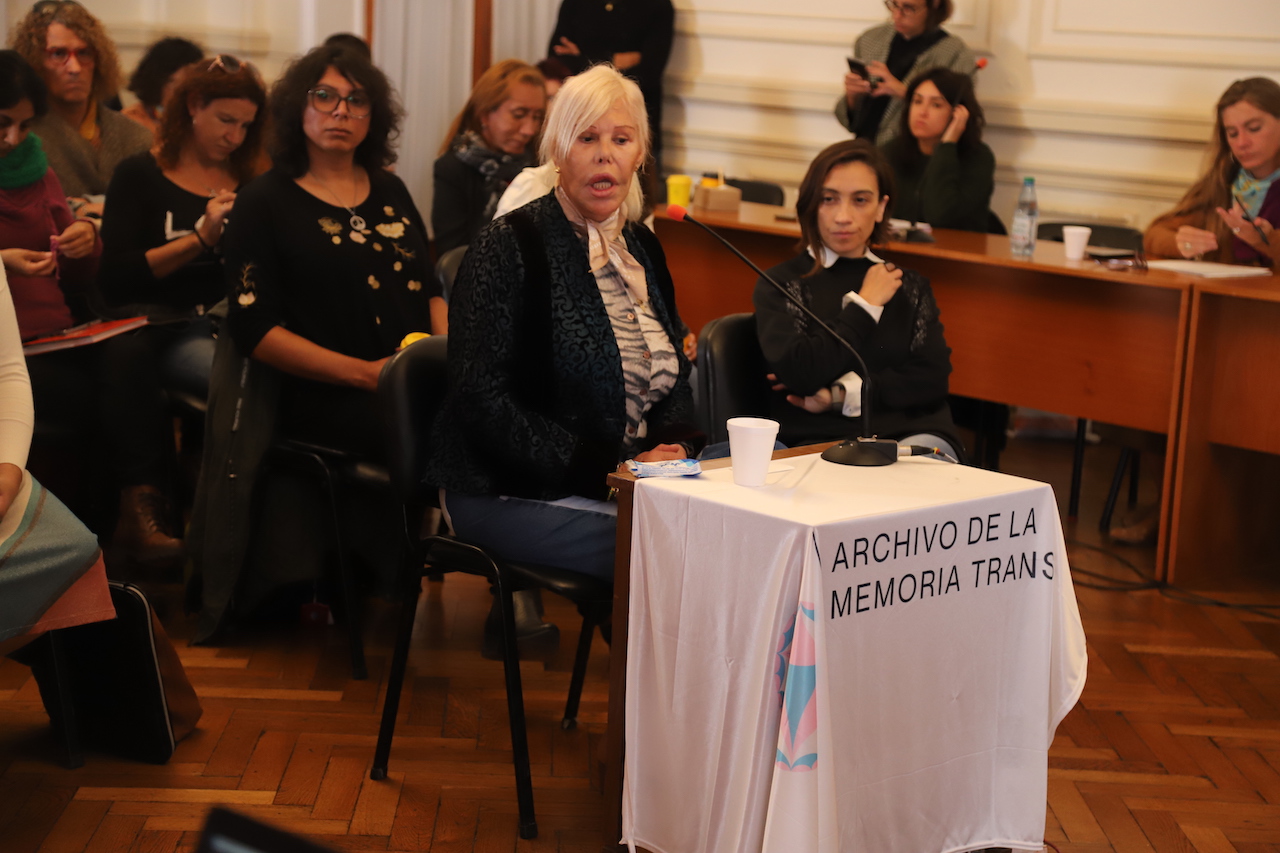
Maju states that these stories are valued today, but 20 years ago they couldn't even be told. “Society is opening up to listening and making these stories visible, and there's a revelation of historical memory, of the experiences of our comrades, of how terrible and difficult the era of terrorism and the Fujimori dictatorship of repression was. It's important to recover all these experiences and this memory,” she says.
“But there’s also a kind of trend toward revisiting experiences that were overlooked for many years. Often because other things were prioritized: the war, the economic recovery, the false welfare state that existed under neoliberalism here in Peru. Those things were valued more, and everything related to civil and human rights was largely neglected. Human rights were the last thing on our minds here; they didn’t matter, and now they’re being recovered. The good thing is that the new generations have an understanding of what our lives were like before. They have it easier now; before, it was a terrible thing.”
“We experience terrible violence from the State, which does not recognize our identity, and from there stem other forms of state violence, media violence that treats us as men when there is a transfemicide, violence from churches, and cyber violence.”
For more information:
2022 Campaign #CareUnitesUs
2020 Report: Social Organization of Care in Light of COVID-19 Social Panorama 2021 with official “updated” data from ECLAC
We are present
We are committed to journalism that delves into the territories and conducts thorough investigations, combined with new technologies and narrative formats. We want the protagonists, their stories, and their struggles to be present.
SUPPORT US

FOLLOW US
Related notes
We are present
This and other stories are not usually on the media agenda. Together we can bring them to light.