

The indigenous genocide of the "Conquest of the Desert" reached the Argentine courts
The genocide of the indigenous peoples of Patagonia during the Conquest of the Desert (1878-1890) has reached the Argentine justice system. On August 16, Ivana Noemí Huenelaf, a Mapuche-Tehuelche woman, filed a complaint with the Federal Courts of Retiro (City of Buenos Aires).


Share

The genocide of the Indigenous peoples of Patagonia during the Conquest of the Desert (1878-1890) has reached the Argentine justice system. On August 16, Ivana Noemí Huenelaf, a Mapuche-Tehuelche woman, filed a complaint with the Federal Courts of Retiro (Buenos Aires). She did so alongside her lawyer, Fernando Cabaleiro , from the NGO Nature of Rights . “To initiate a Truth Trial in order to investigate the commission of atrocious acts that fall under the definition of genocide: torture, executions, forced disappearances and abandonment of persons, illegal coercion, forced transfers, enslavement, and the abduction of minors,” states the 80-page complaint, which was obtained by Presentes.
The plaintiffs requested that “within this procedural framework a declaratory judgment be issued referring to the entire process as a Genocide and that the corresponding reparative measures and acts be ordered .”
The mandatory draw placed the complaint in the Prosecutor's Office 7 (González) and in the Federal Criminal and Correctional Court 3, (headed by Daniel Rafecas) of the federal courts of Retiro.
“There are judges and prosecutors who can listen to us.”
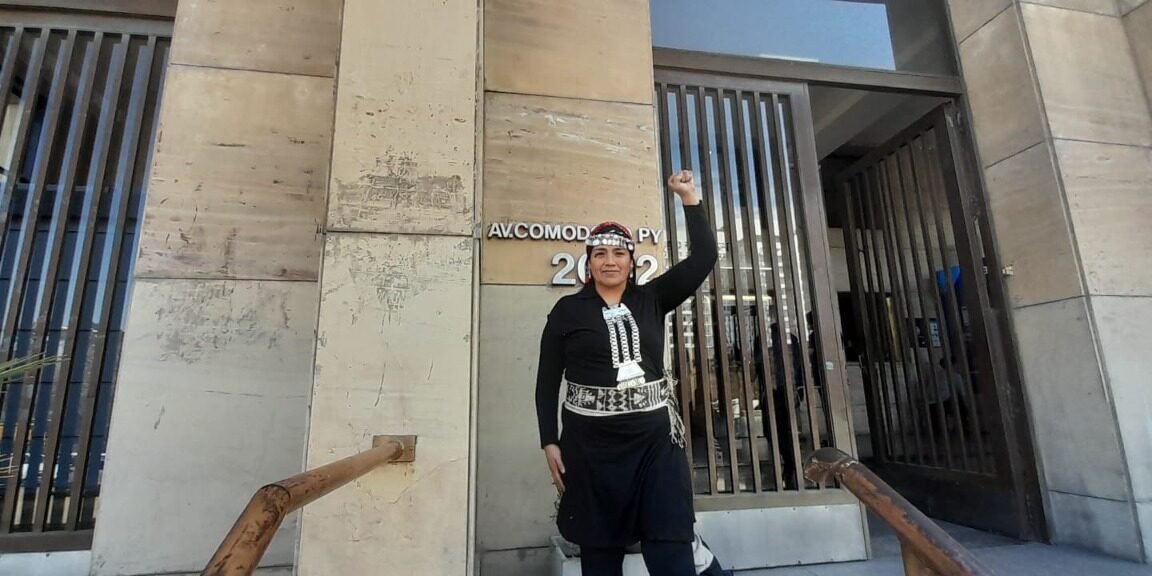
“Mari, mari,” Huenelaf greets as she leaves the Comodoro Py courthouse. “I feel the Newen (spiritual strength) because it’s very important for my people. This is taking shape. There are judges and prosecutors who may listen to us; it’s a great step forward, born from resistance . We don’t come with anger, but with pain, to heal these wounds, with the wisdom and knowledge of Mapu (Mother Earth), with people who believe in our cause ,” this Indigenous woman says calmly and with a smile. And she clarifies: “It’s not just one ethnic group, but everyone in the community, with Norita Cortiñas, who will be a witness if they accept us as plaintiffs. Their genocide had 30,000 victims; ours had 20,000. They’re going to have to get used to that number,” Huenelaf adds.
She is 49 years old, a mother of six, and a grandmother of seven. She was born in José de San Martín, a place at the foot of the Andes Mountains . She is Mapuche and Tehuelche, and she supports land reclamation efforts. She lives in Mallín Ahogado , in a community territory called Tierra y Dignidad (Land and Dignity). She works at the regional market selling homemade bread and teaches judo—a first-degree black belt—to children in Lago Puelo .
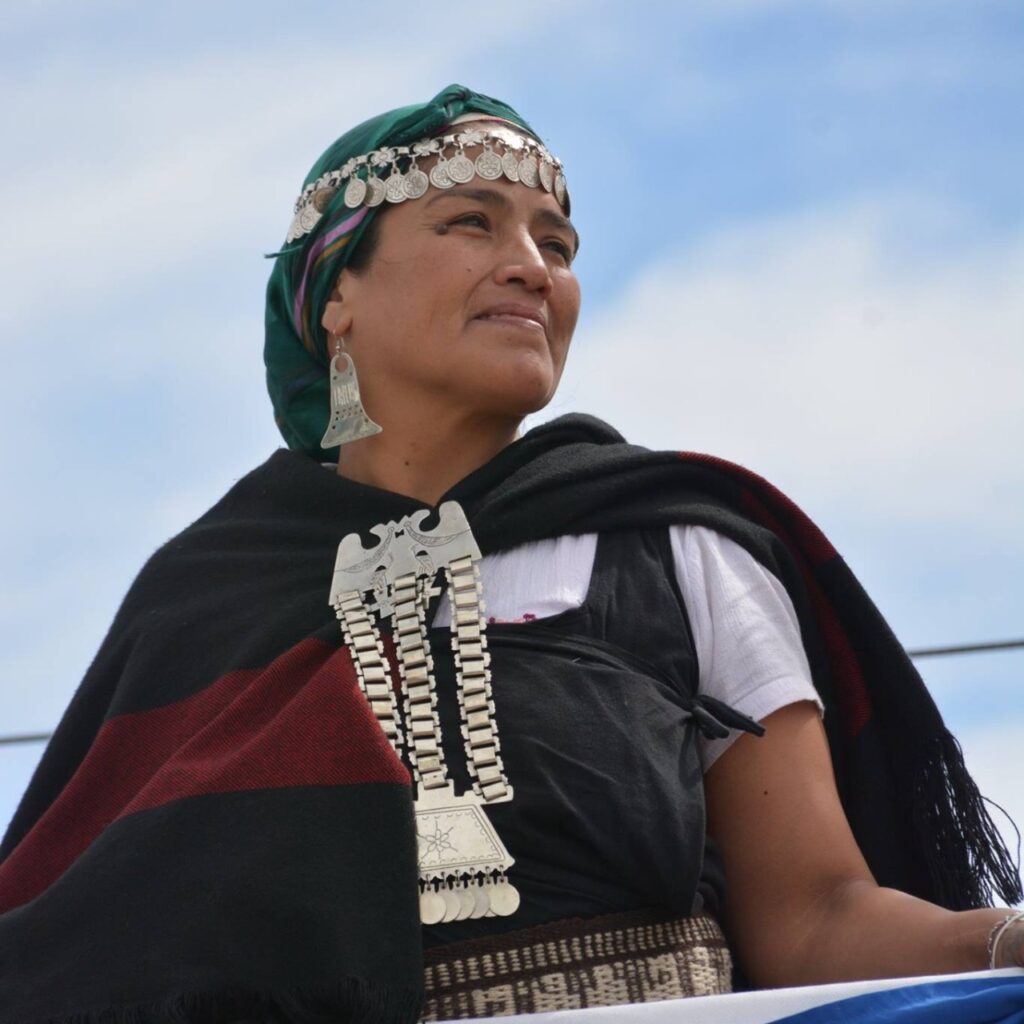
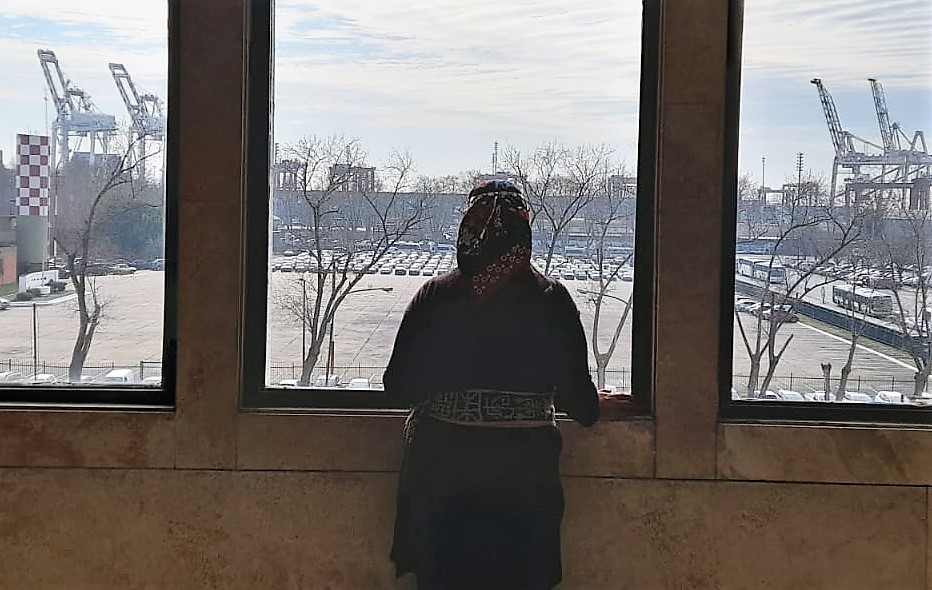
On the sunny morning of Tuesday, August 16, she wore her traditional clothing and a gleaming headband atop her jet-black hair. It caused her trouble. “As soon as I entered (the courthouse), they stopped me. I took three steps and a policewoman grabbed me to prevent me from entering. We took it calmly; we've almost become accustomed to being stopped and discriminated against because of our appearance. There was an exchange of words between the police and my lawyer, but we finally got on with what we came to do,” she recounts.
From the Desert Campaign to Benetton
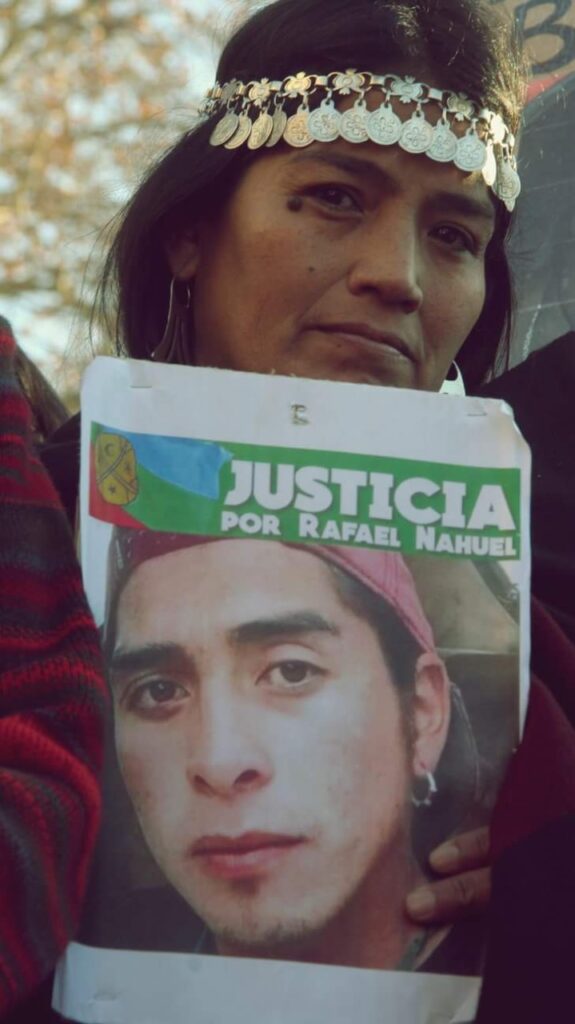
In January 2017, Ivana was among the dozen or so people who showed solidarity with the Lof en Resistencia de Cushamen when its members were violently repressed by the Gendarmerie. The repression was as brutal as during the operation in August of that year, when the anarchist tattoo artist Santiago Maldonado disappeared.
They never imagined the nightmare that awaited them afterward, when they were shot at, chased, and arrested. Ivana and the group were fired upon by Chubut police and Benetton employees. She took photos and managed to contact a lawyer shortly before being beaten and detained at the El Maitén police station. Meanwhile, prosecutor Carlos Díaz Mayer repeatedly denied their presence there. They would have remained there much longer had it not been for lawyer Carlos “Chuzo” González Quintana, who was vacationing in the area, who got them out.
“I experienced a process with a strategy not unlike that of 1879, which began the genocide we are denouncing today in Comodoro Py,” says Huenelaf. The final straw was that all these victims ended up being accused by the Italian businessman of cattle rustling and possession of explosives. Years later, they were acquitted: the evidence had been planted. That's how some things work in Patagonia.
“Because of my Mapuche Tehuelche ancestry”
“Because of my Mapuche Tehuelche ancestry, and given that the events whose criminal investigation is being urged have had and continue to have serious implications for me and my sons, daughters, grandsons and granddaughters, affecting the recognition of our original identity and community life in the ancestral territories that were taken from us,” Huenelaf requested to be admitted as a plaintiff.
What does the genocide complaint request?
Fernando Cabaleiro is a renowned environmental lawyer who became involved with the struggle of Indigenous peoples. “ We demand that the Desert Campaign, or Conquest of the Desert, be investigated as a genocide . That the State's responsibility be established.”
trials for the truth be initiated in all territories to bring the dispossession of the lands ," he told Presentes on the steps of the Federal Courts of Retiro.
It is hoped that this will be the starting point for a process of historical reconstruction at the state level, and that it will serve as support for the recovery of the territories.
Why file the complaint in these courts?
Why did they come to the capital city? “The laws and decrees were issued in Buenos Aires. Furthermore, there is Martín García Island, which functioned as a concentration camp; the initial political acts included Law 947, among others, during the administrations of President Nicolás Avellaneda and his Minister of War, Julio Argentino Roca. The seat of the Executive Branch is the City of Buenos Aires,” the lawyer replies.
What might happen if it succeeds
Should this ambitious lawsuit succeed, the events will be investigated in each jurisdiction. But the accusation encompasses all the episodes within a systematic plan. The historical foundations stem from the work of researchers at CONICET (National Scientific and Technical Council). “The State funds the investigations that demonstrate that a genocide occurred , and nothing is done; it all remains in the archives. That is why we are taking the archives to the courts, establishing the nature of the genocide ,” Cabaleiro points out.
Background: Trial for the Napalpí Massacre
For this presentation, the key precedent is the trial for truth regarding the Napalpí Massacre , which concluded in May of this year. Between 400 and 500 Indigenous and peasant victims were documented in the trial, victims of crimes perpetrated by the State in 1924 in what was then the national territory of Chaco. The Argentine National State was declared responsible as a proven fact. The ruling also declared that the Napalpí Massacre "constitutes crimes against humanity, committed within the framework of a process of genocide against Indigenous peoples ." The presiding judge understood it to be "a premeditated and planned act for which public resources were allocated."
Why was it a genocide?
The presentation states that it understands genocide to be any of the acts perpetrated with the intention of destroying, in whole or in part, a national, ethnic, racial or religious group as such.
Through Law 24,584, Argentina approved the Convention on the non-applicability of statutes of limitations to war crimes and crimes against humanity, adopted by the United Nations General Assembly.
The complaint alleges that the genocide committed by the Argentine State was “against the pre-existing Mapuche, Tehuelche, Ranquel and Pampa peoples in the Pampa and northern Patagonia within a systematic, premeditated, meticulously planned and organized scheme, executed by the Argentine State during the years 1878 and 1890.”.
This "included executions, disappearances and abandonment of indigenous people, illegal coercion, torture, cruel and inhuman acts intended to cause death or serious harm to physical and mental integrity. It also included the recruitment of women, the elderly, children and adolescents with forced transfers and displacements to concentration camps, disciplining, depersonalization and eradication of language, culture and beliefs, seeking to deprive them of their ancestral identity.".
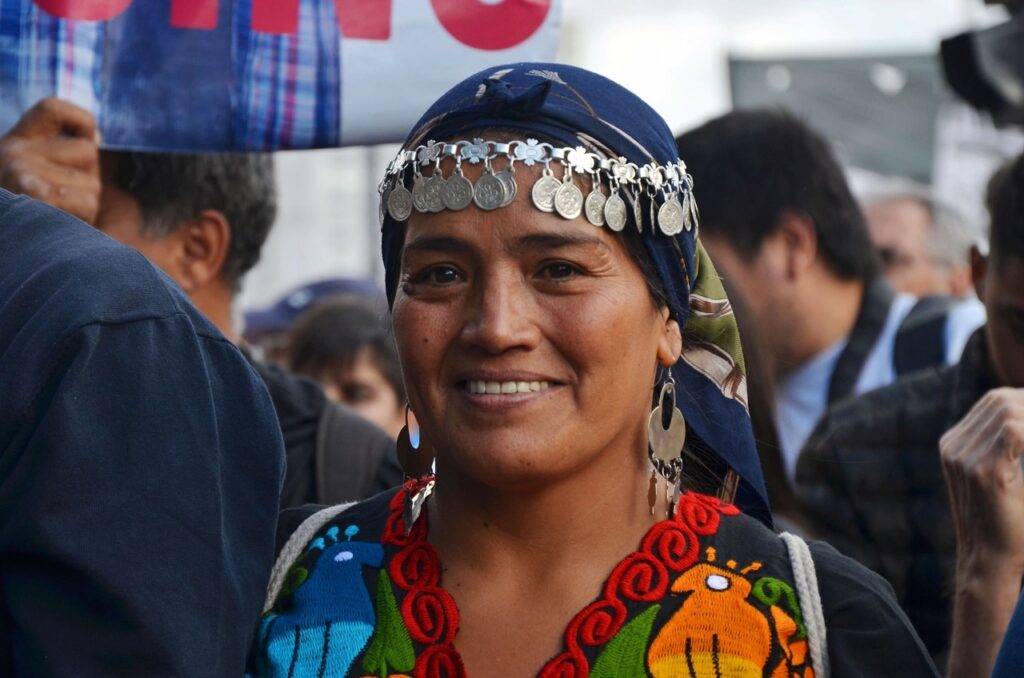
Furthermore, this was immediately followed by the division of the ancestral territory from which these peoples had been seized and dispossessed. “It became part of the Argentine State and was distributed among high-ranking members of the Argentine Army and the large landowners belonging to the Argentine Rural Society, the main contributors to the financing of the systematic campaign of violence against the indigenous peoples of the Pampas and northern Patagonia.”.
Investigate, repair and transform
According to sociologist Daniel Feierstein, understanding genocidal social practices and bringing their consequences to the legal level has effects on the level of perpetrators, victims, accomplices and beneficiaries.
The Inter-American Commission on Human Rights has maintained that in cases of crimes against humanity, States have a heightened duty to investigate and clarify the facts . In situations of structural discrimination—such as that faced by Indigenous peoples in Argentina—" reparations must have a transformative purpose. They must have not only a restitutive but also a corrective effect ."
Some figures on the extermination
The Conquest of the Desert Campaign involved the lack of recognition of "inhabited lands" by indigenous communities, and its motivation – reflected in letters between high-ranking officials of the Argentine State – shows that its purpose was the annihilation and expulsion of tens of thousands. According to President Nicolás Avellaneda, there were 20,000 indigenous people living in their ancestral territory, Puelmapu .
“Even our own dignity, as a virile people, obliges us to subdue as soon as possible, by reason or by force, a handful of savages who are destroying our main wealth and preventing us from definitively occupying, in the name of the law of progress and our own security, the richest and most fertile territories of the Republic ,” said Avellaneda in the foundations of law 947 that promoted the Desert Campaign.
After the genocidal plan was completed, Estanislao Zeballos declared, “Barbarism is cursed, and not even the traces of its bones will remain in La Pampa,” shortly after assuming the presidency of the Rural Society. His associates were the primary beneficiaries of the distribution of ancestral lands belonging to the displaced and subjugated Indigenous communities.
Roca himself specified the numbers of the expeditions “against the enemy”: 5 sovereign caciques captured and one killed, 1271 Spear Indians captured, 1313 Spear Indians killed, 10539 Chusma Indians (women and children) captured, and 1049 Indians resettled. “This results in a total of 14,172 Indians suppressed from the pampa. Not including the considerable number of Indians killed in the pursuits and from starvation in the desert,” he noted.
Massacres, concentration camps and enslavement
Huenelaf said in Cabaleiro's text that "it is a crime that as a systematic action recognizes its execution simultaneously and consecutively in several points of the country, given the formation of concentration and confinement camps, disciplining and subjugation of human beings in which said crimes were carried out.".
Perhaps the least known chapters of this story are those referring to "the children taken prisoner during the military campaigns to occupy the indigenous territory of the Pampa and Patagonia and distributed as virtual slaves during the consolidation of the modern liberal state in Argentina," the complaint states.
Right to know the truth
Although the intellectual and material authors have died, the plaintiffs believe that “ the Argentine State bears responsibility for the atrocious, perverse, and bloody consequences that this campaign has had and continues to have in the living memory of every member of the Mapuche, Tehuelche, Ranquel, and Pampa peoples. This responsibility is inevitably exacerbated by the lack of explicit state recognition of the genocide that this campaign has entailed, coupled with the constant policy of denying the rights of Indigenous peoples to truth and historical reparations, to their own identity, to the recovery of their ancestral territories, and to the development of their Indigenous personality and worldview—human rights whose violation persists despite the constitutional text.” In this sense, this process is framed as a Trial for Truth, without any punitive intent against any defendant.
The Office of the High Commissioner for Human Rights (OHCHR) concluded in 2006 that the right to know the truth about gross violations of human rights and serious breaches of human rights standards is an autonomous and inalienable right , linked to the obligation and duty of the State to protect and guarantee human rights, conduct effective investigations and ensure that there are effective remedies and reparation is obtained.
We are present
We are committed to journalism that delves into the territories and conducts thorough investigations, combined with new technologies and narrative formats. We want the protagonists, their stories, and their struggles to be present.
SUPPORT US

FOLLOW US
Related notes


We are present
This and other stories are not usually on the media agenda. Together we can bring them to light.