

Transfemicide of Sofía Vera in Río Negro: they are looking for the perpetrator of the hate crime
Sofía Vera, a 42-year-old trans woman, was murdered in General Roca (Río Negro). Her killer is on the run.


Share

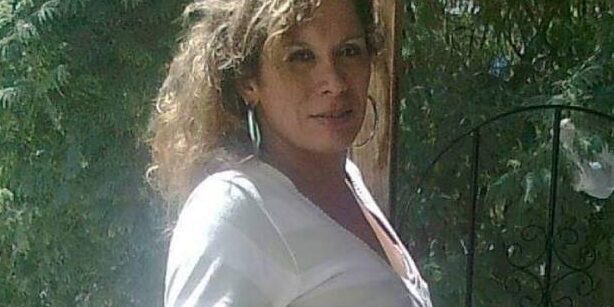
BUENOS AIRES, Argentina. Sofía Vera, a 42-year-old trans woman, was shot and killed on the night of Friday, August 12. She was standing in the doorway of her home in the El Porvenir neighborhood of General Roca (in northern Argentine Patagonia) with her partner, who was also shot.
The perpetrator has been identified as Emanuel Kaigar and remains at large, sources from the General Roca Prosecutor's Office No. 7 told the media. What is known so far is that the assailant was arguing with his ex-partner, who lived near Sofía. Hearing the shouting and the argument, Sofía came out of her house, and it was then that Kaigar shot her and her partner.
So far, the prosecutor's office is trying to locate the assailant, who has a criminal record. In 2015, he committed a homicide while on parole. Prosecutor Ricardo Romero also told the press that there is sufficient evidence . "The crime is clear in its methodology, that is, what happened and what the motives were," he stated. He also reported that Kaigar is involved in some type of drug trafficking activity.
"It was a hate crime"
Amira Cerda is an activist and member of the Association of Trans and Sex Workers (ATTS) in Cipolletti, Río Negro. “We see this as a hate crime. And we condemn the way it was publicized. Personally, it still upsets me deeply that they continue to refer to us as male, completely ignoring our self-perception,” she told Presentes. “We are concerned about the way the media reported it,” she added.
Amira considered it a transphobic murder. She also believed that the media failed to comply with the Gender Identity Law (No. 26,743) , "completely ignoring Sofía's self-perception and gender expression."
More public policies against discrimination
“ Discrimination continues to happen. This occurs because there are no public policies regarding us . I see that violence is constantly being generated in society. You can see it clearly in the media; they don't help either,” the activist said.
What hurts her most is continuing to “bury comrades in these situations,” without the possibility of seeing them grow old. “We don’t see an adult trans comrade. I’ve never seen a comrade die in old age. It breaks my heart the way she died because it was a hate crime,” she said.
Justice for Sofia
Pamela Andrea Quezada is a member of Conciencia VIHda in Neuquén and part of ATTS in Río Negro-Neuquén. She met Sofía when she arrived from Chile 22 years ago. “We used to play at being sisters. We had a huge affection for each other, a lot of affinity. As migrants, and not having family here, we were very close,” Pamela told Agencia Presentes.
Sofía grew up in Juan José Gómez, a town in General Roca, Río Negro . She met Pamela in Neuquén, a nearby city, 45 km away. Both were sex workers in the area.
“I knew who her family was, who her mother was, who her siblings were. We always looked out for each other and were always together. Lately, with a lot of effort, she managed to get her own house and she was there. We didn't talk much lately because she was also prone to losing her cell phone,” Pamela recalls with a smile.
“At 13, Sofía was already 'a well-known queer person,' as we say. Her family accepted her transition, especially her mother. She got along well with her family; when she took me to her house for the first time, I saw how much they loved each other. She had a good childhood, a good transition. She was accepted by her family,” she recounts.
Regarding their sex work, Pamela points out that in Neuquén there has been more progress in terms of sexual diversity and gender identity, and there are not as many situations of violence, that there is a little more protection, while in Roca that violence is still common.
“From experience, what we do is try not to get involved with violent people so that things don’t happen to you. Sofi was an angel to me; it’s hard to believe she suffered so much violence. She didn’t generate violence,” says Pamela.
“I hope justice is served for the man who killed her. Because it has already happened to us; other colleagues have been murdered and nothing was done,” she concludes.
We are present
We are committed to journalism that delves into the territories and conducts thorough investigations, combined with new technologies and narrative formats. We want the protagonists, their stories, and their struggles to be present.
SUPPORT US

FOLLOW US
Related notes


We are present
This and other stories are not usually on the media agenda. Together we can bring them to light.