

A trans woman died due to lack of medical attention in an Argentinian prison.
Sasha was 38 years old and had been experiencing health problems since December, following a beating. In prison, they claimed she was faking her injuries to gain privileges.


Share

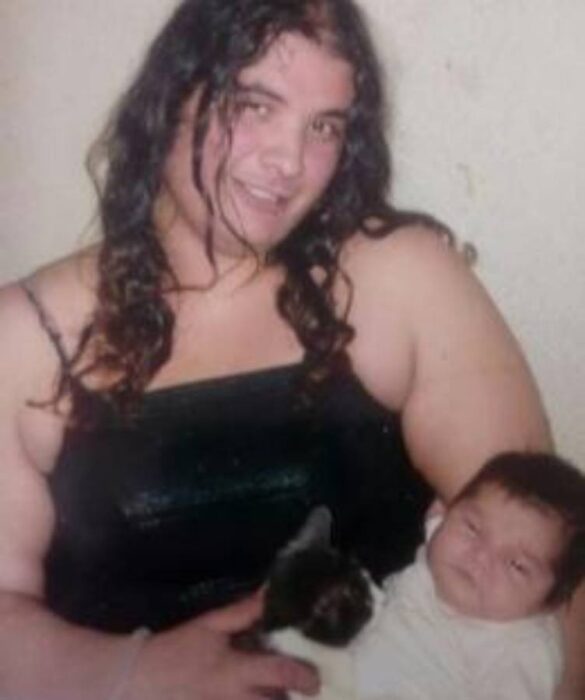
BUENOS AIRES, Argentina. Sasha Barrionuevo was 38 years old, with 13 siblings and 35 nieces and nephews. Like many trans women, she found no other source of income than prostitution. For a long time, she had to deal with police abuse on the streets of Mar del Plata. She spent the last year and a half of her life in prison. She suffered and reported beatings. Her body gave multiple warning signs, but she was accused of faking it. She died in the hospital, almost simultaneously with the signing of her release order. Her agony was the key to getting out of prison. To washing their hands of her, when it was already too late.
Sasha died on July 20 at the Dr. Oscar Alende Interzonal General Hospital (HIGA). She had been transferred there while detained at Unit 44 of the Batán Prison Complex. She had lost over 30 kilos recently, was losing her vision, and had almost no mobility when she was taken on a stretcher to receive care outside the prison. The Provincial Commission for Memory (CPM), which had been monitoring her situation, is demanding an investigation into the causes of her death and the impact of the lack of access to healthcare.
“She told me she felt very sick. She lost 35 kilos abruptly. She was vomiting, had vision problems, and was disoriented. But she and her fellow inmates said that the prison staff didn't believe her . Because of an underlying illness, her immune system was compromised. They should have tested her for meningitis, tuberculosis, everything. Why didn't they take her to the hospital? They just left her there. Her death could have been prevented ,” says Yésica Gómez, one of Sasha's many nieces, indignantly. They were almost the same age and very close: “We grew up together.”
The hit and the fall
Last December, Yésica saw the videos Sasha sent after a crackdown at Unit 54, where she was being held at the time. “You can see them hitting her. The trans women were telling them not to hit her. You can hear someone say they had marked her face, that they had bent one of her fingers. She was even heavier then,” Yésica says about her aunt. After that, the weight loss and decline began.
“ We met Sasha on December 22nd at Unit 54. She contacted us because she had been severely beaten by the prison service. She suffered a blow to the head and began having problems with one eye. We made several requests for healthcare, but she was never seen by an ophthalmologist , which was what worried her,” says Antonella Mirenghi, director of the CPM's Committee Against Torture .
From that location, they saw Sasha again in June. “She was very deteriorated, she had difficulty speaking. She was under the effects of medications whose names she didn't know. That's when we decided to check her medical records and inquire about her health. The doctors from the U44 Health Department told us that, in their opinion, it was a hoax. That she was faking it to gain some legal advantage. We consulted with the director, and he told us the same thing ,” Mirenghi explains.
And she emphasizes: “They didn’t consult an outside doctor. She didn’t have any consultations. In 15 days we saw her again in a more critical condition. Her colleagues told us that many times she didn’t want to get up. She had deteriorated significantly in less than a month.”
Faced with this situation, the CPM filed a habeas corpus petition . “ That same day, they took her to the hospital. They started treating her, first for tuberculosis. They isolated her for that, but then the tests came back negative. She was hospitalized for ten days. It was a complete decline, until she died on July 20 ,” Mirenghi recounts. “Her family says that hours before her death, her sister signed Sasha's release papers, which had been granted by the Oral Criminal Court No. 3 of Mar del Plata . And her family says that as a result of that December repression, her health had worsened. We can't say for sure that was the cause, but the family could tell that something was wrong,” she explains.
Go die at home
“We already buried her. But we want an autopsy. So we can see that they let everything go wrong. There were rumors in the prison that they were letting her die,” says Yésica, Sasha’s niece. She also recounts that “they were going to give her house arrest, but it was denied due to environmental conditions. Because she didn’t have an electricity meter and couldn’t go to that house (in Barrio Centenario) with the electronic monitoring bracelet. But lately there were rumors that they wanted to send her home, even though the permit was denied. So she wouldn’t die in there.”
Sasha's niece maintains that "when they put her on the ventilator, the prison service was in a hurry to leave and have her handcuffed. They released her, and she died. By releasing her, the prison service was no longer responsible. That's how they washed their hands of it." She also alleges that her aunt "wasn't properly registered at the hospital. She was a ghost. Someone from the administration had to go and verify that she was there. There was someone else listed with the same name, but already discharged."
The case is being investigated by the Mar del Plata Prosecutor's Office No. 10, which specializes in crimes against public administration. “In theory, the investigation was going to focus on the doctors' actions and the neglect of healthcare. And we're going to insist on this; we're considering joining the case. We're in daily communication with the prosecutor's office and we're going to continue submitting and requesting evidence. We want family members and fellow inmates to be called to testify about their state of health,” says the director of the CPM's Committee Against Torture.
What happened to Sasha, Mirenghi points out, “is not an isolated case. The prisons in the Province of Buenos Aires are experiencing a health crisis that worsened during the pandemic. And in this population, which already enters with a history of violence and deteriorating health—given everything we know about the trans and travesti population—those who don't enter with underlying health conditions get sick inside, and those who enter already ill see their conditions worsen in confinement.”
“Prison weighs heavily on the entire population, but especially on women and gender-diverse people,” told this agency some time ago . She added: “Because prisons are built, were designed, for men… Trans or cis women who arrive in prison have generally already been violated, and in most cases, have suffered gender-based violence. Almost all of them. You find it in each of their testimonies. And they continue to suffer it inside.”
In line with the concerns raised by other organizations such as the Center for Legal and Social Studies (CELS) and the Gender and Diversity Team of the National Penitentiary Ombudsman's Office (PPN), the CPM representative questions the fact that “ there are no policies designed for the trans and travesti population, with all the specific support they need for their health conditions and considering accommodations appropriate to their gender . Within the prison system, their health conditions worsen, their hormone treatments are interrupted, and they go unmonitored—something we have been denouncing. There is a very high level of criminalization of this population, and 70% in the Province of Buenos Aires are incarcerated for drug trafficking or possession .” As happened with Sasha.
To mother nephews
Before her arrest, Sasha spent every Sunday at her sister Romina's house. She was closest to Romina, the mother of five of her 35 nieces and nephews. “She was a very present aunt. She gave her nieces and nephews everything, bought them everything. They were like her children. She always said so. That I was their second mother,” Romina Barrionuevo says, her voice filled with emotion. And she clarifies: “She wasn't just my sister. She was my best friend, my mother. She was everything to me. They let the wrong person die.”
Romina says that Sasha began her transition around age 13. At first, she hid it from her mother and father. But when they found out, they accepted her. “There was no discrimination in the family,” she says. In other areas, there was .
“Before she was arrested, we were working on her paperwork because she was applying for disability pensions due to a minor disability in her hand and foot, and another pension because she has HIV. I can’t believe so much discrimination, given how difficult it is for a trans woman to get documents. She had to legally change her gender; they asked for her birth certificate, they put up so many obstacles, and I never managed to do it,” Romina laments.
Sasha “wanted to leave prostitution and live off her pension. She didn't want to prostitute herself anymore. She suffered violence, especially from the police, like all trans women. They would stop her and accuse her of selling drugs. She was arrested for that. But she used drugs, she didn't sell them. They were constantly beating her. She was big, and sometimes she would move around and ten police officers would grab her. That's why she went from her spot to her house and from her house to her spot. Nothing more,” her sister recounts. The life change Sasha sought was cut short.
We are present
We are committed to journalism that delves into the territories and conducts thorough investigations, combined with new technologies and narrative formats. We want the protagonists, their stories, and their struggles to be present.
SUPPORT US

FOLLOW US
Related notes


We are present
This and other stories are not usually on the media agenda. Together we can bring them to light.
3 Comments