

What is life like for a transgender teenager in El Salvador?
Scarleth is 16 years old and began her transition two years ago. Her family and educational experiences in a country that denies gender identity.


Share

SAN SALVADOR, El Salvador. The mandatory COVID-19 lockdown in El Salvador was an opportunity for teenager Henríquez to reflect on her previously repressed identity. All the time she had to think allowed her to decide to show the world her feminine expression. From now on, she would be called Scarleth Camila.
With school classes suspended and other activities limited, Scarleth Camila Henríquez spent most of 2020 searching for information on her mobile phone about how to define the identity she had felt since childhood. On the popular social network TikTok, she found a variety of content from transgender teenagers that answered most of the questions she had at that time.
A tall, thin woman
“I think if the pandemic hadn’t happened, I’d still be repressed. The pandemic helped me a lot because I was at home, nobody was going out. I posted what I wanted and I didn’t get any negative comments. I just deleted the ones I got on social media,” the 16-year-old Presentes
Despite her family's resistance and refusal, she always imagined herself as a tall, thin woman: "That's what I am now," she said proudly.
She says that Lady Gaga's music reminds her of happy moments from her childhood, because of its lyrics with messages of celebration and acceptance of diversity. She affirms that her songs are like anthems that accompany her in her transition to her female identity.
also used social media to publicly express her desire to begin the process of adopting a new identity, something she had been forced to postpone since childhood. Her family tried to dissuade her, but Scarleth's decision was unwavering.
“My family reacted badly. They told me I was confused, that it was a phase, that when I was older I would change, that I should try a woman so I wouldn't feel confused, and that by law I had to like women,” she recalled.
Transition in a conservative country
El Salvador is deeply conservative. The Catholic Church and various Christian denominations wield significant influence over the executive and legislative decisions of the Central American country.
The Nayib Bukele administration recently sent the draft "Growing Together" Law to Congress. This bill included recommendations from the United Nations Population Fund (UNFPA) to include gender identity and sexual orientation in the prohibition of psychological or psychiatric medical treatments. However, anti-rights groups pressured the government, and this provision was removed from the final version.
In 2018, the draft Gender Identity Law was presented to Congress. In 2021, it was shelved by members of the ruling party, Nuevas Ideas . They justified this by saying it was an outdated proposal that did not reflect the country's reality. That same year, an updated version of the proposal was submitted again, but it has not yet been discussed in the relevant committee.
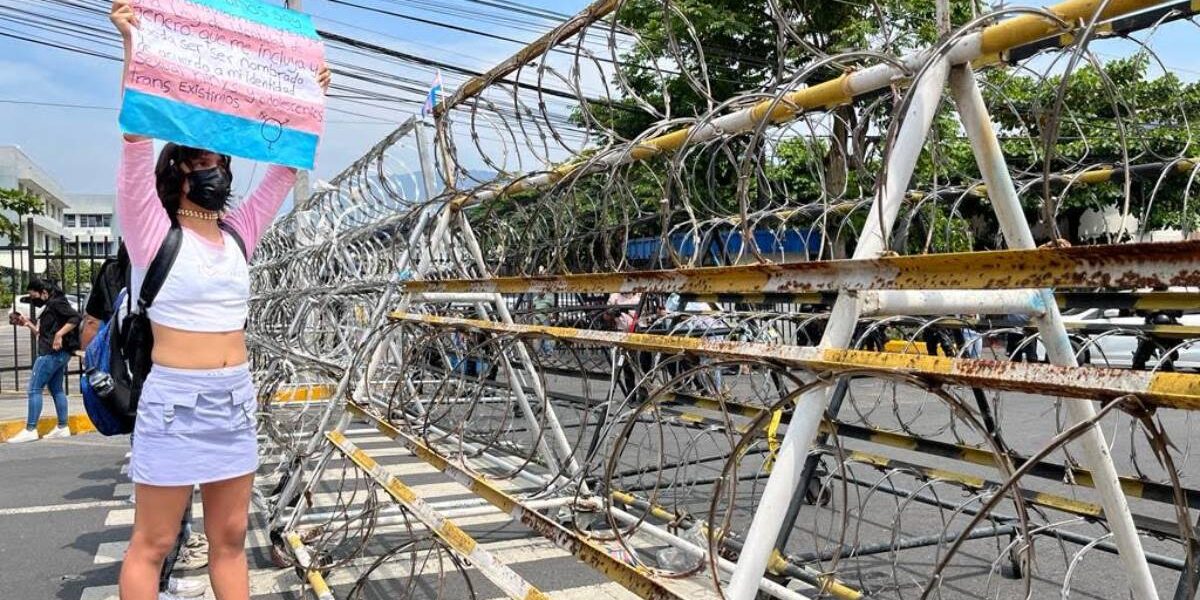
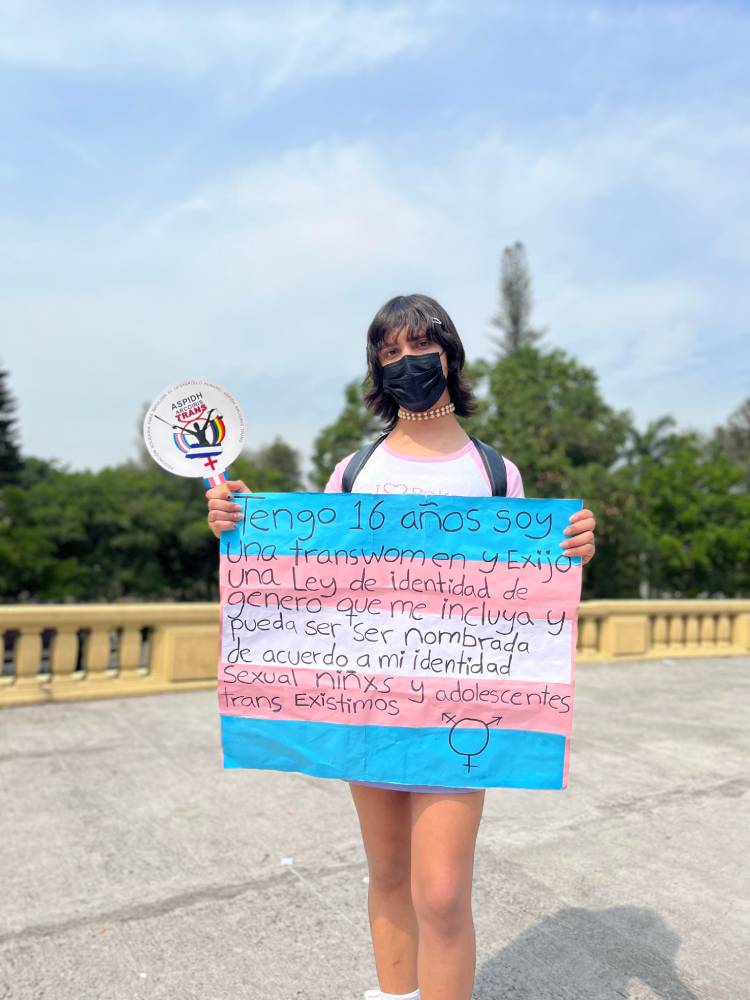
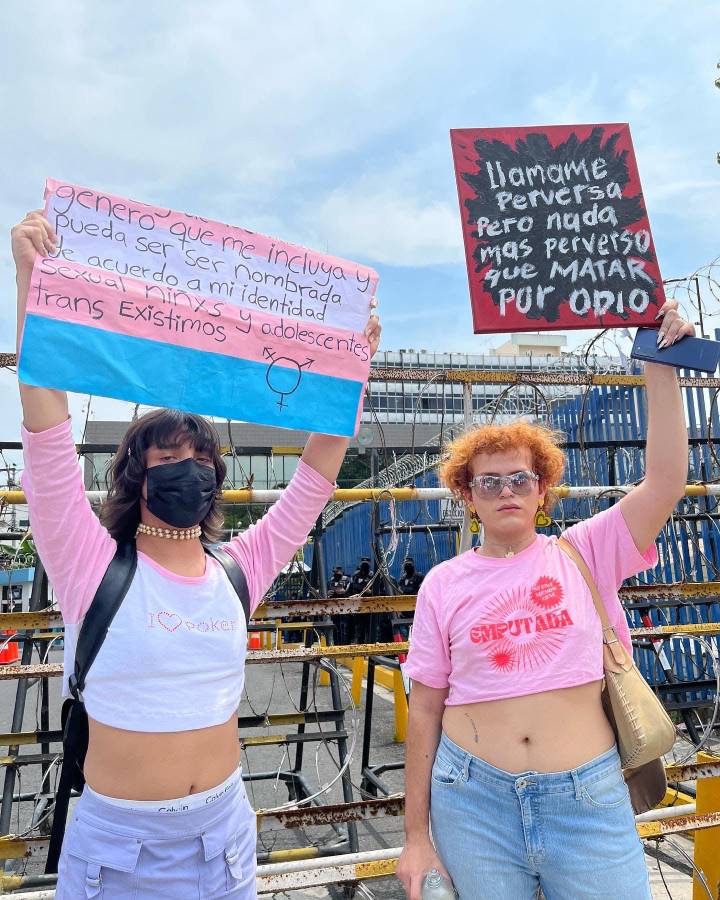
For Scarleth, having a Gender Identity Law is essential for her life. During the 12th march against transphobia, she prepared a sign and walked through the streets of the capital demanding its prompt approval.
“The identity law is important because we are citizens, we have value in El Salvador. All my trans friends and brothers pay taxes and their rights are not valued,” Scarleth said at the first march she had ever participated in.
In favor of all rights
According to the organization Communicating and Empowering Trans Women in El Salvador – COMCAVIS Trans , they have served between 30 and 40 transgender adolescents . The country does not have disaggregated data by gender identity, sexual orientation, and gender expression.
“I think people’s mindsets are changing now because there’s more visibility, but there’s still a long way to go. A gender identity law would be a huge boost for us because it would prevent discrimination in jobs or schools,” the teenager emphasized.
In addition to fighting for the recognition of the rights of the LGBTI population, the young woman is committed to the cause of the decriminalization of abortion in a country with one of the harshest laws against women who suffer obstetric emergencies.
Pronoun, transition and family
For Scarleth, having the support of her family is vital to continuing her transition process. She lives with her mother and older brother. Despite having very deep religious values, Scarleth's mother supports her with some restrictions on clothing. Her transition has been primarily supported by her father, whom she visits regularly.
“I told my mom via WhatsApp when I was 14. When I saw all the LGBT empowerment, I thought it was the right time, so I did it. My dad told me he would always love me just the way I was. My mom didn't take it very well because of her religion. She told me she accepted me, but that I should respect the house and not come home in a skirt,” Scarleth recalled.
For many LGBTI people, their families become the main perpetrators of violence. They discriminate against them and expel them from their homes because of their identity, orientation, and expression, causing irreversible psychosocial harm in many cases.
The role of families
The report “Current conditions of the LGBTI population 2020 – 2021” , prepared by Comcavis Trans, reflects that 56 percent of a total of 244 people surveyed suffered internal forced displacement due to threats from violent gangs that still dominate the communities.
With her transition, Scarleth asked her family to call her by her feminine pronouns, but they still don't use them as often as she would like. El Salvador lacks public policies to prevent discrimination against LGBTI people, and the refusal to use pronouns that align with her gender identity has led to violence in schools, hospitals, and government offices that refuse to respect her.
“My entire trans journey has been alone. I think it would be easier if my family were with me. I think my life has been super easy, while other trans people are kicked out of their homes and have to find somewhere to live and work. It's awful not having information about trans health,” said Scarleth.
“I always take the positive side of life. I feel that my life is privileged; others are kicked out of their homes, beaten by their own parents because of the machismo that exists,” she added.
El Salvador, which reports high rates of discrimination and murders against LGBTI people, had until June 2019 Presidential Decree No. 56, which prohibited discrimination based on gender identity and sexual orientation in all state institutions.
However, after Nayib Bukele's inauguration, the president eliminated the sexual diversity directorate where complaints of human rights violations against the LGBTI population were handled.
School without a protocol for serving the LGBTI population
Article two of the General Education Law of El Salvador establishes that the regulations, which must be strictly followed, should promote respect for human rights and urge the fight against all spirits of intolerance and hatred in educational facilities; however, the practice is far removed from this mandate .
Scarleth had to drop out of school in 2018 due to discrimination from other students. She stayed home for a year until she resumed in-person classes in 2019 and virtual classes in 2020 during the mandatory pandemic quarantine.
According to “National Population Estimates and Projections 2005-2050 and Education Censuses,” some 31,000 students were not enrolled the same year that Scarleth withdrew.
Since the start of the 2021 school year, classes have been a hybrid of in-person and virtual learning. Scarleth has had to attend classes in a male uniform and is called by her birth name. She also asked teachers to call her by her female pronouns, but her request was ignored.
“I would like there to be a gender identity law because at school I said that my pronouns and my name had to be respected because I'm not going to be the first or the last trans person in the school. A few years ago there were two trans people in my school and one of them was bullied terribly,” said Scarleth.
A law for education
The Descriptive Diagnosis on the situation of LGBTI people in the Jorge Lardé School Center in the capital, carried out by the Association of Women for Dignity and Life – Las Dignas , indicates that the student population with dissident identity and orientation suffers verbal violence, marginalization, exposure of sexual orientation without their consent, harassment and invalidation.
The people consulted for the preparation of the diagnosis revealed that the bullying at the educational center caused them problems with concentration, non-attendance at classes, insomnia, fear of going out on the street, self-blame and finally school dropout.
“At school I have felt great support from my classmates, even though there are people who are transphobic, but I don’t associate with them,” Scarleth said.
The report “ We just want to get ahead, the need for legal recognition of gender identity in El Salvador ,” by the international organization Human Rights Watch , points out that it is necessary for Congress to legislate to allow trans people to adjust their name and sex on identity documents.
Presentes contacted the Ministry of Education's communications department, but no response was received by the time of publication.
A seed by Marsha P Johnson
Scarleth wants to be a lawyer to defend vulnerable people. She wants to write a memoir. She eagerly anticipates taking guitar and English lessons, finishing her studies, working, and adopting a baby. She firmly believes that Salvadoran society will change and become more tolerant of dissident identities and orientations.
“In the future, I don’t want to find myself on the street and have someone kill me just for being trans. I feel that things are changing socially right now. When I go out, I don’t hear transphobic comments, which obviously exist, but not in my experience. I feel like I want to follow the path that Marsha P. Johnson ; she inspires me,” Scarleth pointed out.
In 2015, the Salvadoran congress approved a reform to articles 129 and 155 of the penal code to recognize crimes based on sexual orientation, gender identity and expression.
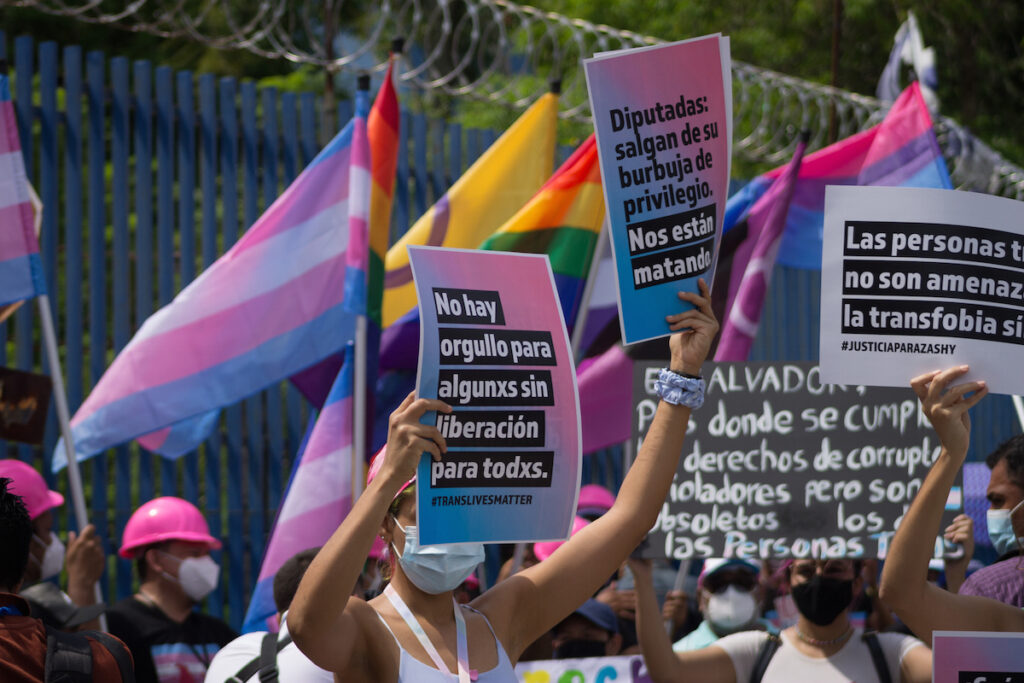
Most cases have been dismissed in the country's courts. Only five of the 600 murders of trans women that have occurred since 1992 have gone to trial: Camila Díaz, Anahy Miranda, Tita Andrade, Sayuri Orellana, and Daniela Rodríguez.
The ruling in favor of Camila Díaz was the first conviction in the Central American country. In February 2021, three members of the Mara Salvatrucha MS-13 gang were sentenced to up to 66 years in prison for the murders of Sayuri Orellana and Daniela Rodríguez. Neither ruling considered the aggravating circumstance of a hate crime.
In 2021, COMCAVIS Trans reported seven murders against the LGBTI population: one trans man, four trans women, and two gay men.
We are present
We are committed to journalism that delves into the territories and conducts thorough investigations, combined with new technologies and narrative formats. We want the protagonists, their stories, and their struggles to be present.
SUPPORT US

FOLLOW US
Related notes



We are present
This and other stories are not usually on the media agenda. Together we can bring them to light.