

Peru's legislative branch is moving against the rights of women and LGBT people
In the Peruvian Congress, they are reviewing different bills that imply a setback in terms of rights.


Share

LIMA, Peru. Peru is facing the worst attack on the rights of women and LGBTQ+ people carried out by a conservative-majority Congress.
What anti-rights groups, led by the disinformation campaign "Don't mess with my children," failed to achieve in civil society, their politicians in the Legislative Branch are now accomplishing.
The few progressive members of Congress are powerless to counter them. Here we review what has been approved and what is planned for approval in Parliament:
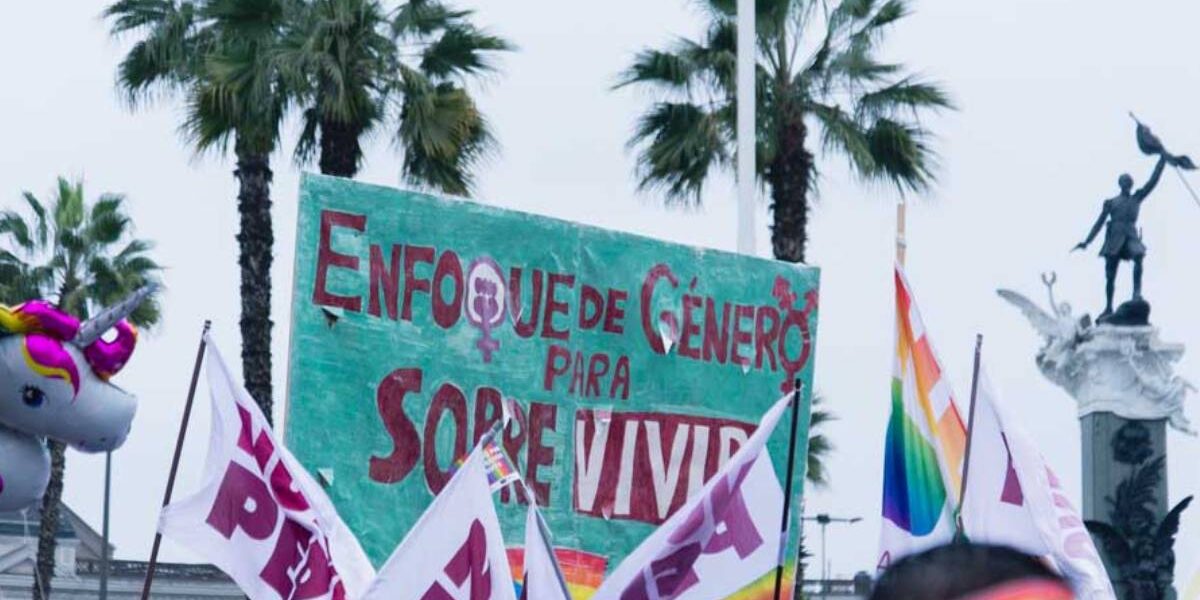
Against the gender approach: Approved
Law No. 31948 promotes the quality of educational materials and resources in Peru . Under this pretext, the Ministry of Education may restrict its authority and require parental approval before publishing books for students in public primary and secondary schools.
This is done through a registry of leaders where representatives of parent-teacher associations will register. The proponents of this law seek to allow conservative groups to join in order to censor the gender perspective, comprehensive sex education, and any reference to contraception or sexual diversity.
This possibility of intervention by external parties, not specialists in content design, created by professionals, generates an insurmountable obstacle to the publication of these texts.
As stated in Article 5, paragraph 1 of the law, “officials and civil servants in the education sector may not approve or publish educational materials, texts or resources whose content violates the principles provided for in Article 2 or in whose preparation the parents of the family have not participated, in accordance with the terms provided for in this law.”
An evaluation of the observations
Furthermore, “the public entity must communicate the detailed result of the analysis and evaluation of the comments and observations received to the organizations that submitted them, after which the representatives of the parents' organizations have a period of 10 business days to express their agreement, and said public entity is enabled to publish or approve the educational materials, texts and resources subject to the procedure in case there is no challenge to the aforementioned result.”
And if this doesn't happen, then the texts "will cease to be distributed, published, displayed, or—in general—any action that involves their dissemination to students or the educational community will be suspended, and those responsible for the creation of said content will be subject to administrative sanctions determined by their superior." A vicious cycle without end that will only result in the texts never being published or being published with biased, partial, incomplete, or erroneous information.
In response, a student has filed an injunction against this law for endangering fundamental rights such as access to education, information, freedom of expression, opinion, among others.
Against sexual and reproductive rights in committees
Bill No. 785/2021-CR proposes that the phrase “the unborn child has the right to life and respect for its dignity” in Article 1 of the Peruvian Civil Code be amended to read: “Human life begins at conception. The human person is a subject of law from conception. The Peruvian State recognizes and guarantees respect for the dignity of the unborn child, as well as its right to life, to its own identity, to mental and physical integrity, and to its free intrauterine development.”
In turn, Bill 1520/2021-CR, which promotes the protection of pregnancy, the pregnant mother, the unborn child and their family environment, proposes to prioritize pregnancy and the life of the conceived child over the life and health of the pregnant person, even if she is a girl or adolescent.
These conservative proposals seek to recognize the unborn child as a human being, granting it a distinct identity and personality separate from the pregnant woman. This violates her reproductive rights and hinders her access to safe abortion, including therapeutic abortion, which is the only legal abortion in Peru. In doing so, it endangers the lives of girls, adolescents, and women.
Against mothers who report abusive fathers: in committees
Bill 1090 creates, implements, and establishes the National Registry of Obstructive Parents (RENPROB), under the jurisdiction of the Judiciary. This proposal aims to prosecute and punish mothers who attempt to protect their children from fathers accused of abuse.
Bill 1096 regulates shared custody of children and adolescents. This proposal seeks to make shared custody mandatory, even if the parents have been accused of assault, physical, psychological, or sexual violence, or are failing to pay child support.
Bill 1120 guarantees the application of shared custody by amending the Children and Adolescents Code. This proposal seeks to modify Articles 81, 82, 83, 84, 85, 87, 88, 91, 93, and 97 of the Children and Adolescents Code, so that both parents have mandatory shared custody, even in cases of violence. It also aims to infinitely alter mediation processes and court rulings, and remove judges' authority to assess the well-being of their children, among other changes.
Bill 1687 aims to modify the Child and Adolescent Code regarding shared custody, and was subsumed under Bill 1120.
All these projects were approved by the Plenary of Congress, the law was observed by the Executive Branch and its approval by insistence is expected.
Against the ministry of women
Another bill, number 1229 , establishes as a matter of public necessity the renaming of the Ministry of Women and Vulnerable Populations to the Ministry of Family and Vulnerable Populations. The argument is that it “allows for highlighting and giving due importance to the other vulnerable groups that are part of the same family unit.”
According to this proposal, including "Women" in the ministry's name leaves children and the elderly unprotected, which would change if the name were changed.
Ultimately, the goal is to ignore the historical, structural, and systematic violence suffered by women, to subsume them within the family environment, and to perpetuate them in a reproductive role.
Against the use of neutral bathrooms
Following protests and international ridicule, Congress reversed its decision and approved the OAS holding its General Assembly in Peru. The agreement was approved with "reservations," but they will not be able to prevent the installation of the gender-neutral bathroom.
According to the congressmen who voted against signing the agreement, the OAS seeks to interfere in Peruvian domestic law and smuggle ideologies.
We are present
We are committed to journalism that delves into the territories and conducts thorough investigations, combined with new technologies and narrative formats. We want the protagonists, their stories, and their struggles to be present.
SUPPORT US

FOLLOW US
Related notes
We are present
This and other stories are not usually on the media agenda. Together we can bring them to light.