
 Apoyanos
Ivo Colonna: “Estoy tratando de habitar una masculinidad no binaria sensible”
Le artista comienza una nueva etapa como solista con un repertorio de boleros y tangos. Un recorrido por su vida artísica y personal.
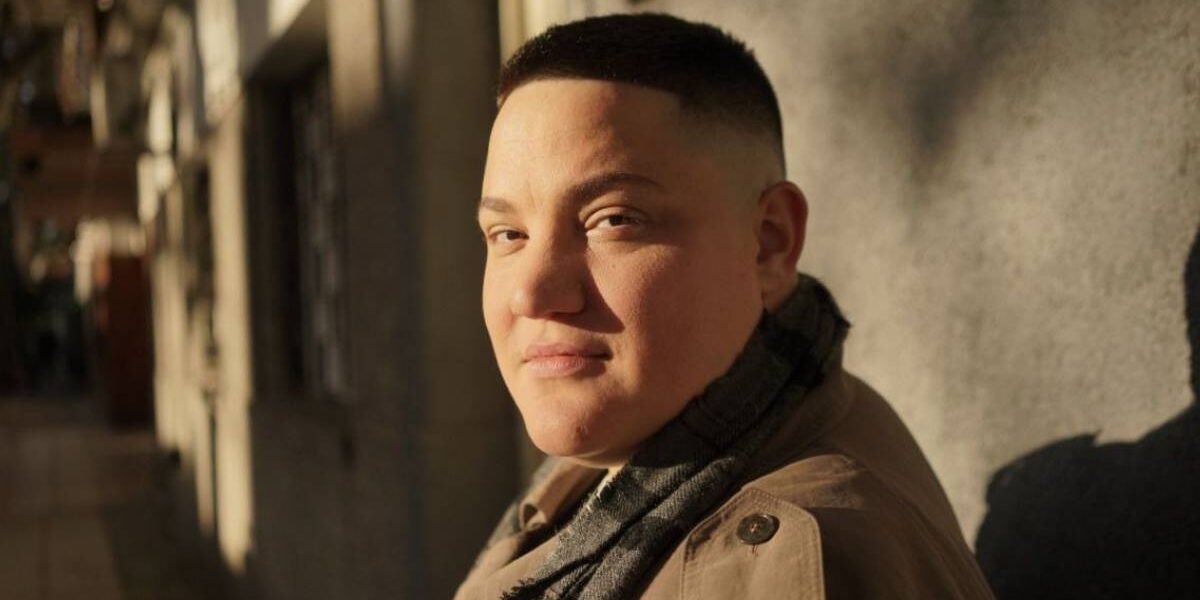


BUENOS AIRES, Argentina. Bajo un sobretodo beige, bufanda a cuadros, zapatos y un pelo muy corto en degradé, Ivo Colonna estrena su nueva faceta de galán disidente.
El músico, que habita una masculinidad trans sensible y no binaria, brindará el show “Mis Romances” a principios de agosto. En el marco del Día de la Visibilidad No Binaria, que se celebra este jueves, Presentes charló con él sobre esta nueva etapa artística en su vida y el volver a los escenarios luego de haber gestado y parido a Malva, su hija de un año y medio.
Ivo es un amante de “hablar sobre el amor y los vínculos” y viene de otras experiencias musicales como Pimentón, Bife y Alto Bondi. Sin embargo, encontró en Mis Romances la posibilidad de cantar sus “canciones favoritas” desde la infancia hasta hoy, en un repertorio de tangos, boleros y “otras sorpresas”.
Este 7 de agosto será el estreno de su primer show solista a las 20 en Café Berlín, ubicado en el barrio porteño de Devoto. Las entradas se consiguen a través de la plataforma livepass.com.ar.
Al café-museo fotográfico Simik del barrio de Chacarita, Ivo llega puntual, vestido con pantalones de colores fluorescentes y un chaleco negro que le regaló su mamá por el Día del Padre.
“Mis romances es un poco el show que le hubiera gustado ver a mi papá. Sin feminismo (se ríe). Es inevitable el feminismo, pero, digo, es una lista de canciones románticas que siempre me gustaron desde la adolescencia hasta ahora. A mí siempre me gustó el tango, desde los 16. Mi viejo me preguntaba por qué me gusta esa música triste. No sé, algo me llama del tango. Después cuando me mudé a capital incluso me gustó más. No soy porteño, pero me siento bastante”, dice Ivo, oriundo de la localidad bonaerense de San Miguel.
-Además de músico se te dio por muchos otros rubros.
-Sí… siempre me gustaron las palabras. Empecé Letras en la UCA, hice bastante de Comunicación en la UADE… en otras vidas. En el medio hice el ingreso al Traductorado en la de Belgrano. Todas universidades privadas. Mis viejos tenían una idea de que si yo iba a la UBA me iba a politizar… Tarde o temprano sucedió. No tuvo la culpa la UBA.
No terminé la carrera nunca. Con apoyo de quien era mi pareja en ese momento terminé dedicándome al arte, publiqué un libro de poemas, empecé a hacer música más en serio.
También hice radio online muchos años, actué en algunas obras, pelis, videoclips, hice performance… ¡con BIFE hasta fui manager! Durante este año actué en la próxima peli de Martín Shanly que sale pronto y en la obra El Arte es Amor de Rodrigo Arena, -muy divertido-, donde hice del Diablo.
-Dijiste que te encantan las palabras. ¿Qué mensajes, discusiones o preguntas te gusta generar en las letras?
-Las letras de Bife yo no las escribía. Las escribía todas Javiera. Y eso para mí también fue un bache de decir en mi vida. Yo me retraje bastante. Observé, y estuve también como en una transformación propia, del cuerpo, de la expresión de género, de mi voz. Sentía mucha libertad en ese sentido, y poca en la del decir.
Después yo fui entrenando más el cuerpo, tomé clases de danza, entrenamiento actoral, empecé más bien a pensar en el cómo, en el ser intérprete, más que en ser autor o compositor. Recién ahora escribí la letra de una canción en el Nuestrans Canciones II para Malva, que era una travesti de 93 años que falleció en el 2020. A mí me llega su historia justo cuando decido ponerle Malva a mi bebé.
– ¿No conocías antes la historia? Pensé que habías elegido su nombre por ella…
-No, fue justo en ese momento que me llegó su historia. Me re pasaron cosas con Malva Solís. Hubo un encuentro de data. Me tenía que llegar esa historia. Porque Malva era una travesti muy particular. El desafío de Susy (Shock) para el Nuestrans fue escribir una historia con la biografía de una referente trans de la historia.
– ¿Cómo te llegó su historia?
Una amiga me mandó un link de la noticia cuando falleció que fue tres días después que yo soñé que mi hija se tenía que llamar Malva. Ahí empecé a investigar. Escribía zarpado, era vestuarista, cocinera, hacía un montón de cosas, era re de la cultura del trabajo, muy discreta. Nació en Chile, a los 17 años cruzó la cordillera y se vino para acá. Una historia de una sobreviviente que llegó hasta los 93 años. También me resonó un poco de lo no binario… al final ya se asume como travesti, como Malva, pero tiene como una resistencia a algo, como una resistencia a simplificarlo. Se puede ver en el documental “Con nombre de flor”, eso me resonó esa fuerza por no habitar un estereotipo.
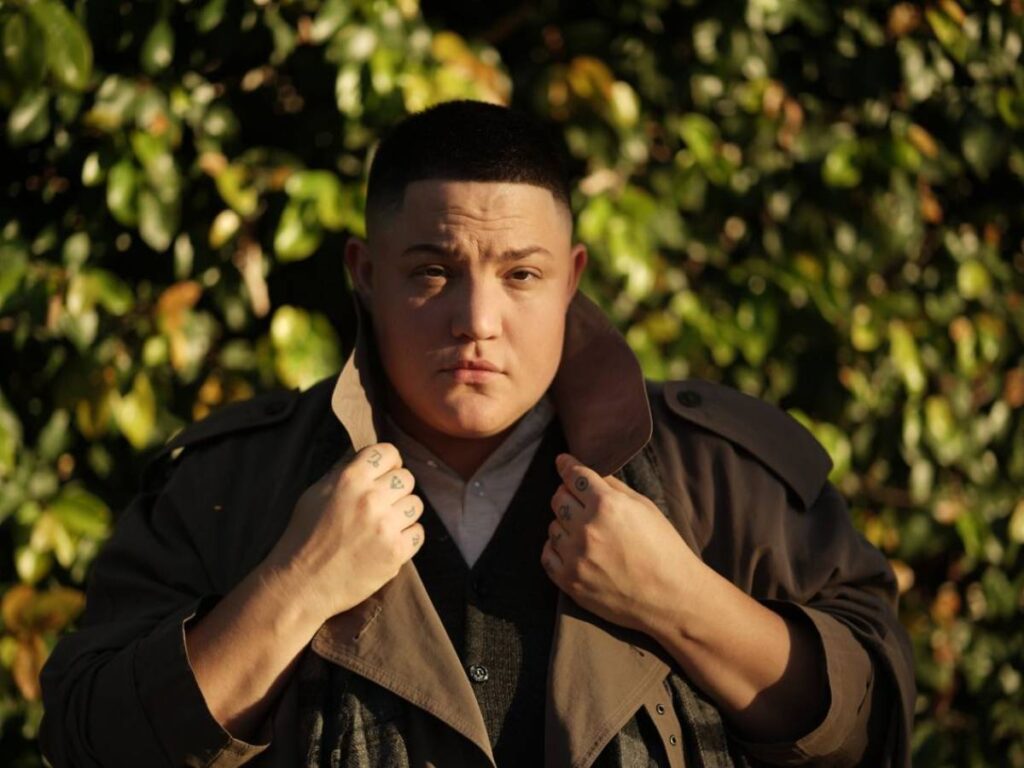
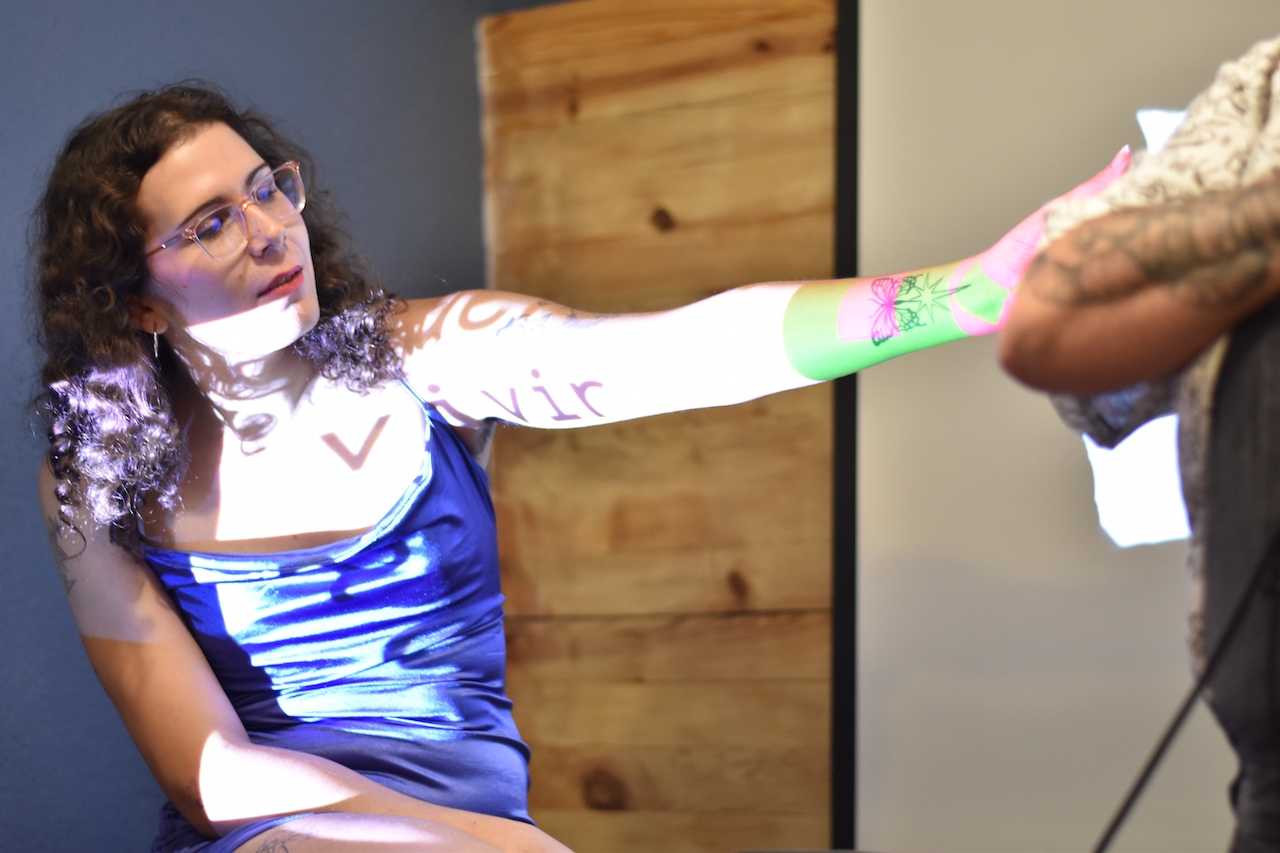
Foto: Nora Felino IG @noricomolasalgas
La pregunta que cambió todo
A Ivo su sobrina, de 12 años, le dice tío. Cuando tenía cuatro, durante una sobremesa, le preguntó: “Tía, ¿sos varón?”.
“Yo no me lo había preguntado tan claro. Estoy eternamente agradecido a mi sobrina que me hizo la pregunta más importante de mi vida”, dice Colonna.
-Con esto de no simplificarlo, ¿cómo pensás vos a tu identidad?
*Toma un sorbo de café* (bromea). -No sé. Creo que estoy tratando de habitar una masculinidad no binaria sensible. Los primeros años de asumirme trans fueron como más guerreros, a la defensiva. Y ahora estoy más tranqui, viendo cómo es esto de ser un papá trans. Tuve muchas vueltas en el embarazo, la pandemia en el medio hizo bastante particular a la situación. Pero están las redes y a mí me han salvado muchas veces.
– ¿Cómo viviste el proceso de tu embarazo?
-Yo devengo trans y después me doy cuenta de que tengo ganas de tener hijos. Antes, no. No quería ser mamá. Tenía una resistencia con eso y con mi historia particular. Cuando me cae la ficha de que puedo ser como soy y también tener hijos -parece una obviedad, pero no lo es-, de repente fue como ‘ok, puedo’. Empiezo a investigar, a conocer gente por Instagram con el hashtag nonbinary y me encuentro con @selfmadecade, que vive en Estados Unidos. Una persona maravillosa. Yo le seguí el embarazo por Instagram. Le dije: «me re inspira verte, gracias por compartir». De repente, de la misma manera, me han escrito personas tortas, no binaries de otros países. A mí me re costó subir fotos embarazado a Instagram, pero de repente se armó una red. En sus dedos, Ivo lleva tatuada su carta astral: sol en Libra, ascendente en Aries y luna en Leo. Se lleva bien con el signo de su hija, que es de Escorpio.
– ¿Y el nacimiento?
-Se aprobó el aborto y yo acababa de parir. Escuchando las discusiones en el Congreso caí en la cuenta de un montón de cosas que yo no había pensado. Los cuerpos gestantes son los que sufren, transitan, el embarazo. Es muy loco la resistencia de las personas cis que les incomoda que se diga ‘cuerpo gestante’.
El embarazo fue en pandemia y me acompañaron mis amigues. A las ecografías y a todo fui solo porque era en pandemia. Pero a parir fui con una amiga. Toda una red familiar… Me estoy amigando con la palabra “familia”, la estoy resignificando. Soy el papá de Malva, pero Malvi tiene además media hermana que es hija de su otre progenitore que es la papi. Mis amigues están muy cerca, son todas las tías. También están mi sobrina, mi vieja, mi hermana. Somos la red que éramos, pero ahora hay un nuevo bebé, que en realidad tiene ya año y medio, habla y camina. Digamos que se podría pensar en una familia diversa porque es tan monoparental como en red, somos la polifamily.
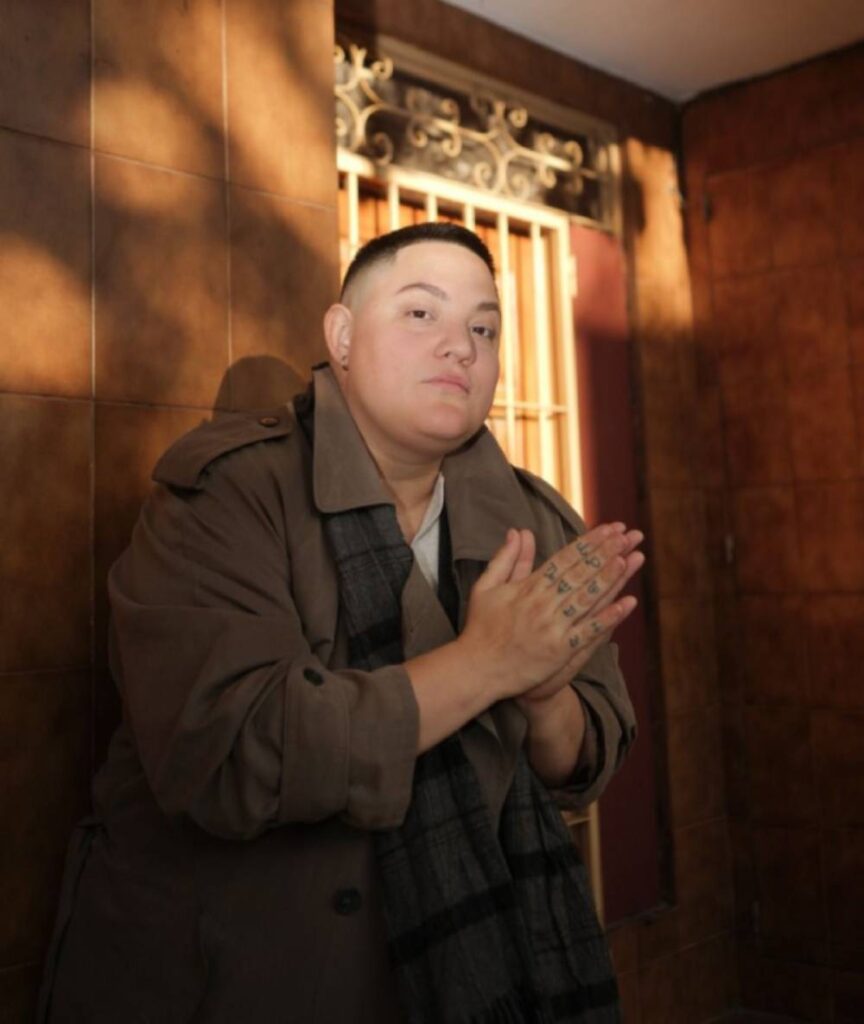
Foto: Nora Felino IG @noricomolasalgas
– ¿Cómo se conjugó el ser padre con tu carrera artística?
-Estuve mucho tiempo fuera de los escenarios por la pandemia y por esta situación. Es un laburazo subir a un escenario, no me resulta tan orgánico ahora. Tengo que volver a entrar en ritmo. Por exponerse, salir en fotos cada 15 días, cosas que te pasan cuando estás todo el tiempo tocando, que es extenuante. Y ahora de repente el centro de mi vida es la beba y no le paro de sacar fotos a ella.
Cómo lograré conjugarlo está por verse. En agosto me presento en CABA y en septiembre ya hay fecha para presentar el show en un festival en Mar Del Plata y voy a viajar con Malva, la tuvieron en cuenta cuando me invitaron. Es hermoso y muy validante. Parece que salen otras fechas a partir de esa de Mardel. Estoy entusiasmado.
– ¿Por qué decidiste hacer algo solista?
-Quise armar un show… lo estoy armando. Llegó la hora de elegir repertorio y salir a la cancha. Esta vez soy la cara yo, pero es siempre en equipo. Estamos laburando mucho en los matices con Lautaro Matute y ahora, además, me está dando coaching actoral Rodrigo Arena, a quien le parece que el show “ya es freak porque lo cantás vos, entonces cualquier playlist que pase por tu cuerpo va a ser otra propuesta”.
Como adelanto grabamos “Fuimos”, un videoclip precioso dirigido por Giselle Hauscarriaga que iba a ser inicialmente solo un video de un acústico en vivo de un tango tradicional, y se le sumó un romance entre dos travos putos. Quedó hermoso, pero al final es disidente. ¿Nunca voy a poder hacer algo ‘normal’? No, evidentemente no (se ríe).
-Dijiste que estuviste sin decir mucho tiempo, ¿hoy eso cambió?
-Más o menos. Estuve haciendo talleres de escritura y no puedo escribir todavía. Estoy pensando, ensayando, gestando algo. Por el momento prefiero cantar clásicos. Creo que ya la curaduría de haber elegido esas canciones dice algo. Por ahí cante una canción mía también en el escenario. No lo sé. También eso de «mía» me cuesta, la posesividad en las cosas y en las canciones. Por otra parte, no sé si hay varones trans que canten tangos y boleros. Entonces es ver cómo sería ser uno que hace eso.
-Ahora te presentás como el galán disidente. ¿Cómo te sienta ese rol?
-Es como habitar otro rol: me divierte. Yo siempre cuento historias. Soy como un viejo. Cuándo y cómo me enamoré de tal o cual. Me encantan las historias de amor, de desamor, me encantan las historias donde mutan los vínculos. Tengo muchas de esas. Mis exs me quieren. No sé cuánto es para seducir a las personas y cuánto es para contar historias, seguir hablando de eso, abrir preguntas.
Somos Presentes
Apostamos a un periodismo capaz de adentrarse en los territorios y la investigación exhaustiva, aliado a nuevas tecnologías y formatos narrativos. Queremos que lxs protagonistas, sus historias y sus luchas, estén presentes.
APOYANOS

SEGUINOS
Notas relacionadas

Estamos Presentes
Esta y otras historias no suelen estar en la agenda mediática. Entre todes podemos hacerlas presentes.