

What is it like to be a non-binary person in Chile?
On International Non-Binary Visibility Day, we tell you how these identities live in Chile.


Share

SANTIAGO, Chile. In Chile, non-binary people exist, resist, and today fight for legal recognition that has not yet arrived, but seems to be close.
Last week, the Legal Clinic course at the Faculty of Law of the University of Chile achieved the first ruling in Chilean justice that recognizes an adult as non-binary and orders the rectification of their birth certificate with an 'X' instead of assigning them 'male' or 'female'.
Activists hope this will set a precedent, as it is still not a procedure available to everyone, in a country where the Gender Identity Law is the mechanism for a person to change their name and sex on official documents.
This law defines gender identity as “the personal and internal conviction of being a man or a woman, as the person perceives themselves.” Although its approval represented a major step forward for the community in terms of rights, it omits identities that fall outside the binary gender model.
How do non-binary people live and cope in Chile? Three members of the community share their stories.
“I cannot have documents according to the identity I feel I deserve, and that leaves me out of many places.”
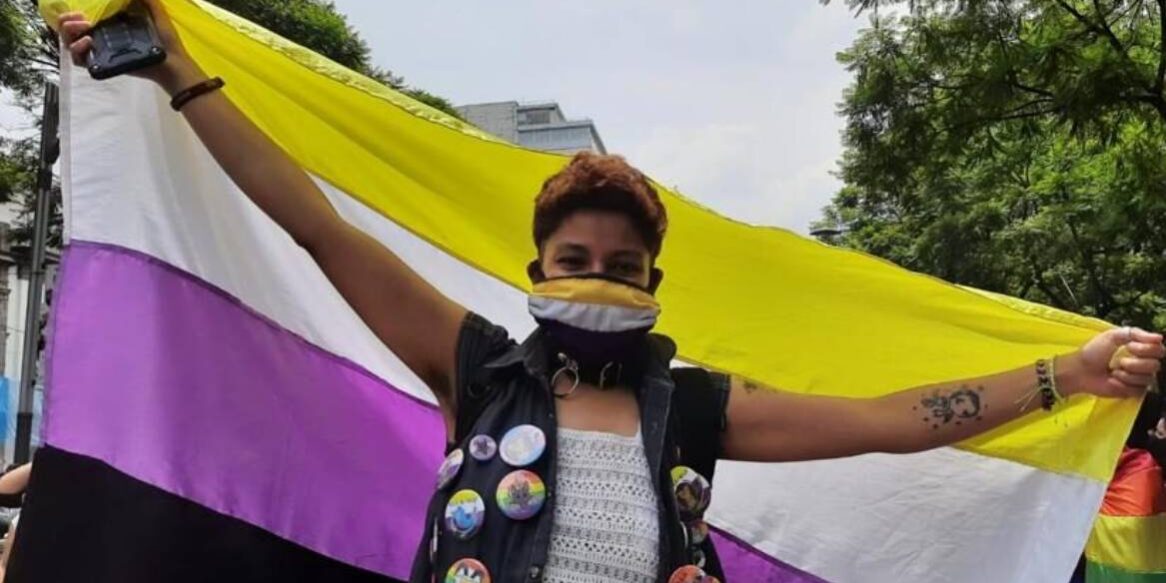
Hire is an activist and a virtual and in-person sex worker. He and they are their pronouns.
“ Living in this country is frustrating in many ways: from the legal and institutional aspects, because they don't allow you to exist within the legal framework, to the most everyday things. There's no recognition at the state level, no training for healthcare personnel about our identities, and I can't have documents that reflect the identity I feel I belong to. This excludes me from many spaces, like getting a job or going to university , since to do so I have to give my deceased name or my ID information. I'm a non-binary transmasculine person, and they're still going to refer to me as a woman, so that creates a distance.”
My transition wasn't focused on moving towards masculinity, but rather on detoxifying from an imposed femininity. On this journey of naming and expressing myself, I went through various experiences, such as queer, genderless, bigender, gender fluid, transmasculine, and eventually settled into this situation of being a non-binary trans person.
When we interact with others, we have to label ourselves in some way to be understood by those who look at us, listen to us, touch us, or connect with us. If it were up to me, I would like them to refer to me without pronouns, but I can't linguistically ask them to do that, because they already struggle to refer to me as "he" instead of "she ," and they struggle even more with "they." Most of the time, they don't see me as masculine or as a gender non-conforming person because they have the idea of woman-vagina and man-penis in their heads.
In Chile, we need visibility in everyday life to move forward in integrating the idea that we are people, not necessarily men or women . For example, stores shouldn't have separate sections for women in white and pink and for men in gray or blue. There's also the issue of restrooms: if I go into the women's restroom, the women there feel uncomfortable; and if I go into the men's, I get dirty looks, and many times I've been kicked out. Things that are so simple or normal for everyone else become profoundly complex when your identity belongs to something the world denies.
“In Chile we experience situations of misgendering that invalidate our sense of identity.”
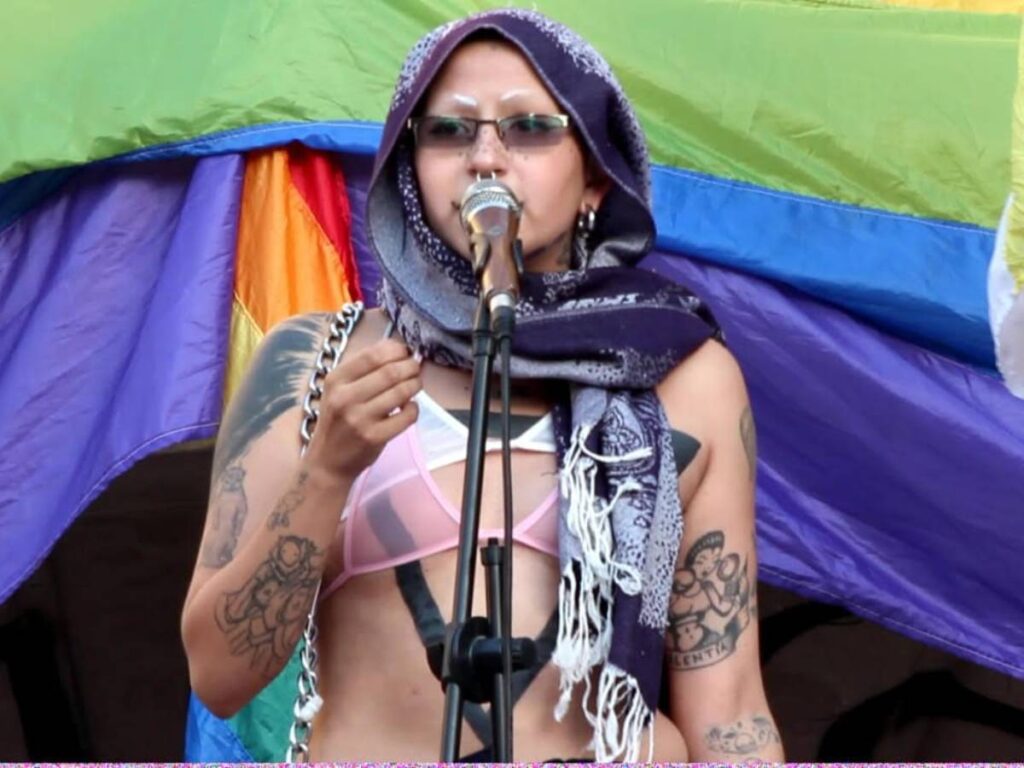
Clau Belaunde is an activist and works in a contact center. Her pronouns are she/they/he, in that order.
“I couldn’t define how we live in Chile from an absolute perspective, since everyone’s experience is different . What is a constant pattern, however, is that we experience situations of misgendering that invalidate our sense of identity as gender-neutral people, despite not being aesthetically androgynous as is generally assumed. Furthermore, we are still not recognized through an identity card, so we remain invisible to society, legally speaking.”
In my case, this was a discovery I made in childhood . Because of this, I experienced a lot of bullying, which in turn led to other problems that resulted in me seeing a psychologist at a very young age. In those sessions, they asked me very raw questions about my identity, and only a few years ago, looking back, did I realize that they might have been a kind of conversion therapy. Over the years, it was very difficult for me to reach a safe space where I could openly and directly say that I wasn't heterosexual.
I remember a historic milestone in 2019, when a huge non-binary flag was unfurled at the main building of the University of Chile. At that time, I was beginning my journey as an activist, and non-binary identity arrived suddenly, bringing with it many answers. That's when I realized that perceiving myself as neutral or feminine wasn't a personal discomfort, and with the deconstruction of my being and the help of friends, I gradually abandoned feeling masculine. Not entirely, because in some scenarios, like work or family contexts, I think it's something that can never be changed. With that awareness, it doesn't bother me as much as it bothers others when their pronouns aren't respected, because at the end of the day, I can be called by all three genders.
“In this country, using pronouns like 'elle' is dangerous.”
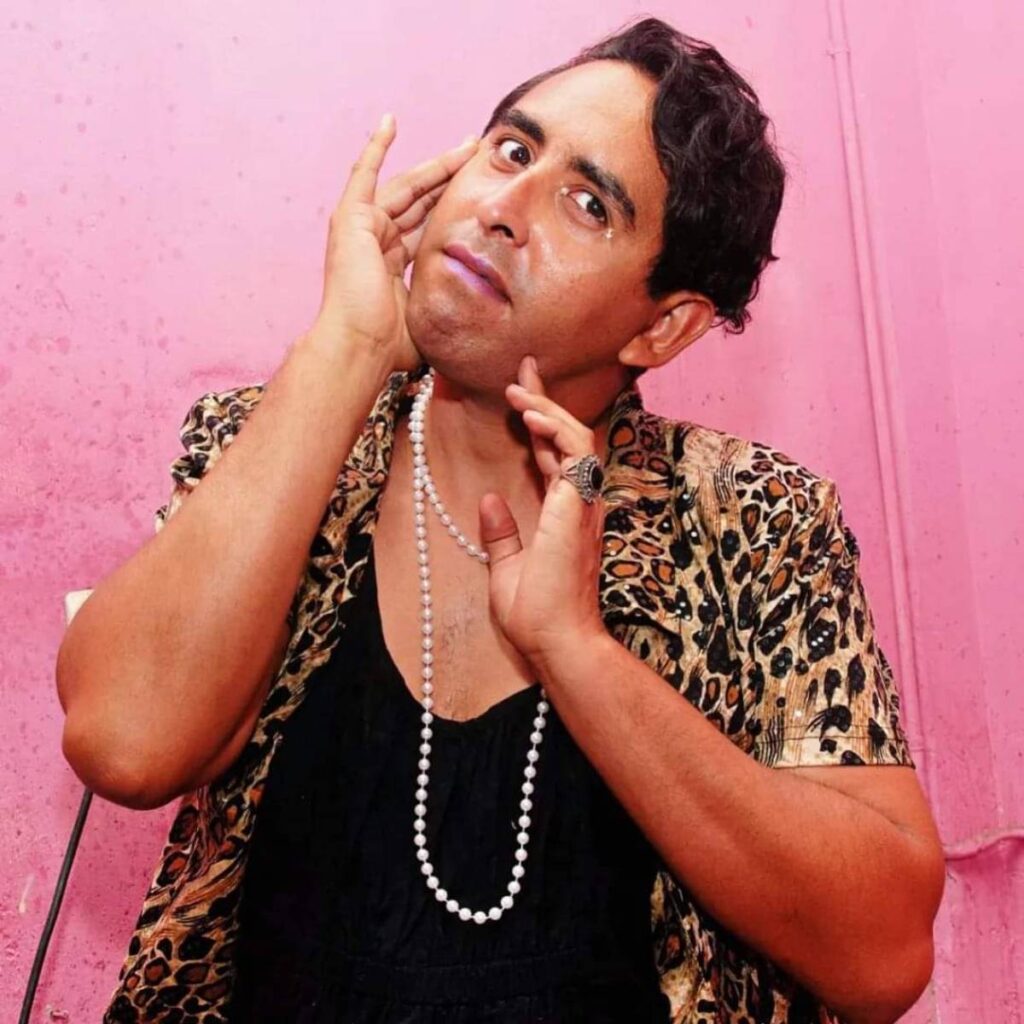
Shane Cienfuegos is the Social Intervention Coordinator for OTD Chile. Her pronoun is she/him/her.
“Being a non-binary person in Chile means not having our existence recognized, both culturally and legally. The sex-gender system has constructed unequal relationships where anything that falls outside the feminine/masculine canon is condemned and must be immediately corrected, censored, and if the 'problem' persists, silenced.”
My experience is collective, because I'm not the only one who experiences discrimination for being non-binary. Many of us are repressed in educational, political, and healthcare settings for asserting our existence. In this country, using pronouns like 'they' is dangerous, and we are exposed to physical and media violence.
But in contrast, there are many non-binary movements, and we are organized in multiple ways. Our struggles have allowed us to reconnect through shared experiences to address various issues, one of which is how we want to be treated and supported in spaces as important as social protection systems.
It is necessary that they provide comprehensive support to our life experiences and listen to our demands for recognition of identity, which are more than demands, they are human rights.”
We are present
We are committed to journalism that delves into the territories and conducts thorough investigations, combined with new technologies and narrative formats. We want the protagonists, their stories, and their struggles to be present.
SUPPORT US

FOLLOW US
Related notes



We are present
This and other stories are not usually on the media agenda. Together we can bring them to light.