

Salta fails to comply with the intercultural health law: another Wichí girl died from malnutrition
Clarisa was 14 months old and had a systemic infection. The province does not guarantee healthcare, and the hospital blames the family.


Share

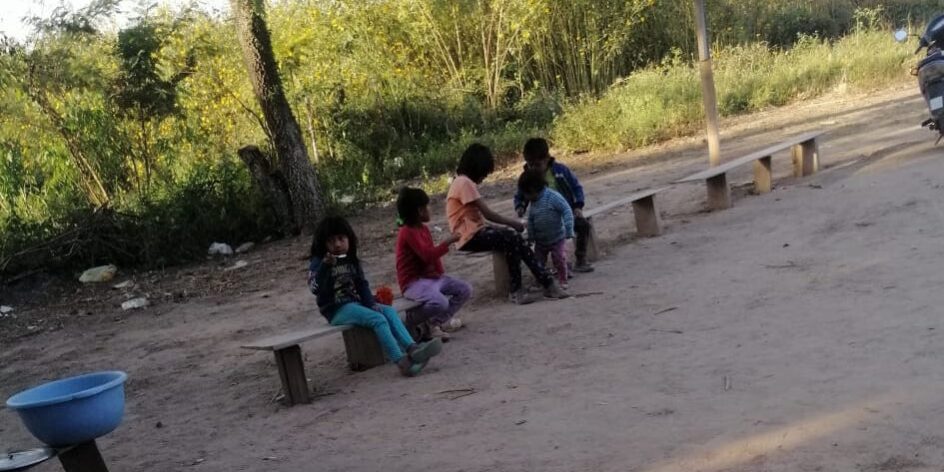
SALTA, Argentina. Felipe Juárez and his partner have been held since last Friday at the Juan Domingo Perón Public Hospital in the city of Tartagal, Salta province. They were taken there by police. They are the parents of Clarisa, the 14-month-old girl who died on June 29. According to the autopsy, the cause of death was multiple organ failure caused by a systemic infection. This infection was caused by severe malnutrition. Clarisa's mother is six months pregnant and has three other children. They belong to the La Quebradita community, 350 kilometers north of the city of Salta, the provincial capital.
A father and mother are under scrutiny by public health officials in the province of Salta because the mother fled the hospital where her young daughter was being treated. Since then, the family has been living through a period of great stress. They are grappling with the grief of losing their daughter, the fear of the increased police presence in their community, and the confusion stemming from a lack of understanding of the measures being taken against them. Suddenly, the state's presence seems more pervasive than ever.
Hospital abuse
The deceased girl had been hospitalized at the General Mosconi Hospital and was discharged, “saying she was fine,” her father said. But two weeks later, on June 7, according to information provided by the Salta Ministry of Health, she had to be readmitted. She was in this second hospitalization when her mother took her out without medical authorization.
According to her husband and a community spokesperson, the woman fled the hospital, fed up with mistreatment by a nurse. The Ministry of Health is placing the blame on the mother.
Felipe Juárez says his partner left Mosconi Hospital because she was mistreated by a nurse. “Mistreatment. Bad words (…) directed at the children, even at her.” At that time, the woman was alone with her children at the hospital because their father had gone to work at a brickyard in the area. The mother doesn't speak Spanish. “That's why she left the hospital,” her partner says. The hospital doesn't have a translator or bilingual facilitator.
“Because of that, they’re already following her like a criminal, and she’s terrified. Now I can’t stay away from her,” he told Presentes from the Tartagal hospital. Juárez said his partner is so afraid that when she hears a motorcycle or truck engine, she immediately wants to leave. She’s particularly afraid of the police, and to make matters worse, “the police are always after the doctors.”
Fear of speaking
After fleeing the hospital, the mother returned with her children to her home in La Quebradita. The police went to look for her there, and the woman fled with the little girl to the community of Misión El Corralito, in General Ballivián, 40 kilometers from Mosconi. Both towns are located on National Route 34, in northern Salta province. It was there that little Clarisa died on June 29.
The hospital was notified of the discovery by a family member. A medical team retrieved the body and transported it to the city of San Ramón de la Nueva Orán, over 80 kilometers away, for an autopsy. Juárez maintains that he was not informed why the autopsy was necessary, nor was he given an explanation for the delay in returning the body.
The spokesperson for the communities of Mosconi confirmed the priest's account. The spokesperson asked not to be identified by name. Like the community member in La Quebradita, they fear government reprisals. Recently, another woman from the area lost social benefits after reporting another death from malnutrition.
The official version
After the funeral, the family received another visit from provincial health officials, accompanied by the police. Juárez said they wanted to take the five-year-old boy, but she refused to hand him over because she fears they will return him to her like they did to the other girl.
Finally, on July 9, the mother, father, and child were taken to the Tartagal Hospital, where they remain. The father said he doesn't know the exact reason for their hospitalization.
In the only official information it provided about the case, the Ministry of Health of Salta assured that the girl “received monthly care from health agents of the Mosconi operational area.”
He added that because the girl was underweight and “frequently suffered from respiratory infections, diarrhea, and occasionally vomiting, care was planned at the Nutritional Recovery Center (CRN) of the Juan Domingo Perón Hospital.” For this reason, she was admitted to the General Mosconi Hospital on June 7th to be transferred to the CRN, “but her parents ran her away.”
The poverty of General Mosconi
The spokesman highlighted the prevailing poverty in the communities on the outskirts of General Mosconi, a town born in the heat of oil and gas exploitation but which entered into a clear decline in the 1990s, with the privatization of the state companies that exploited these resources.
When they have a health emergency, people from the communities arrive at the hospital in private taxis, "if they can pay," and if not, "they arrive however they can," the spokesman said.
“I’m demanding what’s fair. Many times, when they arrive at the hospital—I’ve seen it with my own eyes—they treat Indigenous people badly. They mistreat us. They keep Indigenous people isolated.” They make them wait longer than other people for care at the hospital. She also emphasized that there are “many mothers who understand Spanish, but don’t speak it.” They don’t have a bilingual person to help them with their appointments, provide them with accurate information, or facilitate the procedures they need to complete within the healthcare system.
The spokesperson was at the hospital with his own young daughter, who was also hospitalized, when the girl who died was also admitted. "The mother escaped because of mistreatment at the hospital," he confirmed.
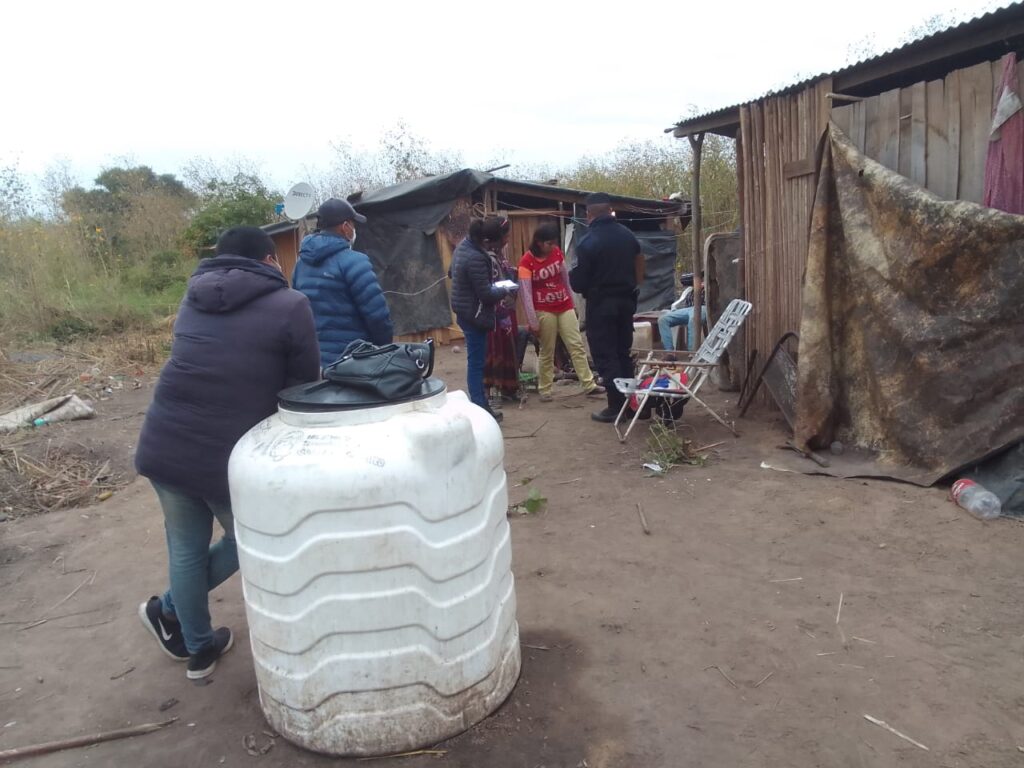
Felipe Juárez says he doesn't know why they are in the Tartagal Hospital. “They put us in here in the hospital without giving us any medication. (His partner) isn't on an IV drip, nothing. They're treating us like criminals.” The five-year-old boy is with them in the hospital. Their other two children stayed in the community.
Juárez recounted that he received a restraining order in this situation. He was prohibited from approaching within 200 meters of a health worker's workplace. The father says he is being accused of committing an act of gender-based violence. He maintains that he only made a "fair" complaint. He criticized the health worker for only visiting her once every two months.
Autopsy and indigenous worldview
The spokesperson also questioned the lack of information regarding the autopsy. “I don’t know why they opened it.” He further lamented the condition in which the girl’s body was delivered, with large, visible stitches. This may be common practice in forensic medicine, but it is particularly shocking for the family. In this case, there was also a lack of accessible information, in their own language, about the necessity of performing this procedure. The spokesperson added that, according to Wichí culture, the body must be buried whole, with no parts missing.
The collaborator of the community soup kitchen told Presentes that the performance of the post-mortem examination generated great fear in the communities of Mosconi, who are now more reluctant to take their children to medical care for fear that they will die in the health center and have autopsies performed on them.
Intercultural health and a law that does not comply
The spokesperson reiterated their repeated calls for the implementation of intercultural healthcare, but lamented that their pleas have been ignored. He stated that the Mosconi Hospital needs translators or healthcare assistants who speak both languages and are familiar with the Wichí people's culture.
“People come from the rural areas. They suffer because there is no one who can go to the hospital and help them, with information about healthcare and the procedures they need to follow.”
The role of the “Bilingual Intercultural Facilitator” already exists in Salta, created by Law 7856, which the Provincial Legislature approved in December 2014. But it is not being implemented because to this day the government has not regulated it.
This law creates an “Intercultural and Interinstitutional Health Support Network for Indigenous Peoples.” Among other objectives, it stipulates that this Network must “guarantee adequate and equitable medical care and access to highly complex medical services” for the Indigenous population. And in cases where sick individuals must be transferred to more complex centers, “family members will be facilitated with appropriate social support” within “an environment of respect for their cultural and ancestral values.”
And regarding the figure of the Bilingual Intercultural Facilitator, the law establishes that the Network must provide them in the necessary quantity to cover all hospitals in the province.
In January 2020, following the publicizing of the deaths of at least nine Indigenous children in the Salta Chaco region due to malnutrition or related causes, the Salta government declared a socio-sanitary emergency in the departments of Orán, San Martín, and Rivadavia. General Mosconi is located in the San Martín department.
However, healthcare conditions have not changed substantially, and the number of child deaths continues to rise.
In the Ministry of Health's statement on Clarisa's death, there is not a single line that mentions the progress in regulating the intercultural health law, which could be a way to improve care.
The province appeals in favor of the indigenous population
Also indicative, but in the opposite sense, is the attitude taken by the Salta government in response to an injunction filed in December 2021 by the Civil Association for Equality and Justice (ACIJ), which requested that the courts order the provincial government to regulate the intercultural health law. The organization accompanied the injunction with a request for an injunction to immediately mandate the presence of bilingual facilitators and provide assistance to people from remote areas who are referred to urban centers for healthcare.
Last January, Judge Eduardo Barrionuevo of the Salta Court of Appeals ordered the province to appoint intercultural facilitators in public hospitals and to provide shelters for people who need healthcare far from their homes. The province's response was to appeal this decision.
After granting the preliminary injunction, the judge declared himself incompetent to rule on the substantive issue raised in the amparo (constitutional protection) action, and the case was referred to the Supreme Court of Justice of Salta, where it awaits a decision. Last May, the Salta Supreme Court reminded the government that the preliminary injunction must be complied with, even while the appeal is pending, and ordered it to submit a progress report on compliance. This report has not yet been submitted.
Last March, some 80 communities from the San Martín department who participated in the Intercultural Health Meeting held in Tartagal, warned that "two years after the declaration of socio-sanitary emergency, the situation that gave rise to it in San Martín, Orán and Rivadavia has not been reversed."
"If you are poor and you get sick, you die."
“Here in the San Martín department there is hunger, especially among the Indigenous communities,” said the spokesperson for the Mosconi communities. “There are about 70 deaths.” The communities have counted 12 children who have died since last year, without specifying whether the deaths were related to malnutrition.
The spokesperson added that the hospital in Mosconi lacks oxygen and a "trained nurse to administer IV fluids," something he said he experiences firsthand with his young daughter, whose arms are injured due to the lack of skill in administering fluids. This girl has a disability and frequently requires treatment in the public health system, both at the local hospital and at the Maternal and Child Hospital in the city of Salta, more than 350 kilometers from Mosconi.
This presents another problem for people who must travel for health care: their companions generally have nowhere to stay, with the added problem that they generally do not have money to cover living expenses.
The volunteer at the community food bank was emphatic: as things stand, "If you're poor and you get sick, you die," she asserted.
The spokesperson said that in the area surrounding the town of Mosconi, there are about 19 communities, all of the Wichí people, with a small group of Chorote families. Some mothers receive the Universal Child Allowance, but a significant number do not have access to this benefit because they are undocumented. He also added complaints about this, saying that they have been requesting for some time that these people be provided with documentation.
500 communities in Salta
In June 2021, the ACIJ published a report explaining the need for regulations to be implemented for the intercultural health law. Under the subheading “Structural Poverty and Socio-Health Emergency,” it detailed that in the province of Salta, “500 Indigenous communities belonging to more than 14 Indigenous peoples reside, living in conditions of structural poverty and discrimination, with severe restrictions on access to the health system and basic services such as drinking water.”
It also included information provided by the Ministry of Public Health of Salta. “In Salta, there are 137,012 children under the age of 5. In 2018, 1,640 children (aged 0 to 5) were found to be malnourished, of whom 47% (768) lived in the northern health district of the province.” Of that total, “1,462 were underweight and 178 were severely underweight.”
The spokesperson also lamented the suspension of milk distribution. The National Ministry of Health explained that the decision was made to replace the milk distribution with its equivalent in cash, which is added to the amount already available on the Food Card. However, the spokesperson maintains that this is discriminatory. Health workers have stopped distributing milk to Indigenous mothers but continue to do so for non-Indigenous mothers.
We are present
We are committed to journalism that delves into the territories and conducts thorough investigations, combined with new technologies and narrative formats. We want the protagonists, their stories, and their struggles to be present.
SUPPORT US

FOLLOW US
Related notes
We are present
This and other stories are not usually on the media agenda. Together we can bring them to light.
1 Comment