

A gang attacked peasant women and a girl in Santiago del Estero
It happened in a rural home in the community of La Armonía. After attacking the family, they burned down the ranch where they lived.


Share

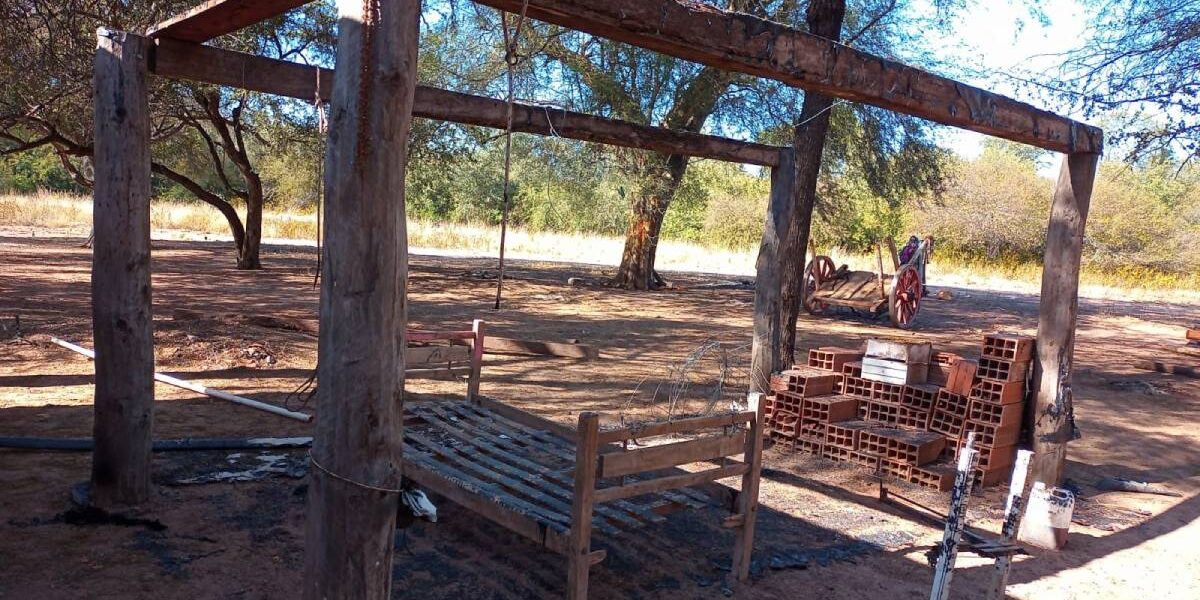
SANTIAGO DEL ESTERO, Argentina. On Wednesday, June 29, in the early morning, a gang of more than 15 hooded and armed men appeared at a rural house in the La Armonía Community, 60 kilometers from Monte Quemado (Santiago del Estero), attacked the family who lived there, burned the ranch and many of their belongings, denounced the Peasant Movement of Santiago del Estero (MOCASE).
The house was inhabited by two women, a young girl, and a young man. “The little girl is terrified; she sees lights or hears noises and gets alarmed,” the women told Presentes. “She has nightmares when she sleeps.” Due to the beating they received, the adults suffered physical injuries, and the girl experienced severe emotional and psychological trauma. The victims filed a police report, but claim that, to date, neither the justice system nor the police have arrived at the scene.
What happened that night?
Days after the attack, Caterina Goncebat is with her family and some colleagues from the Peasant Movement of Santiago del Estero in the same field from which they were evicted by a violent gang just a few days ago.
According to the family's report, the attackers arrived in two pickup trucks. Rosa Mazza, 60, and Ángel Goncebat went to the gate and told them to leave. Caterina Goncebat and her daughter Antonia were also there.
“That night it was my mom, my brother, my four-year-old daughter, and me. It was 1:53 in the morning when two trucks arrived. My brother and my mom went over to see who they were. My daughter and I stayed inside the house,” says Caterina, 22.
“When these men got to the truck, they got out and pointed shotguns at my brother and my mother. They told us to leave or they would take us out 'one way or another',” he explains.
The brother, she says, took out his phone to film. The attackers beat him, took his phone and the phone from Rosa, Caterina's mother, and entered the house. "From where they were, it's about 50 meters to the house. From there they came, beating my mother and my brother, and they dragged us out," she says.
The four of them managed to get into the family's truck. “We have an old truck, and they wouldn't let us out. They even wanted to take my little girl from me so I would give them my cell phone, because I had managed to film something. Fortunately, they couldn't because the truck started and we managed to get out. It was crazy; they were shooting at us with rubber bullets and shotgun shells,” the young woman explained.
"When we were able to leave, they were shooting at our truck from behind. We left, and they stayed here, burning everything. What they couldn't take, they burned," he recounted.
A common situation: appropriating employers
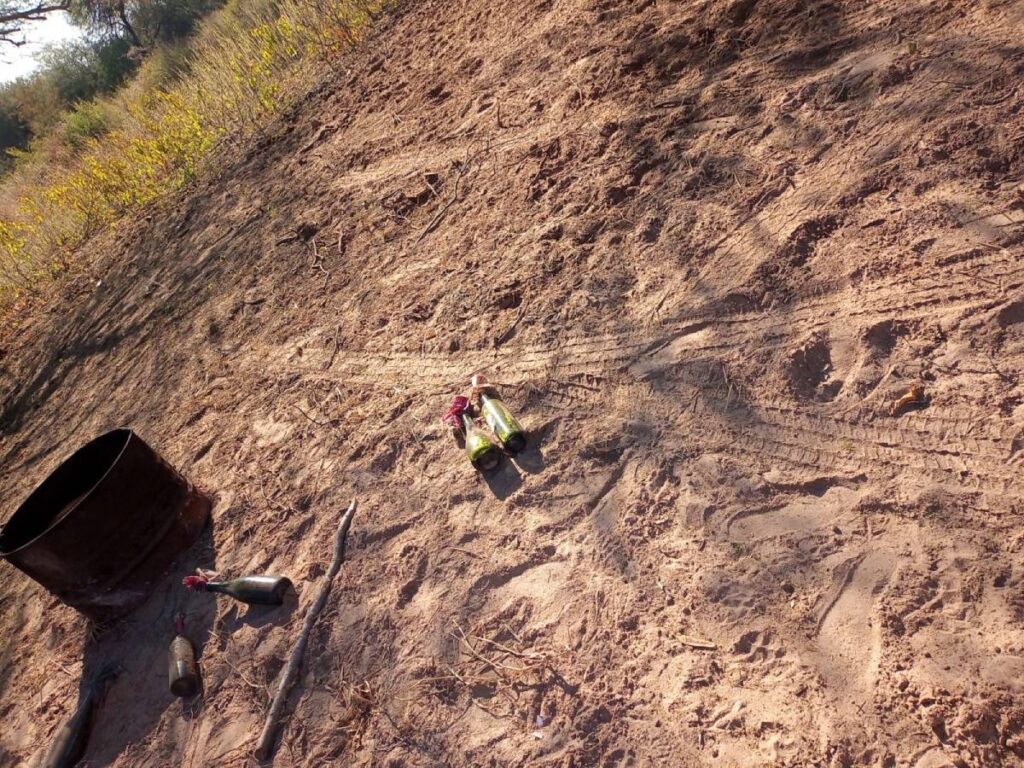
The next day, the family returned to the scene because, after filing the report, they were told the police would come to investigate . “They didn’t come that day; this happened five days ago, and they still haven’t shown up. Two days ago, they informed us that they are waiting for an order from Santiago, the capital, so the police can enter with the patrol car. The problem is that the evidence is fading. In fact, the tire tracks from the truck are almost invisible now because of the wind.”
Caterina explains that the land belongs to the local people and that these situations of land grabbing by businessmen are common. “We were born and raised here. Whenever there have been problems, the authorities haven't acted. When the farmers file complaints, they don't come, but when we're reported, they come immediately, to arrest us.”
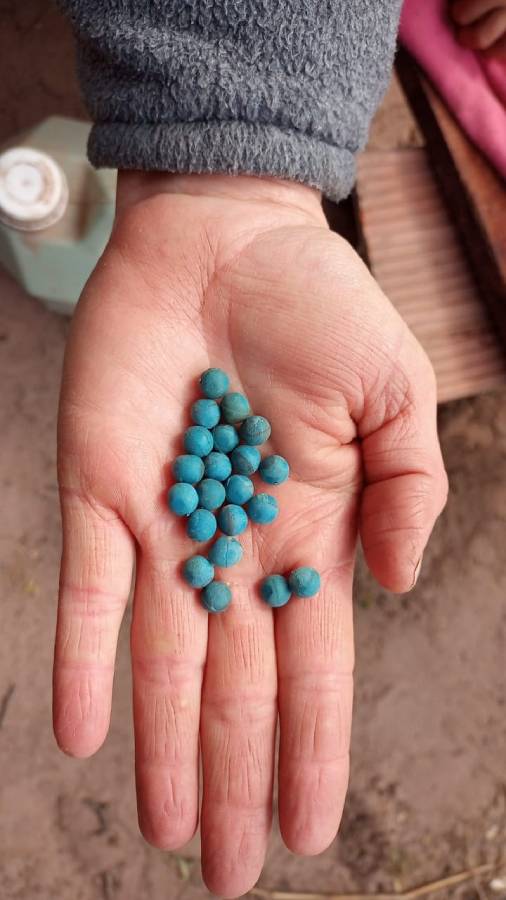
A horror movie
Lule - Vilela indigenous community . “Rosa is bruised and is undergoing treatment to recover because Ángel was badly beaten.”
When the family fled, the attackers burned down the ranch where they lived, a corral with chickens and ducks inside, work tools, and left taking cell phones and a motorcycle.
“We know who he is because he is the only person disputing the land. The trucks entered through his field,” says Caterina.
The young woman is referring to businessman Matías Orue, who claims to own the land. “The conflict with the businessman from Córdoba, Matías Orue, began some time ago,” she said. “He says he bought this land from families in another town, but in 2006 a survey was conducted and it was established that this territory belongs to our community. Since 2012, we have had recognition from the provincial and national governments through legal entity number 174. ”
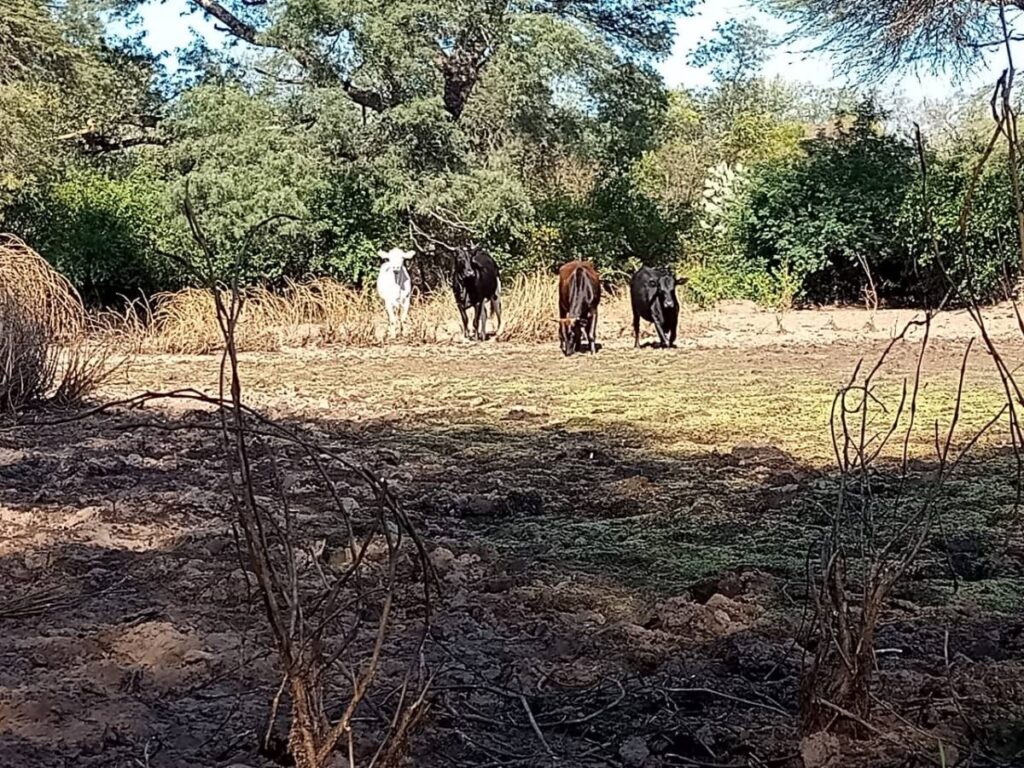
“Every time he wanted to fence it off,” he explained, “we took down the wires, but in recent weeks he wanted to lease this land, so a family stayed to live here because we want to take care of our forest. How can a businessman come here and want to destroy an entire forest?”
The women's organization
La Armonía is a community of the Lule Vilela Indigenous People, located 60 kilometers northeast of Monte Quemado, in the province of Santiago del Estero. “The Lule Vilela community is a territory organized 20 years ago by the Peasant Movement of Santiago del Estero (MOCASE). Since its beginnings in this territory, it has been the women who have led the struggle, the resistance in defense not only of their homes but of the entire territory ,” says Deolinda Carrizo.
“It was the women who went out to stop the bulldozers, to stop the fence builders, or to cut the wires, to chase away those who were illegally occupying forest products,” she adds. “Everything is done with organization, a mixed organization, but with women leading and carrying out the organization and territorial strategies.”
“The male colleagues have also been involved, but the women have been the most active. It is the women who have that enormous sense of participation. They have built a Juana Azurduy Community Center in Monte Quemado. They recovered a space that was abandoned and have put their bodies into cleaning and fixing it up. That center is now operational.”
A fundamental survey
The concerns of the women of La Armonía culminated in great achievements. For example, a land survey conducted under Law 26.160 revealed that there are 400 families in 38 settlements covering approximately 60,000 hectares .
“They control or maintain it as a territory of life, of production, for generations. This is an issue that is present in everything,” she says. “Rosa, the battered woman, was born and raised in that territory. She is 65 years old.”
Businessman Oure has been trying for some time to bring machinery and tractors into the area, and Rosa reported him. “She wouldn’t let the machines in, and that’s the response they got.”
The province with the highest amount of deforestation
According to a study prepared by the Faculty of Agronomy of the University of Buenos Aires (FAUBA), “during the period 2000-2012 the relative rate of transformation of native forests by grain crops in Santiago del Estero was higher than that produced in the entire ecoregion, in South America and even in the world.”
According to the report, “it is estimated that 4 million hectares were deforested in Santiago del Estero between 1976 and 2012. 50% of that area (2 million hectares) was deforested between 2000 and 2012.”
It adds that, in 2019, Greenpeace Argentina reported that Chaco (130,177 hectares) and Santiago del Estero (127,527 ha) were the provinces with the most loss of native forests in the period 2015-19, and that in 2021 Santiago del Estero had 52,290 hectares deforested.
This expansion of the agricultural frontier has generated conflicts in various parts of Santiago del Estero province between peasant and indigenous families defending their lands against businesspeople seeking to occupy those areas. Some of these conflicts have ended in attacks by gangs or thugs who have injured or killed peasants or indigenous people .
Lack of reaction from the Justice system
The Peasant Movement of Santiago del Estero (MOCASE-VIA Campesina) is present in 25 departments of the province. Most of its members belong to rural and indigenous communities, but they also work in working-class neighborhoods in urban areas.
“There are many latent conflicts in northern Santiago del Estero,” explained Deolinda Carrizo. “In Florida, Nueva Esperanza, Copo, Monte Quemado, Quimili, Pinto, and Añatuya, there are many hotspots, and the justice system isn’t taking action.”
“The territory of the La Armonía community,” she explained, “has been experiencing conflicts, and with these kinds of actions they want to intimidate us, but our women remain steadfast. Doña Rosa raised her children alone, endured violence, but she plows, sows, harvests, makes cheese, raises pigs and chickens, and produces food. She doesn't depend on anyone. They've already filed a complaint with the Monte Quemado court and with Prosecutor Gómez, but the lack of response is worrying; so far, there has been no action.”
Threats and resistance
After the attack, the family returned to the site. “The only thing left standing was a piece of material, but the entire community is going to help them rebuild their home,” Córdoba noted.
“They threaten us, they tell us to be vigilant at night, to be careful on the roads, but we are aware and organized, we know what struggle and resistance are,” he emphasized.
“These lands have no soybean plantations; we have a dam, crops grown without pesticides, which provide water and food for us and our animals,” he described. “What happened gives us more strength; we want a future for our children. Mother Earth needs to be healthy .”
We are present
We are committed to journalism that delves into the territories and conducts thorough investigations, combined with new technologies and narrative formats. We want the protagonists, their stories, and their struggles to be present.
SUPPORT US

FOLLOW US
Related notes
We are present
This and other stories are not usually on the media agenda. Together we can bring them to light.